


In Brazil AgTech news this week, Grão Direto attracts Marubeni to its Brazilian grain platform, Vylor launches with a CRISPR-first strategy for corn and soybeans, and Embrapa builds Brazil’s first integrated multiomics platform for developing renewable bioproducts.
In Climate Tech, Courageous Land begins deploying BNDES financing for a US$68 million agroforestry project in Roraima, better soil management raises soybean productivity by 11.1% per level, a new model sharply increases the estimated water footprint of sugarcane herbicides, and biomass supply emerges as a bottleneck for corn-ethanol expansion.
In Funding & M&A, Céleres incorporates AI company Arkéra, Caramuru secures US$20 million for biodiesel investments, Zen-Noh completes its acquisition of 30% of Grupo Cereal, and BrasilAgro resumes domestic land sales with a US$19 million deal in Bahia.
And in Macro & Markets, China imposes an additional 55% tariff on Brazilian beef above its annual quota, extreme drought spreads ahead of a potentially very strong El Niño, expensive credit pushes larger farms towards structured CPR financing, and agricultural-input retailers rethink their business models.
AgTech
Grão Direto Attracts Marubeni to Its Brazilian Grain Platform
Vylor Launches with a “CRISPR First” Strategy for Brazil
Embrapa Builds Brazil’s First Integrated Multiomics Platform
Climate Tech
Courageous Land Secures BNDES Funding for Agroforestry Project
Better Soil Management Raises Soybean Productivity by 11.1%
New Model Raises Sugarcane Herbicides’ Water Footprint 116-Fold
Biomass Supply Becomes a Bottleneck for Corn-Ethanol Expansion
Funding & M&A
Céleres Incorporates AI Company Arkéra
Caramuru Secures US$20 Million for Biodiesel Investments
Zen-Noh Completes Acquisition of 30% of Grupo Cereal
BrasilAgro Resumes Land Sales with US$19 Million Bahia Deal
Macro & Markets
China’s 55% Additional Tariff Takes Effect on Brazilian Beef
Extreme Drought Spreads across Brazil Ahead of El Niño
Expensive Credit Pushes Farms towards Structured CPR Financing
Brazil’s Ag-Input Retail Model Enters a New Consolidation Phase
AgTech
Grão Direto Attracts Marubeni to Its Brazilian Grain Platform — Marubeni Brasil has joined Grão Direto’s platform to digitalize its origination of soybeans and corn. The Japanese trading group’s Brazilian operation handles between three million and four million tons of grain annually, while volumes traded through Grão Direto have grown twelvefold since 2021, reaching 12 million tonnes last year. The agreement brings another major global trader into Brazil’s expanding digital grain ecosystem. Source: AgFeed
Vylor Launches with a “CRISPR First” Strategy for Brazil — Corteva’s newly independent seeds and genetics business has launched with Brazil expected to become its largest global market. Vylor plans to almost double its share of soybean-technology licensing to 30% by 2030 while expanding its leadership in corn. Its strategy combines a century of genetic material with gene editing, data and AI, potentially reducing the development of new crop traits from around ten years to as little as two. Source: AgFeed
Embrapa Builds Brazil’s First Integrated Multiomics Platform for Bioproducts — Embrapa has combined metabolomics, proteomics and fluxomics to map and optimize how yeasts convert sugars into high-value chemical compounds. Developed with Germany’s Helmholtz Centre for Environmental Research, the platform could support more efficient production of renewable chemicals, biological ingredients and microbial inputs. The research strengthens Brazil’s biological-engineering capabilities, although it remains an enabling platform rather than a commercial product. Source: Embrapa
Climate Tech
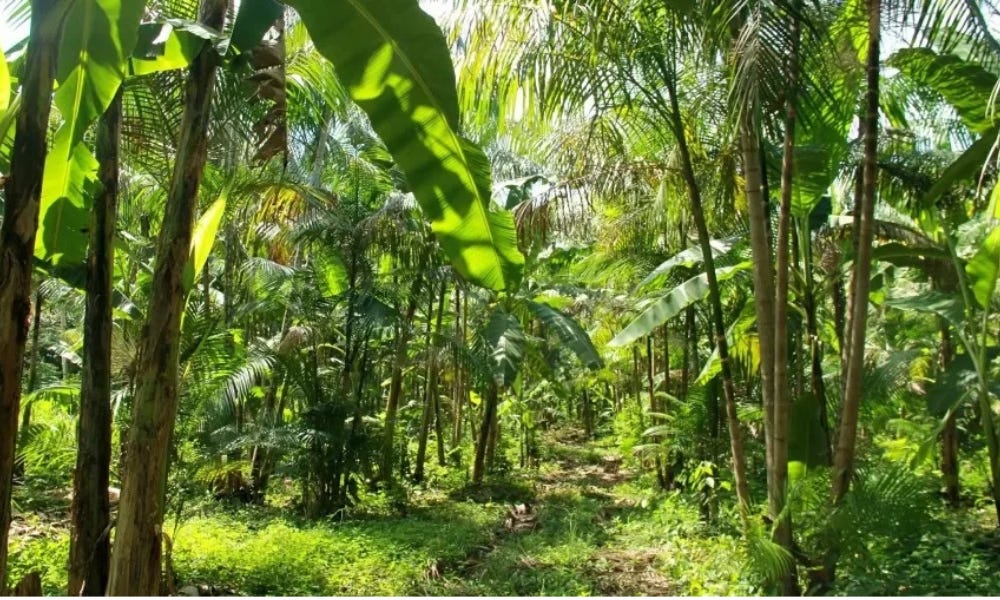
BNDES Backs Courageous Land’s US$68 Million Agroforestry Project — BNDES has released the first tranche from a US$23 million Fundo Clima (Climate Fund) loan supporting Courageous Land’s project in Roraima. The company plans to convert 2,000 hectares of degraded pasture into agroforestry systems combining coffee, cocoa, açaí, banana, black pepper and native timber species. The US$68 million project will include nurseries and processing infrastructure, plant around 9.7 million seedlings, create more than 600 jobs and remove an estimated 33,900 tonnes of carbon annually. Source: CNN Brasil
Better Soil Management Raises Soybean Productivity by 11.1% — An Embrapa study covering 28 harvests and more than 4,300 georeferenced observations found that soybean productivity increased by an average of 11.1% with each improvement in soil-management level. The classification considers factors including soil cover, crop diversity, acidity and the time since mechanical disturbance. The results support incorporating soil-management quality into Zarc climate-risk assessments, agricultural insurance and credit decisions. Source: Embrapa
New Model Raises Sugarcane Herbicides’ Estimated Water Footprint 116-Fold — An Embrapa model that considers the combined effects and mechanisms of action of 17 sugarcane herbicides produced a grey-water-footprint estimate around 116 times higher than the conventional product-by-product method. The result could improve environmental risk assessments and help growers select combinations with lower potential impact. It represents the estimated dilution required under the model—not evidence that measured ecological damage is 116 times greater. Source: Embrapa
Biomass Supply Becomes a Bottleneck for Corn-Ethanol Expansion — Brazil’s corn-ethanol capacity is expanding faster than the planted forests needed to power its biorefineries. A new plant can be built in 12 to 24 months, while eucalyptus requires six to seven years before harvesting, forcing companies to secure biomass well before construction. The mismatch could increase costs, delay projects and weaken the sector’s lower-carbon credentials if mills turn to less sustainable sources of boiler fuel. Source: AgFeed
Funding & M&A
Céleres Incorporates AI Company Arkéra — Brazilian agribusiness consultancy Céleres has incorporated Arkéra Intelligence through a share-swap transaction. The combination will connect Céleres’ 24 years of agricultural data and market knowledge with Arkéra’s AI models, reducing the time required for some long-term analyses from four months to around ten days. The companies also plan to offer subscription-based intelligence products under a “knowledge as a service” model. Financial terms were not disclosed. Source: AgFeed
Caramuru Secures US$20 Million for Biodiesel Investments — Caramuru Alimentos has approved a US$20 million financing agreement with Rabobank for investments in its three biodiesel plants in Goiás and Mato Grosso. Brazil’s fifth-largest biodiesel producer currently has annual production of around 550 million litres. The financing reinforces biofuels as the company’s main growth platform, although the loan’s maturity, cost and guarantees—and the precise investments planned for each plant—were not disclosed. Source: AgFeed
Zen-Noh Completes Acquisition of 30% of Grupo Cereal — Japan’s Zen-Noh has completed its acquisition of 30% of Grupo Cereal following approval from Cade. The Goiás-based company receives around two million tonnes of soybeans and corn annually and operates in grain origination, agricultural inputs, soybean processing and biodiesel. The new shareholder is expected to support Grupo Cereal’s US$160 million expansion programme and strengthen its access to Asian markets. The transaction value was not disclosed. Source: AgFeed
BrasilAgro Resumes Land Sales with US$19 Million Bahia Deal — BrasilAgro has sold 1,753 productive hectares of Fazenda Rio do Meio in western Bahia for US$19 million, equivalent to 425 sacks of soybeans per productive hectare. The sale ends a year-long pause in the company’s domestic land transactions and is expected to generate a pre-tax gain of approximately US$10 million. Most of the purchase price will be paid through annual soybean-linked instalments. Source: AgFeed
Macro & Markets
China’s 55% Additional Tariff Takes Effect on Brazilian Beef — Brazil reached China’s annual duty-protected quota of 1.1 million tonnes on September 29, triggering an additional 55% tariff on subsequent shipments from October 1. China bought 48% of Brazil’s beef exports last year, worth US$8.9 billion, making the measure a significant threat to trade flows and processor margins. The additional tariff applies only to volumes above the quota and comes on top of the regular 12% import duty. Source: Exame Agro
Extreme Drought Spreads across Brazil Ahead of El Niño — The number of Brazilian municipalities experiencing extreme drought rose from four to 24 in one month, while those under severe drought increased from 153 to 197. The deterioration comes as Inmet estimates a 95% probability that El Niño will reach very strong intensity between October and December. The combination raises planting, water and fire risks during the opening months of the 2026/27 grain season. Source: Exame Agro
Costly Credit Pushes Farms Toward Structured CPRs — High interest rates and more selective banks are pushing larger agricultural businesses toward customized financing through Cédulas de Produto Rural (CPRs), instruments backed by agricultural production. Transactions can exceed US$4 million and run for five years, with terms based on collateral, repayment schedules and project cash flow. The trend broadens options for established producers but could widen the financing gap for smaller farms lacking assets or specialist advice. Source: CNN Brasil
Brazil’s Agricultural-Input Retail Model Enters a New Consolidation Phase — Nutrien’s withdrawal from retail in São Paulo and Mato Grosso do Sul, alongside financial distress at AgroGalaxy and Lavoro, is exposing the weaknesses of distributors that combined rapid expansion with generous farmer credit. Industry executives expect the next consolidation cycle to favour integrated service hubs offering inputs, finance, grain origination and agronomic support rather than traditional counter sales. Scale alone is giving way to tighter credit control, systems integration and operational efficiency. Source: Exame Agro
Join 3,500+ investors, founders and agriculture executives following the future of Brazilian agriculture.
Kieran Finbar Gartlan is an Irish native with over 30 years of experience living and working in Brazil. He is Managing Partner at The Yield Lab Latam, a leading venture capital firm investing in Agrifood and Climate Tech startups across Latin America.