


Unlike row crops, Brazil coffee faces long cycles and high investment demands, making irrigation, credit, and tech adoption critical to survival.
On the Road
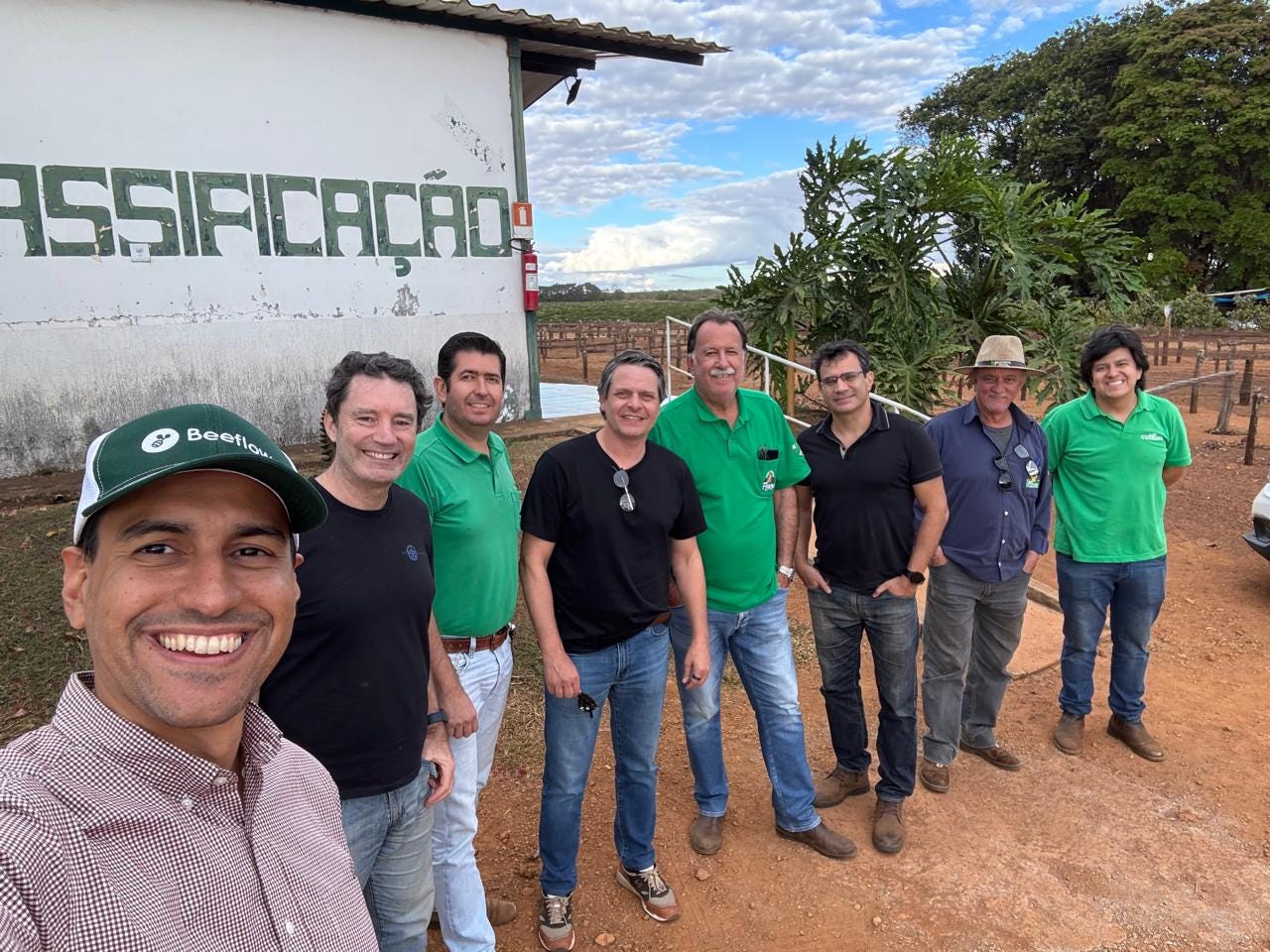
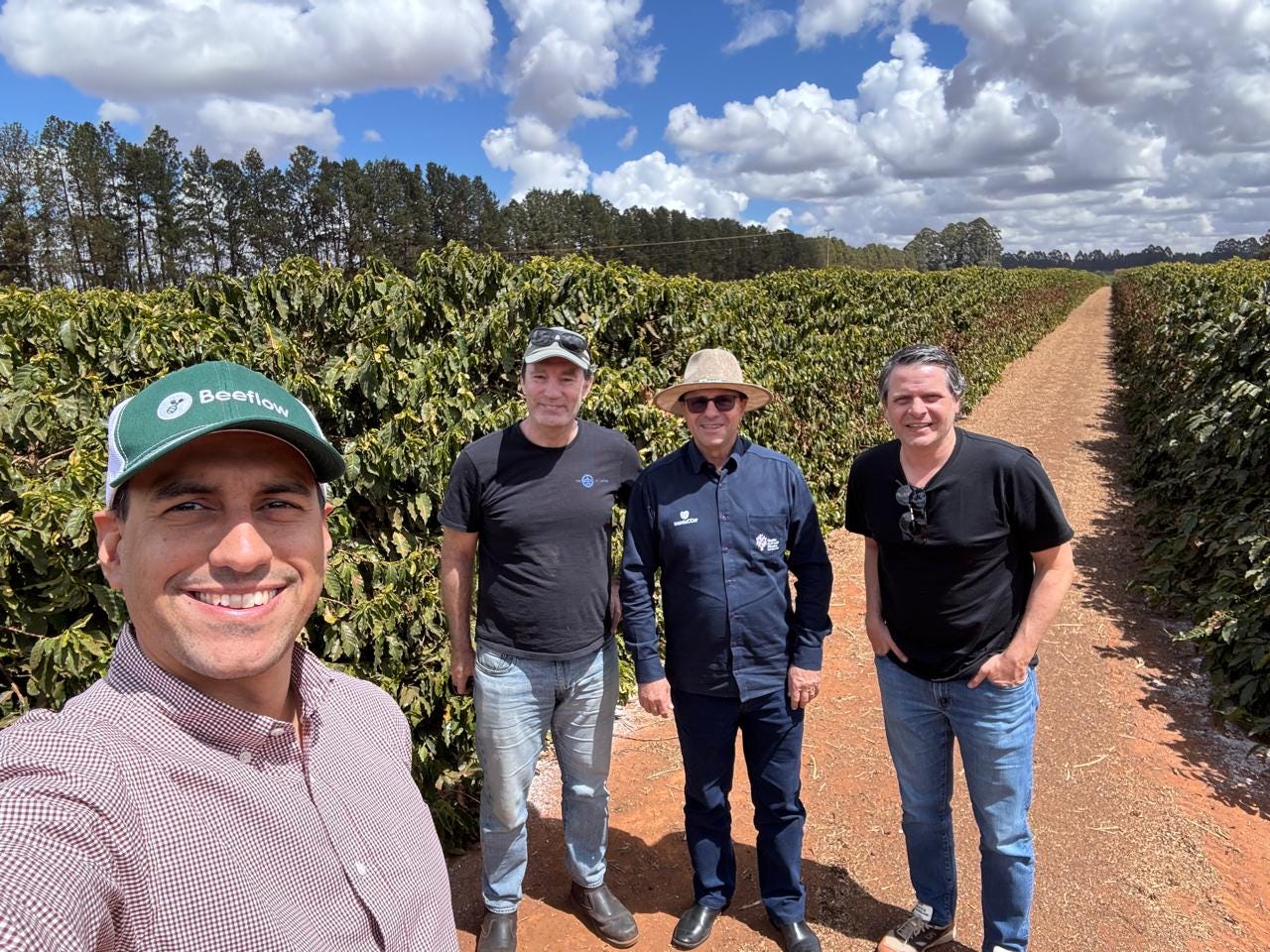
Earlier this month I spent three days crisscrossing the coffee heartland of Cerrado Mineiro, joined by two very different startups: Culttivo, an agfintech rethinking how credit flows to farmers, and Beeflow, a pollination company bringing science to bees. From Araguari to Monte Carmelo and Pedrinópolis, we sat with growers big and small, comparing their struggles and triumphs. One theme kept surfacing: coffee feels slower to modernize than the row crops around it.
What struck me most was the paradox. Coffee may have more to gain from technology than any other crop — its link to premium markets, certifications, and consumer brands is stronger than soy or corn. Yet as a perennial, coffee demands heavier upfront investments and longer payback horizons. Farmers know this, and they adapt cautiously.
Every farmer I met circled back to the same truth: investing in irrigation is the one safe bet. Yields rise, risks fall, and the returns are visible. But even here, growers know the limits — water can’t solve everything. Beyond irrigation, their appetite for new tools is strong, but only when the payoff is clear and fast.
That tension — between long-term needs and short-term survival — defines the challenge for Brazil’s coffee transformation.
Slow Brew
Everywhere we stopped, the same comparison came up: coffee is lagging behind soy, cotton, and sugarcane when it comes to precision agriculture. In Cerrado Mineiro, row crops already run on variable-rate seeders, satellite-linked pivots, and fully integrated ERPs. Coffee, by contrast, is still piecing systems together — a payroll tool here, a drone scout there, a soil analysis every season.
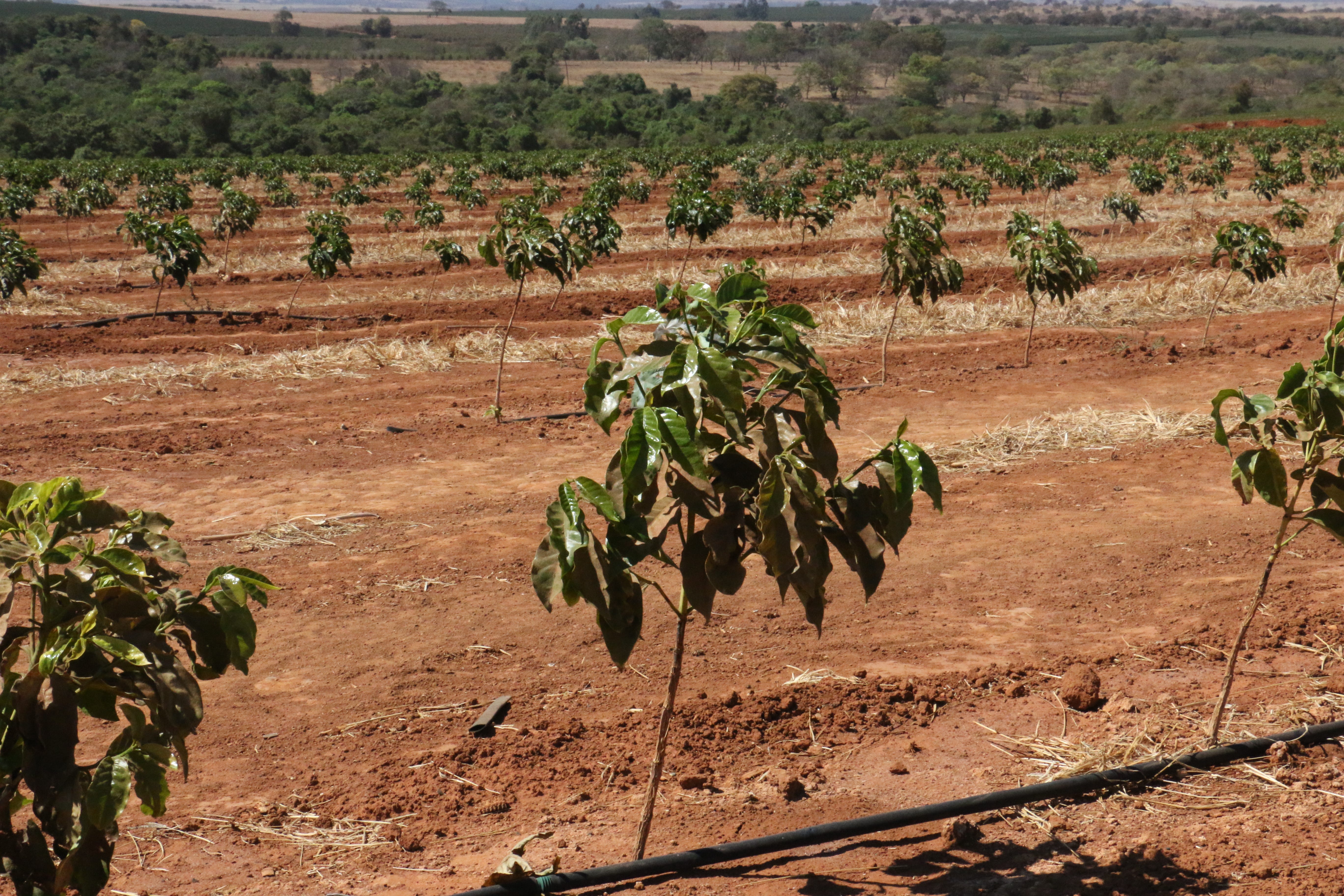
Growers know they are behind, and many say it frustrates them. But their caution is rooted in the biology of the plant. Unlike soy or corn, where a misstep can be corrected the following season, a failed trial in coffee can set a farm back years. That makes them slower to adopt and far more demanding of proof before committing to new platforms or practices.
The result is an uneven patchwork. Some fields are mapped by drones while others rely on the farmer’s eye; some tractors run on telematics while labor scheduling is still done by hand. Precision is creeping in, but rarely across the whole operation. Farmers don’t doubt that technology can help — they just want to see the value show up in the current harvest, not in a slide deck. Until then, coffee’s modernization will keep brewing at a slower pace.
Credit Crunch
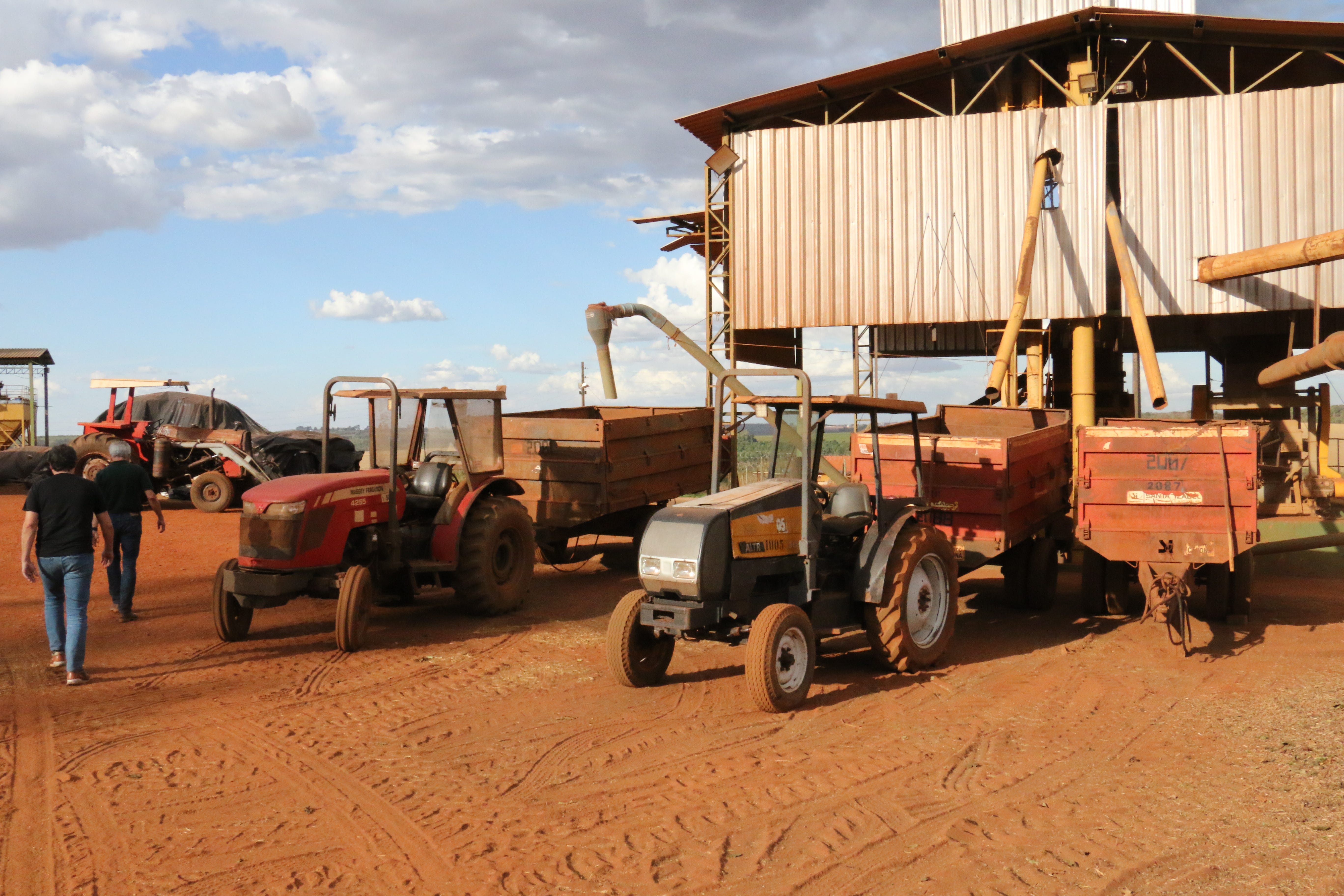
Coffee is a crop of patience, but Brazil’s financial system rarely gives farmers the luxury of time. Renewing a hectare of coffee can cost upwards of US$5,000, and trees take three to four years before producing a full harvest. The math is unforgiving: every decision demands long-term capital, but most credit lines remain short-term and expensive, with monthly interest rates of up to 2 percent. Traditional banks treat coffee like any other crop, placing farmers into broad risk baskets and charging spreads high enough to cover the worst actors in the group. The result is a blunt system that overcharges good farmers while layering on bureaucracy and demanding real guarantees.
On the road, growers explained how this shapes everything from input choices to technology adoption. Larger estates in Monte Carmelo carry heavy debt loads from past renewals, while smaller family farms pride themselves on avoiding barter arrangements that tie them to input suppliers. Either way, the outcome is the same — scarce, costly credit keeps farmers cautious, delaying the shift to new tools and practices.
This is where Culttivo is trying to change the game. Rather than assuming all farmers carry the same risk, Culttivo uses technology to build a production-based credit score, analyzing real yield data and predicting production risk farm by farm. That makes it possible to finance coffee with terms closer to its true risk profile. Instead of demanding land as collateral, Culttivo relies on CPRs (future crop receivables) as the guarantee, aligning repayment with actual production. Coffee growers are generally lower risk than annual row crop farmers — they’ve already made heavy upfront investments, carry high fixed costs, and rarely walk away. Even when late, most repay with interest to protect their long-term viability.
Water’s Edge
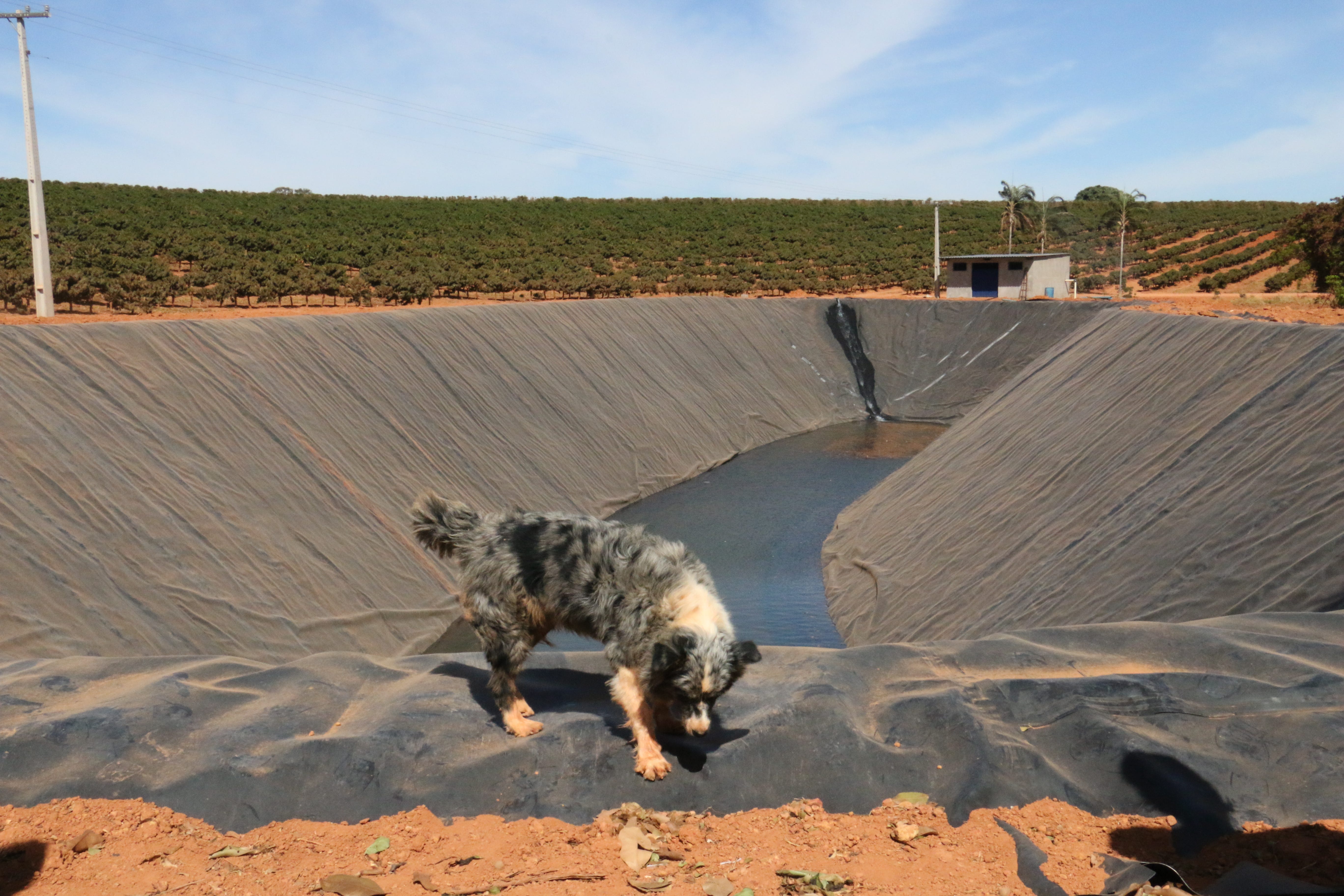
If credit is the drag on coffee’s future, irrigation is the engine that keeps it running. Every farmer we visited pointed to water as the one safe investment bet. Wells, reservoirs, and drip irrigation systems reliably lift yields and cushion the blow of drought. Non-irrigated plots might close a harvest at 30 sacks of arabica coffee per hectare, while irrigated ones reach 50 or more. The difference is the margin between breaking even and staying profitable.
The logic is simple, but the practice is costly. Reservoirs demand heavy investment, and pumping water across large areas adds to the bill. Smaller farmers invest in deep wells or lined ponds, while larger estates are layering software on top of pivots to monitor evapotranspiration and optimize application. Everyone agrees the returns justify the cost, yet no one pretends irrigation is foolproof.
In Monte Carmelo, growers described a six-month dry spell where even irrigated trees suffered. Water tables fell, pumps broke under strain, and heat waves above 30°C burned off blossoms that no amount of drip irrigation could save. “We doubled capacity, but nature still had the last word,” one farmer said.
That growing tension is where Kilimo has started to carve a role. The Argentine startup, now expanding in Brazil with coffee as an early focus, helps farmers monitor water use, optimize scheduling, and document efficiency gains. Kilimo structures this as payments for water stewardship services — a way for big tech and other large water users to compensate farmers for consuming less. For a crop where irrigation is both one of the biggest investments and the best production hedge, turning efficiency into a new income stream could make the safe bet even safer.
Hive Power
If water is the foundation of yields, pollination is the quiet multiplier. Arabica coffee, unlike robusta, is self-pollinating, but studies by Embrapa have shown that managed pollination can lift productivity by as much as 15 to 20 percent while improving bean quality. Larger, fuller seeds are not just good for farmers — they also translate into higher cupping scores and more consistent lots for buyers.
On our trip, farmers admitted they had heard of the benefits but few had taken the leap. Most said they wanted proof on their own neighbors’ fields before committing. “In soy you see results in a few months, in coffee it takes years,” one grower explained. That long cycle makes experimentation harder and the return less immediate.
This is where Beeflow is positioning itself. The company manages bee colonies and uses proprietary protocols to boost bee immunity and foraging patterns, effectively turning pollination into a measurable service. Rather than leaving yields to chance, Beeflow offers farmers a managed, science-based way to capture the hidden value of pollination. The challenge is proving the return in the short term. For coffee growers already squeezed by high costs and thin margins, the promise of a 15 percent gain sounds enticing — but it will take a few visible success stories to unlock real adoption.
Final Sip
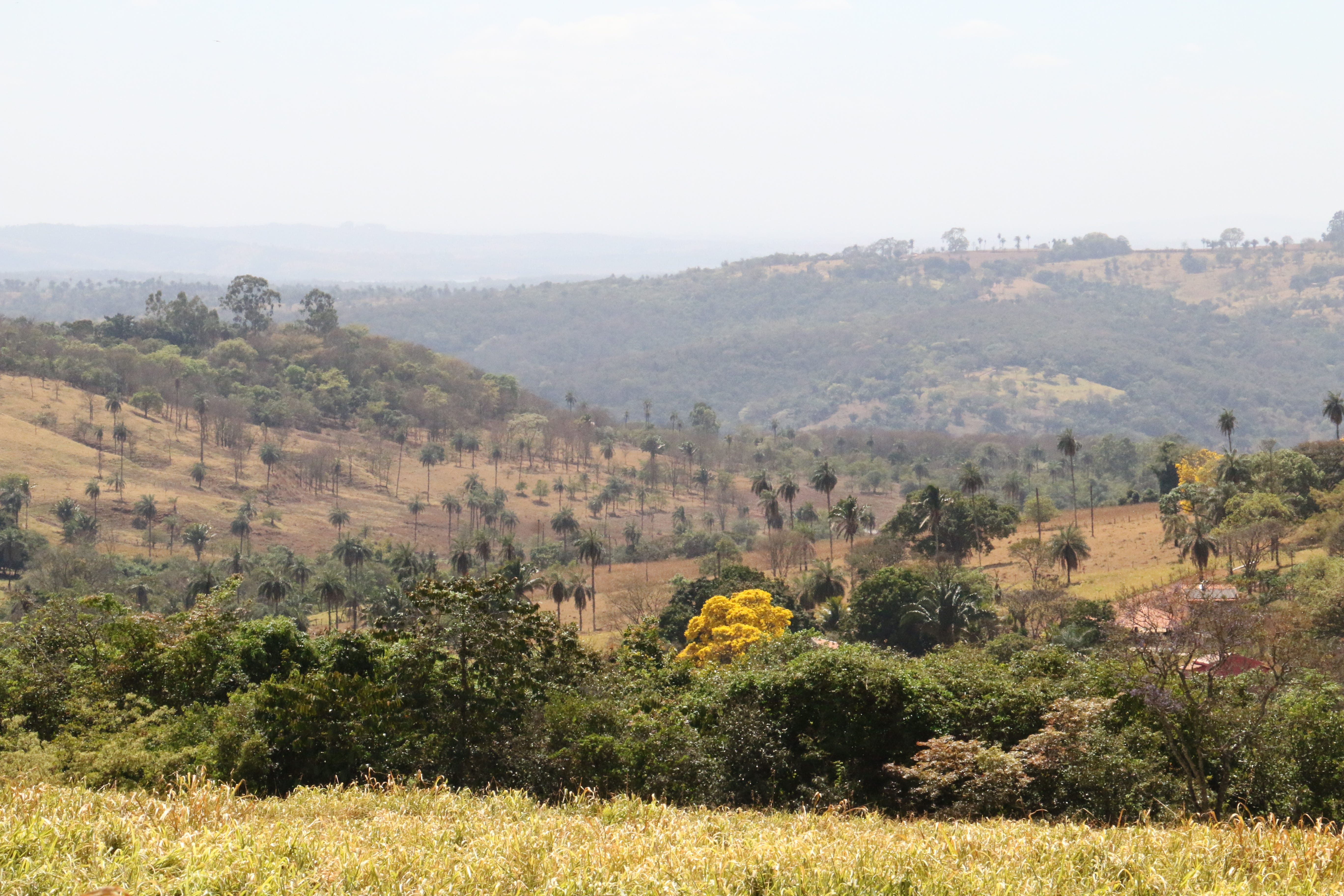
Three days on the road in Cerrado Mineiro made one thing clear: Brazil’s coffee belt sits at the intersection of promise and pressure. Farmers are eager to modernize, but every decision runs into the realities of long crop cycles, high capital costs, and an unforgiving climate. Irrigation stands out as the one safe bet, but even wells and pivots bend under record heat. Pollination offers another lever for gains, yet most growers want to see proof in their neighbors’ fields before adopting.
That’s why new players like Culttivo and Beeflow matter. Culttivo is reshaping how credit is scored and delivered, aligning finance with the biology of coffee instead of the blunt tools of traditional banks. Beeflow is turning pollination from a hidden service into a measurable advantage. Both reflect a broader truth: coffee doesn’t just need more technology, it needs solutions that match its risks and rewards over time. The next chapter of Cerrado Mineiro will be written by those who can bridge that gap.
Thanks for reading.
KFG
Kieran Finbar Gartlan is an Irish native with over 30 years experience living and working in Brazil. He is Managing Partner at The Yield Lab Latam, a leading venture capital firm investing in Agrifood and Climate Tech startups in Latin America.