


Hi, I’m Kieran Gartlan, Managing Partner at The Yield Lab Latam, ranked second in the world last year for AgTech investments. If you’re interested in learning more about Brazil’s AgTech opportunity, feel free to reach out.
In Brazil AgTech news this week, Embrapa is bringing biological innovation closer to home with Brazil’s first international depository for patentable microorganisms, while Argentine startup Calice uses virtual trials to accelerate product development. Another Argentine startup, Agrofy, is retreating from Brazil to rethink its model around AI.
In Climate Tech, açaí pits are being transformed into nanofertilizer, while Tello scales organic-coated fertilizers designed to improve nutrient efficiency. Itaú is backing regenerative agriculture in the Cerrado as Brazil assesses the carbon-market potential of better farming practices.
In Funding & M&A, Vibra Foods has bought back Tyson Foods’ 40% stake, returning the poultry producer to full Brazilian ownership. Itaú is launching the country’s largest FIAGRO, targeting up to $1 billion in agricultural credit assets.
In Macro & Markets, Brazil’s agricultural cooperatives are approaching $100 billion in annual revenue, but fertilizer deliveries and domestic production have fallen sharply. Meanwhile, Chinese agrochemical companies are moving beyond generics to launch their own brands—and eventually patented products—in Brazil.
AgTech
Embrapa to Host Brazil Microorganism Depository
Calice Brings Virtual Crop Trials to Brazil
Biologicals Find Fertile Ground in Paraguay
Brazil’s AgTech Ecosystem Grows 84% in Six Years
Agrofy Retreats from Brazil to Bet on AI
CNH Named Brazil’s Most Innovative Company
Climate Tech
Açaí Waste Powers Nanofertilizer
Tello Scales Biointelligent Fertilizer Production
São Paulo Climate Week Seeks Its Own Identity
Itaú Backs Regenerative Farming in the Cerrado
Brazil Ag Could Generate 314 Million Carbon Credits
Funding & M&A
Vibra Foods Buys Back Tyson’s 40% Stake
Itaú Launches Brazil’s Largest FIAGRO
Macro & Markets
Brazil’s Agricultural Cooperatives Near $100 Billion
Brazil’s Fertilizer Deliveries Fall 14.7%
Chinese Agrochemical Makers Move Beyond Generics
AgTech
Embrapa to Host Brazil Microorganism Depository — Embrapa will establish Brazil’s first International Depositary Authority for microorganisms used in biotechnology patent applications. Backed by approximately US$3 million from Finep and the Ministry of Science, Technology and Innovation, the three-year project will allow biological samples to be deposited domestically rather than sent abroad. Once accredited under the Budapest Treaty, Brazilian deposits will be recognized across 92 member countries, reducing costs and delays while strengthening protection for innovations in bioinputs, microbial pesticides and other biological technologies. Source: Forbes
Calice Brings Virtual Crop Trials to Brazil — Argentine startup Calice uses AI and computational modelling to simulate how seeds, biologicals and crop-protection products perform across different environments, reducing the time, cost and risk of physical trials. Its platform has helped identify around 40% more commercial soybean candidates using roughly half the test sites. Backed by a US$2.5 million seed round, Calice already works with Syngenta, BASF, Corteva and other major players and expects Brazil to generate 40% of its global revenue within five years. Source: AgFeed
Biologicals Find Fertile Ground in Paraguay — Brazilian biological-input companies Agrivalle and Gênica are expanding in Paraguay, attracted by lower interest rates, cheaper energy, faster product registration and growing farmer appetite for technology. Adoption remains below Brazil’s level, but the companies see faster growth potential in soybeans and corn. Agrivalle is strengthening distribution through Agrotec, while both businesses are evaluating opportunities in the emerging Chaco agricultural frontier. Source: The AgriBiz
Brazil’s AgTech Ecosystem Grows 84% in Six Years — The number of Brazilian AgTech startups increased from 1,125 in 2019 to 2,075 in 2025, according to Radar AgTech Brasil. The ecosystem grew another 5% last year as startups expanded across precision agriculture, AI, biotechnology, bioinputs, traceability, finance and carbon markets. Farms, cooperatives and agribusinesses are also becoming active testing grounds for new technologies, helping startups validate solutions and connect them with producers’ needs. Source: Portal do Agronegócio
Agrofy Retreats from Brazil to Bet on AI — Agrofy has suspended its Brazilian operations and cut its remaining local team after raising more than US$65 million to build the “Mercado Libre of agriculture.” Once responsible for 40% of the marketplace’s business volume, Brazil lost momentum as the agricultural inputs and machinery markets weakened. Agrofy will now concentrate on Argentina and AI, with plans to return through a new business model and potential partnerships. Source: AgFeed
CNH Named Brazil’s Most Innovative Company — Agricultural machinery maker CNH topped the Valor Inovação Brasil 2026 ranking after outperforming 269 other companies. CNH said it has used the sector’s worst downturn in 15 years to develop solutions that deliver lasting efficiency gains rather than relying solely on cost cuts. Cargill Nutrition and Animal Health led the agribusiness category, while Indovinya won in chemicals. Source: Globo Rural
Climate Tech
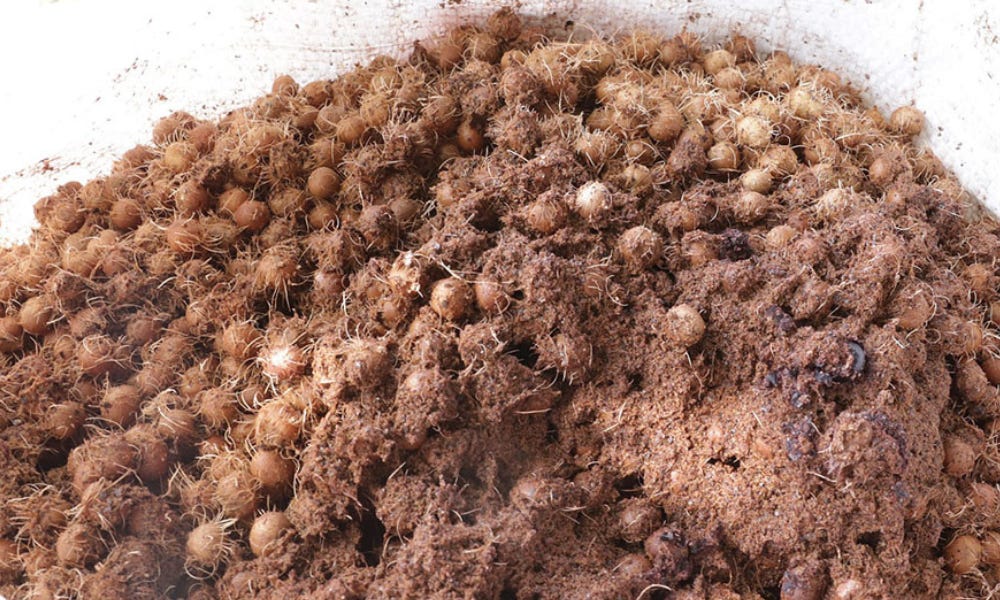
Açaí Waste Powers Nanofertilizer — Embrapa and the Federal University of Ceará have developed a nanofertilizer from discarded açaí pits that increased corn growth by 24% and sorghum growth by 164% in initial tests. Applied at just 10 milligrams per liter, it also boosted root growth by 23% and 59%, respectively. The technology could turn plentiful agroindustrial waste into a lower-dose fertilizer with less runoff, although scaling production beyond the laboratory remains a challenge. Source: Embrapa
Tello Scales Biointelligent Fertilizer Production — Created by Coopercitrus, Amaggi, Tecnobeef, AgroCP and two farming families, Tello has invested R$180 million in its first São Paulo plant and plans a similar facility in Mato Grosso. Its organic-coated fertilizers could improve phosphorus-use efficiency by up to 50% and reduce potassium and nitrogen use by around 30%. Each plant is expected to produce 300,000 tonnes annually and generate up to R$900 million in revenue at full capacity. Source: AgFeed
São Paulo Climate Week Seeks Its Own Identity — São Paulo Climate Week brought together around 300 activities across 30 venues from August 3–7 under a new unified structure. Now led by OFuturo, the event is building a distinctly Latin American agenda around six themes, including agriculture and food systems, biodiversity and climate finance. Working groups will continue developing projects, partnerships and funding opportunities after the week ends. Source: Capital Reset
Itaú Backs Regenerative Farming in the Cerrado — IDB Invest has approved a US$30 million loan to Itaú to finance regenerative practices among soybean farmers, with total support potentially reaching US$59 million. The six-year program initially targets 200,000 hectares, potentially expanding to 600,000, and could mobilize R$1 billion. Credit will support cover crops and bioinputs, alongside technical assistance and systems to monitor soil quality, emissions and deforestation. Source: Capital Reset
Brazilian Agriculture Could Generate 314 Million Carbon Credits — Brazil’s agricultural sector could generate up to 314.3 million carbon credits by 2035, potentially worth R$3.5 billion, according to an ABAG-backed study. Improved cropland management represents the largest opportunity, alongside animal-waste methane recovery, enteric methane reduction and biochar. However, revenues depend on regulation, international demand and government authorization of credits under the Paris Agreement. Source: Forbes
Funding & M&A
Vibra Foods Buys Back Tyson’s 40% Stake — Vibra Foods has returned to full Brazilian ownership after repurchasing the 40% stake acquired by Tyson Foods in 2020. The undisclosed deal ends the joint venture but preserves the companies’ commercial partnership. During Tyson’s investment, Vibra deployed more than R$500 million, expanded exports to around 80 countries and grew its workforce from 4,000 to nearly 7,000. The company now plans further international expansion and acquisitions. Source: CNN Brasil
Itaú Launches Brazil’s Largest FIAGRO — Itaú aims to raise up to R$4.85 billion through a fund that will acquire agricultural credit assets, including CRAs, LCAs and CPRs, originated within the bank’s own ecosystem. The structure allows Itaú to recycle capital into new rural lending while offering investors four maturities paying 91.5% to 93% of the CDI. Investor protection includes subordinated units held by Itaú and the repurchase of defaulted assets. Source: AgFeed
Macro & Markets
Brazil’s Agricultural Cooperatives Near $100 Billion — Brazil’s agricultural cooperatives generated $100 billion in revenue in 2025, up 11.2% after growth of just 1.9% in 2024. The rebound was driven by stronger prices for coffee, poultry, pork and agricultural inputs, alongside increasingly diversified operations. The country’s 1,254 agricultural cooperatives now represent 1.13 million members, employ 277,226 people and account for 10.3% of Brazilian agribusiness exports. Source: AgFeed
Brazil’s Fertilizer Deliveries Fall 14.7% — Fertilizer deliveries fell to 3.16 million tonnes in May, while domestic production dropped 26.2% and imports declined 9.4%. ANDA attributed the slowdown to geopolitical tensions, unfavorable barter ratios, scarce credit, high interest rates and El Niño risks. Domestic production fell 17.1% during the first five months of 2026, partly due to higher sulfur prices. Source: CNN Brasil
Chinese Agrochemical Makers Move Beyond Generics — Chinese suppliers already account for an estimated 85% of Brazil’s crop-protection chemicals and active ingredients, but are now pushing their own brands and preparing to introduce patented molecules and biopesticides. Nearly 70% of exhibitors at São Paulo’s Agrochemshow were Chinese. Rainbow reportedly generates over US$700 million in Brazil, while Synwill plans to expand locally as manufacturers move closer to Brazilian customers. Source: AgFeed

That’s all for this week, thanks for reading,
KFG
Kieran Finbar Gartlan is an Irish native with over 30 years of experience living and working in Brazil. He is Managing Partner at The Yield Lab Latam, a leading venture capital firm investing in Agrifood and Climate Tech startups across Latin America.