


Irrational tariffs, fragmented blocs, and Asia’s rise are forcing Brazil’s agribusiness to master geopolitics as much as agronomy.
Trouble Brewing
The world’s coffee trade has been thrown into turmoil. A sudden tariff war with the United States has hit Brazilian exports hard, leaving farmers, exporters, and policymakers scrambling for answers. For a sector long seen as a symbol of open trade and cultural exchange, the shock feels like a bitter wake-up call.
At the heart of the crisis is more than just coffee. It reflects a broader unraveling of the global order: trade blocs splintering, old alliances fading, and new power centers rising. For decades, agribusiness could count on rules-based markets to expand and thrive. Today, those rules are dissolving, and the game is being rewritten on the fly.
For Brazil, the lesson is clear: agribusiness can’t depend on markets alone. In a world where politics now shapes trade as much as prices and yields, navigating power games is becoming just as important as mastering agronomy.
Trading Places
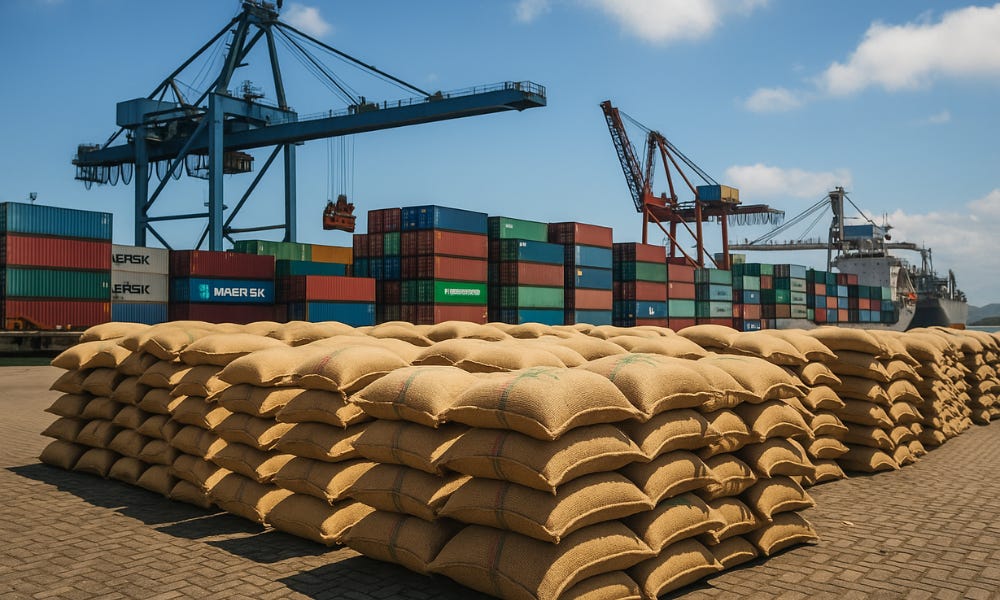
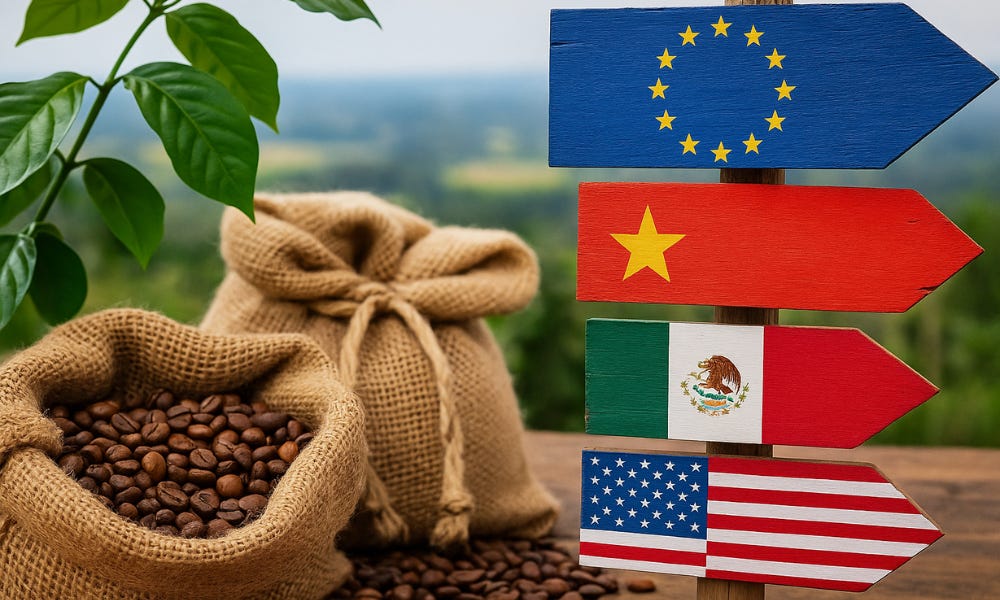
With tariffs shutting the door in the U.S., Brazil’s coffee is slipping into a global game of musical chairs. Europe is importing more beans, roasting them, and re-exporting to American buyers. Vietnam and Mexico, both close rivals and U.S. trade partners, are buying Brazilian coffee and redirecting it north under friendlier terms. The result is a strange inversion: Brazil remains the world’s largest producer, but others are increasingly capturing the value of its trade.
This “triangulation” exposes just how vulnerable Brazil is in a fractured system. Unlike soybeans, which found a new lifeline in China during Trump’s first tariff war in 2017, coffee is tethered to U.S. and European demand. Together, those two markets absorb nearly 30 million bags a year. China’s demand is rising, but at about 5 million bags annually, it remains just a fraction of the U.S., which alone buys more than 25 million. Diversification is possible, but it will be slow, and competitors are already moving faster.
The uncomfortable truth is that coffee is no longer simply about crops and contracts. It now reflects which side of the geopolitical divide Brazil is prepared, or forced, to lean on.
On the Fence
Brazil now finds itself in an uncomfortable position between the world’s two dominant powers. On one side, the U.S. is still the largest single buyer of Brazilian coffee, importing more than 25 million sacks each year. On the other, China has become Brazil’s indispensable partner for soybeans, beef, and fertilizers, while also emerging as a growing coffee consumer.
The dilemma is clear: lean too far toward Washington, and Brazil risks alienating the partner that buys the bulk of its farm output and supplies critical inputs like diesel and chemicals. Drift closer to Beijing, and the world’s biggest coffee market tightens the screws. For years, sitting on the fence looked like smart hedging. Today, it looks more like vulnerability.
Still, instability can create openings. When Trump’s first tariff war erupted in 2017, U.S.–China tensions doubled Brazil’s soybean exports to Beijing. Coffee doesn’t have the same flexibility, it’s more culturally embedded in Western markets, but the lesson remains. Crises can be catalysts, if Brazil learns to negotiate aggressively and move quickly when power balances shift.
Hard Grind
If there was one consensus echoed through a recent coffee leaders’ meeting, it was that the path forward won’t be quick or easy. Unlike soybeans or beef, coffee doesn’t have an obvious substitute market ready to absorb Brazil’s volumes. The U.S. remains the top consumer at more than 25 million bags a year, with Europe close behind. Together, they dominate the global coffee table—and both are at the center of today’s tariff fight.
That leaves Brazil with little choice but to push harder in Washington, where, as one exporter put it, “negotiate, negotiate, negotiate” has become the only viable play. Industry groups are already mobilizing, leaning on U.S. roasters, distributors, and retailers to argue that higher tariffs hurt American consumers as much as Brazilian farmers. At the same time, others are pressing for a longer-term reset: more aggressive trade deals, stronger branding of Cafés do Brasil, and smarter lobbying that looks beyond governments to the corporations and consumers who ultimately decide what ends up in the cup.
Brazil exported around 48 million bags of coffee in 2024, reaffirming its dominance as the world’s top supplier. Yet dominance in production doesn’t guarantee security in trade. Without a shift in strategy, Brazil risks ceding both market share and influence in shaping the rules of the game.
The grind will be slow, but unavoidable. Without it, Brazil risks losing not just sales, but also its voice in the global coffee order.

Aftertaste
The tariff fight may feel like a bitter brew for Brazil’s coffee sector, but it also offers a chance to wake up to a new reality. The age of easy markets is over. In its place is a tougher, more fragmented order where power and politics matter as much as yield and quality. Coffee is just the first reminder—but soy, beef, and corn will follow.
If Brazil adapts, this moment won’t be remembered as the point where its coffee lost ground, but as the moment its agribusiness learned to play the geopolitical game. And in a world where trade rules dissolve as quickly as they are written, that skill may prove to be the most valuable export of all.
Thanks for reading.
KFG
Kieran Finbar Gartlan is an Irish native with over 30 years experience living and working in Brazil. He is Managing Partner at The Yield Lab Latam, a leading venture capital firm investing in Agrifood and Climate Tech startups in Latin America.