


Hi, I’m Kieran Gartlan, originally from Ireland, but living in Brazil for the past 30 years. I’m Managing Partner at The Yield Lab Latam, one of the top agrifood and climate tech VC funds in the region. If you’re curious to learn more about this space, feel free to reach out here or on LinkedIn. I’m always happy to share what I’m seeing on the ground.
Summary
In Agri Tech news this week, low-cost spectroscopy is improving traceability by enabling rapid verification of coffee origin and detection of adulteration. On-farm automation is advancing, with a poultry operation in São Paulo using AI to count 140,000 eggs per day with 99.9 percent accuracy. Equity investment continues to contract as credit overtakes venture capital as the dominant funding model for startups.
In Climate Tech developments, new research shows Brazilian livestock emissions could fall nearly 80 percent by 2050 through productivity gains, pasture recovery, and improved animal management. Digital tools are already reducing operational risk and lifting productivity across agriculture, while irrigation digitization is emerging as a key lever for water and energy efficiency.
In Funding news, it has been a strong week for AgFintech. The Yield Lab Latam invested in Culttivo, an agfintech platform financing small and medium coffee farmers, through a bridge round as the company prepares for a US$6 million pre-Series A later this year. This was followed by agfintech Nagro securing a US$10 million Series B round backed by Itaú and Rabobank to expand rural credit in the grains sector.
In Macro and Markets news, the EU–Mercosur agreement is set to expand export access for Brazilian agribusiness through tariff reductions and quotas. Brazil is also on track to process a record 61 million tonnes of soybeans in 2026 and now supplies nearly three-quarters of China’s soybean imports, reinforcing its role in global oilseed markets.
Table of Contents
Agri Tech
Coffee technology verifies origin and detects adulteration at low cost
ALLTIS AI counts 140,000 eggs per day at Granja São Marcos
Equity shrinks as credit overtakes venture capital in startup funding
Climate Tech
Brazilian livestock emissions could fall nearly 80 percent by 2050
RaboResearch finds AgTech boosts productivity and reduces risk
Irrigation digitization emerges as next productivity lever
Funding
Yield Lab Latam backs Culttivo in bridge ahead of US$6m pre-Series A
Nagro raises US$10 million with Itaú and Rabobank to expand Ag credit
Macro & Markets
EU–Mercosur deal set to expand market access for Brazilian agribusiness
Brazil could process a record 61 million tonnes of soybeans in 2026
Brazil captures 73.6 percent of China’s soybean imports in record year
Agri Tech
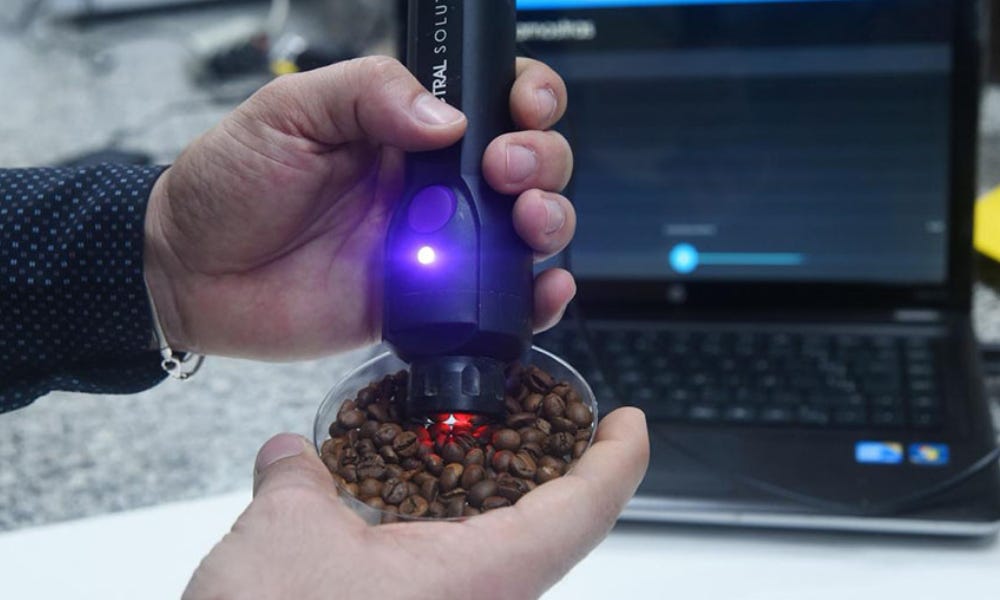
Coffee technology verifies origin and detects adulteration at low cost – Embrapa researchers have developed a rapid, low-cost method to identify the geographic origin of coffee and detect adulteration using near-infrared spectroscopy combined with chemometric analysis. The technology delivers results in minutes without chemical reagents or complex sample preparation, enabling scalable quality control and traceability. The solution can distinguish coffees by producing region and identify fraud, supporting certification, inspections, and premium market access for Brazilian coffee across domestic and export channels. read more
ALLTIS AI counts 140,000 eggs per day at Granja São Marcos – Granja São Marcos, a poultry operation in Mogi-Guaçu, São Paulo, has implemented artificial intelligence technology from ALLTIS to automatically count 140,000 eggs per day with 99.9 percent accuracy, replacing manual processes. The system also monitors key operational indicators such as temperature, water consumption, feed volumes, egg flow, mortality rates, and animal welfare. Digital monitoring has improved real-time decision-making, reduced operational risk, and increased efficiency across the production cycle. read more
Equity shrinks as credit overtakes venture capital in startup funding – Investment in Brazilian startups remained under pressure in 2025, with capital shifting decisively away from equity and toward credit structures. According to Brazil’s Open Innovation and Corporate Venture Capital Ecosystem Report, produced by Sling Hub in partnership with ABVCAP and Alya Ventures, startups raised US$4.5 billion across 459 rounds during the year. When excluding FIDCs, debt, and hybrid structures, pure equity totaled US$1.74 billion, or 39 percent of capital, spread across 412 rounds. Credit dominated volumes, led by US$2.38 billion via FIDCs in 27 transactions, plus US$161 million in traditional debt and US$32.7 million in hybrid rounds, highlighting a more selective, less dilutive funding environment. read more
Climate Tech
Brazilian livestock emissions could fall nearly 80 percent by 2050 – A study by Fundação Getulio Vargas (FGV) estimates that greenhouse gas emissions from Brazil’s livestock sector could be reduced by at least 79.9 percent by 2050, driven by productivity gains such as pasture recovery, improved genetics, and better animal nutrition. The analysis shows that reductions could reach up to 92.6 percent if, in addition to productivity improvements, Brazil accelerates the adoption of low-carbon livestock solutions, including methane-reducing practices and technologies. read more
RaboResearch finds AgTech boosts productivity and reduces risk – A RaboResearch study highlights how digital technology adoption is reshaping Brazilian agribusiness, improving efficiency and lowering operational risk across the value chain. Brazil currently has 1,574 agtech startups and accounts for more than half of all agtech investment in Latin America, with funding peaking at US$330 million in 2023. The report links technology adoption to sustained productivity gains, rising yields, and better management of climate and market volatility. read more
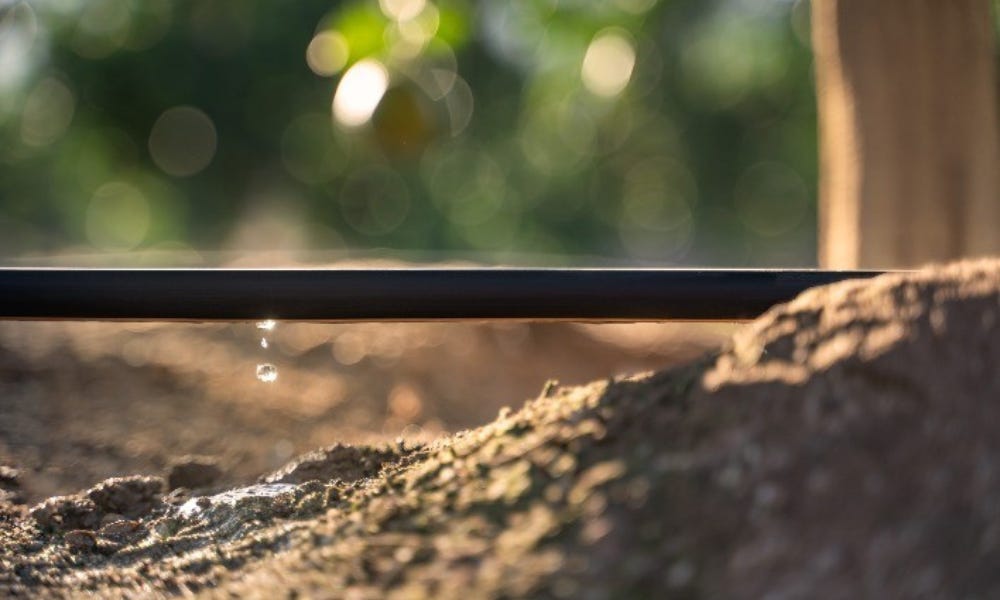
Irrigation digitization emerges as next productivity lever – Digital irrigation is becoming a key driver of efficiency in Brazilian agriculture as sensors, automation, and integrated platforms enable more precise water and energy management. According to Netafim, digitally monitored drip irrigation projects have delivered water savings of up to 45 percent and energy cost reductions of around US$700 per hectare in crops such as coffee. As systems integrate climate, soil, and operational data, irrigation is shifting from fixed infrastructure to a data-driven decision layer. read more
Funding
Yield Lab Latam backs Culttivo in bridge round ahead of US$6m pre-Series A – Culttivo, a Brazil-based agfintech focused on financing small and medium coffee farmers, received a bridge investment from The Yield Lab Latam as it prepares to raise US$6 million (R$30 million) ahead of a larger Series A of up to US$20 million (R$100 million) next year. The company provides digital credit to coffee growers using satellite imagery and producer data to streamline credit analysis. Culttivo plans to originate US$100 million (R$500 million) in credit in 2026, up from US$60 million (R$300 million) disbursed last year, supported by a funding vehicle of up to US$70 million (R$350 million) and default rates below 2 percent. read more
Nagro raises US$10 million with Itaú and Rabobank to expand ag credit – Brazilian agfintech Nagro raised US$10 million (R$50 million) in a Series B round led by Rabobank (via Rabo Partnerships) alongside Itaú Ventures to scale rural credit and risk management. The company focuses on lending to small and medium-sized producers with annual revenues between US$100,000 and US$4 million, operating fully online and releasing credit in around 48 hours. Nagro plans to disburse US$40 million in 2026, up from US$23 million in 2025, after slowing growth amid rising rural delinquency. Its credit vertical currently includes two Fiagro funds totaling US$24 million, while its B2B risk platform AgRisk serves 1,400 clients, including cooperatives, agribusinesses, and banks. read more
Macro & Markets
EU–Mercosur deal set to expand market access for Brazilian agribusiness – The EU and Mercosur signed a historic free trade agreement after more than 25 years of negotiations, though the deal still requires approval by national congresses in each country before entering into force. Once implemented, the agreement will eliminate import tariffs on 77 percent of agricultural products purchased by the EU from Mercosur, including Brazil, with tariffs reduced gradually over periods ranging from four to ten years, depending on the product. The framework is expected to expand exports of items such as coffee, fruits, fish, crustaceans, and vegetable oils, while reinforcing sustainability and traceability requirements for access to European markets. read more
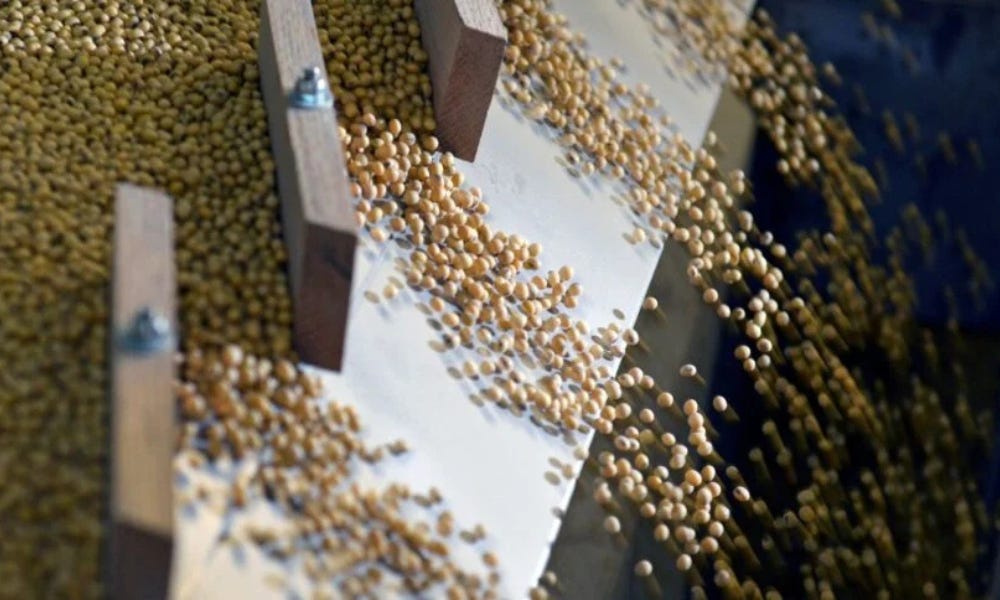
Brazil could process a record 61 million tons of soybeans in 2026 – Soybean crushing in Brazil is expected to reach a record 61 million tons in 2026, up from 58.5 million tons in 2025, according to industry data from Abiove. The increase is supported by a larger harvest, with Brazil’s soybean crop estimated at 177.1 million tons in the 2025/26 season, compared with 171.5 million tons the previous year. Abiove also projects ending soybean stocks of 9.2 million tons, up from 7.1 million tons last season, reinforcing capacity utilization and availability for domestic processing. Rising demand for soybean meal and biodiesel continues to pull more volume into local crushing, increasing value capture within Brazil’s agri-industrial chain. read more
Brazil captures 73.6% of China’s soybean imports in record year – Brazil increased its share of China’s soybean imports to 73.6 percent in 2025, up from 71 percent in 2024, as Chinese buyers shifted decisively toward South American suppliers. Total Chinese soybean imports reached a record 111.8 million tonnes, up 6.5 percent year over year, with 82.3 million tonnes sourced from Brazil, a 10.3 percent increase. Argentina also expanded its share to 7 percent, while U.S. participation fell to 15 percent, down from 21 percent, with U.S. imports dropping 24 percent to 16.8 million tonnes. Brazilian soybean shipments to China surged 92.5 percent year over year in December. read more
That’s all for this week, thanks for reading,
KFG
Kieran Finbar Gartlan is an Irish native with over 30 years of experience living and working in Brazil. He is Managing Partner at The Yield Lab Latam, a leading venture capital firm investing in Agrifood and Climate Tech startups across Latin America.
Your update offers consistently insightful analysis, as always.