


Hi, I’m Kieran Gartlan, Managing Partner at The Yield Lab Latam, ranked number two in the world for AgTech investments in 2025 by AgFunder. If you’re interested in learning more about Brazil’s AgTech opportunity, feel free to message me below.
In Brazil AgTech news this week, automation and data move further into the field. Tevel’s fruit-harvesting robots are being tested in Brazilian citrus farms, ID-Scan brings cattle biometrics to Brazil, and researchers are using AI and satellites to forecast soybean productivity. A new Abstartups and USP study shows a more mature AgTech ecosystem, but one still facing a clear funding gap.
In Climate Tech developments, productivity and sustainability are increasingly linked. Embrapa found that native mandaguari bees can boost arabica coffee production, while Be8’s first large-scale wheat ethanol plant could create a new market for winter cereals in Rio Grande do Sul. FGV Agro also mapped a path for Brazil to cut beef emissions intensity by more than 90% by 2050.
On the funding front, AgroForte is scaling credit for the animal protein chain, Trag raised capital to expand AI-driven parametric insurance, and erural secured funding to build a one-stop cattle marketplace. BNDES also expanded access for individual farmers and rural entrepreneurs to existing credit lines for innovation, automation, AI, connectivity and farm software.
In Macro & Markets, Brazil’s Supreme Court upheld restrictions on rural land purchases by foreign-controlled companies, while the EU formalized new limits on Brazilian animal-origin exports from September 2026. In strategic minerals, the U.S. government will take a stake in USA Rare Earth, the company acquiring Serra Verde.
Table of Contents
AgTech
Orange Robots Enter Brazil
Cattle Biometrics Reach Brazil
AI Forecasts Soy Productivity
AgTech Study Shows Funding Gap
Climate Tech
Native Bees Boost Coffee Yields
Wheat Ethanol Opens Market
Brazil Maps Low-Carbon Beef Path
Funding & M&A
AgroForte Pushes Protein Credit
Trag Raises for Climate Risk AI
erural Raises for Cattle Marketplace
BNDES Opens Credit for Farm Tech
Macro & Markets
STF Upholds Foreign Land Limits
EU Restricts Brazil Animal Exports
US Takes Stake in Rare Earth Miner
AgTech
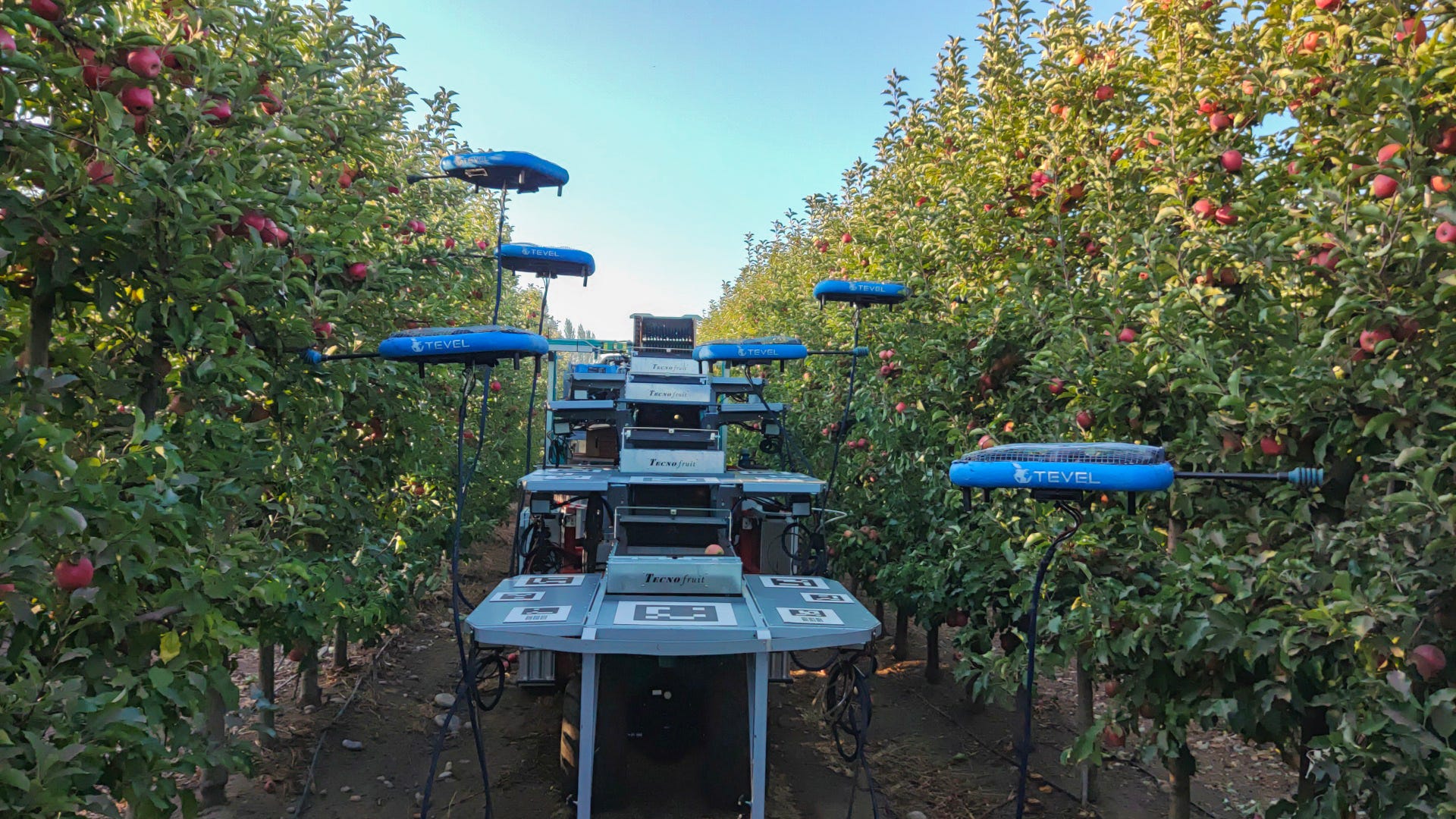
Orange Robots Enter Brazil Israeli startup Tevel’s autonomous fruit-harvesting robots are being tested in large Brazilian orange farms after being imported by Dal Tecnologia. The drone-like robots fly through orchards while connected by cable to a mobile ground base, using cameras, sensors and software to identify fruit by size, color and maturity before picking them with suction arms. A full system has six drones and can operate 24/7, with each drone harvesting one fruit every 12 seconds. The technology is already used commercially in Europe, especially for apples, and in Brazil is being positioned first for oranges, with potential future use in guava, pear and peach. read more
Cattle Biometrics Reach Brazil South African cattle biometrics technology ID-Scan is entering Brazil through DX Data Experience, with a focus on traceability, security and herd governance. The platform uses smartphone video to capture each animal’s muzzle print, creating a permanent digital identity linked to biometric data and herd information. The system can work offline during field capture and later sync data when connectivity is available, making it relevant for farms with limited internet coverage. DX says the technology could support origin verification, insurance, breeder associations, cooperatives, meatpackers and rural credit by creating a more reliable way to individualize cattle and use herd data in financial operations. read more
AI Forecasts Soy Productivity Brazilian researchers developed an AI-based model that combines Sentinel-2 satellite images, climate variables and historical IBGE data to estimate soybean productivity before harvest. The study, conducted by Esalq/USP and partners, analyzed municipalities in Goiás, Mato Grosso and Mato Grosso do Sul across the 2019/20 to 2021/22 seasons. The model reached 72% accuracy, with an average error below 302 kilograms per hectare, and performed best around 150 days after planting, during the grain-filling stage. Researchers say the approach could support public policy, regional planning and future monitoring tools, although farm-level data gaps still limit precision for individual properties. read more
AgTech Study Shows Funding Gap A new study by Abstartups and the University of São Paulo mapped 170 Brazilian agtechs and found a more mature but still underfunded ecosystem. Around 32.9% of the startups have been operating for more than five years, while only 10% have reached the scale-up stage. SaaS leads as the main business model, used by 39.2% of companies, and 50.6% operate in B2B markets. The ecosystem remains concentrated, with São Paulo home to 38.8% of mapped startups, followed by Rio Grande do Sul and Minas Gerais. Access to capital remains the main constraint, with 52.4% of agtechs never having received investment. read more
Climate Tech
Native Bees Boost Coffee Yields A new Embrapa study found that managed colonies of mandaguari, a native stingless bee, can increase arabica coffee fruit production by up to 67% on branches located near the colonies. Researchers installed around ten colonies per hectare before flowering and compared productivity on nearby and more distant branches, linking the gains to pollinator activity. The study found that the approach worked even in self-compatible coffee cultivars and that pesticide use, when applied according to technical recommendations, did not generate measurable harm to the colonies. The findings point to managed pollination as a nature-based strategy to raise coffee productivity without expanding planted area. read more
Wheat Ethanol Opens Market Brazil’s first large-scale wheat ethanol plant is under construction in Passo Fundo, Rio Grande do Sul, creating a new market for winter cereals in the state. The Be8 project will have capacity to process 525,000 tons of grain per year and could supply around 23% of Rio Grande do Sul’s ethanol demand, reducing dependence on imports from other regions. The plant is expected to create additional demand for wheat, triticale and other winter crops, while also producing coproducts such as DDGS, wet bran and vital gluten for animal feed and food industries. The project could connect agriculture, livestock and biofuels in a new regional value chain. read more
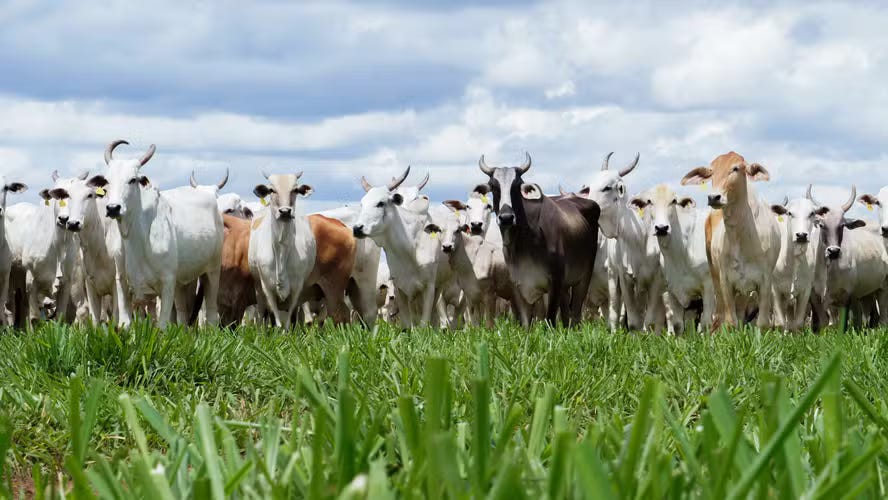
Brazil Maps Low-Carbon Beef Path A new study by FGV Agro, launched by ApexBrasil and Abiec at FAO headquarters in Rome, says Brazil could reduce the carbon intensity of beef production by more than 90% by 2050 under ambitious mitigation scenarios. The report highlights productivity gains already achieved: between 2004 and 2024, national beef production rose more than 240% while pasture area fell 11%, creating what researchers call a “land-sparing effect.” Under the most ambitious scenario, technologies such as integrated crop-livestock-forest systems and pasture recovery could cut emissions intensity to 5 kg of CO2 equivalent per kilo of beef, while stabilizing production and reducing required pasture area by more than 35%. read more
Funding & M&A
AgroForte Pushes Protein Credit AgroForte, a Yield Lab Latam portfolio company, reached about US$200 million in credit originated for Brazil’s animal protein sector and now aims to originate another US$200 million by the end of 2026. Founded around poultry and pork financing, the company has expanded into dairy and beef cattle after acquiring Rumicash, which added more than 20 dairy partners and access to roughly 20,000 additional producers. AgroForte now originates around US$6 million per month, with tickets ranging from about US$10,000 to US$400,000. Its main fund is expected to reach US$53 million to US$57 million in net worth by year-end, while the Paraná Fiagro, an agribusiness investment fund, could drive over US$110 million in additional disbursements. read more
Trag Raises for Climate Risk AI Parametric insurance startup Trag raised about US$500,000 in a round led by DOMO.VC, extending its 2024 raise and taking total funding to roughly US$1 million. The company uses satellite data, climate indicators and proprietary AI models to structure parametric insurance products for agribusiness, where payouts are triggered automatically when predefined climate conditions are met. Trag now operates across eight Brazilian states and eight crops, with insured value rising 47% in recent months to about US$15 million and more than 300,000 hectares analyzed. The startup plans to expand beyond insurance into a broader climate intelligence platform for producers, cooperatives, insurers and financial institutions. read more
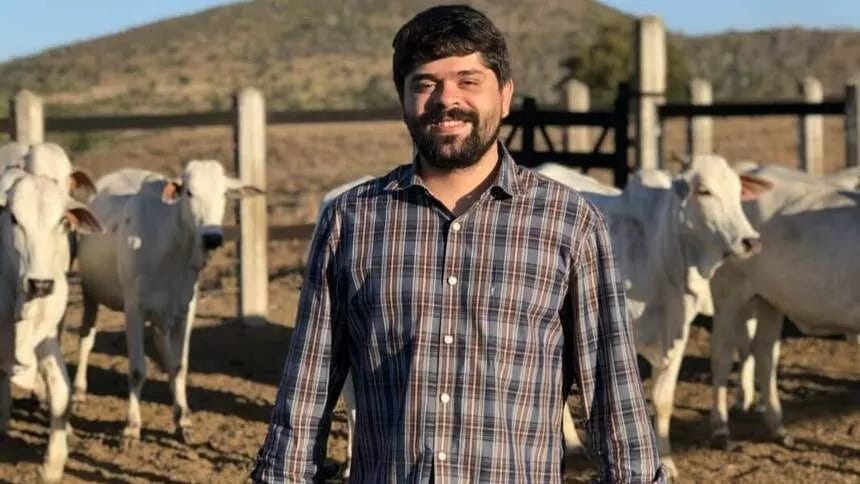
erural Raises for Cattle Marketplace Brazilian livestock marketplace erural raised about US$1 million from Lighthouse and SP Ventures to accelerate investments in technology, AI, credit and logistics. Founded by Matheus Ladeia nearly a decade ago, the company has shifted from supporting traditional cattle auctions to concentrating transactions inside its own platform. It has already moved about US$58 million in animal transactions, including more than US$19 million in 2026, and its “one-stop-shop” model now represents around 60% of deals. erural is focused on beef cattle genetics today, but plans to expand into dairy genetics, breeding, rearing, fattening, inputs, services and financial solutions. read more
BNDES Opens Credit for Farm Tech Brazilian individual farmers and rural entrepreneurs will now be able to access existing BNDES credit lines for innovation, digitalization and technological modernization. The measure, approved by Brazil’s National Monetary Council, does not create new credit lines, but expands eligibility for programs such as BNDES Mais Inovação, BNDES Finame and Finame Baixo Carbono. Eligible investments include digitalization, automation, artificial intelligence, rural connectivity, precision agriculture, drones, sensors, traceability, telemetry, remote monitoring and farm management software. The change could increase demand for machinery, equipment, AgTech solutions and digital infrastructure across farming, forestry, fisheries and aquaculture. read more
Macro & Markets
STF Upholds Foreign Land Limits Brazil’s Supreme Court unanimously upheld the restrictive regime for the acquisition and lease of rural land by foreigners and Brazilian companies controlled by foreign capital. The ruling confirmed the constitutionality of Law No. 5,709/1971, meaning companies with majority foreign ownership continue to be treated like foreign legal entities for rural land transactions. The decision also invalidated a São Paulo registry opinion that had allowed different treatment in that state, creating a uniform national interpretation. For foreign investors, agribusiness companies and funds with international capital, planned or previously structured rural land deals may now require closer legal review. read more
EU Restricts Brazil Animal Exports The European Union formalized Brazil’s removal from the list of countries authorized to export certain animal-origin products to the bloc, including beef, poultry, fish, honey, casings and other products. The measure takes effect on September 3, 2026, and is linked to EU rules on antimicrobial use in livestock, rather than a specific contamination or sanitary incident. Brazil was the only country removed from the list, while Argentina, Paraguay and Uruguay remain authorized, reducing the political impact on the EU-Mercosur agreement. In 2025, Brazil exported US$32.3 billion in animal-origin products, of which US$1.6 billion went to the EU. read more
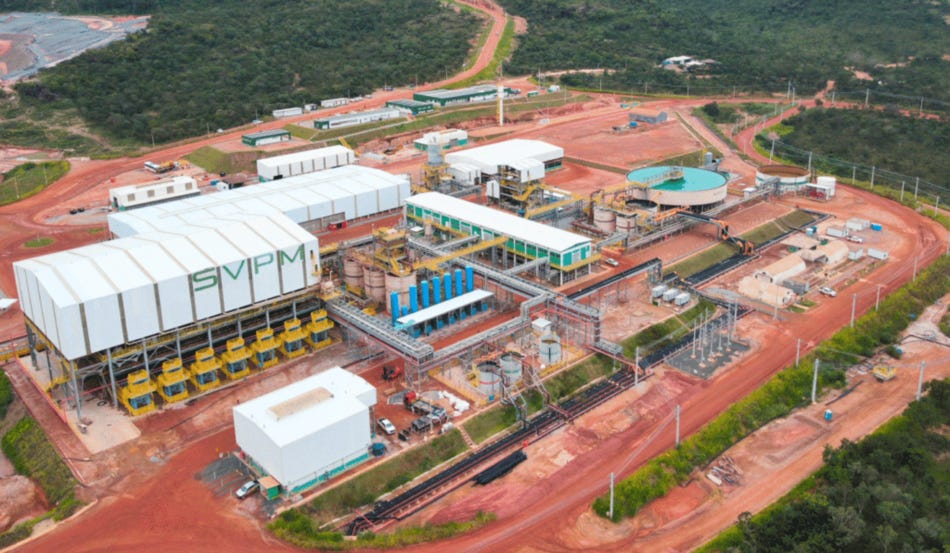
US Takes Stake in Rare Earth Miner USA Rare Earth signed a US$1.6 billion financing package with the U.S. Department of Commerce, giving the U.S. government an equity stake in the Nasdaq-listed company that agreed to acquire Brazil’s Serra Verde. The Goiás-based miner is described as the only operation outside Asia extracting, at commercial scale, four of the most sought-after rare earth elements. The package includes US$277 million in grants, US$1.3 billion in federally guaranteed loans and warrants for additional shares. The deal reflects Washington’s push to reduce dependence on China for minerals critical to AI, energy transition technologies and defense systems. read more
That’s all for this week, thanks for reading,
KFG
Kieran Finbar Gartlan is an Irish native with over 30 years of experience living and working in Brazil. He is Managing Partner at The Yield Lab Latam, a leading venture capital firm investing in Agrifood and Climate Tech startups across Latin America.