


Hi, I’m Kieran Gartlan, Managing Partner at The Yield Lab Latam, ranked number two in the world last year for AgTech investments by AgFunder. If you’re interested in learning more about Brazil’s AgTech opportunity, feel free to get in touch.
This week’s Brazil AgTech Report looks at how Amazon researchers are using genomics to accelerate açaí breeding, while TIM pushes its rural connectivity strategy toward ag data intelligence. Carbon Exchange and GreenBug are combining sensors and bioacoustics for real-time fire detection, and Brazil’s House approved longer protection for plant cultivars.
In Climate Tech, Uberaba is set to receive a new biomethane plant that will turn sugarcane residues into renewable gas. Brazil also regulated payments for environmental services, but limited what farmers can be paid for under the federal program. Volvo and Potencial Agro are expanding B100 biodiesel trucking, while China’s new soy sustainability guide accepts Brazilian environmental law as the core standard.
In Funding & M&A, Suzano closed its $1.3 billion Kimberly-Clark tissue JV acquisition, giving it control of a new consumer-facing platform. DeepAgro raised $3 million to expand AI-powered selective spraying in Brazil, Grupo Zanchetta acquired Ceratti, and Biotrop reached $1.3 million in first-year US sales.
In Macro & Markets, Goiás announced a $60 million applied AI hub, reinforcing the race to build local AI infrastructure. Brazilian meatpackers are cutting slaughter as China’s beef quota nears its limit, most Latin American VCs now use AI to analyze investments, and Sicredi plans $14.4 billion in rural credit for the 2026/27 crop season.
AgTech
Amazon Researchers Sequence Açaí Genome
TIM Shifts From 4G Coverage to Ag Data Intelligence
Carbon Exchange and GreenBug Target Real-Time Fire Detection
Brazilian House Approves Longer Protection for Plant Cultivars
Climate Tech
Uberaba Biomethane Plant to Turn Sugarcane Waste Into Renewable Gas
Brazil Limits Agro Eligibility in Environmental Services Payments
Volvo and Potencial Agro Expand Biodiesel Truck Fleet
China Accepts Brazilian Environmental Law as Soy Sustainability Standard
Funding & M&A
Suzano Closes $1.3 Billion Kimberly-Clark Tissue JV Acquisition
DeepAgro Raises $3 Million to Expand Selective Spraying in Brazil
Grupo Zanchetta Acquires Ceratti to Expand Processed Meat Portfolio
Biotrop Reaches $1.3 Million in First-Year US Sales
Macro & Markets
Goiás to Invest $60 Million in Applied AI Hub
Brazilian Meatpackers Cut Slaughter as China Beef Quota Nears Limit
Most Latin American VCs Now Use AI to Analyze Investments
Sicredi Plans $14.4 Billion in Rural Credit for 2026/27 Crop Season
AgTech
Amazon Researchers Sequence Açaí Genome - Researchers from UFPA and Embrapa Amazônia Oriental sequenced the açaí genome for the first time, creating a tool to accelerate genetic improvement of one of Brazil’s most important bioeconomy crops. The work can help identify genes linked to productivity, anthocyanin content, fruit color and disease resistance, reducing the time needed to select desirable traits. The research may also support new biotech routes for producing natural colorants, antioxidants and other molecules of interest for the pharmaceutical and cosmetics industries, while advancing Embrapa’s long-running effort to adapt açaí for cultivation on non-flooded land. Read more
TIM Shifts From 4G Coverage to Ag Data Intelligence - TIM Brasil is moving into the next phase of its agribusiness strategy after connecting 27.3 million hectares with rural 4G and more than 54 million hectares with NB-IoT. The operator says growth will now come less from coverage expansion and more from turning farm data into services for AI, cloud computing, automation and operational management. Its B2B portfolio totals about $200 million in contracts, with clients including BP Bioenergy, SLC Agrícola, Jalles, Citrosuco, Amaggi and Adecoagro. The recent acquisition of V8.Tech strengthens its push into data integration, analytics and AI. Read more
Carbon Exchange and GreenBug Target Real-Time Fire Detection - Carbon Exchange and GreenBug are developing hardware to monitor fires in real time by combining environmental sensors with bioacoustic detection. Carbon Exchange’s device tracks variables such as pressure, humidity, temperature and smoke, while GreenBug adds sound monitoring capable of identifying human presence, vehicles, chainsaws, gunshots and other activity even in areas without internet or power. Field tests are planned for September, with the product expected to be available in 2027. Carbon Exchange is also raising at least $1 million to help build a factory in Belém. Read more
Brazilian House Approves Longer Protection for Plant Cultivars - Brazil’s Chamber of Deputies approved a bill extending cultivar protection from 15 to 25 years for grapevines, fruit trees, forest trees, ornamental plants, rootstocks and sugarcane, while keeping the 15-year term for annual crops such as soy, corn, beans and rice. The proposal aims to align Brazil more closely with international plant variety protection standards and improve legal certainty for long-cycle breeding investments. Supporters say the change is especially relevant for planted forests and sugarcane, where new varieties can take many years to develop and commercialize. The bill now returns to the Senate. Read more
Climate Tech
Uberaba Biomethane Plant to Turn Sugarcane Waste Into Renewable Gas - Gasmig and Geomit signed a contract to build a biomethane plant in Uberaba that will produce 50,000 cubic meters per day of renewable fuel from sugarcane residues supplied by Companhia Mineira de Açúcar e Álcool. The project is expected to begin commercial operations in May 2028 and will supply industries and fleets in Uberaba, Uberlândia, Indianópolis and Araxá. Gasmig plans to invest about $200 million in 400 kilometers of new gas pipelines, helping replace fossil fuels such as diesel, fuel oil and LPG across the Triângulo Mineiro. Read more
Brazil Limits Agro Eligibility in Environmental Services Payments - Brazil regulated its National Policy for Payments for Environmental Services five years after the law was approved, creating clearer rules for contracts, payers, beneficiaries and eligible activities. The decree allows payments for conservation, restoration, agroforestry, sustainable management, water protection and recycling, and recognizes technologies such as remote sensing for MRV. But the federal program will not pay farmers for preserving areas already protected under the Forest Code, such as Legal Reserves and APPs, limiting payments to legally deforestable native vegetation kept standing. The market is still waiting for a national PSA registry and tax incentives. Read more
Volvo and Potencial Agro Expand Biodiesel Truck Fleet - Volvo delivered five more FH B100 Flex trucks to Potencial Agro, bringing the Paraná-based company’s fleet of 100% biodiesel-capable vehicles to 43 units. Potencial plans to invest about $1.2 billion by 2030 in biodiesel, corn ethanol and biomethane, targeting 1.7 billion liters of biodiesel, 500 million liters of corn ethanol, 1 billion liters of ethanol and 9 million cubic meters of biogas. Volvo says it has sold 300 FH B100 trucks since 2024 and sees faster adoption depending on ANP rules for biodiesel distribution and incentives for B100 freight decarbonization. Read more
China Accepts Brazilian Environmental Law as Soy Sustainability Standard - China’s food import chamber released a sustainable soy supply-chain guide for Brazil that recognizes Brazilian environmental law as the main benchmark for assessing legality and sustainability. Earlier drafts had proposed stricter rules, including zero-deforestation criteria and references to the Soy Moratorium, but those were removed after pressure from Brazilian producer groups, including Aprosoja MT. The guide now cites instruments such as the CAR and deforestation authorizations, and highlights Aprosoja MT’s Soja Legal program as a case study. Aprosoja MT plans to sign an agreement in Beijing to operationalize a traceability program. Read more
Funding & M&A
Suzano Closes $1.3 Billion Kimberly-Clark Tissue JV Acquisition - Suzano completed the acquisition of 51% of FampPro Tissue Holdings from Kimberly-Clark for $1.3 billion, giving the pulp and paper company control of the joint venture, which will now be renamed Arbex. The initial capital structure includes about $1 billion in net debt linked to the transaction financing. Suzano and Kimberly-Clark also signed governance, management and operating agreements, along with transition-service and licensing contracts to support continuity after closing. The deal had been announced in June 2025 and updated in May 2026. Read more
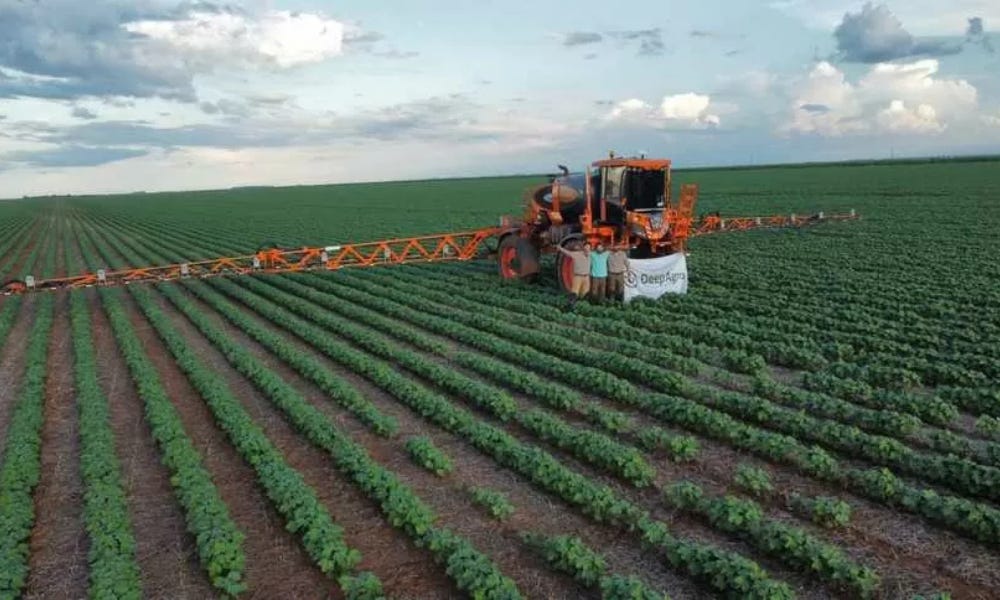
DeepAgro Raises $3 Million to Expand Selective Spraying in Brazil - Argentina’s DeepAgro is raising $3 million in a pre-Series A round led by a large Brazilian fund to scale its AI-powered selective spraying technology in Brazil. The startup validated its SprAI system with Amaggi, where tests across more than 22,000 hectares of soy and cotton delivered an average 71% reduction in herbicide use. DeepAgro is also testing with Adecoagro in sugarcane, negotiating a machinery partnership and targeting the BR-163 corridor in Mato Grosso as a key growth region. The company says its system can be adapted to sprayers of any brand or year. Read more
Grupo Zanchetta Acquires Ceratti to Expand Processed Meat Portfolio - Grupo Zanchetta acquired Ceratti, the 90-year-old cold cuts and processed meats company previously controlled by Hormel Foods since 2017. The deal gives Zanchetta a stronger position in pork-based processed products and expands its consumer-facing portfolio beyond its existing brands Alliz, Mondelli and Frangoeste. Ceratti will keep its industrial unit in Vinhedo, São Paulo, and both companies will continue operating independently until the transaction is approved by Cade. The acquisition value was not disclosed. Read more
Biotrop Reaches $1.3 Million in First-Year US Sales - Biotrop reached $1.3 million in US sales during its first year in the market, as the Brazilian biologicals company expands into the world’s largest agricultural inputs market. The Biofirst-owned company is offering biofungicides, bionematicides and soil conditioners for crops including soy, corn, wheat, cotton and peanuts. Biotrop has opened a research unit in Gainesville with the University of Florida, is building a local field team and has begun registering 14 biological products in the US. In 2025, the company ran 185 field trials in North America and is carrying out more than 170 experiments this year. Read more
Macro & Markets
Goiás to Invest $60 Million in Applied AI Hub - Goiás will invest about $60 million over five years to create an AI and Innovation District in Goiânia and expand the Federal University of Goiás’ AI Excellence Center. The district will cover 91 hectares and aims to attract companies, research centers and startups through incentives, including lower ISS taxes and direct subsidies. Of the total, about $16 million will go to the CEIA, including around $8 million for Nvidia GPUs. The strategy focuses on applied AI, model adaptation, SLMs, autonomous mobility, public-sector solutions and startup acceleration. Read more
Brazilian Meatpackers Cut Slaughter as China Beef Quota Nears Limit - Brazilian meatpackers are reducing slaughter and granting collective vacations as China’s annual tariff-rate quota for Brazilian beef approaches its 1.106 million-ton limit. Companies including Frigol, Better Beef, Iguatemi Beef and Plena Alimentos are suspending or cutting production, with Chinese buyers expected to return only in October for shipments that would count toward the 2027 quota. Brazil had filled 65.4% of the quota by late June, and volumes above the limit face a sharply higher tariff. The slowdown highlights the sector’s exposure to China despite efforts to redirect supply to the US, Middle East, UK and domestic market. Read more
Most Latin American VCs Now Use AI to Analyze Investments - More than 90% of Latin American venture capital firms now use AI to analyze deals, according to Hi Ventures’ State of AI Latin America 2026 report, up from 45% two years ago. The survey of 54 managers found AI is being used for market research, competitive intelligence, portfolio monitoring, financial modeling, LP communications, contract review and compliance. Startups with AI at the core are also becoming a priority, with 61% of funds saying more than 60% of their investments over the past year had AI at the center. The report also highlights rapid adoption of AI agents across portfolios. Read more
Sicredi Plans $14.4 Billion in Rural Credit for 2026/27 Crop Season - Sicredi plans to provide $14.4 billion in rural credit during the 2026/27 crop season, up 4.4% from the previous cycle, across about 340,000 operations. The cooperative expects to allocate $5.5 billion to working capital, $3.1 billion to investment, $400 million to commercialization and industrialization, $3.6 billion through CPRs and $1.8 billion through dollar-linked credit lines. Sicredi is also watching rising rural delinquency and says growth will depend on portfolio quality, with more cautious lending and greater use of insurance, consórcios and diversified funding. Read more

That’s all for this week, thanks for reading,
KFG
Kieran Finbar Gartlan is an Irish native with over 30 years of experience living and working in Brazil. He is Managing Partner at The Yield Lab Latam, a leading venture capital firm investing in Agrifood and Climate Tech startups across Latin America.