


Hi, I’m Kieran Gartlan, Managing Partner at The Yield Lab Latam, one of the region’s top AgriFood and Climate Tech VC funds. If you’re curious to learn more about Brazil’s AgTech Revolution, feel free to reach out in the comments below, or on LinkedIn. I’m always happy to share what I’m seeing on the ground.
Summary
In AgriFood Tech news, a new biodetergent developed by Embrapa extends the shelf life of fruits and vegetables, while Agrishow 2026 highlights the growing use of data, automation and connected machinery in farm management. Solinftec is expanding its robotics platform alongside a multi-agent AI system, and adoption trends show a shift from isolated tools toward integrated operational systems.
In Climate Tech developments, second-crop canola is emerging as a feedstock for sustainable aviation fuel, with emissions reductions of up to 55% in modeled scenarios. Brazil’s biofuels production is projected to reach 30 billion liters by 2030, driven by corn ethanol, while the government is considering an increase in the ethanol blend to E32. New initiatives are mapping coffee supply chains to meet deforestation rules, and Vale is advancing ethanol-powered shipping.
On the Funding & M&A front, Itaú Ventures is backing Minter’s mobile data center model to monetize curtailed renewable energy. VLI is investing $16 million to expand grain export capacity in Maranhão, increasing both port and internal handling throughput.
In Macro & Markets, Brazil’s crop protection market has returned to nearly $20 billion, supported by higher treated area and demand from soy and corn. Record harvests are shifting the focus toward management and technology use on farms, while the Supreme Court has maintained existing restrictions on foreign ownership of rural land.
Table of Contents
AgriFood Tech
New biodetergent extends shelf life of fruits and vegetables
Agrishow 2026 showcases AI, robotics and precision ag innovations
Solinftec expands robotics and AI agent platform
Brazil enters the “second wave” of AI in agriculture
São Paulo accelerates AI adoption across agriculture
Climate Tech
Second-crop canola shows SAF emissions potential
Brazil’s biofuels expansion raises new “food vs fuel” questions
Coffee giants launch global deforestation mapping initiative
Brazil moves closer to E32 ethanol blend
Ethanol-powered shipping gains traction with Vale deal
Funding & M&A
Itaú Ventures backs mobile data center model to monetize curtailment
VLI invests $16 million to expand grain export capacity in Maranhão
Macro & Markets
Agro shifts from expansion to efficiency as technology becomes the edge
Crop protection market rebounds toward $20 billion level
Brazil maintains restrictions on foreign land ownership
AgriFood Tech
Brazilian researchers develop post-harvest biodetergent – Researchers from UFRJ and Embrapa have developed a non-agrochemical biodetergent designed to extend the shelf life of fruits and vegetables by preventing fungal growth after harvest. In orange tests, 11 out of every 12 treated fruits remained intact after 10 days. The research began from a Petrobras-commissioned oil study in 2009 and later evolved through an Embrapa partnership focused on food conservation. The team is now preparing larger-scale tests using industrial application methods and evaluating the product on other fruits, including strawberry, papaya and guava, as well as grains such as beans and soy. read more
Agrishow spotlights data-driven farm tech – Agrishow 2026 will take place from April 27 to May 1 in Ribeirão Preto, bringing more than 800 brands to a 520,000-square-meter exhibition area, with expected attendance of more than 200,000 visitors. The fair will highlight automation, sensors, precision agriculture, connected machinery, robotics and digital farm management platforms, while visitors will also have access to an AI-powered app to help navigate the event. SAE Brasil research cited by Agrishow says 91% of surveyed producers use GPS, 85% use financial management apps, 76% use satellite imagery and agronomic management apps, 70% use precision agriculture practices and 61% use drones. Featured launches include equipment from Valtra, Massey Ferguson, Fendt, AGTech, PTx, Solinftec and TOTVS. read more
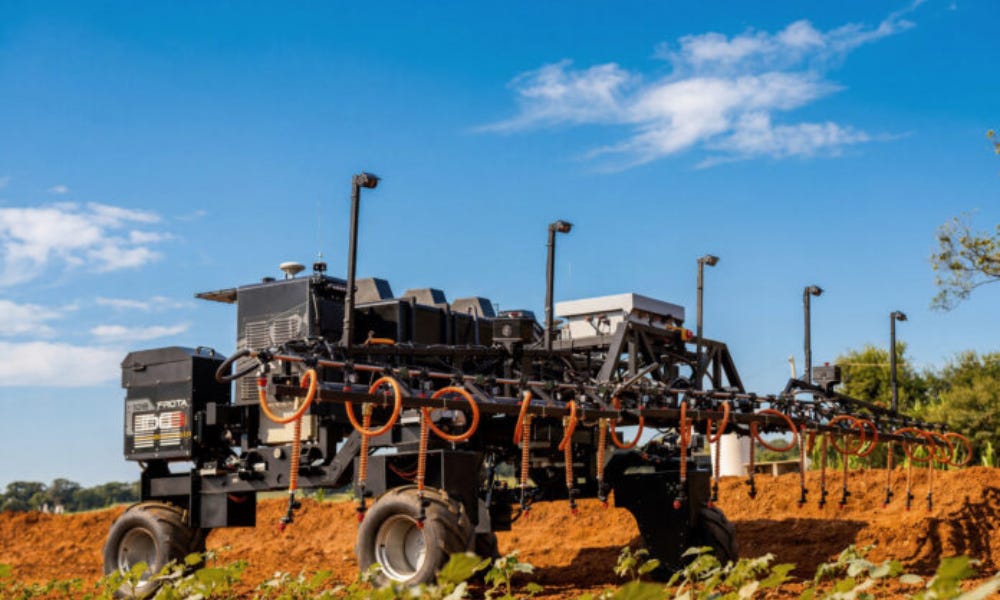
Solinftec expands robotics and AI agent platform – Solinftec will present two new autonomous agricultural robots, the Solix XT and Solix XC, during Agrishow 2026, alongside Alice IA Multiagente, a platform that uses multiple AI agents to turn field data into operational recommendations and actions. The Solix XT is designed for continuous operation through the crop cycle, with autonomy of up to 50 hours and coverage of up to 500 hectares, initially in sugarcane. The Solix XC targets larger-scale operations, with autonomy of up to 70 hours and coverage of up to 1,000 hectares per cycle in soy, corn and cotton. Alice will initially include six agents focused on support, operations, climate, data analysis, fleet availability and spatial projection. read more
Brazilian agribusiness enters AI’s second wave – Brazilian agribusiness is moving from isolated AI use cases toward broader automation of business processes. The shift includes digital contract management, automated purchase orders, document traceability, predictive analytics and natural language tools for compliance, supplier management, certifications and quality control. In export-oriented chains such as soy and beef, AI is being applied to integrate data across contracts, logistics, invoicing, regulatory compliance and commercialization workflows. read more
São Paulo expands AI use across agriculture – Artificial intelligence is being applied across agricultural operations in São Paulo to improve efficiency, reduce post-harvest losses by up to 30% and support decision-making. The state concentrates 845 agtech companies, representing 43.2% of the national total. Initiatives include innovation hubs connecting research institutions, startups and producers, and platforms that integrate climate, soil and financial data to forecast productivity and risk with high accuracy. Public programs are also using AI for geolocation of rural properties and environmental compliance. read more
Climate Tech
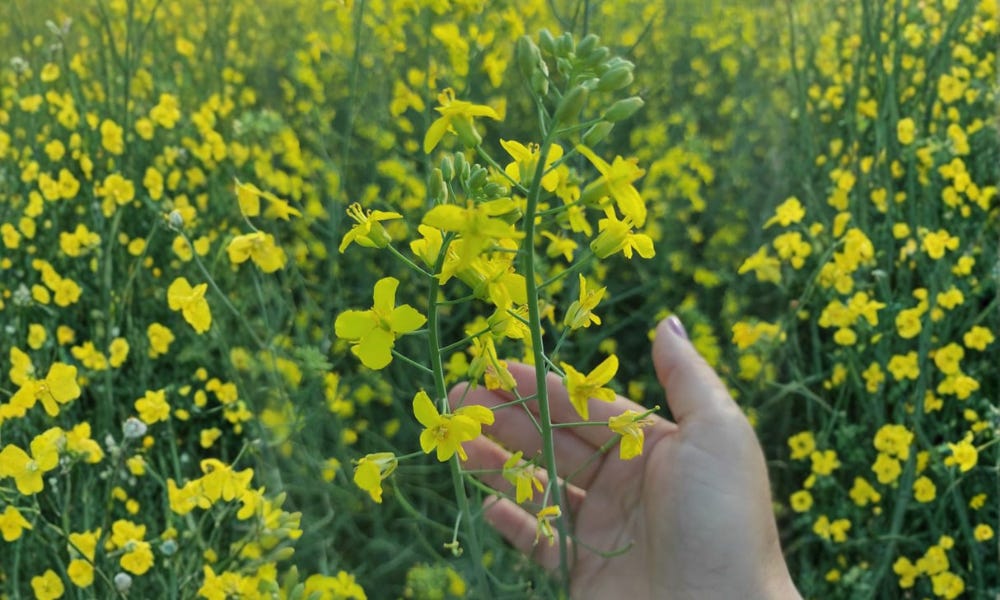
Second-crop canola shows SAF emissions potential – A life-cycle assessment by Embrapa and the University of Brasília found that sustainable aviation fuel made from second-crop canola in Brazil could reduce greenhouse gas emissions by up to 55% compared with fossil Jet-A1 kerosene, depending on adoption scenarios. The study modeled the HEFA route, which converts vegetable oils into aviation fuel, and considered emissions from crop production through final fuel use. The result depends heavily on the use of renewable hydrogen in industrial conversion and on fertilizer management during cultivation. Researchers said canola’s use as a second crop in rotation with soy can improve land-use efficiency. read more
Corn ethanol to drive Brazil biofuels growth – Brazil’s biofuels production is projected to reach around 30 billion liters by 2030, with corn ethanol accounting for roughly one-third of the total. The country had 29 corn ethanol plants in operation at the end of 2025, with 16 more under construction, concentrated in Mato Grosso, Goiás and Mato Grosso do Sul. Growth is supported by rising demand for sustainable fuels, including aviation fuel and maritime applications, while co-products such as DDG support animal feed markets. Constraints include biomass supply for energy generation and regulatory uncertainty around its sourcing. read more
Coffee giants launch deforestation mapping initiative – JDE Peet’s, Louis Dreyfus, Sucafina and Neumann Kaffee Gruppe are creating the Coffee Canopy Partnership to map coffee farms and support compliance with the EU Deforestation Regulation, which takes effect on December 30. The platform will use satellite data, artificial intelligence and on-site verification to identify coffee production areas and will make the map publicly available. The pilot will cover about 1.2 million square kilometers of coffee-growing areas in East Africa, including Ethiopia, Uganda and Kenya, with plans to expand to all coffee-growing regions by 2027. read more
Brazil moves closer to E32 ethanol blend – Brazil’s government is expected to review a proposal in early May to raise the anhydrous ethanol blend in gasoline from 30% to 32%. Mines and Energy Minister Alexandre Silveira said the proposal will be discussed at the next meeting of the National Energy Policy Council. The measure could reduce gasoline import needs by around 500 million liters per month, supporting national self-sufficiency. The initial mandate would last 180 days, with the possibility of extension. read more
Vale orders ethanol-powered transoceanic ships – Vale and Shandong Shipping Corporation signed a 25-year charter agreement for two new second-generation Guaibamax ships powered by ethanol, with delivery expected from 2029. The vessels will be 340 meters long, carry up to 325,000 tons and may reduce carbon emissions by around 90% compared with heavy fuel oil on a well-to-wake basis. The ships will also be able to use methanol and heavy fuel oil, with design options for future conversion to liquefied natural gas or ammonia. read more
Funding & M&A
Itaú Ventures backs mobile data center model to monetize curtailment – Minter installs mobile data centers at renewable energy sites to use electricity that would otherwise be curtailed when the grid cannot absorb supply. The container-based units host up to 200 machines and process data close to generation, reducing transmission losses and improving project economics. The company operates a 20 MW site in Xique-Xique, Bahia, and plans to reach 40 MW by the end of 2026 and 500 MW by 2029. Its Series A round was led by Itaú Ventures and included Grupo Leste, Legend Capital and individual investors. read more
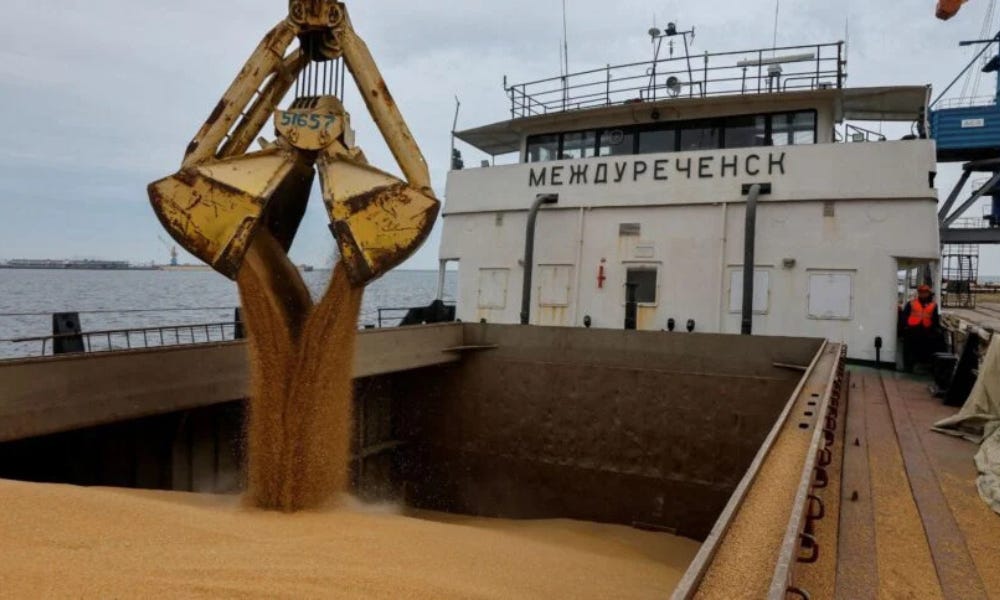
VLI expands grain export capacity in Maranhão – VLI will invest approximately $16 million in its São Luís terminal at the Port of Itaqui to increase grain export capacity by 23%. The terminal handled nearly 5.8 million tons in 2025, including soy and corn from the Matopiba region. The project will raise maritime loading capacity from 3,000 to 3,700 tons per hour and internal grain flow from 1,500 to 2,000 tons per hour, supported by rail logistics. read more
Macro & Markets
Crop protection market returns to $20B level – Brazil’s crop protection market grew 3% in the 2024/25 season to reach approximately $20 billion. The recovery follows a 13% decline in the previous season, driven by lower prices despite increased planted area and treatment intensity. Soy accounted for 51% of the market, followed by corn (16%), sugarcane (8%) and cotton (7%). Treated area reached 2.39 billion hectares, up 13% year on year, with further growth of around 8% expected in 2025/26. read more
Technology use becomes agriculture’s new differentiator – Brazil’s grain harvest reached a record 346.1 million tons in 2025, while projections for 2026 range from 340 million to 344 million tons. With less room for expansion in planted area, productivity gains are increasingly linked to management and technology use within the farm. Tools such as drones, telemetry, artificial intelligence and precision agriculture are widely available, with differentiation driven by how producers interpret data and manage operations. read more
STF maintains restrictions on foreign land ownership – Brazil’s Supreme Court unanimously voted to maintain the existing legal restrictions on the acquisition of rural land by foreigners and Brazilian companies controlled by foreign capital. The ruling does not ban foreign ownership of farmland, and many foreign individuals and companies already own rural land in Brazil, but larger or more sensitive transactions can require prior approval from INCRA and, in some cases, Congress. Current rules also limit foreign ownership by municipality and nationality. The decision rejected an action filed by the Sociedade Rural Brasileira. read more
That’s all for this week, thanks for reading,
KFG
Kieran Finbar Gartlan is an Irish native with over 30 years of experience living and working in Brazil. He is Managing Partner at The Yield Lab Latam, a leading venture capital firm investing in Agrifood and Climate Tech startups across Latin America.