


Welcome to this week’s Brazil AgTech Report. Curated news from the frontline of Brazil’s Agri-Climate Tech ecosystem
Summary
In AgTech news, QR Cattle is mapping cattle snouts for livestock recognition, offering a non-invasive traceability tool for Brazilian producers. Kilimo is scaling its water management platform in Brazil, paying farmers for verified water stewardship services. OptikAI unveiled a rapid coffee bean scanner that distinguishes Arabica from Conilon in under five minutes. Syngenta Digital and BemAgro formed a field-efficiency alliance covering over 3 million hectares, and GoFlux added credit tools to its freight marketplace.
In Climate Tech, Brazilian orange groves were found to store up to 62 tons of CO₂ per hectare. Ideelab opened a $5.5 million bioinputs factory in Paraná with plans for international expansion. Meanwhile, ethanol giant Inpasa announced a $4.6 billion circular bioenergy complex in Rio Verde, Goiás—potentially the region’s largest-ever private investment.
In funding and M&A news, foodtech startup Alloy secured $180,000 from CVC Comunita, the fourth investment by Sicredi’s new cooperative VC arm. Meanwhile, Brazil’s M&A activity jumped 71% in H1 2025, driven by a growing interest in acquiring companies developing AI capabilities.
In Macro & Markets, U.S. tariffs disrupted Brazil’s beef and fruit exports, and coffee alone could lose $2 billion in annual sales. Meatpackers are pivoting to Asia to limit the damage, while Captar’s $222 million beef investment and SLC’s $165 million irrigation project aim to put western Bahia on the global ag supply map.
Table of Contents
AgTech
QR Cattle develops livestock facial recognition app
Kilimo expands in Brazil with sustainable irrigation model
OptikAI develops sensor to accelerate coffee species ID
Syngenta Digital and BemAgro form field efficiency alliance
GoFlux adds credit layer to freight marketplace
Climate Tech
Brazilian orange groves store surprising amounts of carbon
Ideelab opens bioinput plant, eyes international markets
Inpasa plans $4.6B ethanol plant in Rio Verde, Goiás
Funding & M&A
CVC Comunita invests $180K in foodtech Alloy
Brazil’s M&A activity jumps 71% in H1 2025
Macro & Markets
U.S. tariffs hit Brazilian beef and fruit exports
Industry fears $2B in lost coffee sales over tariff fallout
Brazil eyes Asian markets to offset U.S. meat restrictions
Captar leads $222M push to turn Bahia into meat export hub
SLC launches $167M irrigation megaproject in western Bahia
AgTech
QR Cattle develops livestock facial recognition app – QR Cattle is developing a facial recognition app for livestock called Focinho de Boi, or “Cattle Snout” in English. The solution uses biometric imaging to identify individual animals based on snout patterns and can complete identification in under four seconds. Priced at just $0.18 per scan, the tool offers a low-cost, non-invasive alternative to traditional ear tags, with more than 20,000 animals already cataloged. read more
Kilimo expands in Brazil with sustainable irrigation model – Kilimo, an Argentine AgTech company, is accelerating growth in Brazil through a novel irrigation initiative. The startup is onboarding Brazilian farmers, with over 25 hectares in grains, citrus or coffee, to its water management platform, which pays them for verified water stewardship services. Kilimo sees Brazil as a key expansion market due to its vast irrigated area and strong agribusiness base. read more
OptikAI develops sensor to accelerate coffee species ID – A new device developed by startup OptikAI and the Sao Carlos Physics Institute (IFSC) can quickly and accurately identify coffee species through spectral analysis. The equipment evaluates beans’ biochemical composition, enabling automatic differentiation of Arabica and Conilon coffees, even in mixed batches. With the ability to analyze up to 100 beans in under five minutes, the solution could revolutionize quality control and traceability in Brazil’s coffee industry. The device is also being adapted to detect defects, pesticide residues, and mycotoxins. read more
Syngenta Digital and BemAgro form field efficiency alliance – Syngenta Digital and BemAgro have partnered to streamline agronomic decision-making in sugarcane and grain production. The collaboration links Syngenta’s digital crop monitoring platform, Cropwise, with BemAgro’s field team and data services, boosting in-field insights for over 3 million hectares. The partnership aims to increase productivity and reduce inefficiencies by turning digital data into actionable strategies for growers. read more
GoFlux adds credit layer to freight marketplace – GoFlux, a digital logistics platform focused on agribusiness freight, is evolving into a full-service marketplace. The startup plans to integrate credit solutions for freight financing, positioning itself as the “Mercado Livre of freight.” Already processing thousands of transactions, GoFlux is expanding its offer to include insurance and digital contracts. With a database of more than 25,000 logistics providers, the platform seeks to reduce costs and risk in agribusiness transport. read more

Climate Tech
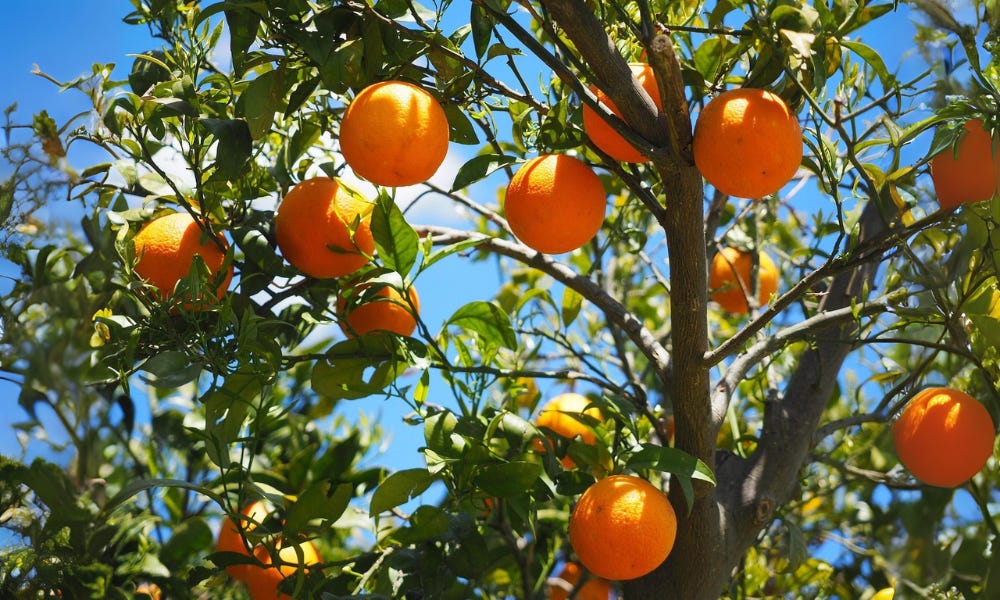
Brazilian orange groves store surprising amounts of carbon – A study by Fundecitrus and the University of São Paulo has revealed that Brazil’s citrus orchards can store nearly 52 tons of CO₂ per hectare, considerably higher than previous estimates of 21 tons. The research highlights the role of commercial orange groves in storing carbon, both in above-ground biomass and in the soil. These findings open new possibilities for including citrus cultivation in carbon markets and climate mitigation strategies. Brazil is the world’s largest orange producer, and this natural carbon sink potential could give the sector an unexpected climate-positive narrative. read more
Ideelab opens bioinput plant, eyes international markets – Agri-biotech firm Ideelab has inaugurated a new $5.5 million bioinputs facility in Paraná with production capacity of 1 million liters per year. The plant will focus on manufacturing biologicals to replace synthetic agrochemicals, aiming to meet growing demand for regenerative and low-residue agriculture. The funds came from the company’s own balance sheet as well as from one of its investors, Inquima. read more
Inpasa plans $450M ethanol plant in Rio Verde, Goiás – Inpasa, one of Brazil’s largest ethanol producers, has announced plans to build a new $450 million facility in Rio Verde, Goiás. The megaproject would produce corn ethanol, DDGs for animal feed, and clean electricity—positioning itself as a circular bioenergy complex. The company is already operating plants in Paraguay and multiple Brazilian states and sees Rio Verde as a key logistics and sourcing hub. read more
Funding & M&A
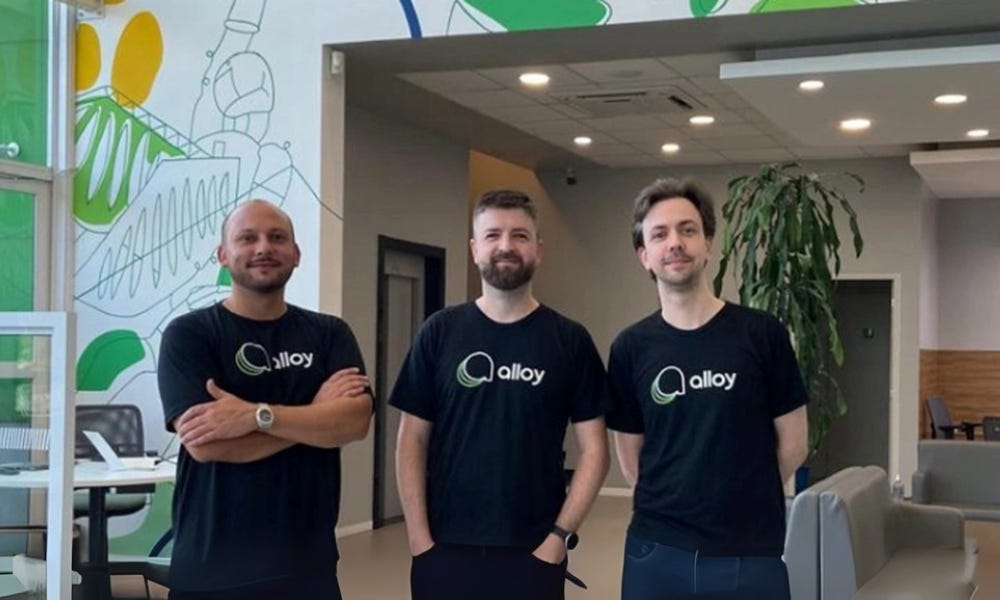
CVC Comunita invests $180K in foodtech Alloy – CVC Comunita, the corporate venture capital arm of Sicredi, has invested $180,000 in Alloy, a foodtech startup focused on healthier and more sustainable food products. The investment is part of a broader strategy to support early-stage innovation aligned with Sicredi’s values and ESG principles. Alloy is the fourth company to receive funding through the Comunita investment vehicle, which also includes Elysios, ESG Now and Movestock. read more
Brazil’s M&A activity jumps 71% in H1 2025 – Mergers and acquisitions in Brazil rose 71% in the first half of 2025 compared to the same period last year, according to a new report by Questum. While the exact number of deals wasn't disclosed, the report highlights a growing appetite among Brazilian buyers—particularly for companies applying artificial intelligence. The sectors drawing the most attention were fintech, retail, health, and agtech. Analysts say this rebound reflects renewed corporate confidence and a shift toward acquiring innovation rather than building it internally. read more
Macro & Markets
U.S. tariffs hit Brazilian beef and fruit exports – Brazil’s agribusiness sector is under pressure following the U.S. decision to raise tariffs on several key imports. Beef and mango exporters have expressed concern over the potential revenue impact and logistical disruptions. Several meatpacking plants have already had their export licenses suspended, adding urgency to industry-wide discussions on market diversification. Despite the blow, producer groups like CNA and Abrafrutas have stopped short of demanding retaliation, opting instead for negotiation. read more
Industry fears $2B in lost coffee sales over tariff fallout – The Brazilian Coffee Exporters Council (Cecafé) estimates that Brazil could lose up to $2 billion in coffee sales to the U.S. following the new import tariffs. The U.S. is Brazil’s top coffee market by volume, representing around 18% of total coffee exports. Cecafé warns that without swift government and diplomatic action, Brazil may permanently lose market share to other producing countries. Currently Brazil represents around one third of US coffee imports. read more
Brazil eyes Asian markets to offset U.S. meat restrictions – With several meatpacking facilities suspended from exporting to the U.S., Brazil’s beef industry is pivoting toward Asia. ABIEC, the national beef exporters association, is leading diplomatic efforts to secure new or expanded trade channels in China, Hong Kong, and other Asian markets. The goal is to offset the loss of U.S. market access while avoiding price collapses domestically. read more
Captar leads $222M push to turn Bahia into meat export hub – Captar Agrobusiness, owner of the largest cattle confinement operation in Brazil’s Northeast, is spearheading a $222 million investment to transform Luís Eduardo Magalhães into a strategic center for meat exports. The plan includes a large agroindustrial complex with a slaughterhouse, feed and bioenergy plants, and supporting logistics infrastructure. In parallel, public-sector investments will upgrade regional roads and inspection facilities to align local supply chains with international standards. read more
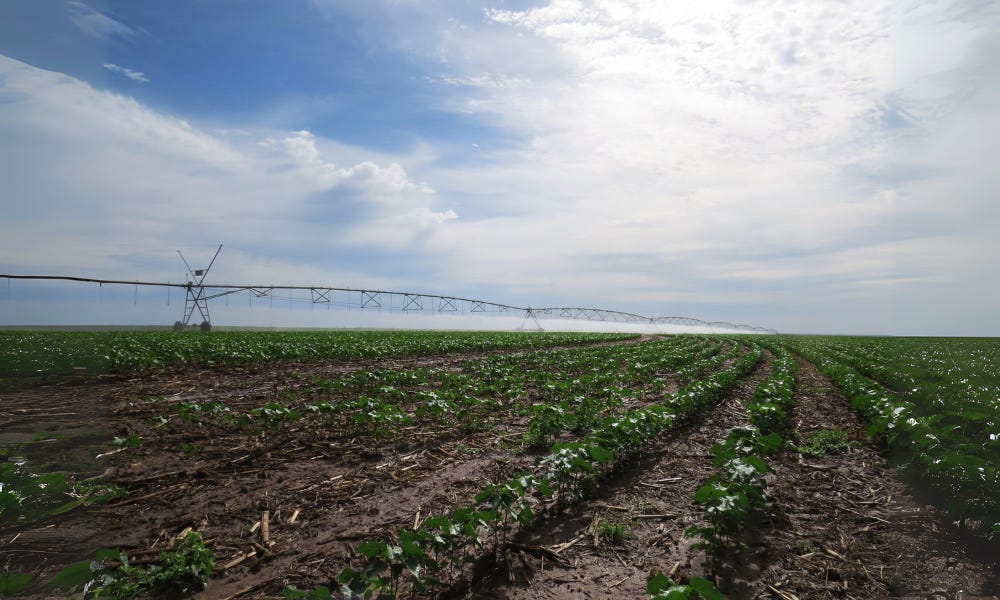
SLC launches $167M irrigation megaproject in western Bahia – SLC Agrícola is rolling out one of Brazil’s most ambitious on-farm irrigation projects, investing $167 million over five years to expand its irrigated area by 37,100 hectares—reaching 53,200 hectares total. The project is concentrated in western Bahia, targeting cotton-producing areas like São Desidério and Jaborandi, where rainfall variability has become a key production risk. The company estimates irrigation costs at $4,600 per hectare and expects revenue gains of $1,100 to $1,300 per hectare annually. In the 2025/26 season, it plans to install irrigation across 3,300 new hectares. read more
That’s all for this week, thanks for reading,
KFG 🚀
Kieran Finbar Gartlan is an Irish native with over 30 years of experience living and working in Brazil. He is Managing Partner at The Yield Lab Latam, a leading venture capital firm investing in Agrifood and Climate Tech startups across Latin America.
🧠 New! Paid subscribers now get access to “My Take” — a brief commentary tying together this week’s key trends, offering insight and perspective on what it all means for Brazil’s ag and climate tech opportunity.
🔍 Insight & Analysis
It’s starting to feel like on-farm tech is finally having its moment. For years, Brazil’s AgTech momentum focused mostly off the field, credit platforms, marketplaces, and logistics solutions. But now we’re seeing a new wave of farm-level innovation: coffee scanners, facial recognition for cattle, irrigation platforms linked to water stewardship. What’s changed? Corporates are stepping in, not just with capital, but with serious distribution power. When a company like Syngenta partners with a field-tech startup, that solution gets embedded in agronomic routines, not just demo plots. That kind of reach could be what finally turns adoption into scale.
In funding and M&A, corporate involvement is creating fresh momentum. Brazil’s M&A market jumped 71% in the first half of 2025, driven in large part by incumbents acquiring AI-driven companies instead of developing that capability internally. This shift is especially relevant for AgTech, where large players are increasingly eyeing early-stage startups as fast-track routes to embed AI across their operations. As more corporates engage via pilots, partnerships, and CVC arms, we expect this trend to accelerate—and reshape the AgTech exit landscape in the coming years.
And on the macro front, Trump’s tariffs could end up doing the opposite of what they were designed to. Instead of isolating rivals, they’re prompting countries like Brazil to deepen trade ties with Asia and look elsewhere for long-term stability. In ag, predictability matters, and sudden policy shifts erode trust. Within Brazil, there’s even growing political fallout. The farm sector, once a key Bolsonaro support base, is now grappling with the economic consequences of that alignment. What began as a trade story could soon reshape alliances, both globally and domestically as Brazil’s prepares for presidential elections next year.