


Hi, I’m Kieran Gartlan, Managing Partner at The Yield Lab Latam, ranked second in the world last year for AgTech investments. If you’re interested in learning more about Brazil’s AgTech opportunity, feel free to reach out.
This week’s Brazil AgTech Report opens with cattle as collateral, with Cowmed completing the first B3-registered loan backed by tokenized cows. John Deere is bringing precision-ag electronics production to Brazil, Embrapa is building the country’s first international microorganism depository, and Ambev is testing AB InBev’s first protein beer.
In Climate Tech, Acelen is combining macaúba and AI to bring down the cost of sustainable aviation fuel. Nearly $6 billion in sustainable agriculture funds is looking for investable projects in Brazil, while B.Kemi is turning agricultural waste into biodegradable cosmetic ingredients.
Funding & M&A brings a busy mix of biotech, soil intelligence and hard assets. Terra Genomics raised $3.6 million, Stenon secured $21 million for expansion in Brazil, Zen-Noh bought 30% of Grupo Cereal, and major deals reshaped port and bioenergy assets.
In Macro & Markets, Brazil is closing in on the US as the world’s largest agricultural exporter, while weaker margins are cooling farmland prices and slowing soy expansion. Brazil has also banned force-fed foie gras, and coffee and beef were left outside the latest US tariff increase.
AgTech
Cowmed Completes First B3-Registered Loan Backed by Tokenized Cattle
John Deere to Produce Precision Agriculture Electronics in Brazil
Embrapa to Host Brazil’s First Depository for Patentable Microorganisms
Ambev Launches AB InBev’s First Protein Beer in Brazil
Docket and B3 Partner to Speed Up CPR Registratio
Climate Tech
Acelen Uses AI and Macaúba to Cut Sustainable Aviation Fuel Costs
Nearly $6 Billion in Sustainable Agriculture Funds Puts Brazil in the Spotlight
B.Kemi Turns Agricultural Waste into Award-Winning Cosmetic Ingredients
Funding & M&A
Terra Genomics Raises $3.6 Million to Engineer Better Biological Inputs
Stenon Raises $21 Million to Expand Real-Time Soil Analysis in Brazil
Zen-Noh Acquires 30% of Grupo Cereal
Simpar Sells Bahia Grain and Fertilizer Port to ICTSI for $360 Million
Raízen Sells Caarapó Sugar and Ethanol Plant to Adecoagro for $152 Million
Macro & Markets
Brazil Could Overtake the US as the World’s Largest Agricultural Exporter
Brazil’s Soy Slowdown Reshapes the Farmland Market
Brazil Bans Foie Gras Produced Through Force-Feeding
US Exempts Brazilian Coffee and Beef from New 12.5% Tariff
AgTech
Cowmed Completes First B3-Registered Loan Backed by Tokenized Cattle - Cowmed and Target FIDC completed Brazil’s first formal credit transaction using tokenized dairy cows as collateral, moving about $20,000. Smart collars monitor each animal’s health, behaviour and location, converting the data into a unique digital identity registered with B3. The system allows lenders to value and track herds without physical inspections, reduces the risk of duplicate collateral and could unlock working capital for farmers. Cowmed currently monitors about 100,000 cows across more than 1,000 farms. Source: CNN Brasil
John Deere to Produce Precision Agriculture Electronics in Brazil - John Deere will invest about $15 million to expand its Canoas plant in Rio Grande do Sul and begin producing electronic components for agricultural and construction machinery in July 2027. The new line will manufacture intelligent control modules, high-precision StarFire GPS receivers, monitors and guidance systems for the Brazilian market. The move is intended to reduce dependence on imported components, deepen local technological capabilities and improve supply-chain agility. Source: AgFeed
Embrapa to Host Brazil’s First Depository for Patentable Microorganisms - Embrapa will establish Brazil’s first International Depositary Authority for microorganisms used in biotechnology patent applications. Backed by about $3 million from Finep and the Ministry of Science, Technology and Innovation, the three-year project will allow companies and researchers to deposit biological samples domestically rather than sending them abroad. Once accredited under the Budapest Treaty, deposits made in Brazil will be recognized across 92 member countries, reducing costs and delays while strengthening protection for bioinputs, microbial pesticides and other biological technologies. Source: Forbes
Ambev Launches AB InBev’s First Protein Beer in Brazil - Ambev will launch Spaten Pro, AB InBev’s first protein beer worldwide, in São Paulo and Rio de Janeiro in late August. Developed over five years and more than 100 prototypes, the alcohol-free Munich Dunkel contains 10 grams of protein per 350 ml can. The product targets growing demand for high-protein, lower-calorie and alcohol-free beverages, with Brazil serving as the test market before any international rollout. Source: Forbes
Docket and B3 Partner to Speed Up CPR Registration - Docket partnered with Trillia, B3’s data and analytics arm, to create a platform that accelerates CPR issuance and registration while giving lenders better visibility into documentation, collateral and default risk. The companies say the solution can cut total processing time by 50%, with registration falling from 15–20 days to 3–4 days. It covers physical and financial CPRs and integrates with registries and certifiers including ONR, RDT, CDT, B3 and CERC. Source: AgFeed
Climate Tech
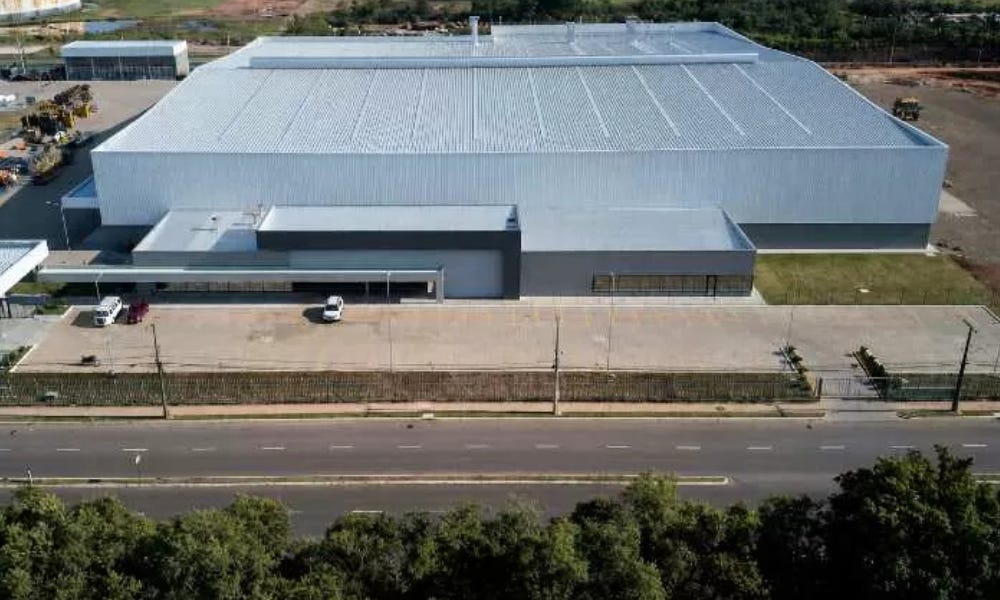
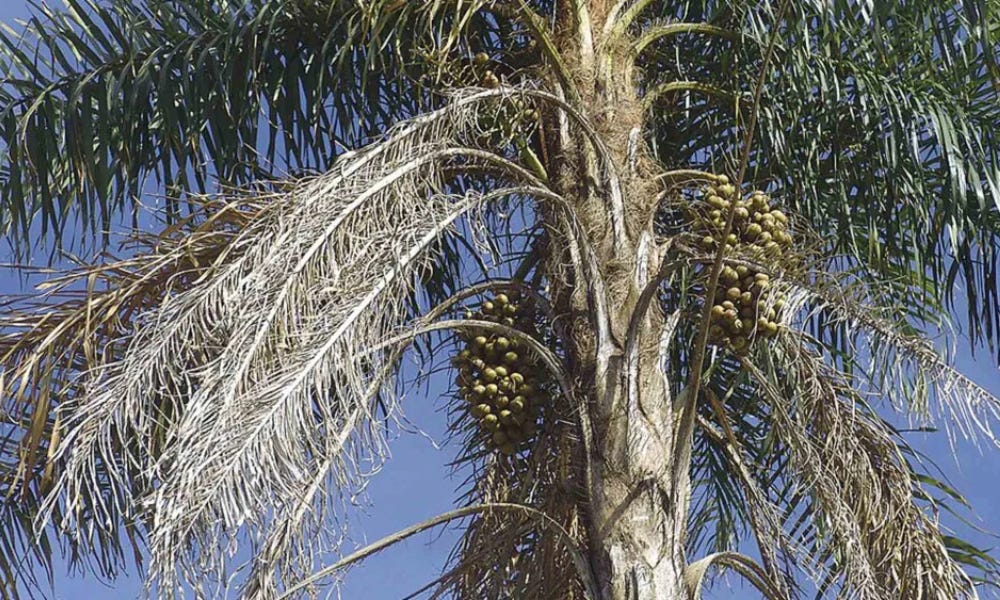
Acelen Uses AI and Macaúba to Cut Sustainable Aviation Fuel Costs - Acelen Renováveis is betting that Brazil’s native macaúba palm can make sustainable aviation fuel competitive with fossil kerosene. The company plans a $1.5 billion biorefinery in Bahia capable of producing 1 billion litres of SAF or renewable diesel annually. At its Agripark research centre, AI developed with a local university increased seed germination from 3% to 85%, while automation cut seed-processing time from 40 seconds to one. Acelen aims to plant 144,000 hectares, largely on degraded land, and says macaúba produces ten times more oil per hectare than soy. Source: The AgriBiz
Nearly $6 Billion in Sustainable Agriculture Funds Puts Brazil in the Spotlight - International funds have almost $6 billion available for regenerative agriculture, deforestation-free supply chains, land restoration and other sustainable farming projects, with Brazil emerging as a leading destination. Vehicles include the Green Climate Fund, AGRI3, &Green, Mirova and Brazil’s Growth Next-Generation Agriculture fund. The capital is available, but the bottleneck is investable projects: funders increasingly require reliable data, measurable outcomes, strong governance and standardized indicators before committing. Source: Forbes
B.Kemi Turns Agricultural Waste into Award-Winning Cosmetic Ingredients - Following last week’s story on Kapeh’s coffee-based cosmetics, Espírito Santo startup B.Kemi is also finding beauty in agricultural by-products. The company won the sustainability category at the Clean Beauty Awards with a fully biodegradable exfoliant made from rice husks and banana-derived microcellulose. Its broader aim is to replace imported and petroleum-based cosmetic ingredients with locally produced biomaterials made from Brazilian agricultural waste. Source: Tribuna Online
Funding & M&A
Terra Genomics Raises $3.6 Million to Engineer Better Biological Inputs - Terra Genomics raised $3.6 million in a seed round led by Pitanga Redux, with participation from Bold.t Capital, to build a research platform in Campinas. The startup combines metabolic engineering, synthetic biology and AI to genetically improve microorganisms already used in biological inputs, targeting traits such as nitrogen fixation, phosphorus solubilization and pest control. Terra says its design-build-test-learn process can cut development cycles from two to three years to as little as two months, while also creating stronger patent protection for new products. Source: AgFeed
Stenon Raises $21 Million to Expand Real-Time Soil Analysis in Brazil - German agtech Stenon raised about $21 million in a Series B led by Pymwymic, with backing from the DeepTech & Climate Fonds and existing investors. Brazil is a priority market for the expansion, with the company already operating in Goiás, Mato Grosso, Paraná and São Paulo. Its FarmLab platform combines sensors, AI and agronomic models to measure plant-available nitrogen and soil organic carbon directly in the field. Stenon says customers have reduced nitrogen fertilizer use by 20%–40% while increasing yields by 2%–8%. Source: Startups
Zen-Noh Acquires 30% of Grupo Cereal to Expand in Brazilian Agribusiness - Japanese agricultural cooperative federation Zen-Noh agreed to acquire a 30% stake in Grupo Cereal, a Goiás-based grain origination, storage, soy-processing and biodiesel company with annual revenue above $1 billion. The founding Barauna family will retain control and management. The partnership is expected to support new investment in storage, biodiesel capacity and geographic expansion, while helping connect Brazilian grain production more directly with Asian markets through Zen-Noh’s global network. Financial terms were not disclosed. Source: AgFeed
Simpar Sells Bahia Grain and Fertilizer Port to ICTSI for $360 Million - Simpar agreed to sell CS Porto Aratu to Philippine port operator ICTSI in a transaction valued at about $360 million, including roughly $200 million of net debt. The two terminals connect by rail to the Matopiba agricultural region and handle fertilizers, minerals, soy and corn, with combined annual capacity of up to 9.5 million tonnes following recent upgrades. The deal marks ICTSI’s entry into Brazil’s dry-bulk segment and gives the global operator a strategic export platform in the Northeast. Completion remains subject to regulatory approval. Source: AgFeed
Raízen Sells Caarapó Sugar and Ethanol Plant to Adecoagro for $152 Million - Raízen agreed to sell its Caarapó mill in Mato Grosso do Sul to Adecoagro for about $152 million, including associated sugarcane assets and supplier contracts. The plant produces sugar, hydrated and anhydrous ethanol, and renewable power, and sits near two other Adecoagro units, creating potential operating synergies. The divestment is part of Raízen’s effort to simplify its portfolio and improve returns while undergoing an out-of-court restructuring involving more than $13 billion of debt. The deal remains subject to regulatory approval. Source: Exame

Macro & Markets
Brazil Could Overtake the US as the World’s Largest Agricultural Exporter - Brazil is on track to surpass the US in agricultural export revenues this year, according to a Financial Times analysis. The gap narrowed to just 1.2% in 2025, when US exports reached $171 billion versus Brazil’s $169.2 billion, after standing at 137% in America’s favour two decades earlier. Rising Brazilian competitiveness, stronger Chinese demand and trade tensions affecting US farmers are accelerating the shift, although the US still leads global corn exports. Source: AgFeed
Brazil’s Soy Slowdown Reshapes the Farmland Market - After more than two decades of expansion, Brazil’s soybean area could stop growing in 2026/27 as weaker prices, tight margins, expensive credit and input uncertainty reduce incentives to open new land. Rabobank expects future growth to rely more on productivity and double cropping. The pressure is already reshaping farmland finance: land in Sorriso reportedly fell from about $40,000 per hectare three years ago to $20,000 today, while some producers are accepting sale-and-leaseback deals at even lower values to raise liquidity. Fiagros see the downturn as an opportunity to finance stronger operators and acquire discounted assets. Source: The AgriBiz and Exame
Brazil Bans Foie Gras Produced Through Force-Feeding - Brazil has prohibited the production and sale of foie gras and other products obtained through forced animal feeding, classifying the practice as animal cruelty. Violations can result in fines and prison sentences of three months to one year. Brazil becomes the second country, after India, to impose a nationwide ban, although similar production restrictions already exist in several other countries. The measure affects only a small domestic market, with three Brazilian producers reportedly using the technique. Source: g1
US Exempts Brazilian Coffee and Beef from New 12.5% Tariff - The US excluded Brazilian coffee and beef from a new 12.5% tariff introduced after a Section 301 investigation into Brazilian trade practices. The exemption list also covers planting seeds, selected fertilizer and pesticide inputs, animal-feed ingredients, leather and certain sugar products within existing quotas. The tariff takes effect on July 24, with exceptions for some goods already in transit. Source: Exame
That’s all for this week, thanks for reading,
KFG
Kieran Finbar Gartlan is an Irish native with over 30 years of experience living and working in Brazil. He is Managing Partner at The Yield Lab Latam, a leading venture capital firm investing in Agrifood and Climate Tech startups across Latin America.