


Welcome to this week’s Brazil AgTech Report. Curated news from the frontline of Brazil’s Agri-Climate Tech ecosystem
Summary
In AgTech news this week, Fruta Imperfeita rescued 300 tons of food waste while boosting farmer incomes, and rancher Carmen Perez promoted facial recognition as the future of cattle welfare and traceability. Israeli startup Taranis exited Brazil after adoption hurdles, while Embrapa, APTA, and Pecege launched an innovation corridor in São Paulo to connect research, startups, and agribusinesses.
On the climate front, coffee growers in São Paulo and Minas delivered Brazil’s first low-carbon beans using Yara’s renewable fertilizer with Cooxupé. Embrapa’s Antecipasto system is lifting beef output while cutting methane, Cargill’s Cocoa Promise now supports 12,000 producers, and Tereos reduced sugarcane fertilizer use by 30%. A Goiás pilot backed by Cargill, Rizoma, Bayer, and Embrapa proved regenerative practices can sustain yields with fewer emissions, while Dexco considers a vast reforestation project in Mato Grosso.
In financing and markets, the government launched a US$2.2 billion BNDES-Finep line to accelerate Industry 4.0 adoption, including on farms. Coffee prices are climbing on tariffs and smaller harvests, Brasília simplified food procurement to buffer producers, China’s farmland approval reignited sovereignty debates, and Paraná’s rural internet rollout added more than US$400 million to state GDP.
🧭 Table of Contents
AgTech
Fruta Imperfeita rescues 300 tons of food
Cattle ID by face recognition
Taranis exits Brazil, eyes return
Innovation corridor launched in São Paulo
Climate Tech
São Paulo and Minas harvest low-carbon coffee
Anticipasto boosts beef output and cuts emissions
Cargill’s Cocoa Promise reaches 12,000 farmers
Tereos cuts fertilizer use by 30%
Regenerative pilot delivers low-carbon harvest
Dexco considers large-scale reforestation in Mato Grosso
Funding
Brazil launches US$2.2B Industry 4.0 credit line
Macro & Markets
Tariffs and tight supply drive coffee prices
Government eases food procurement after tariff shock
China clears path for farmland purchases in Brazil
Internet expansion lifts Paraná’s GDP
AgTech
Fruta Imperfeita rescues 300 tons of food – São Paulo startup Fruta Imperfeita saved 300 tons of produce from waste in the first half of 2025 by distributing “ugly” fruits and vegetables rejected by supermarkets. Founded in 2015, the company delivers subscription boxes and online orders direct to households, connecting small farmers to urban consumers. The model lowers costs for families while creating income streams for producers who would otherwise discard their harvest. With logistics expanded, Fruta Imperfeita is scaling its food waste reduction mission, tapping into consumer demand for sustainable choices and strengthening Brazil’s emerging circular food economy. read more
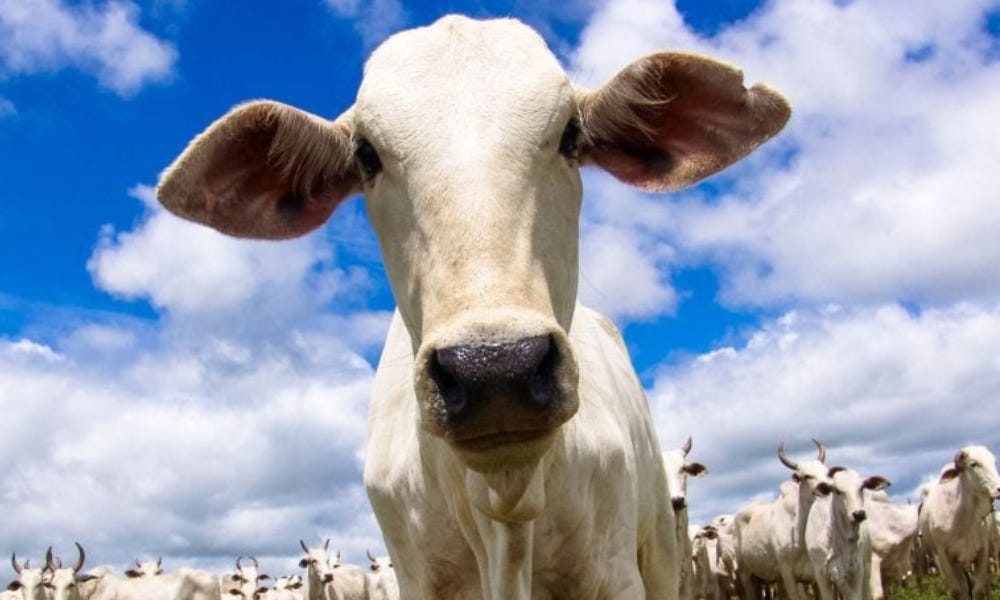
Cattle ID by face recognition – Rancher Carmen Perez is championing AI-powered facial recognition for cattle, a tool that could replace ear tags at less than US$0.20 per scan. The technology reduces handling stress, improves animal welfare, and enhances traceability—critical for Brazil’s beef exports to markets demanding proof of origin. Early pilots show the system can reliably identify animals and track health data across herds. Perez argues the approach will be central to modernizing livestock management while boosting compliance with environmental and welfare standards, positioning Brazil’s beef industry for both productivity gains and stronger ESG credentials. read more
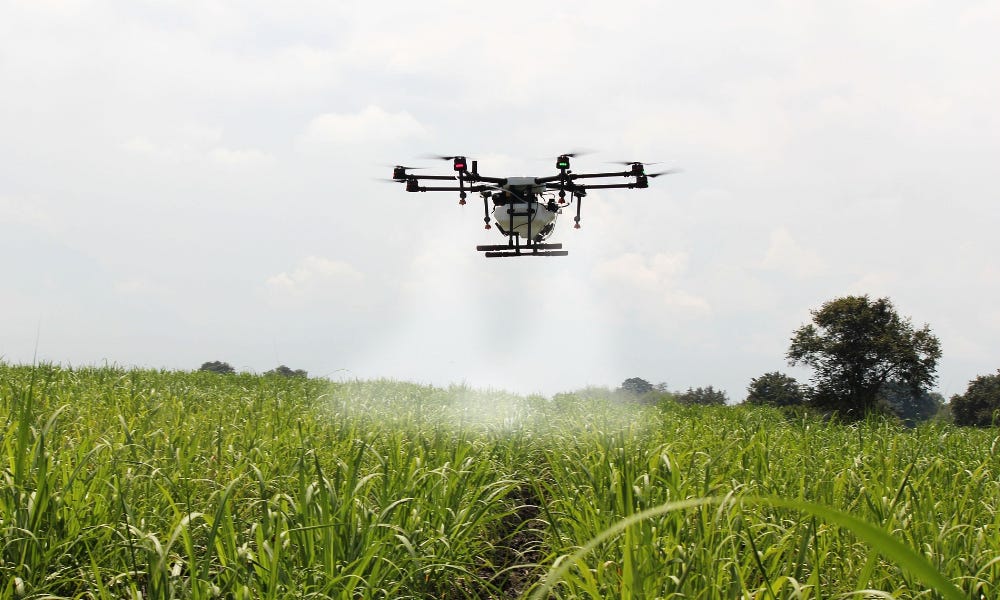
Taranis exits Brazil, eyes return – Israeli crop intelligence startup Taranis has shut down operations in Brazil after struggling to scale its drone-based AI scouting platform. Despite traction in the U.S. and Argentina, adoption lagged in Brazil due to cost pressures and competition from local drone services. Executives say the exit is temporary, with plans to return under new business models or partnerships tailored to Brazilian farmers. The case underscores challenges foreign AgTechs face in adapting to Brazil’s vast and cost-sensitive market, where even advanced technologies must prove clear economic benefits at scale. read more
Innovation corridor launched in São Paulo – Embrapa, APTA, and Pecege have formed an alliance to create an agricultural innovation corridor in São Paulo state. The initiative connects research centers, startups, and agribusinesses, serving as a hub for pilot projects, data sharing, and technology transfer. Organizers say the corridor will accelerate development of solutions in precision farming, sustainability, and digital agriculture, while strengthening São Paulo’s position as a national AgTech leader. By bridging gaps between lab and field, the corridor aims to improve adoption rates and help Brazilian producers remain competitive in a fast-changing global market. read more
Climate Tech
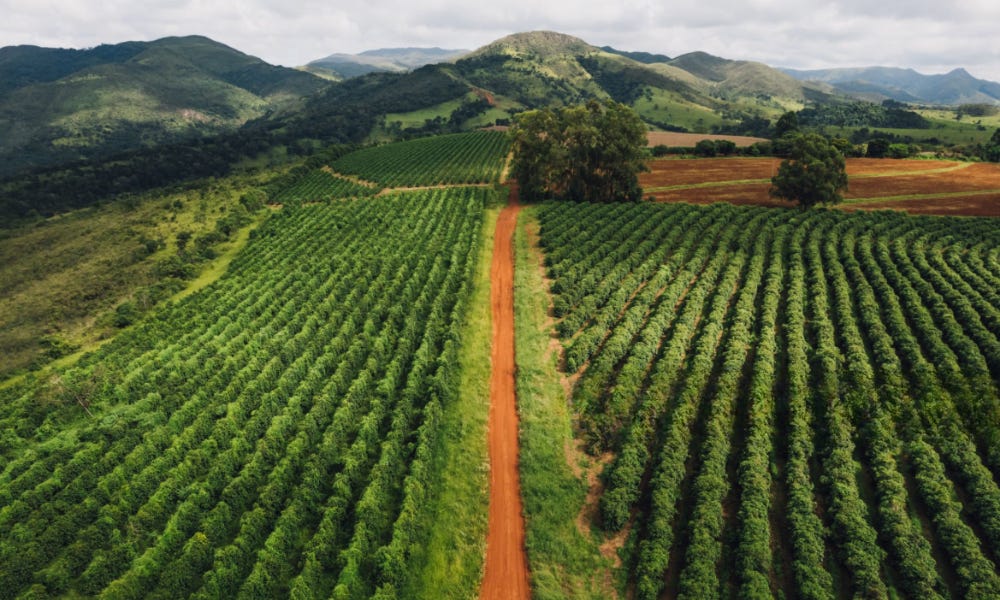
São Paulo and Minas harvest low-carbon coffee – Farmers in São Paulo and Minas Gerais harvested Brazil’s first coffee produced with a fertilizer derived from renewable sources, cutting carbon footprints by up to 40%. Selected by Yara Fertilizantes in partnership with Cooxupé, the world’s largest coffee cooperative, the pilot involved 40 producers. Early adopters reported maintaining quality while lowering emissions, with farms in Monte Santo de Minas and São Sebastião da Grama leading the effort. The initiative highlights Brazil’s potential to supply climate-smart coffee at scale, meeting rising international demand for sustainable commodities. read more
Anticipasto boosts beef output and cuts emissions – A rotational grazing system known as Antecipasto is helping Brazilian ranchers improve cattle productivity while lowering methane emissions. Developed by Embrapa and partners, the method rotates herds through pastures earlier and more frequently, keeping forage young and nutritious. Studies show productivity gains of up to 30% per hectare, with emissions intensity reduced per kilo of beef. Researchers say Antecipasto can be widely replicated in Brazil’s cattle sector, aligning profitability with climate goals in an industry often criticized for its environmental footprint. read more
Cargill’s Cocoa Promise reaches 12,000 farmers – Cargill says its Cocoa Promise program now benefits 12,000 Brazilian cocoa producers with technical assistance, training, and better market access. The initiative, launched globally in 2012, aims to improve farmer livelihoods and promote sustainable cultivation. In Brazil, the focus has been on smallholders in Bahia and Pará, where productivity gains and social programs are lifting incomes. Cargill highlights the effort as part of its commitment to traceable and responsible cocoa supply chains, reflecting global consumer demand for ethical chocolate and bolstering Brazil’s role in sustainable cocoa production. read more
Tereos cuts fertilizer use by 30% – French-owned sugar and ethanol group Tereos has cut fertilizer application across its São Paulo operations by 30%. Using precision agriculture tools, bioinputs, and tailored nutrient mixes, the company has reduced costs and emissions in sugarcane cultivation. Fertilizer is among the largest cost items in cane production and a significant emissions source. Tereos says the program maintains yields while boosting sustainability, positioning the company to better manage volatility in global fertilizer prices. The initiative underscores how bioenergy firms are embedding sustainability deeper into operations. read more
Regenerative pilot delivers low-carbon harvest – A model regenerative farming project in Goiás, backed by Cargill, Rizoma Agro, Bayer, and Embrapa, has completed its first year showing that farmers can maintain yields while reducing emissions. Practices included cover crops, crop rotation, and reduced tillage across soy and corn systems. Results confirmed productivity stability alongside measurable reductions in carbon intensity. Organizers say the pilot provides a replicable blueprint for reconciling farm economics with environmental goals, and positions regenerative agriculture as a scalable path for Brazil’s grain belt. read more
Dexco considers large-scale reforestation in Mato Grosso – Dexco, the Itaúsa-controlled forestry and materials company, has been invited to plant over 1 million hectares of forest in Mato Grosso. The project would support both timber and carbon markets, potentially positioning Dexco as a leader in Brazil’s reforestation economy. Executives say the opportunity aligns with the company’s core business in construction inputs while creating new ESG-aligned revenue streams. If approved, the initiative would rank among the largest reforestation projects in Brazil, reinforcing the growing role of carbon finance in shaping land-use strategies. read more
Funding
Brazil launches US$2.2B Industry 4.0 credit line – The federal government has unveiled a US$2.2 billion financing program through BNDES and Finep to accelerate adoption of Industry 4.0 technologies. The initiative supports acquisition of advanced equipment and digital systems across sectors such as agriculture, manufacturing, and energy. Officials say the goal is to modernize production, boost competitiveness, and expand the use of automation and connected devices. For agribusiness, the line offers opportunities to finance precision farming tools and on-farm digital infrastructure, bridging gaps between frontier technologies and daily operations in the field. read more
Macro & Markets
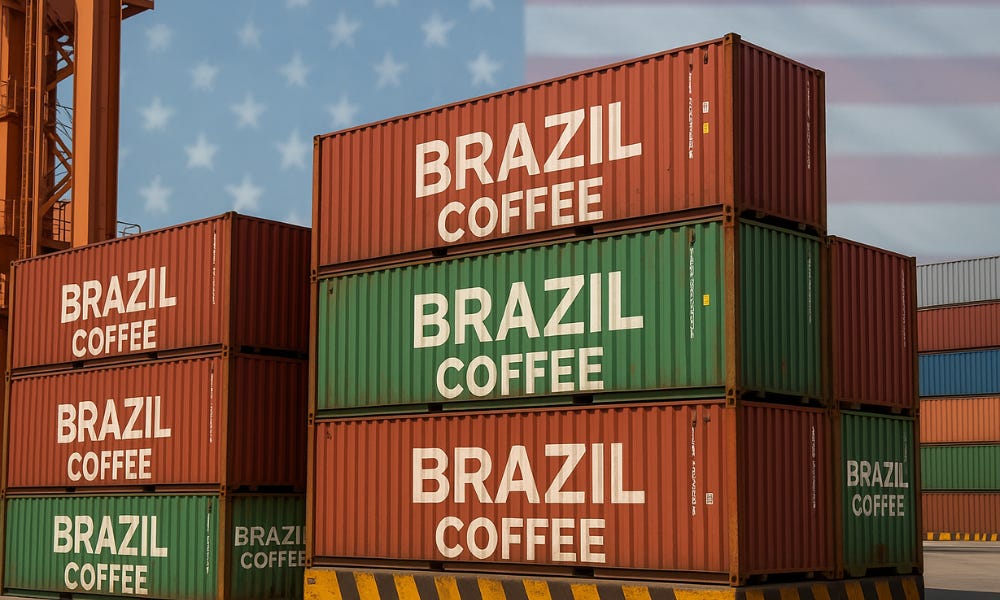
Tariffs and tight supply drive coffee prices – Coffee prices are rising on the back of U.S. tariff hikes on Brazilian imports, combined with a smaller harvest in 2025/26. According to exporters’ council Cecafé, the combination is squeezing global supply even as demand in Europe, the U.S., and Asia remains strong. Analysts expect bullish momentum to continue, underscoring Brazil’s dual exposure to climate volatility and trade policy shifts. As the world’s largest coffee exporter, Brazil’s production swings and external pressures have outsized influence on global coffee markets. read more
Government eases food procurement after tariff shock – Following tariff hikes that disrupted exports of fish, nuts, mangoes, and honey, the federal government has simplified public procurement rules to absorb more of these products into domestic markets. The measure channels supply into school meal and food security programs, protecting small producers and cooperatives from export volatility. Officials say the move strengthens resilience while reducing waste, though it also highlights Brazil’s vulnerability to global trade shifts. The adjustment reflects a growing focus on domestic buffers to shield farmers from external shocks. read more
China clears path for farmland purchases in Brazil – A Chinese state-owned agribusiness has gained approval to purchase farmland in Brazil for large-scale grain cultivation. The move revives debate over foreign land ownership, with critics warning of sovereignty and speculation risks. Supporters argue it could bring capital and infrastructure investment. Legal experts note that while restrictions remain, joint ventures and partnerships with Brazilian entities are opening loopholes. The development underscores how geopolitical and food security strategies are shaping farmland markets in Brazil, with China pushing to secure supplies amid global uncertainty. read more
Internet expansion lifts Paraná’s GDP – Rural connectivity programs have boosted Paraná’s economy by more than US$400 million, according to state data. Between mid-2023 and mid-2024, the state added over 19,000 km² of connected farmland, driving a 37% jump in agricultural productivity in newly covered areas. Partnerships with TIM and Claro are rolling out more than 500 towers under a financing model tied to tax credits. Officials aim for 100% rural coverage by 2026. Beyond boosting farm output, the expansion is generating jobs and tax revenues, showing digital infrastructure’s role in rural development. read more
That’s all for this week, thanks for reading,
KFG
Kieran Finbar Gartlan is an Irish native with over 30 years of experience living and working in Brazil. He is Managing Partner at The Yield Lab Latam, a leading venture capital firm investing in Agrifood and Climate Tech startups across Latin America.