


Welcome to this week’s Brazil AgTech Report. Curated news from the frontline of Brazil’s Agri-Climate Tech ecosystem
Summary
In AgTech this week, expansion and gaps define the agenda. German soil-tech company Stenon is betting big on Brazil with a 1M-hectare target, while Simul Tech and Sustafish show how IoT and AI are reshaping grain storage and Amazon aquaculture. At the same time, rural connectivity tells a mixed story—Paraná’s Conectividade Rural program is driving growth, but a national survey reveals most coffee farms still lack reliable internet.
Climate Tech headlines center on regeneration and resilience. A Brazil–China fund is structuring billions to restore degraded pasture, Confinamento Campanelli is investing heavily to slash methane in cattle feedlots, and Reflorestar is mechanizing eucalyptus planting on slopes once thought unworkable. Embrapa’s drought-hardy dwarf cashew and new projections that the green economy could add US$430B to GDP underscore the opportunity in climate-smart farming.
In Funding and M&A, AgriConnection acquired pesticide registrations from Nutrien, while Arado and Frexco merged toward a US$20M revenue target, highlighting continued consolidation in inputs and distribution.
And on the Macro front, foreign capital and trade deals are redrawing the map. Saudi Arabia is targeting Brazilian agribusiness, exports are shifting from the U.S. to China, Mercosur finally sealed a pact with EFTA, and SGS is preparing EUDR certification. Policy also made waves, with new incentives for data centers and a tariff shock rattling Brazil’s tractor market.
🧭 Table of Contents
AgTech
Stenon targets 1M hectares in Brazil
Simul Tech develops IoT for grain monitoring
Sustafish takes Amazon aquaculture abroad
Connectivity gap and gains in Brazilian farming
Climate Tech
Brazil–China fund targets degraded pasture
Campanelli invests in methane research
Reflorestar scales eucalyptus on steep land
Dwarf cashew thrives in Brazil’s semi-arid
Green economy could add US$430B to Brazil GDP
Funding & M&A
AgriConnection acquires Nutrien assets
FruitTechs merge toward US$20M scale
Macro & Markets
Saudi capital eyes Brazilian agribusiness
Brazil ag exports pivot from U.S. to China
Mercosur–EFTA trade deal signed
SGS prepares EUDR certification for Brazil
Brazil launches incentives for data centers
Tariff shock hits Brazil’s tractor market
AgTech
Stenon targets 1M hectares in Brazil – German AgTech Stenon, which offers real-time soil analysis technology, is doubling down on Brazil with the goal of reaching 1 million hectares monitored. The company has created a new role dedicated to expanding its local footprint and supporting farmers in data-driven soil management. Brazil already represents Stenon’s largest market after Germany, driven by demand for faster, more precise information to guide fertilizer use and boost sustainability. read more
Simul Tech develops IoT for grain monitoring – Brazilian startup Simul Tech, founded by Cristiane Ferraz, has created an IoT-based system to track grain conditions from harvest to storage. The solution monitors moisture, temperature, fuel, and storage quality in real time, with data accessible via mobile or computer. Automated alerts warn producers before losses occur, helping reduce waste and costs. read more
Sustafish takes Amazon aquaculture abroad – Amapá-based startup Sustafish is expanding internationally with its AI-driven aquaculture monitoring system. The platform tracks water quality, feeding, and fish growth in real time, helping farmers cut costs and boost yields while reducing mortality rates. The solution has already drawn attention from markets in Europe and Latin America, positioning Sustafish as one of the first tech-driven fish farming ventures from the Brazilian Amazon to scale abroad. read more
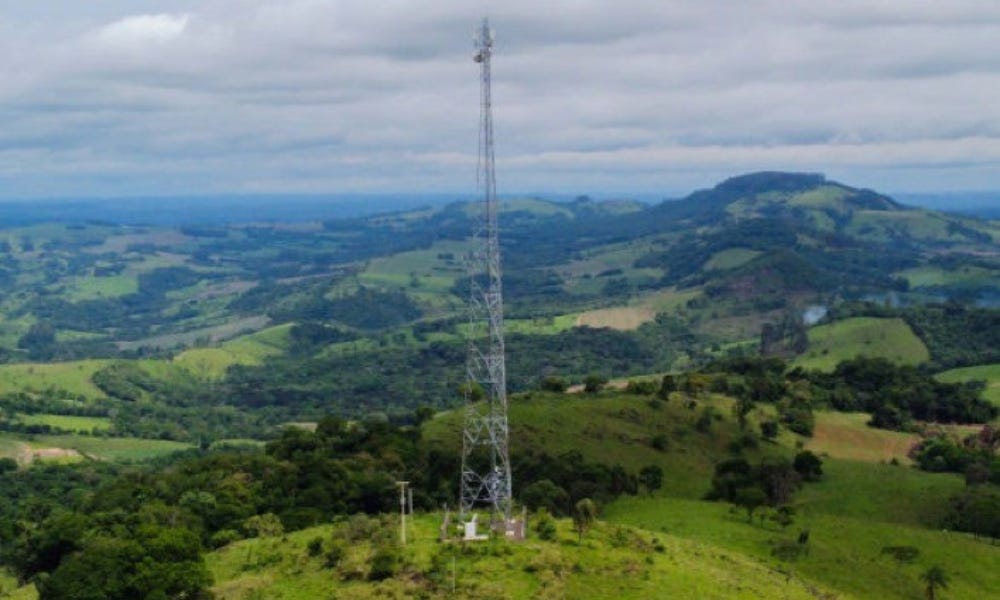
Connectivity gap and gains in Brazilian farming – Digital inclusion is reshaping Brazil’s countryside, but progress remains uneven. In Paraná, the Conectividade Rural program boosted GDP by nearly US$400 million in one year, creating 41,000 jobs and raising productivity by 37% in low-coverage areas. Partnerships with TIM and Claro aim to achieve full state coverage by 2026. Yet nationally, challenges remain: a UFV survey shows only 69% of coffee farms are connected to 4G/5G. São Paulo leads with 76%, while states like Bahia and Goiás lag far behind. read more and more
Climate Tech
Brazil–China fund targets degraded pasture – A new Brazil–China initiative is structuring a US$60 billion plan (part of a broader US$300 billion roadmap) to convert degraded pasture into productive farmland using equity and barter financing models. The project is backed by China’s state-linked investors and Brazilian partners, aiming to unlock land restoration at scale while tying grain offtake to financing flows. read more
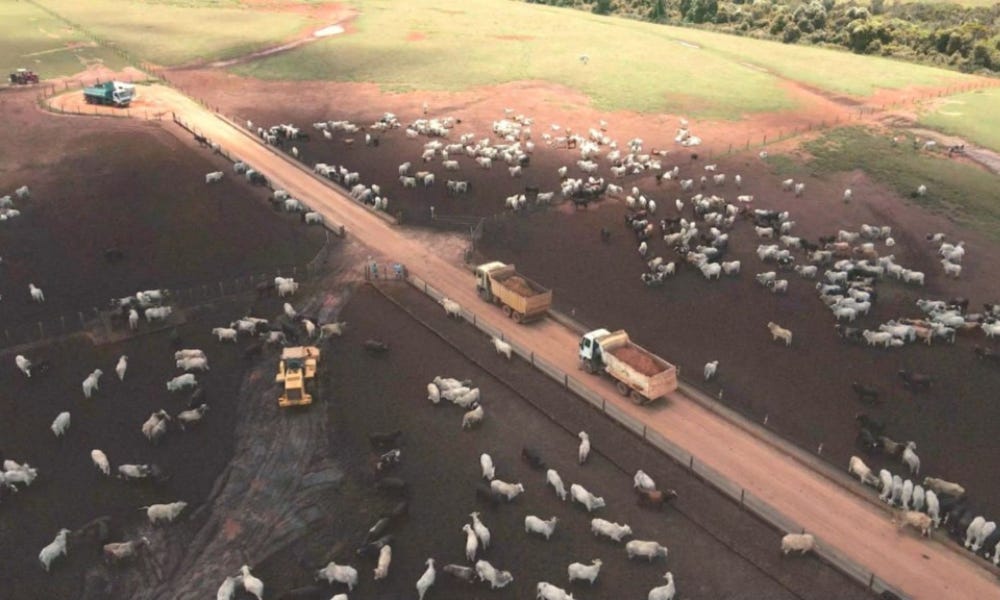
Campanelli invests in methane research – São Paulo-based Confinamento Campanelli, one of Brazil’s largest cattle feedlots, is investing US$10 million in research projects to cut methane emissions. The initiative will test feed additives, genetic selection, and precision nutrition strategies to improve efficiency and sustainability in beef production. read more
Reflorestar scales eucalyptus on steep land – Forestry startup Reflorestar is deploying specialized machinery to plant eucalyptus in mountainous terrain once considered unviable. Backed by Votorantim and Suzano, the initiative targets pulp and paper supply security as flatlands face growing competition from agriculture. The model leverages mechanized planters adapted for slopes, enabling large-scale afforestation in areas previously limited to smallholders. read more
Dwarf cashew thrives in Brazil’s semi-arid – Research by Embrapa shows that dwarf cashew trees continue producing strongly even under drought conditions in the Northeast’s semi-arid zone. With yields surpassing 1,200 kg/ha of nuts and high juice productivity, the crop is proving resilient amid climate stress. Genetic improvement programs are further boosting performance, with new clones offering higher resistance and quality. read more
Green economy could add US$430B to Brazil GDP – A new study from the Coalizão Brasil Clima, Florestas e Agricultura estimates that investing in the green economy could generate up to 10 million jobs and add US$430 billion to Brazil’s GDP by 2030. The analysis highlights opportunities in renewable energy, regenerative agriculture, reforestation, and bioindustry, noting that climate-smart investments could accelerate Brazil’s transition while boosting competitiveness. read more
Funding & M&A
AgriConnection acquires Nutrien assets – Brazilian crop protection company AgriConnection has acquired a portfolio of pesticide registrations from Nutrien, strengthening its product offering across soy, corn, and cotton. The deal supports AgriConnection’s expansion strategy, with CEO André Cavalcanti projecting annual sales of up to US$300 million. The company, backed by Aqua Capital, is positioning itself as a key mid-sized player in Brazil’s highly concentrated agrochemical market, where global giants dominate. read more
FruitTechs merge toward US$20M scale – Brazilian fresh produce startups Arado and Frexco have merged to accelerate growth. The combined company projects revenues approaching US$20 million, positioning itself as a leading tech-enabled player in the fragmented hortifruti market. The move aims to consolidate logistics, improve pricing transparency, and expand reach in urban centers, where demand for direct-to-consumer and B2B fresh supply is rising. Investors see consolidation as key to scaling agrifood startups in Brazil’s perishable supply chain. read more

Macro & Markets
Saudi capital eyes Brazilian agribusiness – Saudi Arabia is stepping up investments in Brazilian agriculture, with the Public Investment Fund (PIF) advancing projects in logistics, infrastructure, and food production. The push reflects Crown Prince Mohammed bin Salman’s strategy to secure food supply and diversify away from oil, channeling billions into global agribusiness. Brazil, with its scale and productivity, is a prime target, particularly in meat and grain chains. read more
Brazil ag exports pivot from U.S. to China – Brazil’s agribusiness exports fell 10.5% in August to US$14.2 billion, with shipments to the United States down 17.6%. In contrast, sales to China surged 32.9% to US$7.2 billion, now accounting for more than half of Brazil’s total ag trade. Soybeans, beef, and cellulose drove the increase, reinforcing China’s dominance as Brazil’s top buyer. read more
Mercosur–EFTA trade deal signed – After more than two decades of negotiations, Mercosur (Brazil, Argentina, Paraguay, Uruguay) has finalized a free trade agreement with the European Free Trade Association (EFTA), composed of Switzerland, Norway, Iceland, and Liechtenstein. The deal will gradually eliminate tariffs on industrial and agricultural goods, opening markets for Brazilian meat, grains, and coffee while expanding access to European dairy, machinery, and pharmaceuticals. read more
SGS prepares EUDR certification for Brazil – With the EU Deforestation Regulation (EUDR) set to take effect at the end of this year, inspection firm SGS is launching a certification program to help Brazilian producers comply. The system will verify traceability, land-use compliance, and zero-deforestation requirements for exports of soy, beef, coffee, and other risk commodities. SGS plans to align its auditing platform with EU criteria and adapt processes to Brazilian realities, giving farmers and companies a tool to secure market access. read more
Brazil launches incentives for data centers – President Lula has signed a provisional measure (MP) creating incentives for data centers under the Redata program, aimed at boosting Brazil’s digital infrastructure. The initiative grants tax benefits, credit lines, and regulatory flexibility to attract global cloud and AI players, while supporting local companies. Officials expect Redata to mobilize billions in investment, reduce Brazil’s dependence on foreign hubs, and accelerate adoption of high-performance computing across sectors including agribusiness, fintech, and climate monitoring. read more
Tariff impact hits Brazil tractor manufacturer Agritech – Agritech, a Brazilian tractor maker that had been growing sales at 27% annually, saw a sudden drop in demand following the new 50% U.S. tariff on Brazilian machinery. Although the company does not export directly to the U.S., the tariff disrupted supply chains and buyer sentiment, impacting domestic sales. Industry analysts warn that the policy could ripple across Brazil’s machinery sector, squeezing both large manufacturers and small family farmers who depend on affordable equipment to boost productivity. read more

That’s all for this week, thanks for reading,
KFG
Kieran Finbar Gartlan is an Irish native with over 30 years of experience living and working in Brazil. He is Managing Partner at The Yield Lab Latam, a leading venture capital firm investing in Agrifood and Climate Tech startups across Latin America.