


Hi, I’m Kieran Gartlan, Managing Partner at The Yield Lab Latam, one of the region’s top AgriFood and Climate Tech VC funds. If you’re curious to learn more about Brazil’s AgTech Revolution, feel free to reach out below, or on LinkedIn. I’m always happy to share what I’m seeing on the ground.
Summary
In AgTech & AI news, a new MRI-based tool from FIT promises faster measurement of beef tenderness, while the latest Radar Agtech report shows growing AI adoption across Brazil’s startup ecosystem. John Deere is shifting from new machine sales toward upgrades and connectivity, Atvos and Tereos tested autonomous tractors in sugarcane fields, Agricef is using AI and computer vision for selective irrigation in forestry, and Moinho Globo is investing in robotics to ease bottlenecks as growth pushes its flour operations to capacity.
In Climate Tech developments, dairy producers are investing in cooling and animal welfare to protect milk yields, while Brazil’s rapid adoption of agricultural drones is bringing new compliance and environmental risks into focus. Atvos is planning a wider biometane buildout to replace diesel in its own fleet, and Brazil’s bioinputs market returned to growth, reaching a new record as biological products gain ground.
On the Funding & M&A front, Ecotrace is seeking up to R$10 million in equity funding to expand its traceability platform, especially in halal markets. 3corações agreed to buy General Mills assets in Brazil, adding Yoki and Kitano to its portfolio, while agribusiness software group Aliare moved deeper into animal protein through another acquisition.
In Macro & Markets, diesel prices jumped sharply in March, reviving debate over a faster increase in Brazil’s biodiesel blend. Brazil also opened an export route through Turkey to reduce dependence on the Strait of Hormuz, while cattle market participants are warning that the expected expiry of China’s quota window could collide with rising feedlot supply and weigh on fed cattle prices later this year.
Table of Contents
AgTech & AI
FIT's MRI Tool Targets Meat Tenderness
AI Moves to the Core of Brazil Agtech
John Deere Shifts from Iron to Upgrades
Atvos and Tereos Pilot Autonomous Tractors
Agricef Takes AI Irrigation Beyond Cane
Moinho Globo Automates as Growth Hits Capacity Ceiling
Climate Tech
Cow Comfort Boosts Milk Yields
Brazil’s Drone Boom Meets Compliance Risk
Atvos Maps Biometane Expansion
Brazil Bioinputs Market Rebounds to Record
Funding & M&A
Ecotrace Seeks up to R$10 Million in Equity Funding
3corações Buys Yoki and Kitano
Aliare Expands into Animal Protein Software
Macro & Markets
Diesel Jump Revives B16 Debate
Brazil Reroutes Exports Around Hormuz
China Quota Expiry Weighs on Fed Cattle Prices
AgTech & AI
FIT's MRI Tool Targets Meat Tenderness - Brazilian startup Fine Instrument Technology (FIT) has developed SpecFit Meat, a magnetic resonance device that can identify beef tenderness in just 12 seconds without cutting or cooking the product. The system captures signals and converts them into objective tenderness indicators, allowing analysis directly on the meat, even after packaging. The company says the technology could help packers certify softer zebu beef, improve product segmentation, reduce subjectivity at purchase, and shorten maturation times that can otherwise last up to 28 days in cold storage. Development took five years and more than R$3 million of investment, with support from FAPESP. read more
AI Moves to the Core of Brazil Agtech - Artificial intelligence is no longer a side feature in Brazil’s agtech ecosystem. The latest Radar Agtech report shows that 83% of surveyed startups already use AI, and for 35% it sits at the core of the product rather than as a support tool. The report maps 2,075 agtechs across 468 municipalities, pointing to an ecosystem that is still expanding but with more maturity and stronger institutional support, including 390 mapped innovation centers. Investors are also becoming more selective, with attention centered on areas such as biotechnology and biologicals, traceability, farm digitalization, and mechanization. see report
John Deere Shifts from Iron to Upgrades - With Brazilian farmers still constrained by high interest rates, tighter credit and rising delinquencies, John Deere is adapting its sales strategy to a market that is buying fewer new machines and asking instead for more productivity from existing fleets. At a proprietary event ahead of Agrishow, the company emphasized connectivity, operational efficiency and financing solutions, including upgrades to its JD Link satellite system and support from Banco John Deere, whose funding capacity was expanded through a partnership with Bradesco. The company is also adjusting production to avoid excess dealer inventory, while continuing to test longer-term technologies such as an ethanol-powered tractor. read more
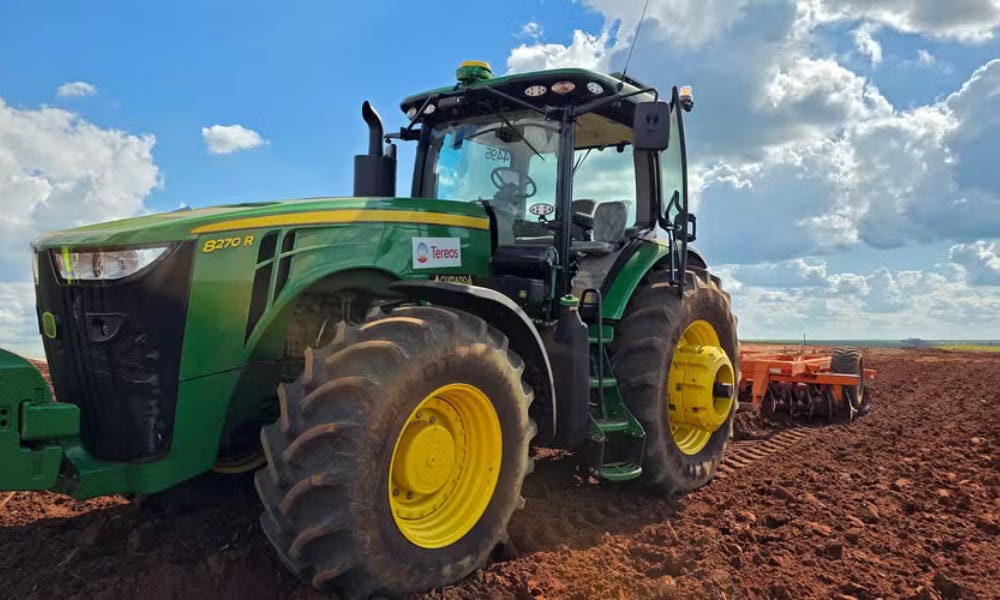
Atvos and Tereos Pilot Autonomous Tractors - Sugar and ethanol groups Atvos and Tereos tested fully autonomous tractors during the 2025/26 crop season, marking what they describe as the first such trials in Brazil’s sugar-energy industry. Using ASI technology adapted onto existing tractors, the companies ran soil preparation operations with remote supervision from control centers and reported gains of up to 20% in productivity, cuts of up to 10% in diesel consumption and lower labor needs, with one operator monitoring three machines at once in Atvos’ tests. The trials also highlighted the remaining bottlenecks, especially poor connectivity in large farming areas and the need to adapt autonomous systems to Brazil’s terrain, soils and legal framework. read more
Agricef Takes AI Irrigation Beyond Cane - Campinas-based Agricef, a company born out of Unicamp university, is using computer vision and AI to develop a selective irrigation system aimed at Brazil’s forestry sector, as it looks to reduce its heavy dependence on sugarcane equipment. The new IrrigAI system uses cameras and algorithms to identify seedlings in the field and apply water only where plants are present, tackling one of silviculture’s most manual and costly operating bottlenecks. The solution is now in pilot tests with major forestry groups including Suzano and Dexco. Agricef says about half of its revenue already comes from its own machines, but around 90% of equipment sales are still tied to cane, making diversification a strategic priority. read more
Moinho Globo Automates as Growth Hits Capacity Ceiling - Paraná flour producer Moinho Globo is operating close to its expanded capacity after boosting output by about 70% to 1,000 tons per day with a new milling line, helping lift 2025 revenue 23% to about $133 million. To remove new bottlenecks in packaging and dispatch, the company is investing about $5 million in automation and robotics for its flour bagging lines, aiming for a fully automated flow from milling to palletized storage and shipment. The group is also expanding commercially with a direct-to-consumer e-commerce channel and plans another $4 million for new flour silos this year, while keeping larger greenfield investments on hold until macro conditions improve. read more
Climate Tech
Cow Comfort Boosts Milk Yields - Brazilian dairy farms are showing that animal comfort is paying off in higher productivity. Fazenda São José in Tapiratiba, Minas Gerais, returned to the top of the Top 100 dairy ranking with average output of 102,500 liters per day in 2025, helped by investments in facilities and a larger producing herd. Management said the upgrades lifted annual productivity by about 3 liters per cow per day, with measures such as extra cooling baths to reduce heat stress. Other producers are following the same path: one farm doubled output in two years by investing in feed and animal welfare, while Cobiça farm invested about $3 million in 2025 and is expanding milking capacity to 3,000 animals. read more
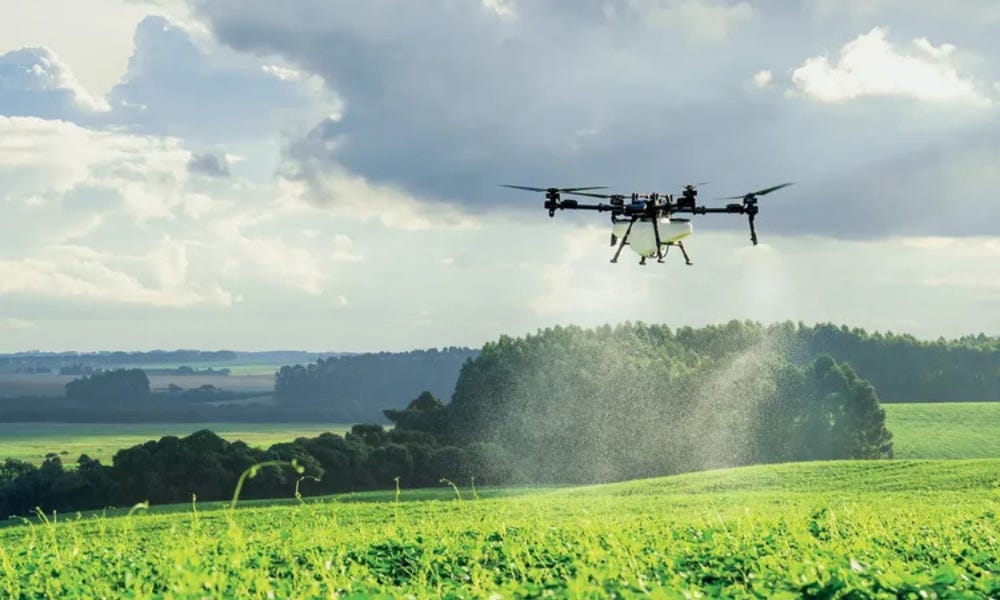
Brazil’s Drone Boom Meets Compliance Risk - Brazil is rapidly expanding the use of agricultural drones, especially for crop spraying, but operational, legal and financial risks are rising alongside adoption. The report highlights spray drift as one of the biggest concerns, with recent cases in Goiás, Maranhão, Minas Gerais and Ceará showing how chemicals can reach neighboring crops, residential areas and local communities when application controls fail. While drones can improve efficiency and precision, Brazil still lacks more consistent operator training, certification and enforcement. The edge is now shifting from simply having the technology to managing it well, with stronger protocols for weather, calibration, monitoring and compliance. read more
Atvos Maps Biometane Expansion - Sugar and ethanol producer Atvos is advancing the construction of its first biomethane plant at the Santa Luzia mill in Mato Grosso do Sul and is already evaluating seven additional units beside its other sugar mills. The Santa Luzia facility will require about $70 million of investment and is expected to produce around 28 million cubic meters of biomethane per harvest. If all eight plants are built, Atvos says it could reach 137 million cubic meters per crop cycle and cut diesel-related emissions by 88.3%. The gas is intended mainly to replace diesel in the company’s own fleet, as Atvos works toward converting all of its vehicles to renewable gas over the coming years. read more
Brazil Bioinputs Market Rebounds to Record - Brazil’s bioinputs market resumed growth in 2025 and reached a record $1.2 billion, up 15.2% from about $1.1 billion in 2024, according to CropLife Brasil. Adoption in the field also accelerated, with the treated area rising 28% to 194 million hectares. Bioinsecticides led revenue with about $420 million, up 33.4%, while biofungicides grew 41% to about $260 million and inoculants advanced 13% to about $162 million. Soybeans accounted for 62% of market value, followed by corn at 22% and sugarcane at 10%, while Mato Grosso remained the largest consuming state. CropLife also said the newly approved Bioinputs Law should help sustain momentum once regulation is finalized. read more
Funding & M&A
Ecotrace Seeks up to $2 Million in Equity Funding - Brazilian traceability startup Ecotrace is seeking between $1 million and $2 million in a new equity round to support expansion into Europe and the Middle East, key destinations for Brazilian agricultural exports. The company, which has already raised about $2.2 million across five previous rounds, is doubling down on the halal market through its Ecohalal subsidiary, created with a $1.2 million investment in 2024. Last year Ecotrace tracked 39 million cattle and 112 million poultry in Brazil, and in 2025 it issued more than 46,000 halal certificates. The platform combines environmental, labor and production data, publishing audit reports on blockchain and linking each shipment to QR-coded product histories. read more
3corações Buys Yoki and Kitano - Grupo 3corações has agreed to acquire General Mills’ operations in Brazil for about $160 million, adding the Yoki and Kitano brands to its portfolio. The deal gives the coffee and food group a stronger position in staples, snacks and seasonings, with Yoki leading in categories such as farofa, microwave popcorn, potato sticks and related products, while Kitano is well known for natural seasonings. 3corações said the acquisition supports its strategy of diversification and portfolio complementarity. The transaction is still subject to regulatory approval and customary closing conditions. read more
Aliare Expands into Animal Protein Software - Brazilian agribusiness software group Aliare has acquired a majority stake in Agrosys, a poultry software specialist whose systems are used in operations handling about 30% of all birds slaughtered in Brazil. The deal deepens Aliare’s move into animal protein agroindustry, adding industrial and quality-management capabilities it previously lacked and extending its presence in Paraguay and Peru. It is Aliare’s fourth acquisition since 2021, following deals in logistics, machinery dealerships and rural credit, and reinforces its strategy of building a broader consolidated platform across the agribusiness value chain. The company now serves more than 5,000 clients and has projected revenue of $46 million for 2026, before any further acquisitions. read more

Macro & Markets
Diesel Jump Revives B16 Debate - Diesel prices in Brazil rose sharply in March, with lower sulfer diesel (S10) up 13.6% month on month and regular diesel up 12.34%, reaching average prices of around $5.30 per gallon. The increase came amid Middle East tensions that pushed oil prices higher and after Petrobras’ mid-March adjustment, reinforcing pressure on freight and broader logistics costs. The spike also reignited debate over raising Brazil’s biodiesel blend from B15 to B16, with Abiove arguing the move could be implemented if the government chooses and help reduce external dependence. The Center-West recorded the steepest monthly rise in regular diesel at 17%, while the North remained the most expensive region. read more
Brazil Reroutes Exports Around Hormuz - Brazil’s Agriculture Ministry has agreed a new logistics route via Turkey to keep agro exports flowing to the Middle East while avoiding the Strait of Hormuz. The arrangement allows Brazilian cargo, especially animal protein, to move by sea to Turkey and then continue by rail or road, with temporary storage and sanitary certification handled in Turkish territory, including halal requirements. The workaround preserves access to key import markets, but at a price: analysts say insurance for the region has surged and total logistics costs could rise by as much as 300%, with exporters and buyers likely forced to share the extra burden. read more
China Quota Expiry Weighs on Finished Cattle Prices - Brazil’s finished cattle market may come under pressure in the second half as the expected exhaustion of the beef export quota to China coincides with a larger supply of animals coming out of feedlots. JBS global CEO Gilberto Tomazoni warned that this overlap is likely to affect finished cattle prices, a view echoed by other analysts who have advised feedlot operators to hedge cattle prices in the futures market. For meatpackers, lower cattle prices could support margins, while for ranchers the risk is a widening gap between today’s physical market and lower forward contracts. read more
That’s all for this week, thanks for reading,
KFG
Kieran Finbar Gartlan is an Irish native with over 30 years of experience living and working in Brazil. He is Managing Partner at The Yield Lab Latam, a leading venture capital firm investing in Agrifood and Climate Tech startups across Latin America.