


Welcome to this week’s Brazil AgTech Report. Curated news from the frontline of Brazil’s Agri-Climate Tech ecosystem
Summary
In this week's AgTech news, MeteoIA landed a record round from Bossa Invest for its AI-powered climate risk model, Vega launched a geospatial grain platform aimed at distributors and traders, and Weg is doubling down on solar and battery storage to serve off-grid farms and reduce diesel use.
In Climate Tech, Radix Florestal secured $2 million to scale Amazon reforestation, Grupo Potencial announced a $370 million corn ethanol project in Paraná, new research shows IATF can cut cattle emissions by nearly half, and Embrapa is promoting sustainable tech adoption across citrus farms.
On the M&A front, BRF and Marfrig’s long-awaited merger has been approved by shareholders, Carbonext acquired Mangue Tech to automate emissions tracking, Baldoni entered Minas Gerais with the Beezy acquisition, and Oman’s Solaris fund took control of Agribrasil and a key port terminal.
And in Macro & Markets, Mexico has overtaken the U.S. as Brazil’s second-largest beef buyer, coffee exporters are eyeing China amid new U.S. tariffs, soy area is set to expand despite squeezed margins, and Brazil’s cocoa and honey industries face mounting trade barriers in Europe and Africa.
Table of Contents
AgTech
MeteoIA raises record round for climate risk AI
Vega launches geospatial grain monitoring platform
Weg expands solar and battery division for farms
Climate Tech
Radix secures $2M for Amazon reforestation
Grupo Potencial to invest $370M in corn ethanol
IATF tech cuts livestock emissions up to 49%
Embrapa backs sustainable tech in citrus sector
M&A
BRF and Marfrig merger approved by shareholders
Carbonext acquires Mangue Tech emissions platform
Baldoni buys Beezy to expand honey portfolio
Oman fund takes control of Agribrasil and TESC
Ag M&A down 28% in H1 2025
Macro & Markets
Mexico surpasses US in Brazilian beef imports
US coffee tariffs may shift trade to China
Brazil soybean crop poised for record in 2025/26
EU and Nigeria tariffs threaten Brazil cocoa exports
Honey exports blocked by new EU certification rules
AgTech
MeteoIA predicts climate risk, lands record investment – Brazilian startup MeteoIA has developed the country’s first AI system capable of forecasting long-term climate risk, attracting a landmark investment from Bossa Invest, the VC firm led by João Kepler. While the amount wasn’t disclosed, Bossa called it the largest investment in its history. The AI can predict climate-related disasters up to a year in advance and is aimed at sectors like agriculture, energy, insurance, and logistics. read more
Vega launches AI-powered grain monitoring platform – Brazilian AgTech Vega Monitoramento unveiled its new “Grain Station” platform at Andav 2025, combining geospatial data, remote sensing, and AI to boost traceability and efficiency in grain supply chains. Designed to support distributors, cooperatives, and traders, the system offers harvest forecasting, environmental compliance tracking, and real-time monitoring of farms and storage facilities. Vega currently monitors over 48 million hectares and works with major players like Bunge. The new solution builds on Vega’s LYRA platform and aims to meet rising market demands for transparency and sustainability. read more
Weg doubles down on solar and battery tech for farmers – Facing global trade headwinds, Weg is ramping up its push into rural markets with a new agro-focused division and expanded offerings in solar energy and battery storage. Traditionally known for electric motors, the Brazilian multinational is now targeting energy independence for farms—especially in off-grid areas—through solar microgrids and battery systems. Sales of solar products have grown 40% annually since 2018, and Weg sees strong growth potential in agriculture, where solar-battery combos reduce diesel dependence. The strategy also helps offset export risks amid U.S. tariff uncertainty. read more

Climate Tech
Radix Florestal lands US$2M to expand Amazon reforestation – Brazilian reforestation startup Radix Florestal secured US$2 million from German impact investor Ecosia, marking its first direct investment in a Brazilian startup. The funds will help Radix scale its Amazon footprint to 2,000 hectares by 2030, using drones and satellites to monitor and verify restoration. The company aims to sequester 21 million tons of CO₂ by 2050 while generating income for local communities—5% of raised capital is allocated to social projects in Roraima. The startup also joins the Nature Investment Lab, backed by BB, BNDES, and GFANZ. read more
Grupo Potencial invests US$370M in corn ethanol plant – Brazilian energy group Grupo Potencial will invest over US$370 million in a new corn ethanol plant in Lapa, Paraná, aiming to anchor what it calls the world’s largest biofuel complex. The project complements ongoing investments in biodiesel and soybean crushing, with future plans for SAF (sustainable aviation fuel). The complex is set to use 1.2M tons of corn annually—roughly 6% of Paraná’s crop—and will feature pipelines linking to distribution and refining hubs. The move aligns with Brazil’s 30% ethanol fuel blend and growing demand for low-carbon energy. read more
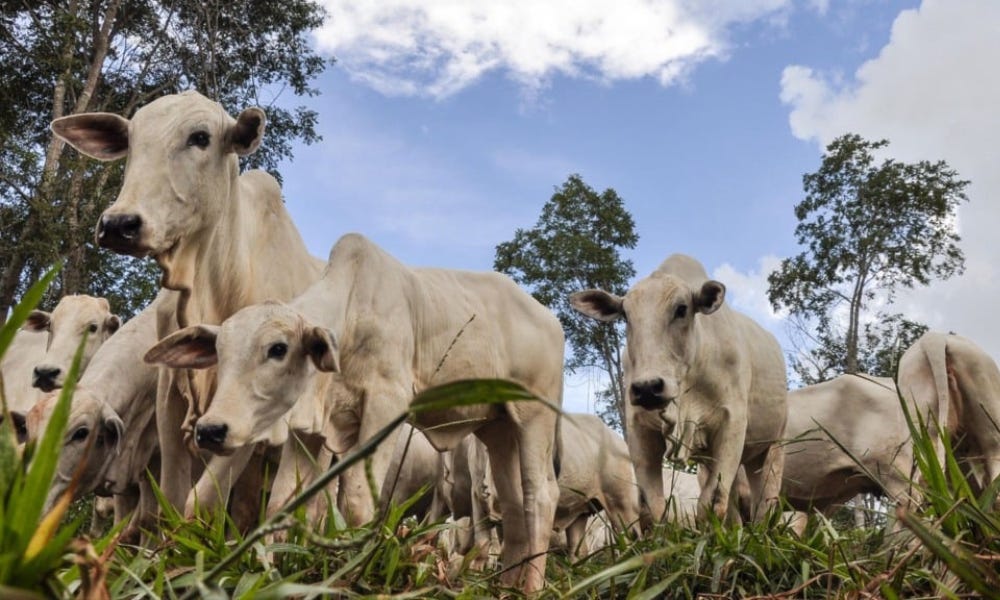
Study shows IATF tech cuts livestock emissions by up to 49% – A new study by USP, Embrapa, and private partners shows that Timed Artificial Insemination (IATF) can slash the carbon footprint of beef cattle by up to 49%, and dairy herds by 37%, compared to natural breeding. IATF improves reproductive efficiency and genetics, enabling producers to raise more food with fewer emissions and less land use. With Brazil’s vast herd and 70% of pastures still underperforming, the findings highlight how scalable tech can align productivity with sustainability in livestock. read more
Tech meets citrus in push for greener groves – A new Embrapa study outlines how sustainable technologies are reshaping Brazil’s citrus industry, traditionally viewed as high-input and labor intensive. Autonomous sprayers and harvesting machines are now gaining ground, reducing human contact with agrochemicals and boosting operational efficiency. Farm management platforms are also helping integrate orchard data, track inputs, and meet certification demands. But while the opportunities are growing, so are the barriers: high upfront costs, lack of technical training, and access to credit remain major hurdles. read more
M&A
BRF–Marfrig Merger Gets Shareholder Green Light – Shareholders of BRF and Marfrig have approved the merger of the two Brazilian food giants, moving forward with a share-swap deal that will create MBRF, a global meat and processed foods company with US$28 billion in annual revenues. The deal, announced in May, still requires final approval at a Marfrig shareholder meeting and by regulators. Once completed, it will consolidate Marfrig’s control over BRF, forming one of the largest protein companies in the world. read more
Carbonext buys Mangue Tech to automate emissions tracking Carbonext has acquired 40% of Mangue Tech, a SaaS startup that uses AI to calculate carbon footprints from utility bills and logistics data. Founded by former Linx execs, Mangue helps companies measure emissions using a database of over 50,000 factors. The deal follows Carbonext’s earlier stake in NaturAll Carbon and expands its NetZero Solutions offering. Backed by Shell, Carbonext aims to serve Brazil’s growing SME market as new regulations drive demand for carbon inventories and offsets. Mangue will remain independent while powering Carbonext’s internal and client-facing tools. read more
Baldoni buys Beezy to boost national honey play – Brazil’s top honey brand Baldoni has acquired Beezy to enter the Minas Gerais market, marking a key step in its national expansion. Known for its authenticity and sustainability focus, Baldoni plans a gradual product transition and portfolio expansion, including floral varieties and bee-based sweets. The deal reinforces its positioning in conscious nutrition and hive-derived innovation. read more
Oman fund acquires Agribrasil and port stake – Agribrasil, Brazil’s third-largest grain exporter with 100% local capital, has been acquired by Solaris Brazil, a subsidiary of Oman’s sovereign wealth fund. The deal also includes majority control of the Santa Catarina port terminal (TESC). Founder Frederico Humberg will stay on for at least four years, after abandoning an IPO plan due to high interest rates. The transaction allows Solaris to vertically integrate its supply chain, expand commodity offerings, and boost port logistics. Agribrasil’s net revenue tripled year-over-year in Q1 2025, reaching over US$260 million. read more
Ag M&A drops 28% in H1 2025– Brazil’s agribusiness sector recorded just five M&A deals in the first half of 2025, down 28.6% year-on-year, according to KPMG. Four of the transactions involved foreign investors acquiring stakes in local companies. The fertilizer segment saw four deals, 20% fewer than the same period in 2024, while sugar and ethanol registered just one. Analysts cited macroeconomic uncertainty and high interest rates as key headwinds, though investor interest remains strong due to ag’s global relevance and sustainability gains. read more

Macro & Markets
Mexico replaces U.S. as Brazil’s #2 beef buyer – With U.S. demand falling due to new tariffs, Mexico has surged into second place among buyers of Brazilian beef. Imports jumped 420% in H1 2025, from 3,100 to 16,100 tons. Revenue soared from US$15.5M in January to US$89.3M in June. China remains the top buyer, accounting for nearly half of total exports, but also posted a 64% increase in monthly volume since January. The U.S., meanwhile, saw a 67% drop in beef imports from Brazil, as 30,000 tons were withheld due to a new 50% tariff. read more
US coffee tariff may reroute Brazil’s beans to China – A new 50% tariff on Brazilian coffee imposed by the Trump administration is prompting exporters to redirect shipments away from the US. With demand rising in China—especially among young professionals switching from tea to coffee—Brazilian beans could find a new home in Asia. Analysts also expect more shipments to Europe, where no tariffs apply, and some suggest traders may re-export via third countries. The US remains Brazil’s largest coffee buyer, accounting for one-third of its US$4.4B bilateral trade. read more
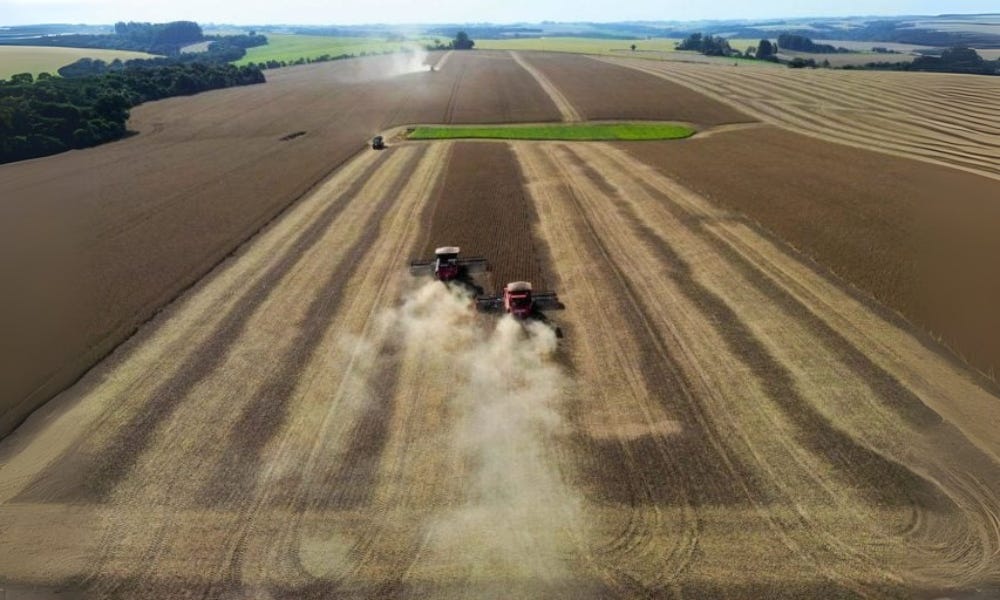
Soybean sowing to hit new record – Brazil’s 2025/26 soybean area is projected to grow 2% to 48.6 million hectares, according to Céleres, despite lower profit margins. A modest 0.5% boost in productivity could push total output to a record 177.2 million tons, surpassing the previous cycle. While Mato Grosso remains the key growth driver, analysts warn of squeezed margins—especially in states like Paraná—and cautious investment amid weaker price forecasts for March 2026. Slower Chinese demand is also a drag on more aggressive expansion plans. read more
Tariff hike hits cocoa – Brazil’s cocoa sector could lose nearly US$33 million if proposed tariff increases by Nigeria and the EU are enacted, according to AIPC. The EU plans to raise import duties on processed cocoa products, while Nigeria may impose a 5% tax on bean exports. Brazil’s exporters, already battling high costs and logistics hurdles, say the changes could undermine competitiveness just as demand for sustainable, deforestation-free cocoa rises. The industry is calling for diplomatic action and fiscal support to avoid further strain on margins. read more
Honey stuck at home – Over 2,000 tonnes of Brazilian honey are stranded in warehouses due to a tariff hike by the European Union, which has reclassified honey as a product requiring a new certification process under its deforestation-free regulation. Exporters warn the shift could cripple small and mid-sized producers, particularly in the Northeast, who rely heavily on EU markets. Industry leaders are pushing for urgent dialogue to avoid long-term damage to a sector known for its traceability and low environmental impact. read more
That’s all for this week, thanks for reading,
KFG
Kieran Finbar Gartlan is an Irish native with over 30 years of experience living and working in Brazil. He is Managing Partner at The Yield Lab Latam, a leading venture capital firm investing in Agrifood and Climate Tech startups across Latin America.