


Hi, I’m Kieran Gartlan, Managing Partner at The Yield Lab Latam, one of the region’s top AgriFood and Climate Tech VC funds. If you’re curious to learn more about Brazil’s AgTech Revolution, feel free to reach out in the comments below, or on LinkedIn. I’m always happy to share what I’m seeing on the ground.
In AgTech news this week, Zeit is taking lab analysis to the field with portable AI tools, while Semear Digital and Embrapa Agricultura Digital are using drones and computer vision to improve cattle slaughter timing. Brazilian researchers also advanced nanotechnology for slower urea release and biological control for soybean pests.
In Climate Tech developments, Copersucar is preparing two new biomethane plants tied to sugarcane mills, while LOTS Group and Cocal will use biomethane-powered trucks to transport vinasse and reduce diesel use.
On the Funding & M&A front, Aimirim raised capital from Indicator Capital and SP Ventures, Amaggi agreed to buy 40% of FS, Cleam Capital acquired control of Grano Alimentos, and Oby Capital is raising a new farmland Fiagro. Fertalvo and Novatech also formed Alvotech to expand specialty fertilizers in the Cerrado.
In Macro & Markets, StoneX Leite Brasil launched a dairy hedging platform with Cepea, Brazil’s meat exporters pushed back against new EU antimicrobial rules, and the National Monetary Council softened rural credit environmental requirements after farm-sector pressure.
Table of Contents
AgTech
Portable Lab Speeds Farm Decisions
Beef Timing Gets Smarter
Nano Nutrients Reduce Waste
Biologicals Battle Soy Pest
AI Maps Farmland
Climate Tech
Biomethane Buildout Expands
Green Logistics Cuts Emissions
Funding & M&A
Factory Automation Funded
Corn Ethanol Consolidates
Frozen Food Funded
Farmland Fund Raises
Fertilizer JV Expands Footprint
Macro & Markets
Milk Market Modernizes
EU Meat Rules Threaten Brazil Exports
Credit Rules Recalibrated
AgTech
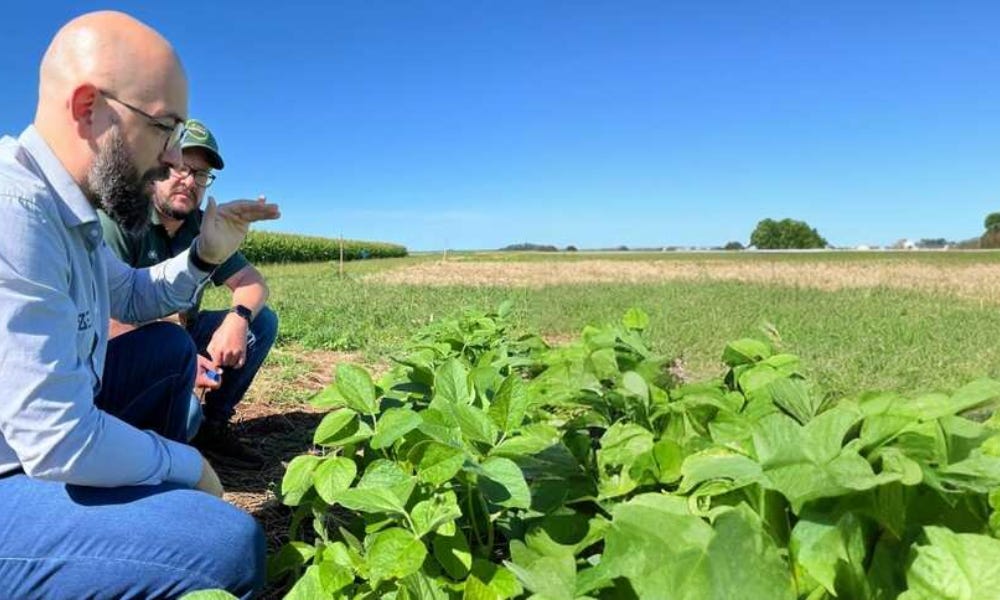
Portable Lab Speeds Farm Decisions – Zeit, a deeptech startup from Rio Grande do Sul, is bringing chemical analysis out of the lab and into the field with portable devices and embedded AI. Founded in 2020 by researchers from the Federal University of Santa Maria, the company expects to reach about US$1m in revenue in 2026, five times more than in 2025, after growing its client base by 300% since January. A joint venture with Nira monitors commodity quality in soymeal and milk, with more than 250,000 tons already tracked, while its Zeit K tool measures potassium in plants in under five minutes to guide fertilizer decisions. read more
Beef Timing Gets Smarter – Researchers are testing drones and AI to identify the ideal slaughter timing for feedlot cattle, potentially reducing feed costs and improving herd management. The system was tested at Fazenda Campanário in Laguna Carapã, Mato Grosso do Sul, tracking 110 Nelore cattle over 112 days. Using computer vision, the technology identified that animals were ready for slaughter up to one week earlier than traditional methods, creating an estimated feed saving of about US$2,700 for that lot. Applied across Fazenda Campanário’s 14,600 confined cattle, the efficiency gain could reach roughly US$360,000. The study was developed by Semear Digital in partnership with Embrapa Agricultura Digital. read more
Nano Nutrients Reduce Waste – Brazilian researchers developed a biodegradable nanotechnology coating that slows the release of urea, aiming to improve fertilizer efficiency and reduce nitrogen losses. The work, led by Embrapa, the University of Ribeirão Preto, Unesp, and USP, combines castor-oil-based polyurethane with mineral nanoclay to encapsulate urea granules. In water-release tests, conventional urea released more than 85% of its nitrogen in four hours, while the nanoclay-coated version released only 22% over nine days. In greenhouse tests with capim-piatã, the coated fertilizer improved dry matter production and nitrogen uptake, with absorption reaching twice the level seen under conventional fertilization. read more
Biologicals Battle Soy Pest – Brazilian researchers identified a new use for the bacterium Bacillus altitudinis to control brown stink bug, one of the hardest pests to manage in Brazilian soybean fields and linked to estimated losses of about US$2.2 billion per season. The discovery by INCT NanoAgro, connected to Unesp, showed near 80% mortality in lab tests, compared with the 30% to 40% efficiency range cited for many chemical products. The bacterium works through contact with the insect’s legs rather than ingestion, offering a different biological pathway. The technology is still at proof-of-concept stage and could take three to six years to reach the market. read more
AI Maps Farmland – Researchers from U.S. universities have built a global AI-powered agricultural field map that identifies farm boundaries from satellite images, creating a standardized dataset for crop monitoring, food security, and land-use analysis. The Fields of The World project mapped 1.55 billion agricultural polygons across 241 countries and territories in 2025, using Sentinel-2 imagery and a machine-learning model trained on field-boundary data from 24 countries, including Brazil. The tool could support more granular analysis of farms, crops, deforestation risk, and climate programs, although the project appears to be global research rather than a Brazil-specific deployment. read more
Climate Tech
Biomethane Buildout Expands – Copersucar plans to build two new biomethane plants at associated sugarcane mills from late 2026 or early 2027, adding momentum to its renewable gas strategy. Each unit is expected to cost between about US$40 million and US$60 million, bringing total investment for the two plants to as much as US$120 million. The company already has biomethane plants linked to Cocal in Narandiba and Paraguaçu Paulista, using vinasse and filter cake from sugarcane processing. Its BioRota project has replaced around 5 million liters of diesel, avoided more than 8,000 tons of CO2 emissions, and completed over 13,000 truck trips since April 2024. read more
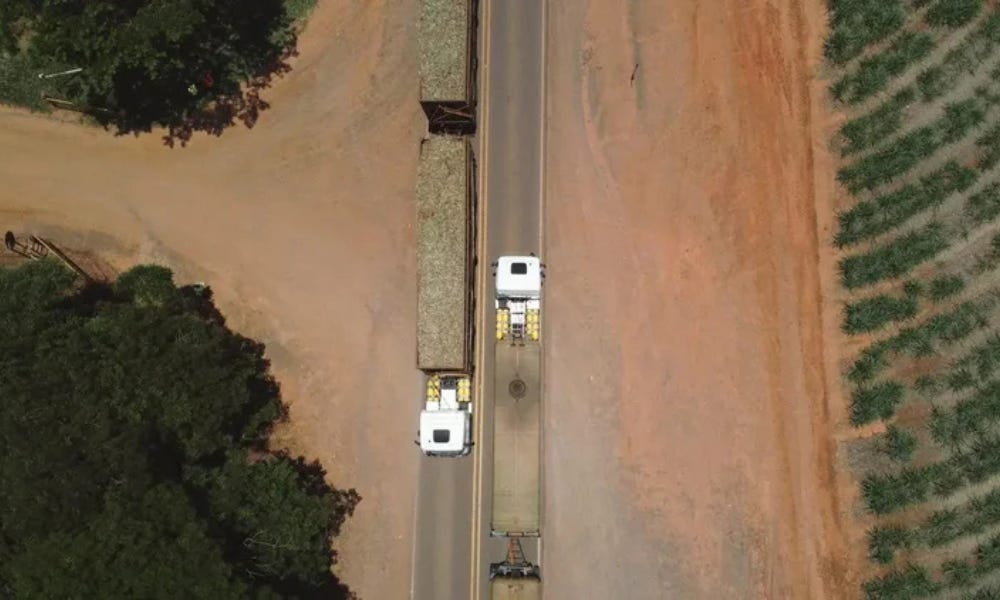
Green Logistics Cuts Emissions – LOTS Group and Cocal will launch Brazil’s first industrial-scale operation using biomethane-powered trucks to transport vinasse, an organic fertilizer produced from sugarcane ethanol residues. The project will use 44 trucks running entirely on biomethane and is expected to replace more than 19 million liters of diesel over five years, avoiding about 41,000 tons of CO2 emissions. The companies estimate a 91% reduction in pollutants compared with an equivalent diesel truck operation. The partnership could later expand biomethane use to other areas of Cocal’s agricultural operations, including sugarcane transport between fields and industrial plants. read more
Funding & M&A
Factory Automation Funded – Aimirim raised about US$2 million in a round co-led by Indicator Capital and SP Ventures to scale automation tools for agroindustries. Founded ten years ago by mechanical engineer Renato Pacheco Silva and incubated at the Federal University of Uberlândia, the deeptech company combines hardware and software for industrial monitoring, including sensors that measure grain volumes in silos and devices that help reduce energy use in sugarcane boilers. The funding will support larger orders of its IoT devices, expand its commercial team, and help the company move beyond large clients such as BAT, Raízen, and VLI into mid-sized agroindustrial customers. read more
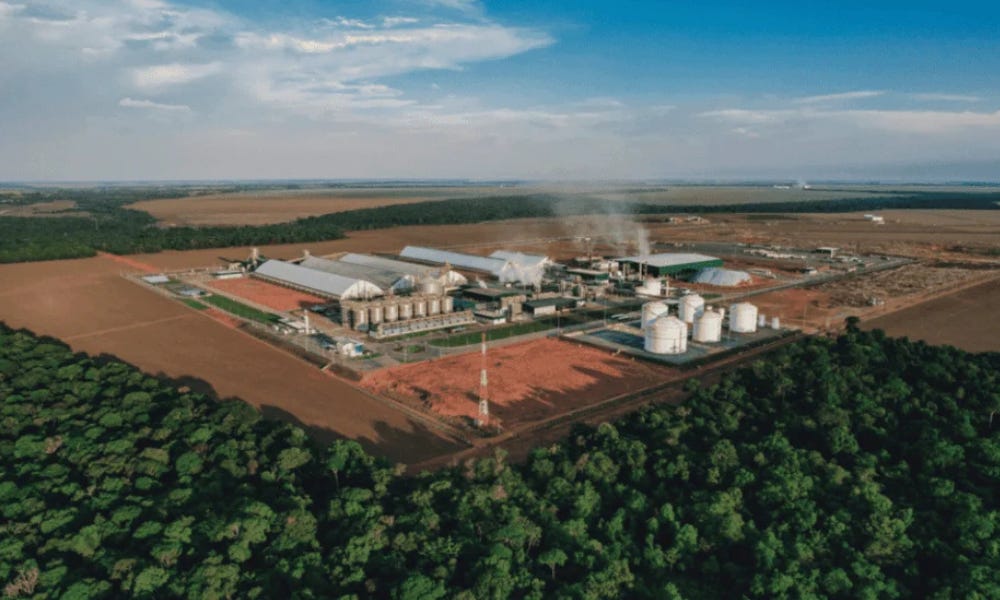
Corn Ethanol Consolidates – Amaggi agreed to acquire 40% of FS, marking one of the most significant deals in Brazil’s corn ethanol industry. The transaction, filed with Cade for approval, includes a US$100 million primary share issuance by FS, while the value of Amaggi’s secondary purchase from existing shareholders was not disclosed. FS and Amaggi will remain separate companies, but the agreement gives Amaggi board representation and exclusivity for future corn ethanol investments through FS. FS is building its fourth plant in Campo Novo do Parecis, has two additional Mato Grosso sites, and expects to open a carbon capture and storage unit in Lucas do Rio Verde in September. read more
Frozen Food Funded – Cleam Capital acquired control of Grano Alimentos, Brazil’s leading frozen vegetable company, opening a new growth cycle after a decade under Arlon. The transaction value was not disclosed and Rabobank advised the process. Based in Serafina Corrêa, Rio Grande do Sul, Grano holds more than 40% of the Brazilian frozen vegetable market, according to Nielsen, and expects to reach about US$55 million in revenue in 2026. The company aims to grow toward roughly US$180 million in annual revenue by expanding geographically, especially into the Center-West, Northeast, and North, while strengthening retail, food service, and co-packer channels. read more
Farmland Fund Raises – Oby Capital is seeking about US$23 million for a new Fiagro focused on buying and leasing farmland to producers and sugarcane mills. The Ribeirão Preto-based manager has around US$360 million under management and already runs a listed farmland Fiagro, LAFI11, with about US$16 million in assets. The new fund will use a buy-to-lease strategy and target qualified investors, with XP as distributor. Its initial pipeline includes 5,000 hectares across São Paulo and Minas Gerais, valued at roughly US$70 million, mostly linked to sugarcane production. The fund aims to acquire three properties. read more
Fertilizer Footprint Expands – Fertalvo and Novatech formed Alvotech, a joint venture focused on bringing specialty fertilizers to Cerrado producers in crops such as soybeans, corn, and cotton. The company is building a factory in Rondonópolis, Mato Grosso, expected to begin operations in September with capacity of 3 million to 5 million liters per year and investment of about US$2.2 million to US$2.6 million. Alvotech expects to generate around US$5.5 million in revenue in 2026 and sees a potential specialty fertilizer market of about US$620 million. It has also opened a commercial base in Rio Verde, Goiás, to support expansion across the Cerrado. read more
Macro & Markets
Milk Market Modernizes – StoneX Leite Brasil launched a new hedging tool for Brazil’s dairy market in partnership with Cepea, giving producers, cooperatives, dairies, traders, and retailers a way to lock future prices and protect margins. The OTC platform offers four contracts: producer milk and UHT milk, each at 40,000 liters, mozzarella at 4,000 kilos, and industrial whole milk powder at 5 tons. Settlement will use Cepea price indicators, with no physical delivery. The tool arrives as Brazil’s dairy chain faces price volatility, low planning visibility, and a dumping investigation into milk powder imports from Argentina and Uruguay. read more
EU Meat Rules Threaten Brazil Exports – Brazil’s meat industry reacted after the European Union removed the country from its list of nations that comply with the bloc’s rules on antimicrobial use in animal production. If the decision is not reversed, exports of beef, chicken, honey, eggs, and other animal-origin products could face restrictions from September 3. Brazil exported about US$1.8 billion in meat to the EU in 2025, including 128,000 tons of beef and 230,000 tons of chicken. Industry groups ABIEC and ABPA said exports continue normally for now and that Brazil is working with officials to meet the EU’s technical requirements. read more
Credit Rules Recalibrated – Brazil’s National Monetary Council delayed and softened environmental requirements that had restricted rural credit for producers flagged by Prodes satellite deforestation monitoring. The rule, which began in April, had drawn strong opposition from farm groups and triggered a legal challenge by CNA at the Supreme Court. The CMN will now phase in the measure by farm size, with larger properties starting in January 2027, and will accept additional documents such as vegetation suppression authorizations and environmental commitment terms to prove compliance. Farm leaders called the move a partial victory but said they will keep pushing for broader changes in Congress and the courts. read more

That’s all for this week, thanks for reading,
KFG
Kieran Finbar Gartlan is an Irish native with over 30 years of experience living and working in Brazil. He is Managing Partner at The Yield Lab Latam, a leading venture capital firm investing in Agrifood and Climate Tech startups across Latin America.