


Hi, I’m Kieran Gartlan, Managing Partner at The Yield Lab Latam, ranked number two in the world for AgTech investments last year by AgFunder. If you’re interested in learning more about Brazil’s AgTech opportunity, feel free to message me.
This week’s Brazil AgTech Report looks at grain markets moving after hours, as Grão Direto and ADM test 24-hour trading. Brazil’s new regional radar shows the country dominates Latin American agtech, Pyka turns Brazil into its main market for autonomous agricultural aircraft, and the AI race highlights agriculture’s data gap.
In Climate Tech, Viter expands from agricultural limestone into foliar nutrition and biologicals, while Danone links dairy productivity to ESG, protein growth and regenerative agriculture. Biotrop pushes Brazilian biologicals into the U.S. market, Petrobras advances renewable fuels, Komet studies water droplets to improve irrigation efficiency, and biomass cogeneration faces Brazil’s first curtailment test.
Funding & M&A brings another active week for farmland, credit and corporate deleveraging. SLC Agrícola moves to secure Radar farmland in Mato Grosso, JiveMauá raises a new Fiagro for ag credit, Cosan weighs further asset sales, and rural insurance budgets tighten again despite the need for broader climate risk protection.
In Macro & Markets, Mato Grosso gains new rail capacity to move more grain toward Santos, Brazil’s soy area expansion slows to its weakest pace in 20 years, and the country’s beef export quota to China moves close to saturation.
AgTech
Grão Direto opens 24-hour grain trading with ADM pilot
Brazil leads Latin America with 78% of regional agtech startups
Pyka makes Brazil its main market for autonomous agricultural aircraft
AI adoption in agriculture exposes the field data gap
Climate Tech
Viter expands from agricultural limestone into foliar nutrition and biologicals
Danone ties dairy to ESG, protein growth and regenerative agriculture
Biotrop targets U.S. growth in biological inputs from Brazilian base
Brazil’s first biomass curtailment raises concerns for sugarcane cogeneration mills
Petrobras approves $1.2 billion renewable aviation fuel and diesel plant
Komet opens irrigation efficiency lab to reduce water losses in Brazil
Funding & M&A
Rural insurance budget cut again despite push to expand coverage
SLC Agrícola buys Radar farmland in Mato Grosso for about $370 million
JiveMauá raises first Fiagro to expand private credit for agribusiness
Cosan weighs further asset sales after Radar deal
Macro & Markets
Mato Grosso rail link expands grain logistics corridor to Santos
Brazil soy expansion slows to smallest annual increase in 20 years
China beef quota nears saturation as Brazil exports accelerate
AgTech
Grão Direto Opens 24-Hour Grain Trading - Grão Direto and ADM have tested a new Mercado 24h feature that lets farmers and traders close grain deals outside traditional market hours, including at night and early morning. In less than three months, the pilot moved 55,000 tons of soy and corn, enough to fill a grain vessel, with more than 100 trades completed. The feature complements Grão Direto’s AI assistant AIrton, reducing timing friction in a market still heavily shaped by manual processes and limited trading windows. Read more
Brazil Leads Latin America in AgTech Startups - Brazil accounts for 2,075 of the 2,653 agtech startups identified in the new Radar Agtech Latin America and Caribbean study, representing 78% of the regional total. The report, an extension of Embrapa’s Brazilian mapping effort, shows Brazil far ahead of Argentina, Mexico, Chile, Colombia and Uruguay, supported by its stronger research, university and innovation infrastructure. Most startups operate “inside the farm gate,” with systems integration, data platforms, fertilizers, inoculants, plant nutrition, drones, machinery and equipment among the largest categories. Read more
Pyka Makes Brazil Its Main Autonomous Aircraft Market - Pyka is expanding rapidly in Brazil as large agribusiness groups adopt its autonomous Pelican aircraft for aerial spraying. The company now has 12 aircraft operating in the country and expects to reach 22 to 25 by year-end, with clients including SLC Agrícola, Amaggi, Natter Agro, ACP Bioenergia and Terra Agro. Brazil already represents 80% of Pyka’s agricultural aircraft market, helped by demand for night spraying, labor efficiency and regulation that has moved faster than in the United States. Read more
AI Push Exposes Agriculture’s Data Gap - Agriculture’s AI adoption still depends on a less glamorous foundation: clean, connected and usable field data. At SP Ventures’ Harvesting Innovation event, Grão Direto CEO Alexandre Borges warned that digitizing bad processes only scales mistakes, while GoFlux CEO Rodrigo Gonçalves said offline freight negotiations still disappear from the digital data layer. Both argued that AI in ag will require hands-on client work, better process design and a mix of off-the-shelf and proprietary models, especially where local rules and strategic data matter. Read more

Climate Tech
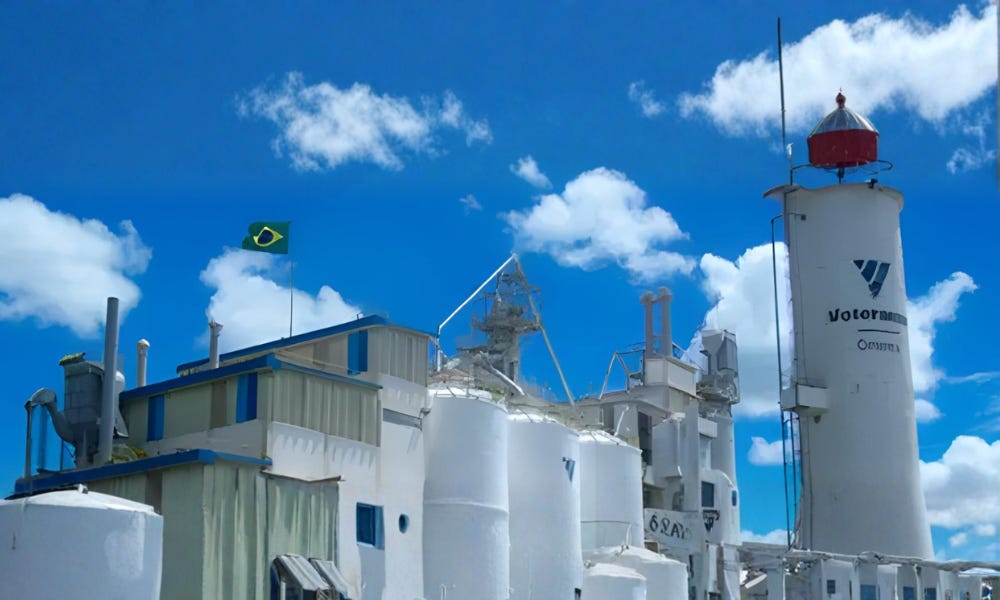
Viter Expands Into Foliar Nutrition - Viter, the agribusiness unit of Votorantim Cimentos, is moving beyond agricultural limestone into foliar nutrition, fertilizers and future biological products. The company has invested about $60 million between 2020 and 2026 to expand capacity and broaden its portfolio, including new foliar products launched in May. Viter says limestone demand remains stable despite tighter farm margins, with sales up 13% in 2025, but sees faster growth ahead in “mixtures” that combine calcium, magnesium, sulfur and other nutrients. Read more
Danone Ties Dairy Productivity to ESG and Protein Growth - Danone is making Brazilian dairy a core part of its 2030 strategy, linking demand for protein and functional nutrition with regenerative agriculture and decarbonization targets. More than 60% of the milk used in Brazil already comes from farms using regenerative practices, while its Jornada Flora program works with suppliers on emissions reduction, animal welfare, productivity and access to credit. The company says intensification, not herd expansion, is the goal, with supported farms reaching close to 24 liters per cow per day versus a national average of around six. Read more
Biotrop Targets U.S. Biologicals Growth - Biotrop is expanding in the United States after its first year of commercial operations generated just over $1 million in sales and presence across 23 states. The Brazilian biological inputs company, controlled by Belgium’s Biofirst, says early traction is measured less by revenue and more by product trials, repeat purchases and distributor relationships in regions including the Corn Belt and the southern peanut belt. Biotrop aims to reach $160 million in U.S. revenue by 2034, supported by university partnerships, local R&D and future plans for U.S. production. Read more
Brazil’s First Biomass Curtailment Raises Concerns - Brazil’s energy operator ONS ordered its first-ever curtailment of type 3 plants, including sugarcane biomass cogeneration units, cutting 1 GW of generation for four hours on June 7. The impact on sugar and ethanol production was limited, but mills warned that biomass cuts are more complex than solar or wind curtailment because bagasse also generates steam used in industrial operations. Tereos said it adapted without relevant losses, while sector groups fear repeated curtailments could disrupt milling schedules and reduce revenue from power exports. Read more
Petrobras Approves $1.2 Billion Renewable Fuels Plant - Petrobras has approved a $1.2 billion investment to build a renewable aviation fuel and renewable diesel plant at its Presidente Bernardes refinery in Cubatão, São Paulo. The unit is expected to start operations in 2030, with capacity to produce up to 15,000 barrels per day of renewable fuels. The project was already included in Petrobras’ 2026–2030 strategic plan and now moves into the final contracting phase, adding another large-scale signal that Brazil’s biofuels platform is expanding beyond ethanol and biodiesel. Read more
Komet Opens Irrigation Efficiency Lab in Brazil - Komet Irrigation has opened a $400,000 research lab in Brazil to study how water droplets behave between leaving a sprinkler and reaching the soil. The goal is to improve irrigation efficiency by measuring evaporation, wind drift, droplet size, water distribution and equipment wear over time. Brazil accounts for about 23% of Komet’s global revenue and has around 40,000 center pivots in operation, creating a large modernization opportunity as the company develops sensors to turn sprinklers into real-time data sources for irrigation management. Read more
Funding & M&A
Rural Insurance Budget Cut Again - Brazil’s rural insurance subsidy program lost another roughly $11 million after the federal government shifted funds to another Agriculture Ministry initiative. The move reduces the 2026 budget for the program to about $95 million, down from around $106 million after an earlier fiscal freeze and below the roughly $116 million executed in 2025. The cut comes as policymakers are also discussing ways to expand insurance adoption, highlighting the tension between broader climate risk protection and shrinking public subsidy capacity. Read more
SLC Agrícola Buys Radar Farmland in Mato Grosso - SLC Agrícola has exercised its right of first refusal to buy 41,200 hectares of farmland in Mato Grosso from Radar, the rural land company controlled by Cosan and Nuveen, for about $370 million. The properties had been under negotiation with Grupo Bom Futuro, but SLC already leased 17,600 hectares of the area and moved quickly to secure the full “Mato Grosso Block.” The deal marks a strategic shift from SLC’s recent asset-light leasing model, suggesting the land was too important to let go. Read more
JiveMauá Raises First Fiagro for Private Agribusiness Credit - JiveMauá has raised about $83 million for its first Fiagro, JMAG, focused on private credit for agribusiness. The fund is already half allocated, with deals typically starting at about $5 million, averaging three and a half years and costing borrowers around CDI + 5% per year. To attract producers and investors, JMAG offers two years of principal grace and a senior/subordinated structure, meaning the manager absorbs first losses before retail investors in the senior tranche, which raised about $70 million. Read more
Cosan Weighs Further Asset Sales After Radar Deal - Cosan is continuing its deleveraging strategy after the sale of Radar farmland assets in Mato Grosso, with SLC Agrícola’s purchase covered separately in this edition. The transaction is expected to generate about $117 million for Cosan’s holding company, while the broader Radar portfolio sold for about $370 million. Cosan may still pursue additional divestments, including stakes in Rumo and Compass, although after Compass’ IPO the company said there are no current talks or studies involving another Compass stake sale. Read more
Macro & Markets
Mato Grosso Rail Link Expands Grain Logistics - Rumo has started operations on the first 162 km stretch of Mato Grosso’s state railway, linking Rondonópolis to Dom Aquino and bringing rail closer to key grain-producing regions. The new BR-070 terminal is expected to handle up to 10 million tons of grain per year at full capacity, strengthening the corridor to the Port of Santos and reducing reliance on long-distance trucking. Future phases would extend the line to Nova Mutum, Lucas do Rio Verde and Cuiabá, although licensing is still pending. Read more
Soy Expansion Slows to 20-Year Low - Brazil’s soybean area is expected to grow just 0.9% in 2026/27, reaching a record 49 million hectares but marking the smallest annual expansion in 20 years, according to AgRural. The slowdown reflects tighter margins, high production costs, rising debt, expensive credit and caution over El Niño, which could delay planting in some states. The forecast suggests Brazil’s soy frontier is still expanding, but the era of easy area growth is getting harder to finance. Read more
China Beef Quota Nears Saturation - Brazil’s beef export quota to China could reach 94.5% by the end of June, according to Terra Investimentos, leaving only about 60,000 tons available under the annual limit. China set a 1.106 million-ton quota for Brazilian beef in 2026, and volumes already cleared, shipped or in the logistics pipeline are expected to bring the total committed volume to about 1.045 million tons. The quota could be exhausted at Brazilian ports by mid-July, potentially triggering additional tariffs and affecting Chinese buying decisions in the months ahead. Read more

That’s all for this week, thanks for reading,
KFG
Kieran Finbar Gartlan is an Irish native with over 30 years of experience living and working in Brazil. He is Managing Partner at The Yield Lab Latam, a leading venture capital firm investing in Agrifood and Climate Tech startups across Latin America.