


Welcome to this week’s Brazil AgTech Report. Curated news from the frontline of Brazil’s Agri-Climate Tech ecosystem
Summary
In this week's AgTech news, Brazil’s sugar-energy industry is taking a leap into the future with “smart” mills integrating AI and sustainability, GreenLight Biosciences is bringing RNA technology to silence pest genes without chemical residues, and Acadian Sea Beyond is betting on Brazilian-led expansion of seaweed-based biostimulants.
In Climate Tech, the second EcoInvest auction has mobilized billions for pasture recovery, Nanofert is partnering with India’s IFFCO to build a nanofertilizer plant in Paraná, and Brazil will require full cattle traceability by 2032. Embrapa has launched a methane monitoring tool to track livestock waste emissions, while agave emerges as a promising bio-economy crop for the semi-arid Northeast.
In M&A, Mosaic is exiting potash production in Sergipe, selling its mine to VL Mineração to reallocate capital and streamline its portfolio.
And in Macro & Markets, the government is preparing a relief package to counter the impact of new US tariffs, seafood exporters warn of sector collapse under the 50% import duty, and adherence to ZARC climate risk zoning becomes mandatory for accessing record Plano Safra credit lines.
Table of Contents
AgTech
Futuristic sugar mills integrate AI and sustainability
GreenLight brings RNA biotech to Brazil to fight pests
Acadian centralizes management and targets growth in Brazil
Climate Tech
EcoInvest auction mobilizes billions for pasture recovery
Nanofert plans Brazil plant with Indian giant IFFCO
Brazil to mandate full cattle traceability by 2032
Embrapa and Mapa launch methane monitoring tool
Agave powers semi-arid revival
M&A
Mosaic sells Sergipe potash mine to VL Mineração
Macro & Markets
Brazil prepares relief package against US tariff impact
US tariff hike threatens Brazil’s fish exports
ZARC becomes mandatory for Plano Safra credit
AgTech
Futuristic sugar mills integrate AI and sustainability – Brazil’s sugar-energy sector is undergoing a deep transformation as global demand for biofuels rises. The new generation of “future mills” combines AI, IoT, and big data to optimize production, management, and commercialization. A pioneering US$200M plant in Prata (MG), set to start in 2026, will process sugarcane into sugar, ethanol, bioenergy, and yeast, alongside soybean and peanut cultivation. Senior Sistemas will centralize operations in a digital ERP platform with intelligent agents to detect anomalies, suggest improvements, and boost efficiency from farm to factory. read more
GreenLight brings RNA biotech to Brazil to fight pests – US-based GreenLight Biosciences is entering Brazil with RNA interference (RNAi) technology to “silence” pest genes without harming other organisms. Its first product, Fortivance, boosts insecticide efficiency in fruit crops, with plans to expand to major crops like soy, corn, cotton, and beans. The biodegradable, residue-free approach has CTNBio clearance for trials and aims for 2026 registration. Backed by US$25M from Al Gore’s Just Climate, GreenLight plans 10+ products in five years, leveraging a Piracicaba base for Latin America. In the US, its Calantha product holds 10% of the Colorado potato beetle market. read more
Acadian centralizes management and targets growth in Brazil – Canadian company Acadian Sea Beyond, a leader in seaweed-based bio-stimulants, has unified its Latin American operations under Brazilian leadership to accelerate growth in the country. Brazil already accounts for 35% of the regional revenue, or about US$17.5 million to US$35 million annually, with expectations to surpass Mexico and become the top market within three years. The company is betting on higher adoption in the Cerrado and sees room to grow in crops such as soy, corn, coffee, and vegetables. read more

Climate Tech
EcoInvest auction mobilizes billions for pasture recovery – The second EcoInvest auction drew US$3.14B in bids, with the potential to mobilize US$5.7B to restore up to 3M hectares of degraded land. Itaú BBA emerged as the largest participant, committing around 300,000 hectares—about 20% of the 1.4M hectares submitted—under the federal blended finance program, which will channel US$5.5B into projects between 2025 and 2027. Most initiatives target the Cerrado, with others in the Amazon, Caatinga, and reforestation areas. Ten banks have pledged recovery targets, but the Agriculture Ministry wants to ensure credit is affordable, widely distributed, and not overly concentrated among large clients or diverted to non-food crops. Banco do Brasil may secure US$1.45B for a new RenovAgro line, while Embrapa will develop climate impact monitoring protocols. read more and more
Nanofert plans Brazil plant with Indian giant IFFCO – Nanofert, partnered with India’s 55M-member cooperative IFFCO, appointed ex-Corteva executive Mozart Fogaça Junior as CEO and plans to open a nanofertilizer factory in Campina Grande do Sul (PR) by March 2026. Initial capacity will be 1.5M liters, scalable to 4.5M, treating up to 1M hectares in year one. Investment totals R$68M, with potential revenue of R$480M when reaching 3M hectares. Products like Nanonitro and Nanophos are adapted for Brazil. A second plant could be needed within five years as demand grows. The company is also building a nanotech lab on-site. read more
Brazil to mandate full cattle traceability by 2032 – A new law will require 100% individual animal traceability within seven years, replacing lot-based tracking and enhancing transparency, sustainability, and farm profitability. The system will qualify stock from birth, prove deforestation-free origin for markets like the EU, and channel incentives to producers with best practices. Pará is leading implementation, using dual ID tags and a national code (076). JBS, via its Green Offices, is supporting adaptation and compliance, including CAR registration and embargo clearance. The measure aims to open markets and include small producers. read more
Embrapa and Mapa launch methane monitoring tool – Embrapa and the Ministry of Agriculture have introduced ABC+Calc, a platform to track methane emissions from livestock waste management. Integrated into Brazil’s ABC+ Plan and supported by the UN’s Climate and Clean Air Coalition, the tool centralizes data on herd size and production systems to help public managers estimate mitigation potential and monitor progress. Animal waste accounts for 5.7% of Brazil’s methane emissions, with agriculture overall responsible for 76%. The initiative aims to cut methane by 30% by 2030 and achieve climate neutrality by 2050. read more
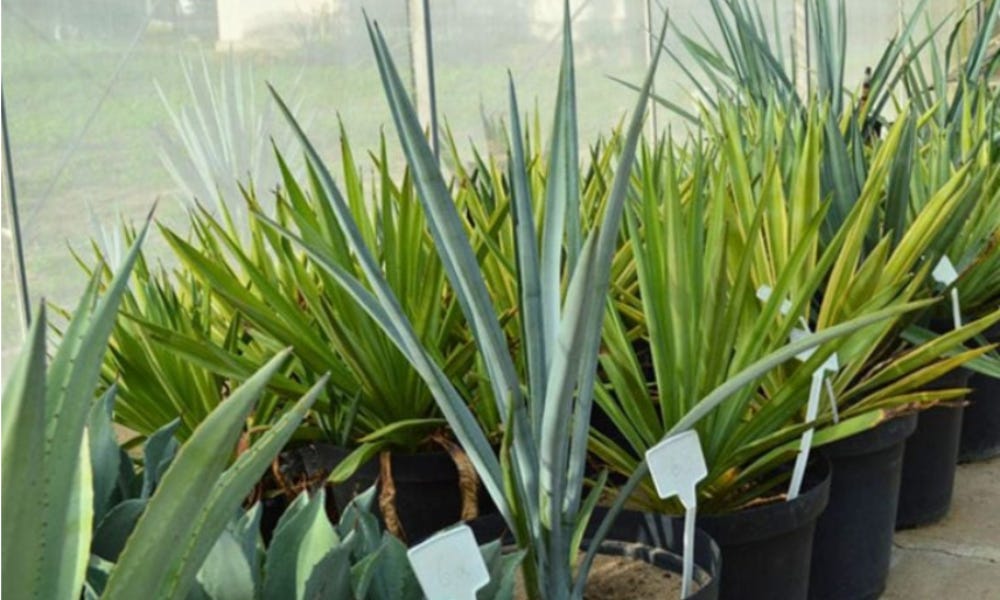
Agave powers semi-arid revival – Embrapa is testing the Agave tequilana plant, famous for tequila, in Brazil’s Northeast to produce ethanol, animal feed, and capture carbon. The project, in partnership with Santa Anna Bioenergia, aims to leverage the plant’s natural drought resistance to drive income and bio-economy innovation in the semi-arid region. Trials span Bahia and Paraíba, with studies on planting, fertilization, and cultural practices over five years. The initiative could boost energy production, reduce regional inequalities, and create new opportunities for rural communities. read more
M&A
Mosaic sells Sergipe potash mine to VL Mineração – Mosaic has agreed to sell its Taquari-Vassouras potash mine in Rosário do Catete, Sergipe, to VL Mineração for up to US$27 million in cash. The deal includes US$12 million at closing, US$10 million after one year, and US$5 million over six years, with the buyer also assuming around US$22 million in asset decommissioning obligations. Mosaic said the sale aligns with its strategy to reallocate capital to higher-return opportunities, while VL Mineração plans to maintain and expand domestic potash supply. The transaction is subject to CADE approval. read more

Macro & Markets
Brazil prepares relief package against US tariff impact – The government will announce on Aug. 12 a plan to offset the 50% US tariff on 35% of Brazilian exports, including credit lines from the Treasury tied to job preservation, tax deferrals for 90 days, and flexible labor measures. The package may also expand public purchases under PAA and PNAE to absorb products like fish and fruit initially bound for export. Social Fund resources will support directly affected producers. President Lula and VP Alckmin are leading discussions, with aid calibrated by sector and measures aimed at protecting employment. read more
US tariff hike threatens Brazil’s fish exports – Brazilian seafood distributor Frescatto warns of a sector collapse after the US imposed a 50% tariff on imports, hitting 60% (US$180M) of Brazil’s US$300M in annual fish exports. CEO Thiago De Luca says the US became the main buyer after Europe’s 2017 ban, but fresh products like lobster, snapper, tuna and tilapia can’t easily find new markets. Competing suppliers in Panama and the Caribbean face only 18% tariffs. Frescatto is negotiating with fishermen to cut costs but may only endure the impact for “three or four months.” read more
ZARC becomes mandatory for Plano Safra credit – The 2025/26 Plano Safra, with a record US$94.5B in funding, introduces a key change for farmers: following the Zoneamento Agrícola de Risco Climático (ZARC, or Agricultural Climate Risk Zoning) is now mandatory to access rural credit lines. Developed by Embrapa and the Ministry of Agriculture, ZARC defines ideal planting windows based on climate risk for each crop, region, and soil type. The rule aims to promote more sustainable practices and reduce losses from climate events, aligning with the government’s climate resilience goals. Without meeting ZARC criteria, no producer can obtain financing. read more

That’s all for this week, thanks for reading,
KFG
Kieran Finbar Gartlan is an Irish native with over 30 years of experience living and working in Brazil. He is Managing Partner at The Yield Lab Latam, a leading venture capital firm investing in Agrifood and Climate Tech startups across Latin America.