


Welcome to this week’s Brazil AgTech Report. Curated news from the frontline of Brazil’s Agri-Climate Tech ecosystem
Summary
In AgTech news, Embrapa is simulating farming systems for the Moon and Mars using hydroponics and AI. Sound Agriculture launched in Brazil with a bold offer: if its Trigger product doesn’t pay for itself in yield gains, farmers get their money back. A Brazilian-developed drone platform won a U.S. agtech award, and Syngenta secured approval for its new biological nematicide, Tymirium.
In Climate Tech, Courageous Land is aiming to convert 100,000 hectares of degraded land into productive agroforests within 10 years. A 31-family co-op raised US$180 million for a corn ethanol plant. BP Bunge Bioenergia cut fire incidents near its sugarcane fields by 46% using Um Grau e Meio’s real-time monitoring system, while Soli3 is helping form a new biodiesel mega-cooperative in the South.
In Macro & Markets, a 50% U.S. tariff on Brazilian goods is already hitting citrus, seafood, and pulp exporters. Brazil’s ag sector faces over US$180 billion in credit demand for the upcoming season, and fertilizer deliveries rose nearly 17% in April year-on-year. Meanwhile, China’s rising coffee demand is expected to lift Brazil’s output by 35% over the next decade.
🧭 Table of Contents
AgTech
🚀 Embrapa simulates farming on Mars
🌾 Sound Ag launches in Brazil with bold promise
🛰️ Brazilian drone platform wins U.S. award
🎯 Syngenta enters bionematicide race
Climate Tech
🌱 Courageous Land targets 100,000 hectares of agroforests
🌽 Evermat raises US$180M for family-led corn ethanol plant
🔥 BP Bioenergia uses high-tech to cut fire risk in sugarcane
🛢️ Soli3 fuels biodiesel co-op model
Macro & Markets
🧾 Trump tariffs hit citrus, seafood and pulp exports
☕ China coffee demand to lift Brazil output 35%
📈 Ag credit demand tops US$180B
🧪 Brazil fertilizer deliveries climb almost 17% in April
🌱 AgTech
Embrapa simulates farming on Mars – Embrapa has launched a collaborative research initiative with a network of 56 scientists to explore off-Earth agriculture, focusing on chickpea and sweet potato cultivation for future NASA Artemis missions. The project includes hydroponic systems, nutrient recycling, and autonomous management tools designed for lunar and Martian environments. Tests are being conducted in controlled labs in Brazil and abroad to simulate space farming conditions. Embrapa expects the results will also inform terrestrial solutions for arid and degraded soils where resource use must be tightly managed. read more
Sound Agriculture launches in Brazil with payback guarantee – U.S.-based Sound Agriculture has launched its flagship product Trigger in Brazil with a performance-based guarantee. The company says Trigger boosts yields by activating existing soil microbes, and promises that farmers will recoup their investment through extra yield. If not, they get their money back. Farmers apply the product to part of a field and keep a control strip for comparison, using yield monitors and digital ag platforms to calculate ROI. The company is backed by Bayer, Syngenta, Mosaic, as well as Mark Zuckerberg. read more
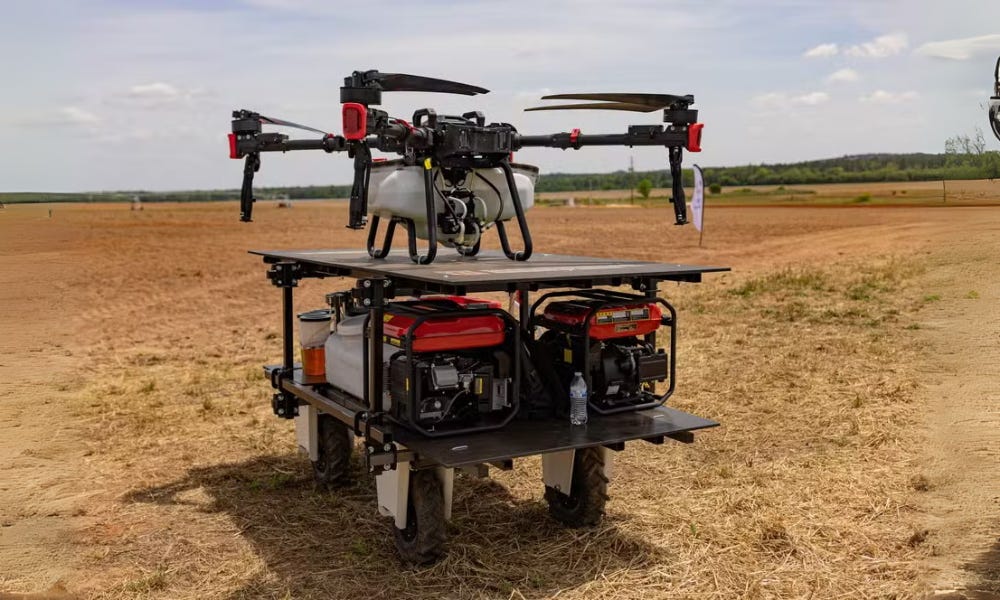
Brazilian drone platform wins U.S. award – A team led by Brazilian professor Luan Oliveira from the University of Georgia won first place and a US$20,000 prize at the Farm Robotics Challenge 2025, organized by UC California and AIFS. The winning project is a fully automated ground-based platform that refuels and recharges spray drones in the field, reducing downtime and operator exposure to chemicals. The system includes water and input tanks, a chemical mixing unit, power generator, and app-based control. Tested in tomato fields, it handles up to 400 kg and was designed for small to mid-size farms. The team reports 99% dosing accuracy and aims to bring the technology to Brazil through ongoing talks with a local partner. read more
Syngenta enters bionematicide race – Syngenta has received regulatory approval in Brazil for Tymirium, a new product based on the active ingredient cyclobutrifluram, developed by the company to function as both a nematicide and a fungicide. Tymirium targets root-knot nematodes like Meloidogyne while preserving beneficial soil organisms. Brazil is the first country to approve the product, with commercial launch planned for the 2026 safrinha corn crop and the 2026/27 main soybean season. It is also suitable for coffee, sugarcane, cotton, and horticulture, but Syngenta’s main focus is corn and soybeans. The company expects Tymirium to compete with biologicals but sees room for both approaches in the market. read more
🌎 Climate Tech
Courageous Land targets 100,000 hectares of agroforests – Courageous Land, founded by former Goldman Sachs executive Phil Kauders, aims to restore 100,000 hectares of degraded land in Brazil over the next 10 years using scalable agroforestry models. Courageous Land, a Yield Lab Latam portfolio company, currently has around US$55 million in funding committed through Special Purpose Vehicles (SPEs) set up with platform partners to finance the first 5,000 hectares. Its model combines native species reforestation with carbon and biodiversity revenue streams, using digital tools and investor partnerships to de-risk agroforestry for rural landowners. read more
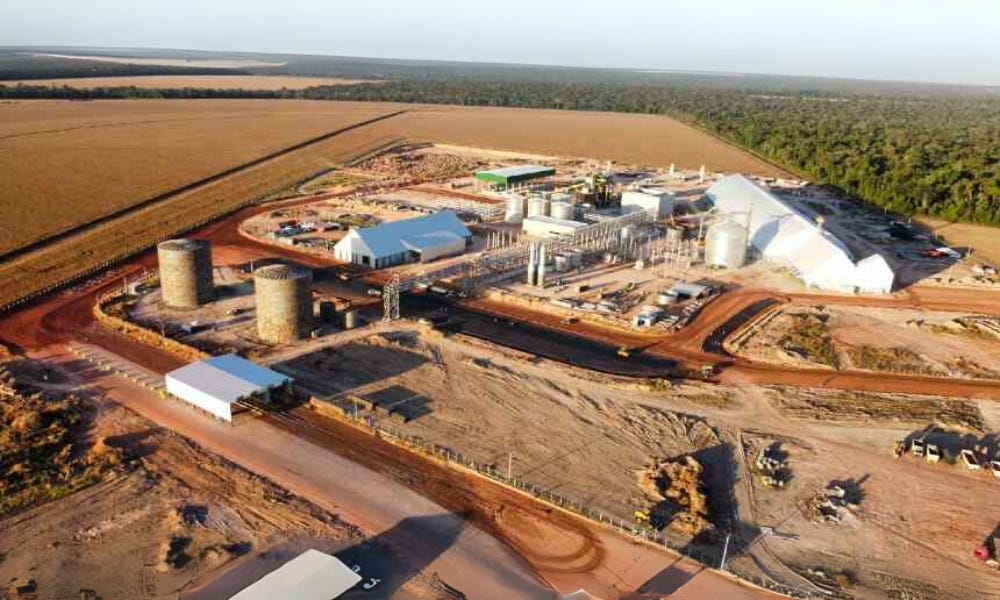
Evermat raises US$180M for family-led corn ethanol plant – Evermat (Green Ethanol Industry of Mato Grosso), formed by 31 farming families in Sinop, has secured an initial investment of US$180 million to build a corn ethanol plant, with total investment expected to reach up to US$720 million over the next four years. The project has environmental approval and is already under construction. In its first phase, the facility will produce over 200 million liters of ethanol annually, along with 134,000 tons of DDG, 7,900 tons of corn oil, and 13 MW of electricity. The plant will consume 1.25 million tons of corn per year and operate continuously. read more
BP Bioenergia uses high-tech to cut fire risk in sugarcane – BP Bunge Bioenergia, one of Brazil’s largest sugar and ethanol producers, has reduced fire outbreaks near its sugarcane fields by 46% since 2019 using startup Um Grau e Meio’s (UGM) high-tech monitoring platform. By replacing satellite-only surveillance with UGM’s high-definition camera system powered by AI, BP cut fire response time by 66%. The company now operates 40 fire monitoring towers in Tocantins, integrated with satellite data, GPS-enabled firefighting fleets, and real-time alerts. The program, which includes geolocation tools and SmartHub coordination, is active at all 11 BP units and has already received US$15 million in safety tech investment. BP has also fully automated its water cannon trucks and plans to deploy self-driving fire engines in future harvests. read more
Soli3 fuels biodiesel co-op model – Soli3, created by the cooperatives Cotrijal, Cotripal, and Cotrisal, is leading a US$225 million investment to build a large-scale biodiesel and soybean byproduct complex in Cruz Alta, Rio Grande do Sul. The plant is set to begin operations in 2028, processing 1 million tons of soy per year and producing 192,000 tons of biodiesel, 729,000 tons of soybean meal, 19,800 tons of glycerin, and 59,400 tons of soybean hulls. The cooperatives represent 35,000 producers and generate over US$2 billion in annual revenue. Soli3 could serve as the seed for a future megacooperative, as the groups also explore unifying their retail operations under a single brand to centralize procurement and reduce costs. read more
📊Macro & Markets
Trump tariffs hit citrus, seafood and pulp exports – A 50% tariff on all Brazilian exports to the U.S., announced last week and scheduled to take effect August 1, is already sending shockwaves through Brazil’s ag sectors. CitrusBR warns the move could severely hit the juice industry, with the U.S. representing 40% of Brazil’s concentrated orange juice exports. The seafood sector has begun canceling contracts with U.S. buyers, citing unviable economics under the new tax regime. Minerva says its diversified beef production outside Brazil limits its exposure, but analysts warn pulp giant Suzano could face additional pressure. The Brazilian government has yet to issue a coordinated response. read more
China coffee demand to lift Brazil output 35% – Chinese coffee consumption has surged by the equivalent of four Englands in five years, according to new data. To meet future demand, Brazil will need to increase coffee production by 35% over the next decade. The shift is already underway, with new plantings in Cerrado and higher-tech cultivation spreading across Minas Gerais and Espírito Santo. China’s market is now seen as a strategic priority for Brazilian exporters, given its size, growth pace, and interest in premium and specialty beans. read more
Ag credit demand tops US$180B – Brazil’s agricultural sector will require more than US$180 billion in financing to meet production demands in the 2025/26 cycle, according to estimates. Rising input costs, expanding planted area, and investment in on-farm technology are driving the surge. The figure reinforces trends seen in recent rural credit plans and explains the growing interest in structured credit funds, cooperatives, and agfintechs targeting medium and large-scale producers. read more
Brazil fertilizer deliveries climb almost 17% in April – Fertilizer deliveries in Brazil reached 2.68 million tons in April, a 16.8% increase compared to the same month last year, according to industry group ANDA. The spike reflects strong preseason demand from farmers preparing for the 2024–25 cycle and confirms that supply chains remain resilient despite global volatility. The rise in deliveries also signals producer confidence and high liquidity across key grain-producing regions. read more
That’s all for this week, thanks for reading,
KFG 🚀
Kieran Finbar Gartlan is an Irish native with over 30 years of experience living and working in Brazil. He is Managing Partner at The Yield Lab Latam, a leading venture capital firm investing in Agrifood and Climate Tech startups across Latin America.
🧠 New! Paid subscribers now get access to “My Take” — a brief commentary tying together this week’s key trends, offering insight and perspective on what it all means for Brazil’s ag and climate tech opportunity.
🔍 Insight & Analysis
This week’s tariff shock is a useful reminder: market diversification isn’t just about spreading exports across more countries—it’s also about adding value at home. Turning corn into ethanol or soy into biodiesel helps reduce exposure to raw commodity price swings and creates new markets for farmers. Brazil’s limited reliance on the U.S. softens this particular blow, but the country’s dependence on China—especially for soy—remains high. The meat sector shows that diversification is possible, not only by exporting to more countries but by producing in them too. That model could serve as a playbook for others.
We’re also seeing a shift in how startups contribute. Instead of chasing disruption for its own sake, companies like Sound Agriculture are offering performance-based guarantees that align with farmer outcomes, while Um Grau e Meio is embedding its fire risk tech into large-scale monitoring systems like those used by BP Bioenergia. These examples show how innovation can work with incumbents to improve sustainability and resilience. The focus now is less on being radical and more on being useful—and that’s a welcome trend.