


Welcome to this week’s Brazil AgTech Report. Curated news from the frontline of Brazil’s Agrifood and Climate Tech ecosystem
Summary
In AgTech news this week, GreenLight Biosciences is doubling down on Brazil as its global hub for RNA-based crop protection, while Arara Seed and Dabi Business Park launched a new early-stage agtech fund targeting 15 startups over the next three years. At the other end of the pipeline, Mosaic is entering the fertigation market with a portfolio built for high-efficiency irrigation systems.
In Climate Tech developments, Renner brought its “cotton forests” concept to COP30, Brazil Ag Ministry, MAPA pitched its plan to recover 40 million hectares of degraded pasture, and the UN's FAO released a guide for integrating livestock into circular bioeconomy systems. New research from Ag research agency, Embrapa, shows that sugarcane ethanol could reach net-zero—or even negative—carbon emissions, while Marfrig committed to cutting methane emissions by 33% by 2035.
On the funding front, GoFlux expanded its freight-tech platform with a new credit vehicle and a “freight harvest plan,” while the federal government launched a climate-entrepreneur credit platform with rates starting at 4.4% annually. In parallel, a new irrigation program aims to help family farmers adopt more efficient, low-pressure and solar-powered systems.
In macro and market moves, the U.S. officially removed the 40% additional tariffs on key Brazilian ag products after partial signals last week. A new Rabobank report argues that Brazil is positioned to lead carbon-neutral agriculture, and a joint study from Embrapa and Brasilseg shows how better climate and soil data can reduce the cost of rural insurance nationwide.
🧭 Table of Contents
AgTech
GreenLight Biosciences makes Brazil its global biotech hub
Arara Seed partners with Dabi Business Park on new early-stage agtech fund
Mosaic enters Brazil’s fertigation market
Climate Tech
Renner takes cotton forests to COP30
MAPA seeks global partners for Brazil’s pasture-recovery plan
FAO releases guide to integrate livestock into circular bioeconomy
Embrapa says new tech can zero ethanol’s carbon footprint
Marfrig targets 33% methane reduction by 2035
Fintech / Funding
Ag freight-tech GoFlux adds credit to its platform
Brazil launches climate-entrepreneur credit platform with 4.4% rates
Brazil launches sustainable irrigation program for family farmers
Macro & Markets
U.S. removes 40% additional tariffs on Brazilian ag products
Brazil poised to lead carbon-neutral ag, according to Rabobank
Embrapa and Brasilseg show how rural insurance can get cheaper
AgTech
GreenLight Biosciences makes Brazil its global biotech hub – U.S.-based GreenLight Biosciences has chosen Brazil as the center of its global expansion in agricultural RNA technology, building new R&D and field-testing capacity to accelerate product development. The company is focusing on RNA-based bioinsecticides and disease-control solutions designed to reduce reliance on synthetic chemicals. GreenLight says Brazil’s scale, regulatory environment, and strong demand for biological inputs make it an ideal launch market. The new hub will support partnerships with universities, research institutes, and large growers as it prepares for broader commercial rollout. read more
Arara Seed partners with Dabi Business Park on new early-stage agtech fund – Dabi Business Park, in partnership with Arara Seed, an equity crowdfunding platform focused on agtech and bioenergy, has launched the Dabi Impulso Agro fund to invest in seed and pre-seed startups. The vehicle will make equity investments of up to US$100,000 per company and aims to support as many as 15 startups over the next three years. The fund targets early technologies that can improve productivity or sustainability while helping position Ribeirão Preto (SP) as a growing agricultural innovation hub. read more
Mosaic enters Brazil’s fertigation market – Fertilizer producer Mosaic is expanding into the fertigation segment with a new portfolio designed for irrigation systems used in high-value crops. The company aims to tap into a market projected to reach 4 million tons by 2030 as more farmers adopt soluble nutrients to improve efficiency. Mosaic’s entry includes products developed at its research center in Luís Eduardo Magalhães (BA), where field trials showed gains in nutrient absorption and reduced application losses. The strategy aligns with rising demand for tools that cut water and fertilizer waste in irrigated fruit and vegetable systems. read more

Climate Tech
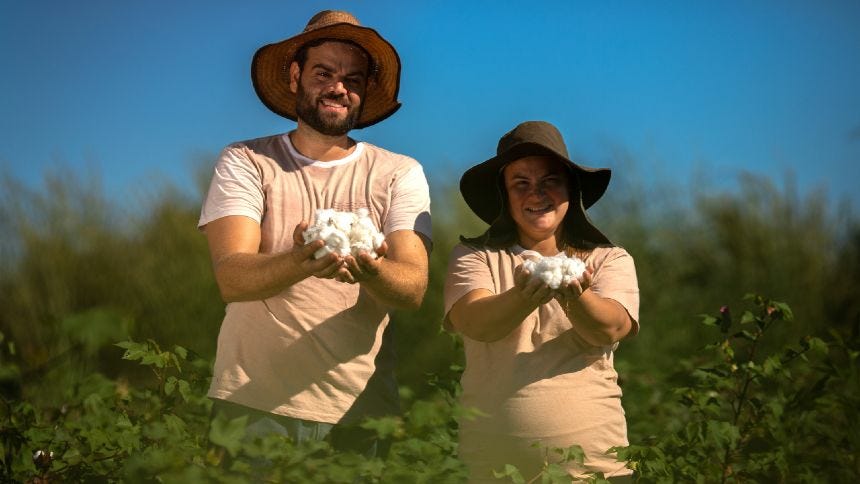
Renner takes cotton forests to COP30 – Brazilian retailer Renner created small “cotton forests” for its stores and for COP30 in Belém, using native tree species that naturally coexist with cotton in semi-arid regions. The installations combine shrubs, young trees, and cotton rows to replicate diversified agroecosystems used by family farmers. The goal is to show consumers that cotton can be part of a forested landscape rather than a monocrop, highlighting how regenerative systems improve soil structure, water retention, and biodiversity. read more
MAPA seeks global partners for Brazil’s pasture-recovery plan – Brazil’s Ministry of Agriculture (MAPA) used COP30 to promote its plan to recover 40 million hectares of degraded pastures, one of the world’s largest restoration efforts. The program aims to shift low-productivity areas toward more efficient livestock or crop-livestock systems and is seeking international co-investors to scale financing. Officials said the initiative could mobilize billions through climate funds, carbon markets, and blended-finance structures. The ministry also presented proposals for technical cooperation to improve monitoring, verification, and long-term land-use management. read more
FAO releases guide to integrate livestock into circular bioeconomy – The UN’s Food and Agriculture Organization (FAO) used COP30 to launch a new guide showing how livestock systems can shift from waste generators to nutrient recyclers within a circular bioeconomy. The document outlines practices for converting manure into organic fertilizer, improving feed efficiency, and capturing nutrient losses that commonly drive emissions. It also highlights business models for biogas, composting, and nutrient credits that reduce fertilizer costs. FAO says the guide aims to help countries standardize and scale circular practices across beef, dairy, and poultry chains. read more
Embrapa says new tech can zero ethanol’s carbon footprint – New studies from Embrapa show that Brazil’s sugarcane ethanol could reach net-zero—or in some cases negative—carbon emissions when combined with practices such as biochar, filtercake composting, optimized vinasse application, and high-efficiency fertigation. Field data indicate gains in soil carbon sequestration, reduced nitrous oxide emissions, and improved nutrient cycling. Embrapa also highlights the role of renewable-energy mills and residue-based fertilizers in creating carbon-smart production chains. read more
Marfrig targets 33% methane reduction by 2035 – Meat processor Marfrig announced during COP30 that it aims to cut methane emissions by 33% across its supply chain by 2035. The company plans to expand feed additives that reduce enteric methane, strengthen rotational grazing and pasture recovery programs, and apply biological supplements validated by Embrapa and university trials. Marfrig also intends to certify low-emission cattle through its monitoring platform, which integrates farm-level data into climate reporting. read more
Funding
Ag freight-tech GoFlux adds credit to its platform – Agricultural freight-tech goFlux, a Yield Lab Latam portfolio company, is expanding into financial services with a new credit structure anchored by a US$16 million fund that will finance up to US$200 million in receivables for transporters. The company is also rolling out a “freight harvest plan” with partners Pirelli and Localiza, offering discounted tires, maintenance packages, and rental options tied to digital freight performance. With the new products and partnerships, goFlux expects its platform to transact as much as US$4 billion in road freight next year, strengthening its push to integrate logistics contracting, payments, and fleet support. read more
Brazil launches climate-entrepreneur credit platform with 4.4% rates – The federal government used COP30 to launch Empreender Clima, a climate-finance platform offering credit at annual rates starting at 4.4% for low-carbon projects by small and mid-sized businesses. The initiative supports renewable energy, energy efficiency, waste management, and sustainable production, and integrates financing from BNDES and regional development banks. It also includes technical assistance to help companies structure eligible projects. read more
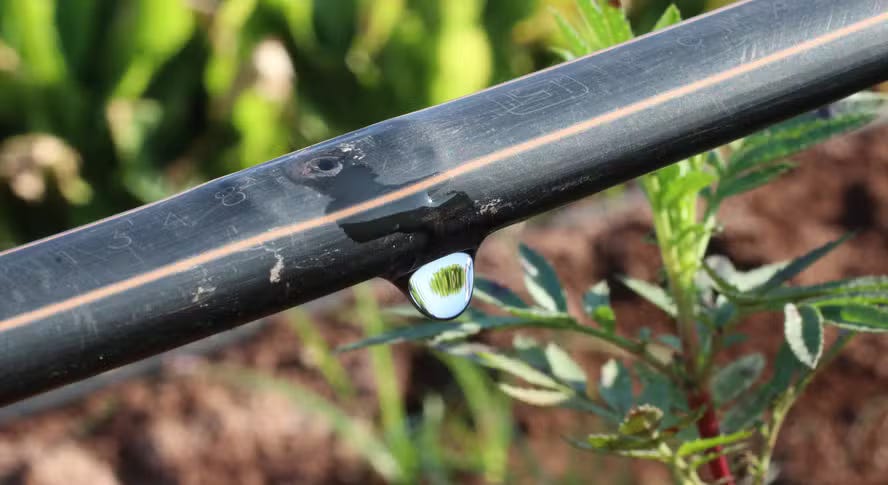
Brazil launches sustainable irrigation program for family farmers – The federal government has created a new program to expand sustainable irrigation across smallholder farms, prioritizing drip and micro-sprinkler systems that reduce water and energy use. The initiative targets drought-prone regions and aims to support resilience and productivity in fruit, vegetable, and horticulture crops. The plan includes dedicated credit lines, technical assistance, and support for low-pressure pumps and solar-powered systems to lower operating costs. read more
Macro & Markets
U.S. removes 40% additional tariffs on Brazilian ag products – This story first appeared in last week’s edition, when details were still unclear. The U.S. government has now confirmed the removal of the 40% additional tariffs imposed under the previous administration, restoring standard import rates for products including coffee, beef, ethanol, orange juice and processed foods. The rollback reopens access for sectors that saw exports collapse under the surcharge. read more
Brazil poised to lead carbon-neutral ag, according to Rabobank – A new report from Rabobank says Brazil is emerging as a frontrunner in carbon-neutral agriculture as global demand shifts toward low-emission food. The study highlights Brazil’s strengths in large-scale pasture recovery, adoption of biological inputs that reduce synthetic fertilizer use, and traceability systems capable of verifying emissions reductions. Rabobank says producers who certify lower-carbon production could gain export premiums and preferential access to climate-aligned finance. read more
Embrapa and Brasilseg show how rural insurance can get cheaper – Ag research agency, Embrapa, and rural insurance provider, Brasilseg, presented data at COP30 showing how better soil mapping, crop monitoring, and climate-risk zoning can reduce the high cost of rural insurance in Brazil. More precise geospatial information lowers uncertainty for insurers, allowing premiums to fall in regions where risk has historically been overestimated. Long-term climate datasets and farm-level digital records improve loss modeling and expand access for small and medium producers. read more
That’s all for this week, thanks for reading,
KFG
Kieran Finbar Gartlan is an Irish native with over 30 years of experience living and working in Brazil. He is Managing Partner at The Yield Lab Latam, a leading venture capital firm investing in Agrifood and Climate Tech startups across Latin America.