


Welcome to this week’s Brazil AgTech Report. Curated news from the frontline of Brazil’s Agri-Climate Tech ecosystem
Summary
In AgTech news, new research shows smarter liming can lift corn yields by 50%, Solinftec is scaling its family of farm robots with modular upgrades, and IBGE is reviving its Innovation Survey after eight years, offering long-overdue insights into R&D and technology adoption.
In Climate Tech, a Cargill study finds regenerative agriculture can outperform conventional farming by 23%, and Amazon-based entrepreneur Lília França is bringing biodiversity products into mainstream retail. Reg-IA has harvested soybeans with a 66% lower carbon footprint, deforestation in the Amazon fell 48% in August, and energy firm ComBio is betting on biomass to triple revenue within five years.
In Funding, The Yield Lab Institute has launched a new program linking Brazilian AgTech startups with Wells Fargo’s financing tools, while BNDES is preparing a guarantee fund to lower credit costs for farmers. Together, these moves highlight growing efforts to close the capital gap that has slowed AgTech adoption.
In Macro & Markets, Brazil’s coffee trade is shifting as U.S. imports fall sharply and Colombia emerges as a top buyer. Beef exports are projected to grow 12% in 2025 despite U.S. tariffs, Brazil continues to underuse its 40,000 km of navigable rivers, and China may begin importing sorghum from Brazil later this year.
🧭 Table of Contents
AgTech
Smarter liming lifts corn yields 50%
Solinftec scales farm robotics
IBGE revives innovation survey
Climate Tech
Regen ag outperforms by 23%
Amazon flavors enter mainstream
Soy crop cuts carbon by 66%
Amazon deforestation drops 48%
ComBio bets on biomass boom
Funding / Fintech
Yield Lab Institute links Wells Fargo to AgTech
BNDES readies farmer guarantee fund
Macro & Markets
Brazil coffee exports shift to Colombia
Beef exports grow despite U.S. tariffs
Brazil underuses river transport
China may import Brazilian sorghum
AgTech
Smarter liming boosts corn yields 50% – A study by Embrapa and Unesp shows that more precise calculations of lime application, using tools like “Real System,” can lift corn productivity by up to 50%. The method improves soil acidity correction, nutrient absorption, and root development while cutting waste from over-application. Researchers highlight that applying lime deeper in the soil and at the right dosage maximizes returns. Adoption of this science-based approach could reduce fertilizer costs and increase resilience in Brazil’s main grain belt. read more
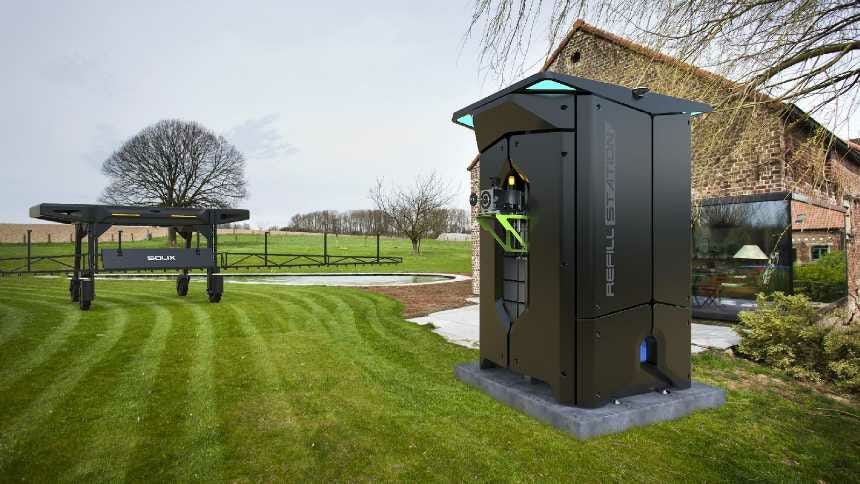
Solinftec bets on farm robotics – Brazilian AgTech leader Solinftec is scaling up its family of agricultural robots, applying an “iPhone logic” of continuous updates and modular design. The company’s Solix line already supports tasks such as pest monitoring, spraying, and data collection, with new versions aimed at planting and broader automation. By integrating AI, sensors, and cloud connectivity, Solinftec wants to accelerate the pace of farming and cut input use. With adoption rising in Brazil and the U.S., the company is positioning robotics as the next frontier in digital agriculture. read more
IBGE revives innovation survey – After an eight-year hiatus, Brazil’s national statistics agency (IBGE) will resume its Innovation Survey, a key dataset used by policymakers, investors, and researchers to track R&D and technology adoption across sectors. The 2025 edition will cover 2019–2024, offering a long-awaited update on how companies have invested in innovation during years marked by digital acceleration, ESG pressures, and shifting trade dynamics. Analysts say the results will be critical for evaluating Brazil’s competitiveness and guiding future industrial and agricultural policy. read more
Climate Tech
Regen ag outperforms by 23% – A new Cargill study shows that regenerative agriculture can deliver up to 23% higher yields than conventional systems, while also improving soil health and reducing input costs. The research, conducted with Brazilian farmers, emphasizes practices such as cover crops, crop rotation, integrated livestock, and minimal soil disturbance. Beyond productivity, regenerative systems were shown to enhance long-term resilience and market access, positioning farmers for future export opportunities tied to sustainability. The findings reinforce momentum for regen adoption across Brazil’s main grain regions. read more
Amazon flavors go mainstream – Pará-based researcher and entrepreneur Lília França is on a mission to bring Amazonian biodiversity into Brazilian households. Through her startup and partnerships with local communities, she is developing food products that highlight native ingredients such as açaí, cupuaçu, and bacaba, combining traditional knowledge with modern processing. The initiative seeks to expand market access for Amazonian producers, strengthen sustainable value chains, and create new consumer demand across Brazil. França argues that scaling biodiversity-based foods is key to preserving the forest while generating income. read more
Soy with 66% less carbon – Reg-IA, a Brazilian agtech startup, has harvested its first soybean crop with a verified carbon footprint 66% below conventional benchmarks. The pilot, monitored by Bayer and Embrapa, used regenerative practices such as crop-livestock integration, no-till, and diversified rotations. Results are being positioned as a model for the new Regenerative Livestock Consortium, which seeks to scale practices across Brazil’s beef supply chain. The case highlights how MRV-backed verification can unlock carbon markets while boosting farmer profitability and corporate climate commitments. read more
Amazon deforestation drops 48% – Deforestation in the Brazilian Amazon fell by nearly half in August compared with the same month last year, according to satellite data. The decline reflects tighter enforcement, improved monitoring, and stronger corporate commitments to deforestation-free supply chains. Analysts warn, however, that long-term success will depend on consistent policy, financing for sustainable production, and balancing conservation with rural livelihoods. The figures provide a positive signal ahead of global climate negotiations, reinforcing Brazil’s role as a key player in emissions reduction. read more
ComBio bets on biomass boom – Brazilian energy company ComBio plans to triple revenue to US$2.4 billion over the next five years, driven largely by demand from agribusiness. The company supplies biomass-based energy to replace fossil fuels in industrial processes, with sugarcane, wood residues, and dedicated energy crops as feedstocks. ComBio is expanding contracts in food, beverage, and paper sectors, while exploring partnerships with farmers for long-term biomass supply. The model aligns with Brazil’s bioeconomy push, linking renewable energy growth directly to agriculture. read more

Funding
Yield Lab Institute links Wells Fargo to AgTech – A new program managed by The Yield Lab Institute, the non-profit arm of The Yield Lab, will connect Brazilian startups to financing opportunities from U.S. banking giant Wells Fargo. The initiative, part of a broader push to accelerate AgTech adoption in Latin America, will provide early-stage companies with access to credit, financial training, and global networks. By bridging capital from international institutions with local innovation, the program aims to reduce funding gaps that often prevent promising AgTech solutions from scaling in Brazil. read more
BNDES to launch guarantee fund – Brazil’s development bank (BNDES) is preparing a new guarantee fund to lower borrowing costs for farmers by reducing risk premiums charged by banks. The initiative, expected to be launched in early 2026, could back up to US$10 billion in rural credit over five years, with priority for small and medium producers. The mechanism will complement existing instruments such as the FGO (Guarantee Fund for Operations) and aims to broaden access to structured finance in agriculture. read more

Macro & Markets
Brazil’s coffee exports shift from U.S. to Colombia – Brazil’s green coffee exports plunged in August, with total shipments down 23% and volumes to the United States collapsing by 47%, according to export association Cecafé. The U.S., traditionally the top buyer, has now been overtaken by Colombia, which imported nearly six times more Brazilian coffee than a year earlier. Analysts point to the new 50% U.S. tariffs, alongside logistical hurdles and tighter inventories, as key drivers, while Colombian roasters are sourcing more Brazilian beans to cover smaller harvests and re-export blends. While some of the demand drop may be temporary, exporters warn that U.S. roasters risk supply gaps, raising questions about Brazil’s shifting trade flows. read more
Beef exports to grow despite U.S. tariffs – Brazil’s beef exports are projected to rise 12% in 2025, reaching 2.5 million tons, even as U.S. tariffs squeeze margins, according to industry group Abiec. China remains the dominant buyer, but demand from the Middle East and Latin America is also strengthening. The outlook reflects Brazil’s competitive advantage in scale and cost, alongside strong investment in genetics and animal health. While U.S. market access remains politically uncertain, exporters are betting on diversified demand to sustain growth. read more
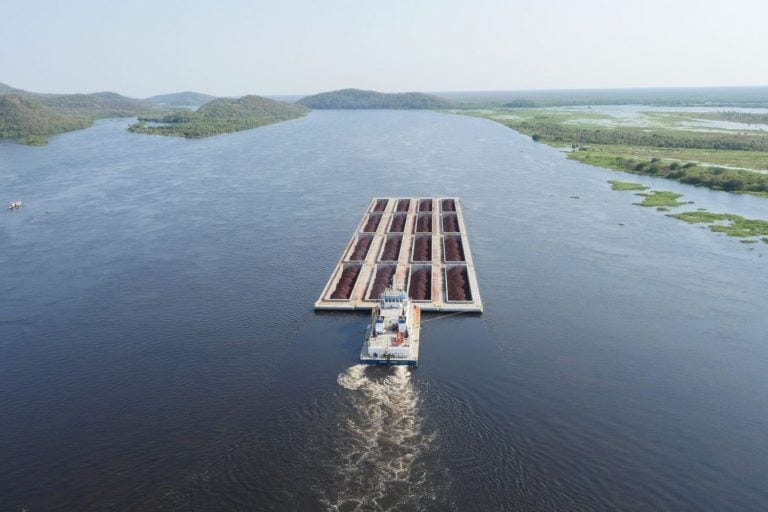
Brazil underuses navigable rivers – Despite having 40,000 km of navigable rivers, Brazil uses only half that potential for transport, according to a new Forbes analysis. The underutilization increases logistics costs, keeps pressure on highways, and limits competitiveness in bulk exports such as soy, corn, and iron ore. Experts argue that boosting river transport could cut emissions, reduce freight costs, and enhance resilience against infrastructure bottlenecks. Unlocking this potential will require investment in port terminals, dredging, and better integration with rail and road networks. read more
China eyes Brazilian sorghum – Brazil may begin exporting sorghum to China before the end of 2025, according to trade officials. Negotiations are advancing after Beijing approved sanitary protocols earlier this year, creating a new outlet for Brazilian farmers as global feed demand diversifies. Sorghum, more drought-tolerant than corn, has grown in acreage across Brazil’s Cerrado and Northeast, positioning the country to capture Asian demand. The move could reduce Brazil’s reliance on soy and corn exports while deepening ag trade ties with China. read more
That’s all for this week, thanks for reading,
KFG
Kieran Finbar Gartlan is an Irish native with over 30 years of experience living and working in Brazil. He is Managing Partner at The Yield Lab Latam, a leading venture capital firm investing in Agrifood and Climate Tech startups across Latin America.