


Welcome to this week’s Brazil AgTech Report. Curated news from the frontline of Brazil’s Agri-Climate Tech ecosystem
Summary
In this week`s agtech news, Seedz and Coopercitrus are integrating digital insights with ground-level agronomy through one of Brazil’s largest rural networks. EcoTrace is investing US$750K to expand its blockchain-powered Halal beef traceability system, while drone startup Arpac expects to reach US$1.4 million in revenue this year. Pastu is evolving from pasture management into full-chain livestock traceability, and Grao Direto is piloting a digital barter system to let farmers trade tokenized grain for fuel, machinery, and services.
On the climate front, Belterra is demonstrating how cattle and forest restoration can co-exist in the Amazon, with support from partners like Natura and Cargill. Sanctu, launched by a Loggi co-founder, is building a regenerative ag platform targeting 50,000 farmers and 5 million hectares, combining education, financing, and offtaking. UbyAgro is completing a US$20 million biologicals plant this year, while biologicals in fruits and vegetables are gaining momentum with backing from multinationals like BASF and Bayer.
In M&A, SLC Agrícola has acquired grain trading platform Sierentz Agro Brasil, reinforcing its vertical integration strategy. Scala Alimentos doubled its processing capacity to 1.55 million liters/day by acquiring southern dairy Deale, strengthening its supply base and positioning in the premium dairy market.
In macro and markets, Brazil’s 2025/26 Rural Credit Plan will release US$95 billion, up just 1.5% from last year, and below inflation, shrinking its real impact. Meanwhile, the state of Paraná aims to mobilize US$2.7 billion in private-sector ag financing through new state-backed Fiagros, and Moody’s sees upside for Latin America’s ag sector as global trade realigns and ESG-aligned producers gain market share.
🧭 Table of Contents
AgTech
🎯 Seedz and Coopercitrus link digital data with ground truth
🔗 EcoTrace invests US$750K to scale Halal beef traceability
🚁 Arpac drones to earn US$1.4M in 2025
🥩 Pastu brings IoT traceability from pasture to processor
🪙 Grao Direto tokenizes grain for smarter barter
Climate Tech
🌳 Belterra sees cattle and forests co-existing in the Amazon
🌱 Sanctu creates scalable regen‑ag platform
🧪 UbyAgro to build US$20 million biological plant
🍓 Biologicals gain traction in Fruit & Veg
M&A
🌾 SLC Agrícola acquires Sierentz Agro Brasil
🧀 Scala Alimentos buys Deale dairy in silent deal
Macro & Markets
💸 Brazil’s rural credit plan falls short of expectations
🏛️ Paraná aims to unlock US$2.7B in private ag financing
🌍 Moody’s sees upside for Latin America Ag on global volatility
🌱 AgTech
Seedz and Coopercitrus link digital insights with ground truth – Brazilian agtech Seedz has partnered with Coopercitrus, one of Brazil’s largest cooperatives, to bridge the gap between remote sensing and field reality. With over 60,000 coop members and more than 500 field technicians, Coopercitrus offers Seedz a unique opportunity to validate and refine its digital agronomic recommendations through large-scale, real-world observations. The integration embeds Seedz’s platform—already active in several countries, including the U.S.—into one of Brazil’s most established rural networks. Seedz, a Yield Lab Latam portfolio company, generates around US$40 million in annual revenue through its loyalty and business intelligence ecosystem and is emerging as a leader in digitally enabled, boots-on-the-ground agriculture following acquisitions of Gaivota, Atomic Agro, and Perfarm. read more
EcoTrace invests US$750K to scale Halal beef traceability – Brazilian agtech EcoTrace is expanding its blockchain and AI platform to offer end-to-end traceability for Halal-certified beef. The company is investing US$750,000 in new systems that track cattle from origin to slaughter, ensuring compliance with religious and export standards. The platform enables real-time digital certification, replacing paper records and reducing fraud. read more
Arpac drones to earn US$1.4M in 2025 – After surviving a plane crash, Eduardo da Costa Goerl got renewed vigor to found Arpac, a rising agtech deploying autonomous drones for spraying and monitoring. Operating across southern Brazil, the company expects US$1.4 million in revenue this year. As producers seek precision and efficiency, Arpac’s model is proving both scalable and commercially viable. read more
Pastu brings IoT traceability from pasture to processor – Originally launched as a digital pasture management platform, Pastu has expanded its offering to include animal traceability and direct connections to meatpackers. The startup uses IoT tags and a cloud-based system to track cattle from birth through transport to slaughter, enabling verified records of origin, welfare, and sustainability. read more
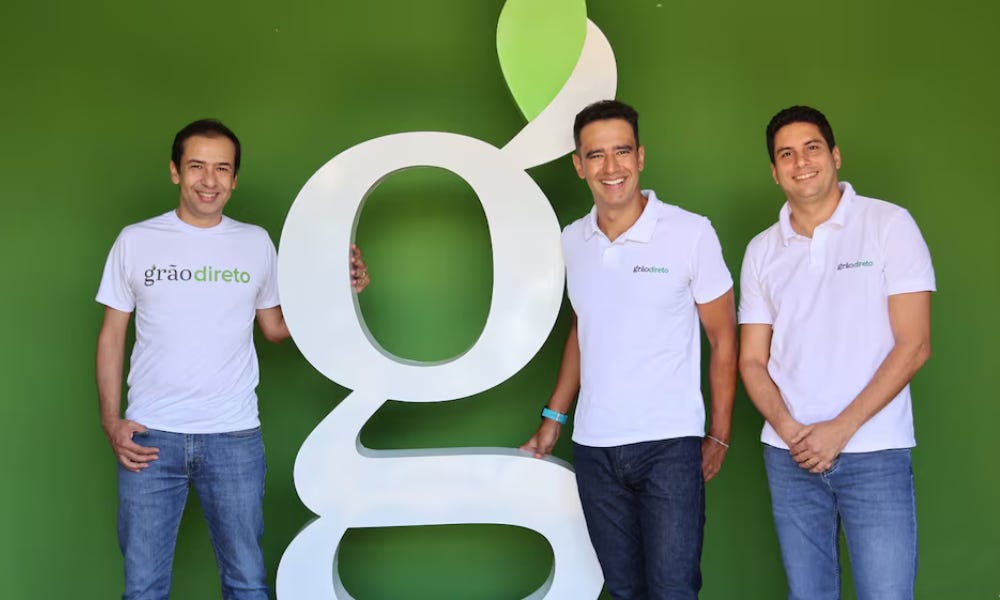
Grao Direto tokenizes grain for smarter barter – In Brazil, barter is already a common way for farmers to acquire inputs like seed, fertilizer, and chemicals. Now, Grao Direto, a digital grains marketplace, is piloting a more sophisticated digital barter platform that allows tokenized grain to be used for a broader range of purchases, including fuel and machinery, which are typically paid in cash. The system lets farmers convert future harvests into tradeable digital assets, aligning payments with production cycles and expanding their purchasing power. read more
🌎 Climate Tech
Belterra sees cattle and forests co-existing in the Amazon – Valmir Ortega, CEO of Belterra, argues that Amazon restoration and livestock production must work together, not compete. He highlights agroforestry and silvopastoral systems as scalable solutions that balance regeneration with farmer income. Belterra partners with companies like Natura and Cargill to support sustainable land use models that generate both carbon revenue and agricultural output. read more
Sanctu creates scalable regen‑ag platform in the Amazon – Brazilian startup Sanctu is building a digital regenerative agriculture platform designed to increase farmer earnings while restoring degraded land in the Amazon region. The platform bundles financing, technical assistance, and off‑taking, all managed digitally at scale. Sanctu aims to transform 50,000 smallholder families and regenerate 5 million hectares by 2034. Using AI and geospatial tools, the system customizes land‑use plans, covering forest restoration, agroforestry, and regenerative pasture, and provides financing infrastructure to implement them. read more
UbyAgro to build US$20 million biological plant – UbyAgro, which owns specialty fertilizer maker Ubyfol, biologicals company Vitales, and animal and plant nutrition firm Bauminas Agro, is set to launch a new biologicals facility by the end of this year—a US$20 million investment. The plant will produce 8,000 tons annually of biological inputs. To support the expansion, the company raised US$64 million through the capital markets. With projected 2024 revenues around US$180 million, UbyAgro is consolidating its position as a leading platform in plant nutrition and sustainable inputs. read more
Biologicals gain traction in Fruit & Veg – Biological input use in Brazil’s fruit and vegetable sectors has long lagged behind grains, constrained by short shelf life, farmer skepticism, and limited technical support. But that’s beginning to change. Multinationals like BASF and Bayer are increasing their focus on this segment, seeing untapped potential in high-value crops. As sustainability standards tighten and demand for residue-free produce grows, biologicals are gaining renewed attention as a strategic input in intensive production systems. read more
M&A
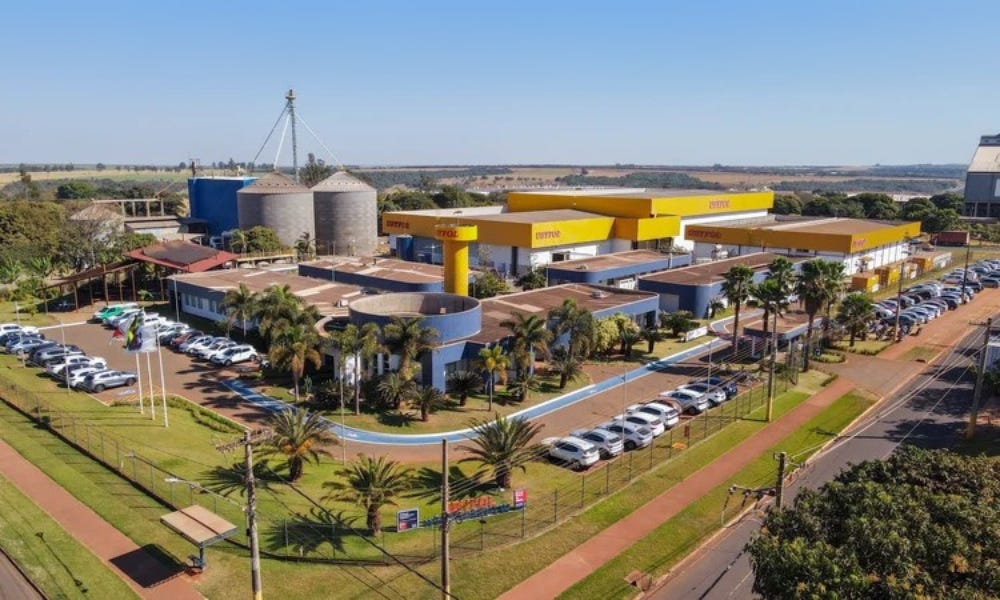
SLC Agrícola acquires Sierentz Agro Brasil – SLC Agrícola, one of Brazil’s largest soy and cotton producers, has acquired grain trader Sierentz Agro Brasil for US$135 million. The deal enhances SLC’s grain trading and logistics capacity, allowing more control over commercialization. This move aligns with a broader trend of vertical integration as producers seek margin stability amid volatile markets. It also strengthens SLC’s position as a full-stack ag player, from farm to port. read more
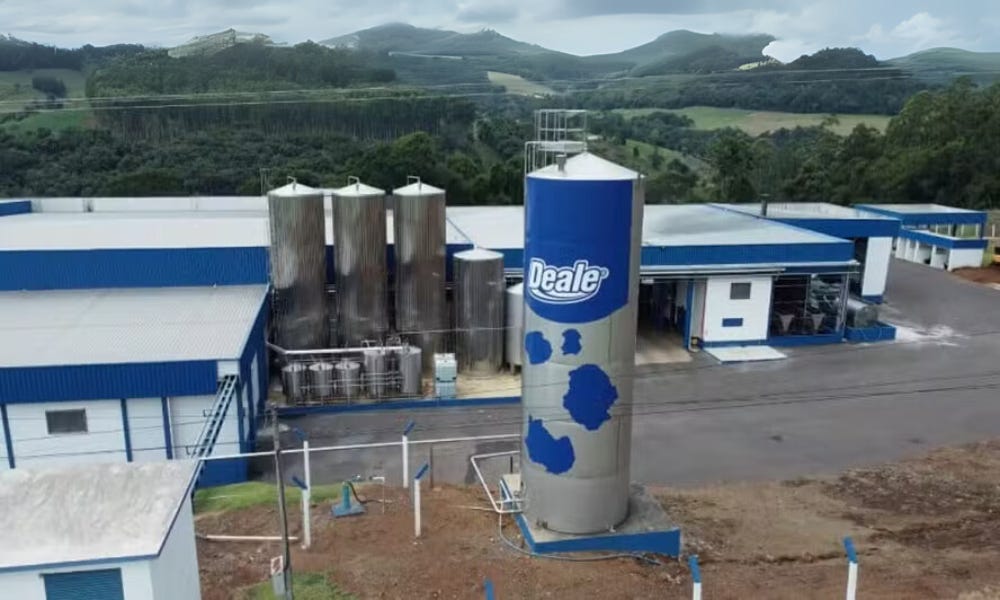
Scala Alimentos to double capacity after Deale acquisition – Scala Alimentos, a premium cheese producer, has acquired southern Brazil milk processor Deale in an undisclosed transaction. The deal will more than double Scala’s processing capacity from 700,000 to 1.55 million liters per day by integrating Deale’s operations into its platform. The acquisition also strengthens Scala’s geographic reach and supply chain integration, positioning the company to meet rising demand in both domestic and export markets. read more
Macro & Markets
Brazil’s rural credit plan falls short of expectations – The federal government announced US$95 billion in rural credit for the 2025–26 crop year through the Plano Safra, Brazil’s annual farm financing program that channels subsidized and market-rate credit to producers. The increase over last year is just 1.5% in nominal terms—well below the 5.2% inflation for the period, meaning a drop in real terms. Analysts also note that only 22% of the total (about US$21 billion) will be offered under subsidized interest rates; the rest comes from private market credit lines. read more
Paraná aims to unlock US$2.7B in private ag financing – The state of Paraná has launched a new round of Fiagros—investment funds tailored to Brazil’s ag sector—to expand credit access for cooperatives and exporters. Using a blended finance model, the state will commit up to US$15 million per fund, with a cap of US$66 million per manager, leveraging public capital via Fomento Paraná to attract market investors. The goal is to mobilize up to US$2.7 billion in total. The structure builds on a first-round vehicle led by Suno Asset and C.Vale, which raised over US$200 million. read more
Moody’s sees upside for Latin America ag on global volatility – A new report by Moody’s suggests that macroeconomic uncertainty is creating fresh opportunities for Latin American agribusiness, particularly Brazil. As global supply chains shift and climate-related trade pressures intensify, the region is well positioned to gain market share—even amid rising capital costs. Moody’s highlights risks from fiscal uncertainty but expects ESG-aligned producers to outperform. The report reinforces Brazil’s dual role as a supplier of both food and environmental assets. read more
That’s all for this week, thanks for reading,
KFG 🚀
Kieran Finbar Gartlan is an Irish native with over 30 years of experience living and working in Brazil. He is Managing Partner at The Yield Lab Latam, a leading venture capital firm investing in Agrifood and Climate Tech startups across Latin America.
🧠 New! Paid subscribers now get access to “My Take” — a brief commentary tying together this week’s key trends, offering insight and perspective on what it all means for Brazil’s ag and climate tech opportunity.
🔍 Insight & Analysis
The tension between headline numbers and real purchasing power came into sharp focus last week. The federal ag credit plan may have hit a record in nominal terms, but once adjusted for inflation, it amounts to less, not more. Producers, especially smaller ones, will be left with thinner margins and tougher trade-offs. Defaults are already climbing and are likely to remain elevated through the rest of the year. Relief may come, but not before 2026. In response, we’re seeing a shift toward state-led and blended financing models that mix public capital with private markets, alongside emerging digital barter platforms that allow producers to trade future harvests for inputs, as new ways to bridge the gap.
Meanwhile, for AgTech we are seeing a maturing of the market. What matters now is integration, connecting digital platforms with the physical networks farmers already use. Whether it’s credit, traceability, or input efficiency, the focus has shifted to what actually works in the field, not just what looks innovative on paper.
The climate narrative is also shifting to a more practical, ROI-based dialogue. Regenerative agriculture is no longer framed as a feel-good restoration effort but as a reinvestment strategy, one tied to land use, carbon, and biodiversity. The value proposition is clearer: measurable returns backed by data, infrastructure, and market demand.
Adoption of biological inputs continues to expand, creeping into high-value crops. New production capacity is coming online, and multinational interest is growing. Regulatory pressure and shifting market preferences are contributing to a gradual shift in what is considered a standard input across different segments.