


Hi, I’m Kieran Gartlan, Managing Partner at The Yield Lab Latam, ranked number two in the world for AgTech investments last year by AgFunder. If you’re interested in learning more about Brazil’s AgTech opportunity, feel free to message me below.
This week’s Brazil AgTech Report starts with practical farm-level innovation. iRancho is using voice AI to make cattle management easier in the field, researchers in Paraná are preparing a hull-free pumpkin seed, Dux is tackling ammonia buildup in poultry houses, and VivaTerra is building a new agtech venture platform.
In Climate Tech, a group of Brazilian biologicals companies will take the country’s bioinputs model to California, Embrapa has added more Brazilian seeds to the Svalbard Global Seed Vault, and a new tropical soil carbon model could unlock carbon credits in agriculture. At the same time, the government is pushing back against proposed changes to the Forest Code.
In Funding and M&A news, Leaf raised a $13 million Series B to expand its farm data infrastructure, Polato Sementes completed a dollar-linked financing structure and Amaggi raised $700 million in financing through the capital markets.
On the Macro & Markets side, Brazil’s protein trade keeps breaking records, but pressure is building in dairy. The federal government blocked nearly half of the rural insurance subsidy budget, while a possible strong El Niño is creating mixed signals for different markets.
And while Brazil and Morocco played out a 1-1 draw in their opening World Cup game over the weekend, trade between the two countries has never been stronger, with food exports flowing one way and fertilizer imports the other.
Table of Contents
AgTech
iRancho Bets on Voice AI
Hull-Free Pumpkin Seeds Near Market
Dux Targets Ammonia in Poultry
VivaTerra Builds MS AgTech Hub
Climate Tech
Brazil Takes Biologicals Model to California
Brazil Seeds Stored in Svalbard
Brazil Builds Tropical Carbon Model
Government Fights Forest Code Changes
Funding & M&A
Leaf Raises $13M Series B
Polato Raises Dollar-Linked CPR
Amaggi Raises $700M CPR
Macro & Markets
Protein and Dairy Trade Pressures
Rural Insurance Budget Cut
El Niño Splits Commodity Outlook
Brazil-Morocco Trade Deepens
AgTech
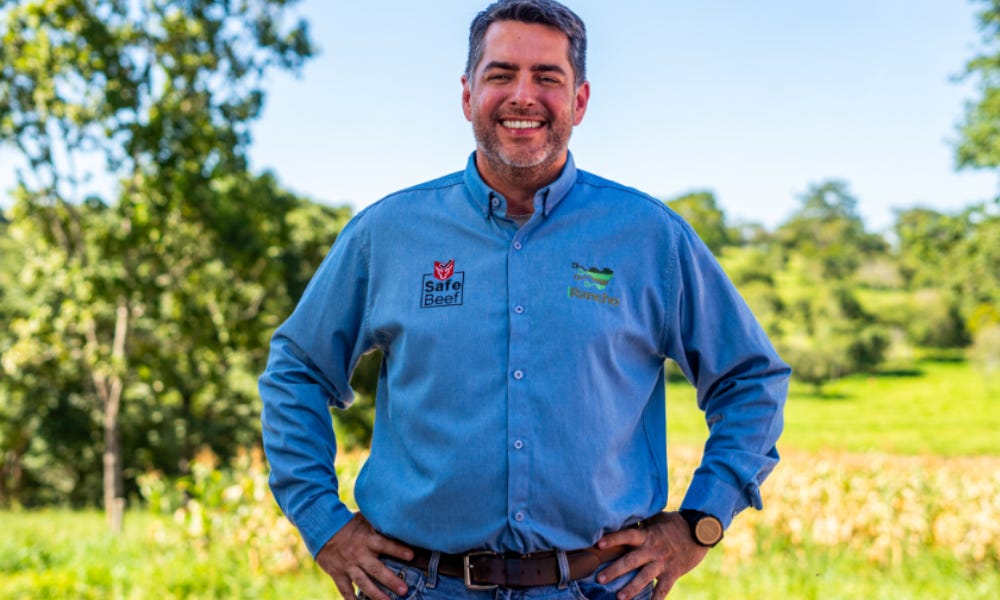
iRancho Bets on Voice AI - iRancho, a cattle management and animal traceability startup, expects revenue to reach $2 million in 2026 after closing 2025 at $1.3 million, driven by growing demand for livestock digitization. The company says its new AI tool, which allows farm workers to record information by voice directly in the field, including in areas without internet access, is helping accelerate adoption and sales. iRancho also operates SafeBeef, a blockchain-based traceability platform, and is developing new tools for natural language processing, automation and real-time data analysis. Read more
Hull-Free Pumpkin Seeds Near Market - Researchers at the State University of Ponta Grossa have developed a hull-free pumpkin seed with commercial potential, after two decades of genetic crossing based on seed material originally obtained through a partnership with Austrian researchers. The seed is ready to eat without shelling, has a pleasant flavor, germinates in soil and contains higher levels of cucurbitacin, a compound associated with vermifuge properties. The team is finalizing laboratory tests before seeking registration with Brazil’s Agriculture Ministry, with potential uses in food, oil extraction and smallholder production. Read more
Dux Targets Ammonia in Poultry - Green chemistry company Dux Grupo is targeting a potential $400 million opportunity in Brazil’s poultry industry with Amonix, a biodegradable product designed to reduce ammonia formation in chicken houses. In tests in Brazil and Peru, the product generated average gains of 60 grams per bird, while reducing ammonia levels and improving shed conditions. High ammonia can affect bird health, feed and water consumption, immunity and weight gain. Dux, already present in animal protein chains with clients including JBS, MBRF and Aurora, plans to add real-time environmental monitoring to the solution. Read more
VivaTerra Builds MS AgTech Hub - VivaTerra Ventures is racing to raise $30 million in six months for a new fund and ecosystem designed to back early-stage agtech startups in Mato Grosso do Sul. Inspired by California’s Reservoir model, the initiative combines venture capital with AgroValley MS, a local platform for testing, validating and incubating technologies with producers, universities and research partners. The first incubated startups include Carbon Vantage, focused on soil carbon credit measurement, and Kerow, which applies imaging and biometrics to livestock traceability and disease detection. Read more
Climate Tech
Brazil Takes Biologicals Model to California - Brazilian bioinput companies, researchers and industry groups will present the country’s experience with biological products at the Salinas Biological Summit 2026, held on June 23 and 24 in California. The delegation includes Ideelab, Grupo Vigna Brasil, Lallemand, ANPII Bio and Esalq/USP, with panels on research, regulation, adoption and commercialization. Organizers say Brazil has become a global reference in biologicals thanks to regulatory progress, stronger links between science and industry and rising farmer adoption. The event should also expand cooperation between Brazilian and US organizations in bioinput research and innovation. Read more
Brazil Seeds Stored in Svalbard - Brazil has delivered 24 new seed samples to the Svalbard Global Seed Vault in Norway, bringing Embrapa’s total deposits there to 8,149 samples since 2012. The latest shipment includes cashew, fava bean, peanut, castor bean and sesame seeds, stored at -18°C inside the Arctic mountain facility as a backup for Brazil’s agricultural biodiversity. Embrapa president Silvia Massruhá personally delivered the samples, highlighting the vault’s role in protecting genetic resources from climate risk, conflict and institutional failure. Brazil first joined the vault with rice and corn samples. Read more
Brazil Builds Tropical Carbon Model - Embrapa is finalizing ProCarbon-Soil, a new model designed in Brazil to estimate soil carbon dynamics in tropical farming systems and support agricultural carbon credit projects. Developed with Bayer, the tool uses Brazilian agricultural data, 4,290 soil samples and information from 370 scientific studies, aiming to simplify monitoring by focusing on total carbon stock and decomposition. Researchers say Procs performed similarly to Century in 50-year simulations, while reducing uncertainty versus direct field measurements. The next step is formal validation, including submission to Verra, a leading voluntary carbon market certifier. Read more
Government Fights Forest Code Changes - Brazil’s environment minister João Paulo Capobianco said the government will use legal tools to block changes to the Forest Code approved by the lower house in May. The bill still needs Senate approval and presidential sanction, but Capobianco said the government will seek a Senate rejection, a presidential veto or, if needed, a Supreme Court challenge. He argues the proposal weakens protections for the Pantanal, Cerrado, Pampas, parts of the Amazon and high-altitude Atlantic Forest areas by allowing vegetation removal in certain rural areas without prior authorization or compensation. Read more

Funding & M&A
Leaf Raises $13M Series B - Leaf Agriculture raised a $13 million Series B co-led by Leaps by Bayer and strategic industry investors to expand its farm data infrastructure for AI-driven agribusiness. Founded in 2021, Leaf connects, cleans and structures farmer-owned data from machinery, soil labs, weather stations, satellites and farm management systems, helping insurers, retailers, input companies and compliance platforms build tools on top of fragmented agricultural data. The company says it processes data covering more than 20% of global crop acres annually and helps partners support faster insurance payouts, field-specific recommendations and sustainability programs. Read more
Polato Raises Dollar-Linked CPR - Polato Sementes raised R$137 million through Brazil’s first public offering of a financial CPR linked to exchange-rate variation, giving the Mato Grosso seed company access to capital in reais while aligning the instrument with dollar-driven commodity markets. The raise follows a R$100 million investment in a new seed-processing unit in Pedra Preta, designed to double annual production capacity to 1 million bags. Founded in 1981, Polato produces soybean, cotton and sorghum seeds and says the funds will support growth, governance upgrades and more sophisticated agribusiness financing. Read more
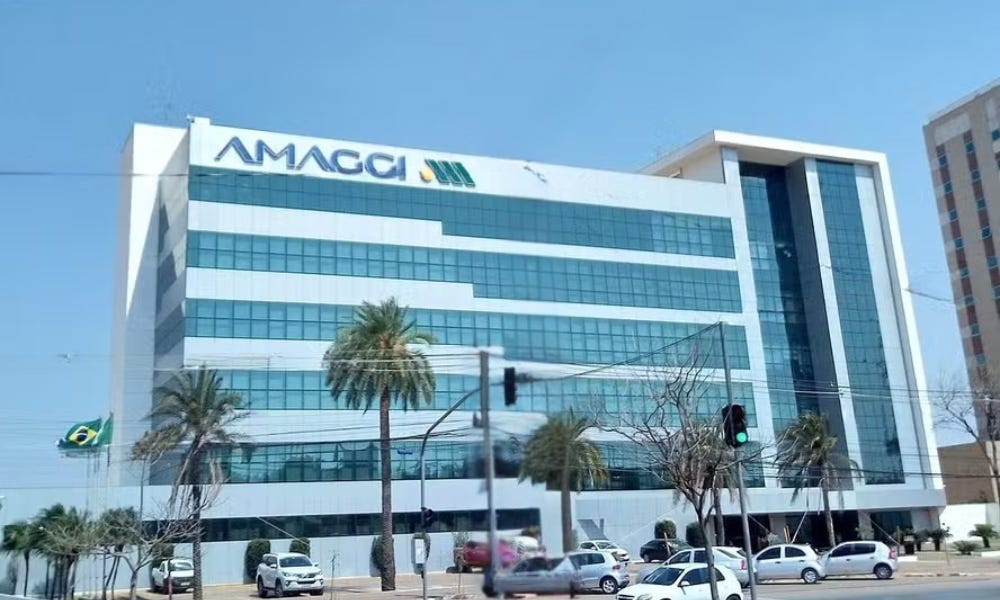
Amaggi Raises $700M CPR - Agropecuária Maggi, part of the Amaggi group, issued its first financial CPR, raising R$3.54 billion through a single-series, book-entry operation distributed exclusively to professional investors. The instrument pays 100% of the DI rate plus a 1.08% annual spread, with semiannual payments and debt amortization over ten years from 2031 to 2036. Proceeds will be used for working capital, investments and support for the company’s own agricultural production. The CPR is backed by soybean and cotton volumes, with Itaú acting as settlement bank and bookrunner. Read more
Macro & Markets
Protein and Dairy Trade Pressures - Brazil’s poultry and pork exports hit record levels in May, with chicken exports topping US$1 billion and pork shipments reaching 129,400 tons and US$302.1 million. China, Japan, the EU and Saudi Arabia led chicken demand, while the Philippines remained the top pork buyer and Japan increased purchases sharply. At the same time, dairy imports reached the equivalent of 220 million liters in May, taking year-to-date purchases above 1 billion liters for the first time, as Brazil weighs antidumping tariffs on milk powder from Argentina and Uruguay. Read more on protein exports and dairy imports
Rural Insurance Budget Cut - Brazil’s federal government has blocked R$461.7 million from the Rural Insurance Premium Subsidy Program, almost half of the R$999.1 million allocated to MAPA for agricultural protection in 2026. The rural insurance line accounts for 45.7% of the ministry’s total budget freeze, part of a wider R$788.4 million cut that also affects agricultural development, technology research and Embrapa-related programs. The cut comes in an El Niño year and affects a program designed to help producers pay for policies covering losses from droughts, floods, frost and storms. Read more
El Niño Splits Commodity Outlook - A possible very strong El Niño could put 30% of global agricultural production at risk, but recent reports from Cogo Inteligência and Bradesco BBI suggest the impact will vary sharply by crop and region. Soybean and sugarcane may see modest productivity gains in Brazil, while corn faces risks if rains delay second-crop planting in the Center-West. Coffee appears more exposed, with high risk for arabica in Minas Gerais and robusta in Bahia and Rondônia. Bradesco BBI sees limited price impact overall, while Cogo is more bullish on sugar. Read more
Brazil-Morocco Trade Deepens - Brazil and Morocco moved US$2.8 billion in trade in 2025, with agriculture central to the relationship. Brazilian exports to Morocco totaled US$1.4 billion, led by sugar and molasses, which represented 58.1% of sales, alongside corn, live animals, coffee, fruit and spices. Imports reached a similar level, but were heavily concentrated in chemical fertilizers, which accounted for 84.8% of Brazilian purchases from Morocco. Trade has continued growing in 2026, with Brazilian exports up 9.6% through May and imports up 34.4%, reinforcing Morocco’s role as both food buyer and fertilizer supplier. Read more

That’s all for this week, thanks for reading,
KFG
Kieran Finbar Gartlan is an Irish native with over 30 years of experience living and working in Brazil. He is Managing Partner at The Yield Lab Latam, a leading venture capital firm investing in Agrifood and Climate Tech startups across Latin America.