


Welcome to this week’s Brazil AgTech Report. There was no edition last week as I was in Ireland visiting family and catching up on the local AgTech scene — I’ll share a short report on that later this week.
Summary
In Brazil AgTech news, Octagora is bringing AI-powered remote diagnostics to farm machinery, helping prevent costly breakdowns, while Rumina is using WhatsApp-based AI to simplify dairy herd management. The state of Minas Gerais has passed a new law offering incentives for AgTech startups, aiming to strengthen its innovation ecosystem and expand pilot projects across key farming regions.
In Climate Tech, Brazil’s forest sector hit a record US$88 billion in revenues last year, fueled by pulp exports, reforestation projects, and rising carbon credit demand. GPA’s circular economy initiative continues to scale, rescuing 11.4 thousand tons of food from waste through partnerships with foodtech startups, while an energy surplus from solar and hydro sources is drawing cryptocurrency miners to Brazil’s Northeast.
In Funding and M&A, Banco Pine expanded its agro portfolio to over US$1.1 billion, while Bradesco’s E-Agro is on track to disburse nearly US$930 million in rural credit this year. Meanwhile, GDM is advancing into corn genetics and ethanol-linked opportunities through acquisitions and R&D partnerships, positioning itself for Brazil’s next biofuel growth cycle.
And in Macro & Markets, Cerrado wheat is fast becoming a major rotation crop, growing 70% last year with Embrapa-led research and private investment. The Soy Moratorium has been reinstated after a CADE reversal, ethanol may face its first deficit in 14 years, and the ag workforce hit a record 19.2 million, driven by more women and higher-skilled roles across Brazil’s farming regions.
🧭 Table of Contents
AgTech
Octagora brings remote diagnostics to farm machinery
Rumina uses AI via WhatsApp to streamline dairy farm management
Minas Gerais approves incentive law to boost AgTech development
Climate Tech
Brazil’s forest sector grows 16.7%, reaching US$88 billion in 2024
Clean energy surplus draws crypto miners to Brazil
GPA and foodtechs rescue 11.4 thousand tons of food
Funding and M&A
Banco Pine expands agribusiness portfolio to US$1.1 billion
Bradesco’s E-Agro targets US$930 million in 2024
GDM expands into corn genetics and ethanol-linked opportunities
Macro & Markets
Cerrado wheat expands with strong investment and research support
Soy Moratorium reinstated after CADE reversal
Brazil’s ethanol market faces first deficit in 14 years
Brazil keeps supplying beef to the U.S. through indirect trade routes
More women and skilled workers drive record employment in agribusiness
AgTech
Octagora brings remote diagnostics to farm machinery – São Paulo–based Octagora has developed a remote monitoring platform that applies a “telemedicine for machines” approach to agricultural equipment. Using AI and IoT sensors, it diagnoses mechanical issues before they cause downtime, helping farmers reduce costs and improve fleet efficiency. The startup has raised about US$3.5 million from investors including KPTL and DOMO Invest, and is expanding its customer base among major agribusinesses. read more
Rumina uses AI via WhatsApp to streamline dairy farm management – Brazilian agtech Rumina has launched an AI assistant integrated into WhatsApp to help dairy farmers manage herd data, feeding schedules, and milk productivity in real time. The platform converts voice or text inputs into actionable insights, connecting farmers with consultants and veterinarians through a conversational interface. By reducing the need for manual data entry, Rumina aims to simplify decision-making and improve animal health outcomes. read more
Minas Gerais approves incentive law to boost AgTech development – The state of Minas Gerais has enacted a new law to strengthen its innovation ecosystem and support the growth of AgTech startups. The legislation creates financial incentives, tax benefits, and access to public–private investment funds for companies developing agricultural technology solutions. It also encourages partnerships between universities, cooperatives, and research institutions to expand pilot programs across the state’s main farming regions. read more

Climate Tech
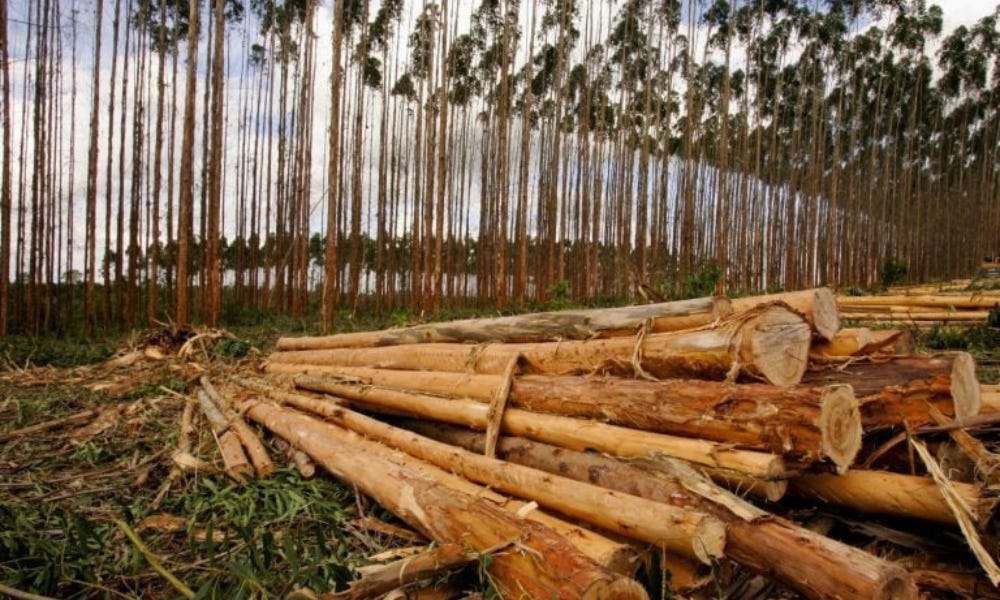
Brazil’s forest sector grows 16.7%, reaching US$88 billion in 2024 – Brazil’s planted forest industry generated US$88 billion last year, up 16.7% from 2023, according to Ibá (Brazilian Tree Industry Association). The expansion was driven by pulp and paper exports, carbon credit opportunities, and new reforestation investments, particularly in the Cerrado and South regions. The sector now represents 1.2% of Brazil’s GDP and employs over 2.4 million people. read more
Clean energy surplus draws crypto miners to Brazil – Brazil’s growing surplus of renewable energy is attracting cryptocurrency mining companies seeking low-cost, low-carbon electricity. According to Abraceel, hydro and solar output now exceed domestic demand in several states, driving energy prices down and creating new opportunities for large-scale data infrastructure. Crypto firms are setting up operations in the North and Northeast, regions with abundant solar capacity and transmission incentives. read more
GPA and foodtechs rescue 11.4 thousand tons of food – Brazilian retail group GPA has partnered with foodtech startups Food To Save and Connecting Food to reduce waste across its supermarket chains, including Pão de Açúcar and Extra. The collaboration recovered 11.4 thousand tons of food since 2021, redistributing surplus through food banks and social programs, equivalent to 21 million meals. The initiative is part of GPA’s ESG strategy to achieve zero waste by 2030. read more
Funding and M&A
Banco Pine expands agribusiness portfolio by 47% in six months – Defying Brazil’s tight credit environment, Banco Pine grew its agribusiness portfolio from US$250 million to nearly US$370 million in the first half of 2025—a 47% increase. Agro now represents about 23% of the bank’s total credit exposure, supported by strong demand from soy, corn, and cotton producers. Pine focuses on mid-sized clients and regional offices in key farm hubs, combining credit, hedging, and structured finance. Despite sector challenges, delinquency remains low at 1.2% of the total portfolio, signaling solid risk management and continued appetite for agribusiness lending. read more
Bradesco’s E-Agro targets US$930 million in 2024 – Bradesco’s E-Agro platform, focused on financing small and medium-sized rural producers, expects to reach US$930 million in credit disbursements this year. The bank projects moderate growth in 2026, supported by strong adoption of digital channels and increased demand for input, machinery, and sustainability-linked financing. E-Agro has expanded its customer base through partnerships with cooperatives and agtech platforms, aiming to simplify rural credit access and improve loan efficiency. read more
GDM expands into corn genetics and ethanol-linked opportunities – Seed giant GDM, known for its dominance in soybean breeding, is accelerating its entry into the corn market through acquisitions and R&D partnerships aimed at capturing the growing ethanol opportunity. The company recently invested in new hybrid development programs and is exploring strategic deals with local biotech and input firms to expand its genetic portfolio. With corn demand rising from Brazil’s biofuel sector, GDM sees the crop as its next growth frontier, leveraging its regional breeding network and precision phenotyping expertise to compete with multinationals. read more

Macro & Markets
Cerrado wheat expands with strong investment and research support – Wheat cultivation is expanding in Brazil’s Cerrado region, with farmers adopting it as a strategic rotation crop that suppresses soil pathogens and improves fertility. Backed by Embrapa research and private investment, the area planted in tropical wheat grew 70% in 2024, driven by strong demand from milling industries and new resistant cultivars adapted to hot, dry climates. Companies like Biotrigo and Sementes Goiás are leading trials and seed production, signaling a new economic frontier for the region’s grain systems. read more
Soy Moratorium reinstated after CADE reversal – Brazil’s Soy Moratorium, temporarily suspended in August by the country’s antitrust authority (CADE), has been reinstated after a board review allowed the agreement to remain valid until the end of 2025. The pact, signed by major traders such as ADM, Bunge, Cargill, Cofco, and Louis Dreyfus, prohibits soybean purchases from areas deforested in the Amazon after 2008. The reversal follows pressure from civil society and export partners in Europe. read more
Brazil’s ethanol market faces first deficit in 14 years – Brazil may register its first ethanol supply deficit since 2011, according to Datagro. The shortfall is driven by strong domestic fuel demand, slower sugarcane recovery, and a shift in production toward sugar due to high global prices. Ethanol output is expected to fall 3.4% this season, while consumption grows nearly 6%, especially from hybrid and flex-fuel vehicles. Analysts say imports could rise in late 2025 to balance supply, marking a structural shift as biofuel demand accelerates and mills face tighter margins amid high energy and logistics costs. read more
Brazil keeps supplying beef to the U.S. through indirect trade routes – Despite recent tariff increases, Brazil continues exporting beef to the United States via alternative routes. Data from USDA and Abiec show that while direct shipments fell, re-exports through Mexico, Panama, and Canada have increased, helping maintain supply to U.S. importers. Brazilian beef remains competitive thanks to strong productivity and currency advantages, with over 270 plants now certified for foreign markets. read more
More women and skilled workers drive record employment in agribusiness – Brazil’s agricultural workforce reached a record 19.2 million people in 2024, according to IBGE, up 7% from the previous year. The rise reflects both higher rural employment and structural shifts, with women now representing 26% of the sector and the share of workers with secondary or higher education climbing to 42%. Experts say the trend highlights agriculture’s growing professionalization and the spread of technology-based jobs in logistics, sustainability, and farm management. read more
That’s all for this week, thanks for reading,
KFG
Kieran Finbar Gartlan is an Irish native with over 30 years of experience living and working in Brazil. He is Managing Partner at The Yield Lab Latam, a leading venture capital firm investing in Agrifood and Climate Tech startups across Latin America.