


How AI is starting to shape decisions on capital, production risk, and market outcomes in Brazilian agriculture.
Reality Bites
In a recent article, I argued that artificial intelligence would first change agriculture by improving decisions, not by automating farms. That remains true. AI’s earliest impact is cognitive. It reduces uncertainty and will help farmers make better calls under pressure.
Shortly after publishing that piece, however, I listened to an episode of Moonshots featuring a wide-ranging discussion with Elon Musk on AGI timelines and humanoid robots. The vision was extremely bullish, particularly for industries where capital is cheap, assets turn over quickly, and labor is scarce.
Agriculture in Brazil operates under a different set of constraints. High interest rates, long-lived machinery, legacy investments, and still-available labor slow the pace of structural change. That does not delay AI’s impact. It changes where it shows up first.
On Brazilian farms, AI will not arrive as a sweeping technological overhaul. It will arrive where uncertainty is most expensive and mistakes are hardest to absorb. Capital decisions. Production risk. Market exposure. These are the pressure points where better information and better timing can deliver value, without requiring large new investments.
Finance Friction
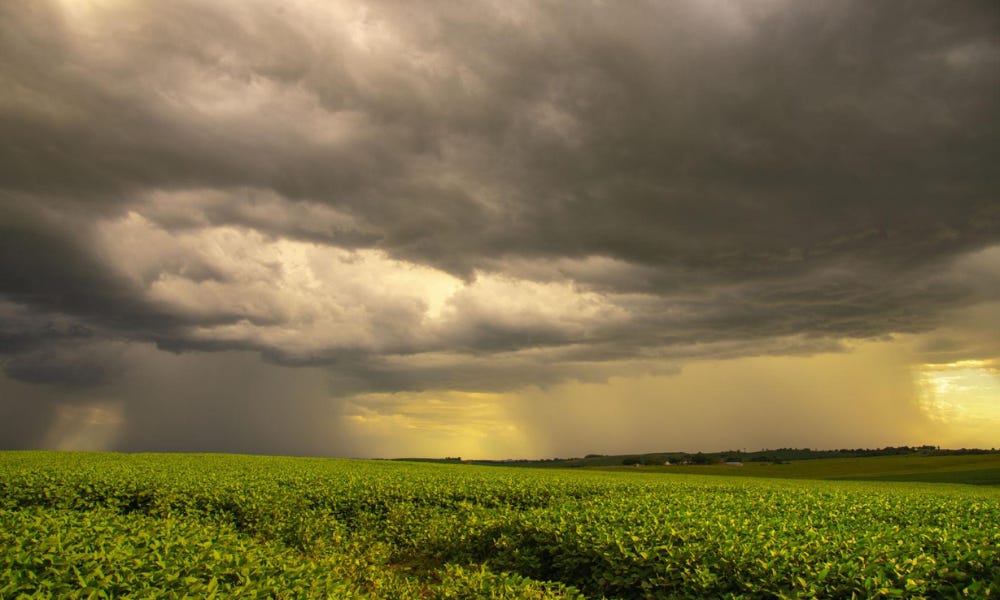
Capital is where AI first starts to matter in Brazilian agriculture, because that’s where uncertainty is most expensive. Credit decisions still rely heavily on blunt filters such as past credit history, generic risk buckets, and hard collateral like land titles that are slow and costly to enforce. What is often missing is a precise view of production risk, even though future production is the real collateral behind most farm loans.
In grains, TerraMagna applies satellite imagery, historical crop data, and AI models to assess the quality of future production as collateral. Founded by ITA graduates with strong geospatial and AI backgrounds, the company focuses on measuring and predicting production conditions with far greater precision than traditional credit models. It also estimates expected harvest windows, making repayment timing more visible and collection more predictable.
In coffee, Culttivo reflects the different risk profile of a perennial crop with a biennial cycle and a 15- to 20-year investment horizon. By combining satellite imagery, climate data, and ground-level validation, the platform distinguishes between low- and high-risk producers in a sector where farmers rarely walk away and irrigation has reduced climate exposure.
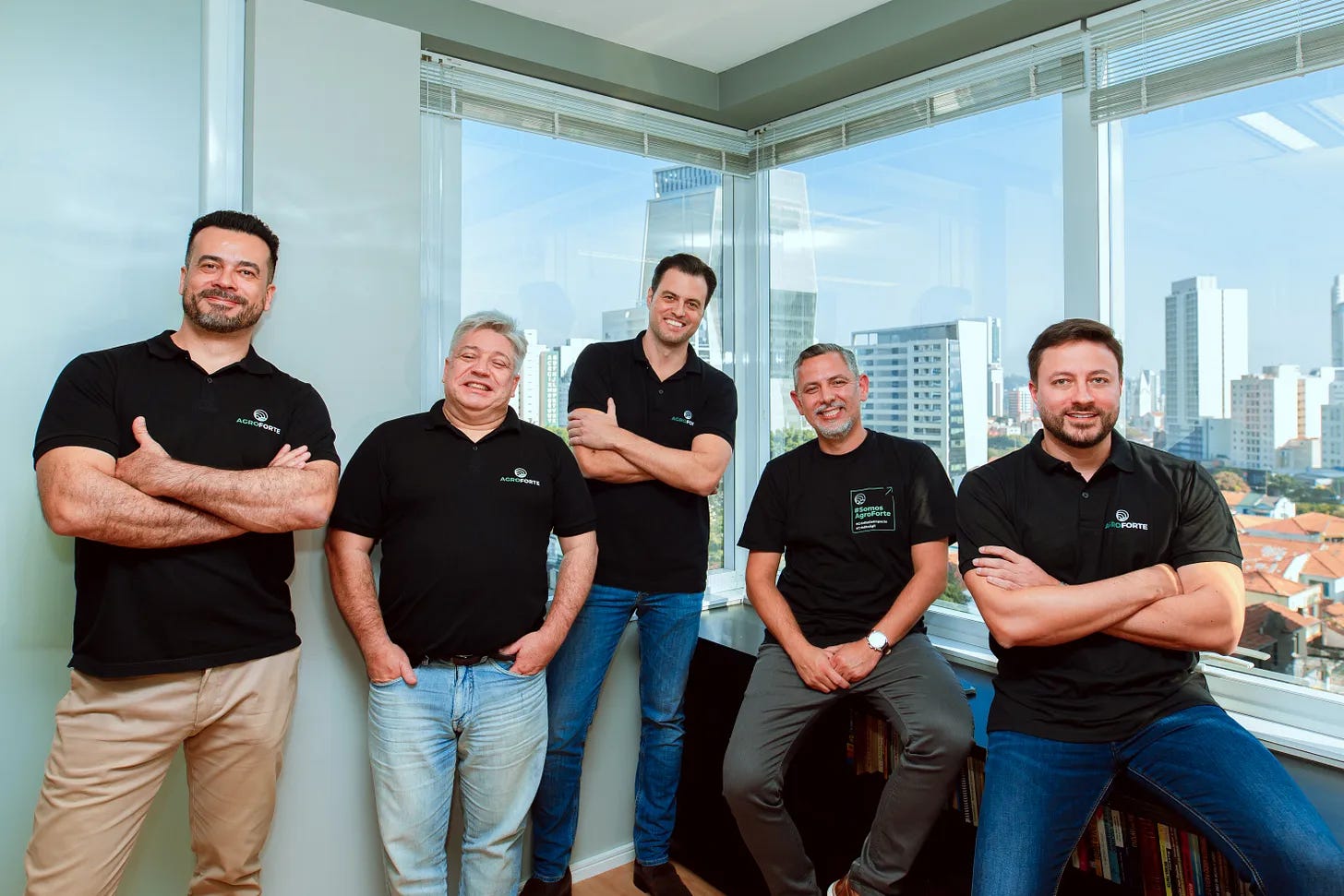
In animal protein, Agroforte builds risk profiles using production data already held by dairy, pork, poultry, and beef processors. Much of this information has historically been scattered across spreadsheets or filing cabinets. By structuring it, Agroforte helps identify higher-margin producers and supports investments in productivity and animal wellbeing. In many cases, processors are willing to help guarantee loans as a way to strengthen long-term supply relationships.
Harnessing Nature
If capital is where uncertainty is priced, production is where it is felt. Brazilian agriculture operates in open systems shaped by biology, weather, and timing, where static models struggle to keep up. As volatility increases, production risk is no longer just about yield. It is about resilience.
At the biological level, Symbiomics applies AI to the development of next-generation biologicals. By combining sequencing technologies, machine learning, and genome-editing tools, the company designs high-performance biological inputs that improve productivity while reducing reliance on synthetic chemicals. Instead of slow trial-and-error discovery, AI helps narrow the search space and accelerate learning.
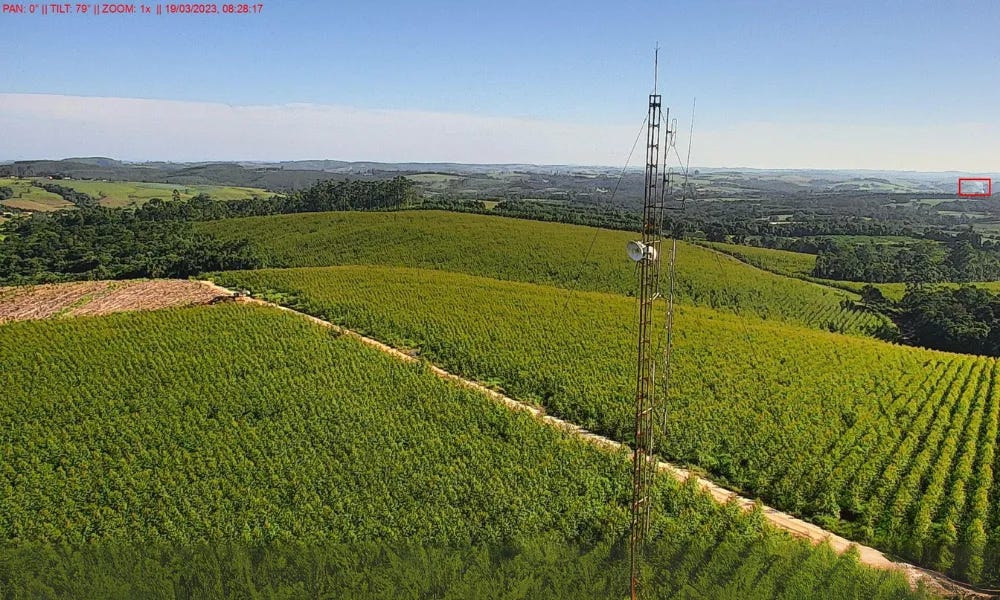
Other risks are more immediate. In sugarcane, Umgrauemeio focuses on wildfire prevention, one of the sector’s most destructive threats. Using satellite imagery, high-definition cameras on monitoring towers, and AI models trained to predict where fires are most likely to start, the platform helps operators detect outbreaks in seconds and position resources closer to high-risk zones, reducing response time and damage.
Water risk follows a different logic. Kilimo combines sensor data and satellite imagery to build precision irrigation models that help farmers increase productivity while reducing water and energy use. Beyond efficiency gains, the platform enables farmers to participate in water stewardship programs, where savings can be monitored, reported, and verified, turning risk management into measurable income.
Money Matters
If production risk determines whether a crop exists, market risk determines whether it is profitable. Brazilian farmers operate in markets shaped by price volatility, basis risk, logistics constraints, and foreign exchange exposure. These factors are often treated as external forces. In practice, they are information problems.
AI begins to matter here by improving price discovery and origination. Grão Direto applies data and AI to connect farmers and trading companies more efficiently, improving transparency and deal formation in grain markets. By analyzing historical transactions, market conditions, and buyer behavior, the platform reduces information asymmetry and friction in commercialization.
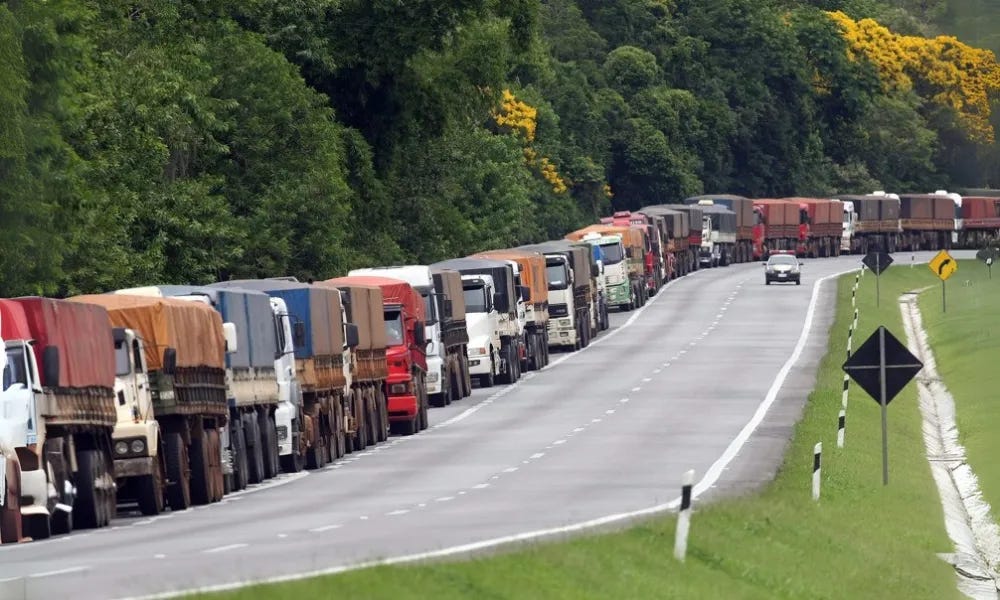
Logistics is where market inefficiencies often compound. In Brazil, distance and coordination failures turn transport into a hidden tax on farm profitability. goFlux uses AI to improve the efficiency of agricultural logistics by matching freight demand with available capacity more intelligently. By reducing empty miles, delays, and coordination costs, logistics becomes more predictable, helping compress basis spreads and improve net prices at the farm gate.
Market intelligence follows a different path. Seedz has built a network of more than 150,000 farmers who earn loyalty points by registering activities and sharing data. AI transforms this large, real-world dataset into a business intelligence platform for input suppliers and machinery companies. What was once anecdotal feedback becomes structured insight, helping companies measure market share, identify demand trends, and spot commercial opportunities earlier.
Trust, First
Taken together, these three areas point in the same direction. AI is beginning to matter in Brazilian agriculture by reducing friction in the decisions that carry the most risk. It improves how capital is allocated, how production risk is managed, and how crops move into the market. In each case, the value comes from clearer signals and better timing.
This also explains why much of the global AI narrative struggles to translate to agriculture. Visions built around cheap capital, fast asset turnover, and extreme labor scarcity do not map neatly onto farming systems shaped by long-lived equipment, high interest rates, and biological cycles. In Brazil, those constraints shape where AI takes hold first.
What emerges instead is a slower, more practical path built on trust. AI earns its place by working quietly in the background, using data that already exists and improving probabilities rather than promising certainty. Over time, these gains compound. Better credit decisions support better production choices, which in turn provide better market positioning.

If you are interested in this topic, The Yield Lab Latam, together with the Brazilian Rural Society, will be hosting an event later this month on February 26 in São Paulo to showcase real case studies of AI being used in Brazilian agriculture. The session will feature three startups and three corporates, will be held in Portuguese, and will also be streamed online. Registration is free, although in-person places are limited, and available at the following link.
Thanks for reading.
KFG
Kieran Finbar Gartlan is an Irish native with over 30 years experience living and working in Brazil. He is Managing Partner at The Yield Lab Latam, a leading venture capital firm investing in Agrifood and Climate Tech startups in Latin America.