


Forget gut instinct — the future of farming lies in sensing what the human body was never wired to detect.
Change Ahead
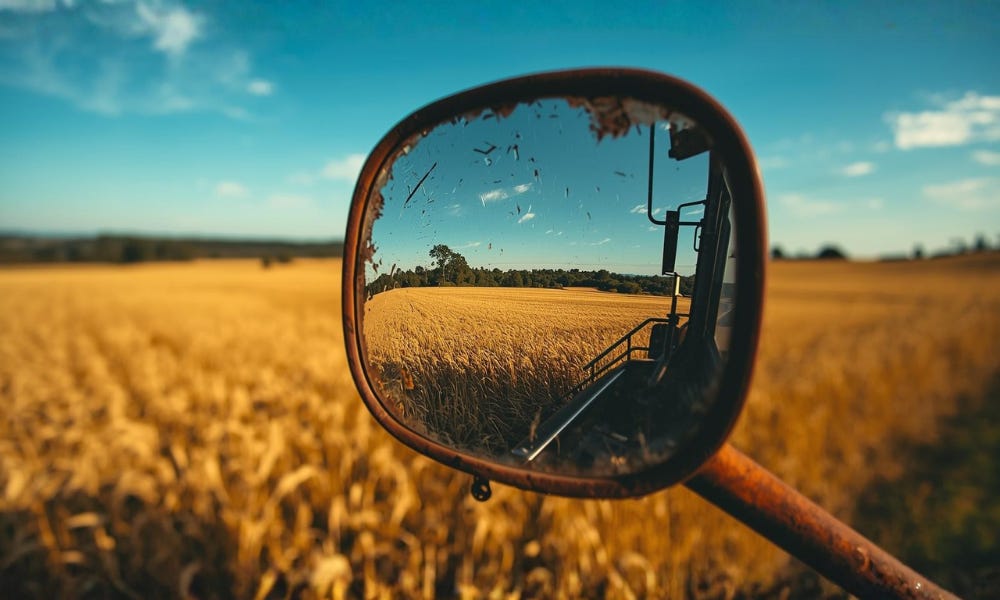
For generations, farming has been a sensory craft. A quick squeeze of the soil or the sound of a tractor running differently told farmers much of what they needed to know. Instinct became a competitive advantage. Experience became a sixth sense. Farming rewarded those who could read subtle cues and make good decisions in the face of uncertainty.
But the job is getting harder. Farms are larger, climates swing more sharply, and every decision carries more weight — with less margin for error. What once relied on observation and timing now demands a level of consistency and precision that human senses were never built to deliver. Even the best operators can only track so much across a busy season.
That’s where technology is stepping in — not to replace intuition, but to extend it. Tools that measure, record, and map the farm give farmers a wider field of view, revealing dynamics that were once easy to miss. The craft of farming remains, but the way we perceive the farm is expanding.
Data Storm
Farming has always looked simple from the outside — a field is a field, a crop is a crop. But beneath that apparent uniformity lies a dynamic system shaped by soil chemistry, canopy temperature, root development, microclimates, nutrient flow, and countless biological interactions. Most of these dynamics unfold quietly and invisibly, far beyond what human senses are able to pick up in real time.
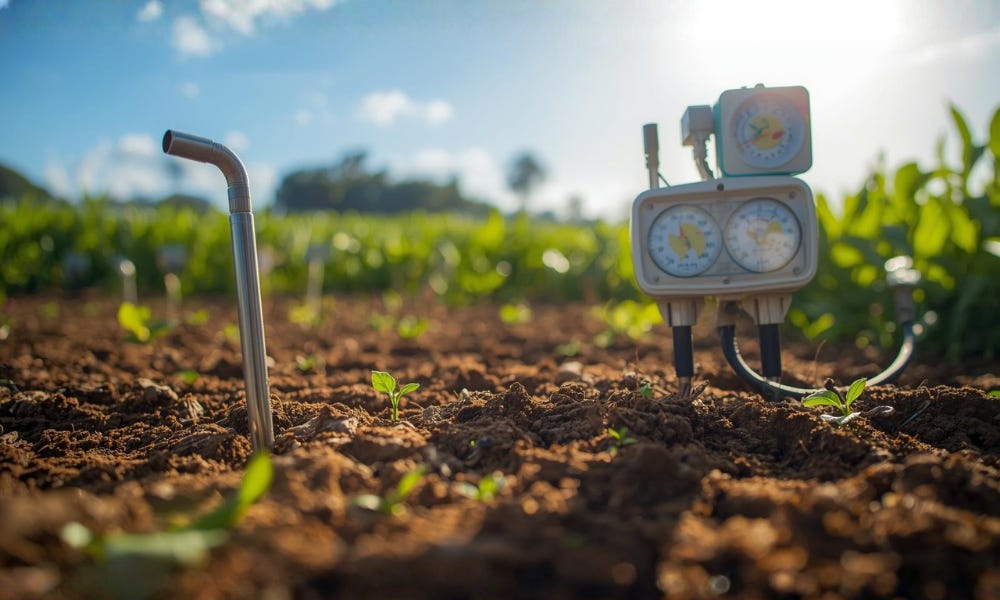
Technology begins to widen the frame. Soil probes track moisture shifts through the day. Satellites catch early signs of stress long before a leaf changes colour. Weather stations capture hyperlocal patterns that never show up in national forecasts. Even tractors, sprayers, and harvesters now stream data as they work, turning routine operations into detailed maps of how the field behaves.
The result is an unprecedented flood of information. Chemical signals, temperature changes, soil movements, atmospheric shifts — all of it captured continuously and at a scale no person could ever monitor alone. A modern farm generates more data in a single season than previous generations gathered in a lifetime, and the gap between what’s happening and what we can perceive grows wider each year.
Connecting Dots
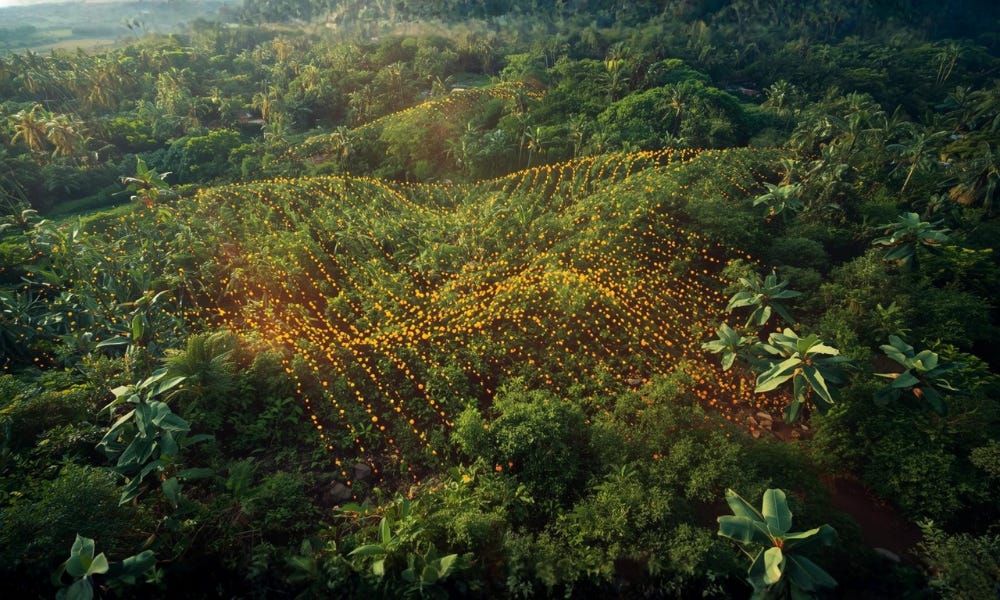
Capturing data is only half the job — making sense of it is where AI steps in. It pulls these signals together and shows how small shifts in moisture, temperature, soil chemistry, or canopy behaviour link up to influence outcomes. When moisture readings sit beside canopy temperature, or when nutrient maps align with satellite imagery, new patterns appear — the kind no farmer could spot with the naked eye.
These systems learn from the farm itself. They notice subtle trends farmers don’t have time to track, integrating historical performance, weather forecasts, sensor data, and real-time field signals. A system might pick up, for example, that a slight rise in canopy temperature on a particular slope consistently follows a dip in soil moisture — a pattern invisible to even the most attentive scout. Over time, the machine begins to anticipate issues before they appear, offering recommendations that feel less like analysis and more like instinct — only with the accuracy of high-resolution sensing behind them.
The result is a shift from reactive decisions to proactive ones. Farmers stop responding to what they can see and start preparing for what they can’t. Technology doesn’t override farmer wisdom; it enhances it, giving producers a kind of augmented awareness that blends experience with machine-level sensing power.
Second Sight
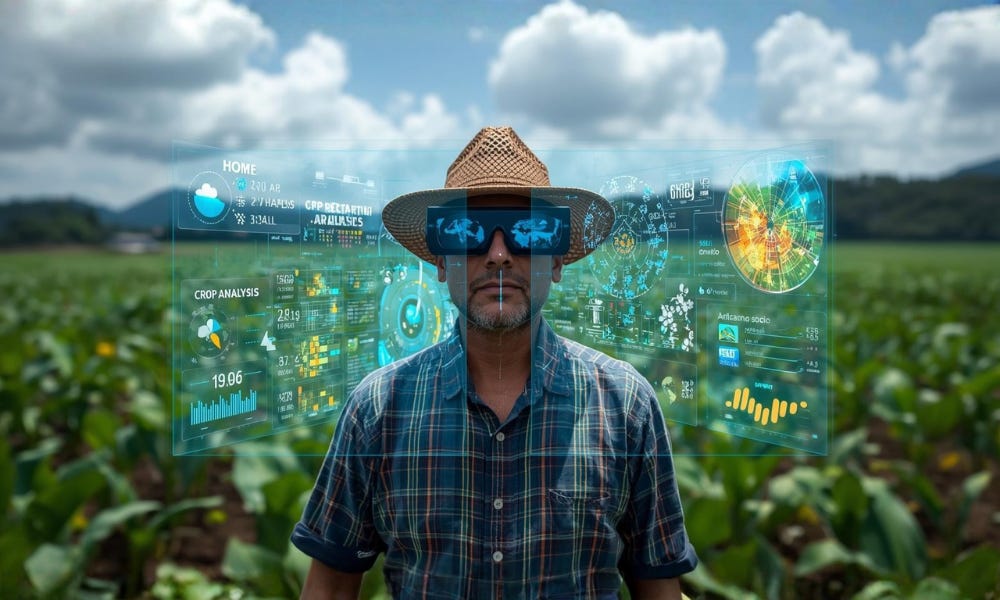
The next shift in perception won’t come from dashboards alone. As tools evolve, the goal is to bring insight closer to where decisions happen — in the cab, on the quad bike, or walking a field. Augmented displays, guided overlays, and wearable interfaces can turn complex data into something almost physical, letting farmers glance at a landscape and see moisture zones, nutrient hotspots, or emerging pest pressure layered over the areas they already know.
Much of this happens automatically, without the farmer needing to stop and check a screen. Connected equipment, autonomous scouts, and always-on monitoring networks register changes that would otherwise slip by unnoticed. Instead of searching for problems, farmers receive targeted nudges: a subtle anomaly in one corner of a field, a shift in vigour along a slope, a zone drying out faster than expected.
As these tools mature, perception stops being limited by the human body. The farm becomes easier to “read,” not because a person sees more, but because the systems around them surface the right clues at the right moment. It feels less like using technology and more like gaining a new sense that fits naturally into the rhythm of work.
Wider Horizons
Extended perception doesn’t replace what farmers already know — it builds on it. The sharp eye, the gut feeling, the experience shaped by years on the land all remain essential. What’s changing is the range of what can now be sensed. The invisible becomes visible, the complex becomes legible, and the field itself becomes easier to understand.
And as perception expands, the profession itself is shifting. Farming was once a vocation more than a business — a way of life passed from one generation to the next, full of uncertainty and hard work but grounded in a deep connection to nature. Much of its value was non-monetary: the feel of soil between your fingers, the smell of fresh cut grass, the satisfaction of coaxing life from the land. Technology doesn’t erase that heritage, but it is nudging farming closer to an industrial model, one where efficiency and predictability carry more weight. Fields remain open-air factories — exposed to weather, biology, and risk — yet they are becoming more structured, more measurable, and more manageable.
This shift brings trade-offs. Farmers may spend less time physically immersed in the land, but they gain the ability to run their operations with more clarity, less waste, and far fewer blind spots. The volatility that once defined the business softens as better insight reduces risk and allows farmers to capture more upside across the supply chain. It’s a different kind of connection to the land — less tactile, more informed — but one that strengthens resilience and helps secure the future for the next generation.
Thanks for reading.
KFG
Kieran Finbar Gartlan is an Irish native with over 30 years experience living and working in Brazil. He is Managing Partner at The Yield Lab Latam, a leading venture capital firm investing in Agrifood and Climate Tech startups in Latin America.