


My week-long visit to UK AgriTech centres showed how these institutions are pushing science and technology from lab to farm and even beyond UK borders.
Market Lens
Having grown up on a farm in Ireland, I’m fairly familiar with the European AgriTech scene, so I was not expecting this one-week ARISE* trip across the UK ecosystem to show me anything new. I returned to Brazil, however, more surprised and impressed than I had expected.
What stood out was not just the science, the quality of the centres, or the funding behind them. These institutions seem to have matured beyond a pure research and technology lens and are taking a harder look at market opportunities, including ones farther afield.
The UK has many of the ingredients needed to build strong AgriTech: talent, public funding, serious research infrastructure, and institutions like Norwich Research Park, the John Innes Centre, The Sainsbury Laboratory, the Lincoln Institute for Agri-Food Technology, Cambridge-based Niab, and Warwick Manufacturing Group. What it does not have is a large addressable market. British agriculture is relatively small, fragmented, and seasonal, which limits its attractiveness for venture capital.
That reality seems to be changing the way some of these centres think. The focus is widening from developing the science to finding the right market, the right test bed, and the right commercial path. Brazil kept coming into the picture for exactly that reason.
Southern Appeal
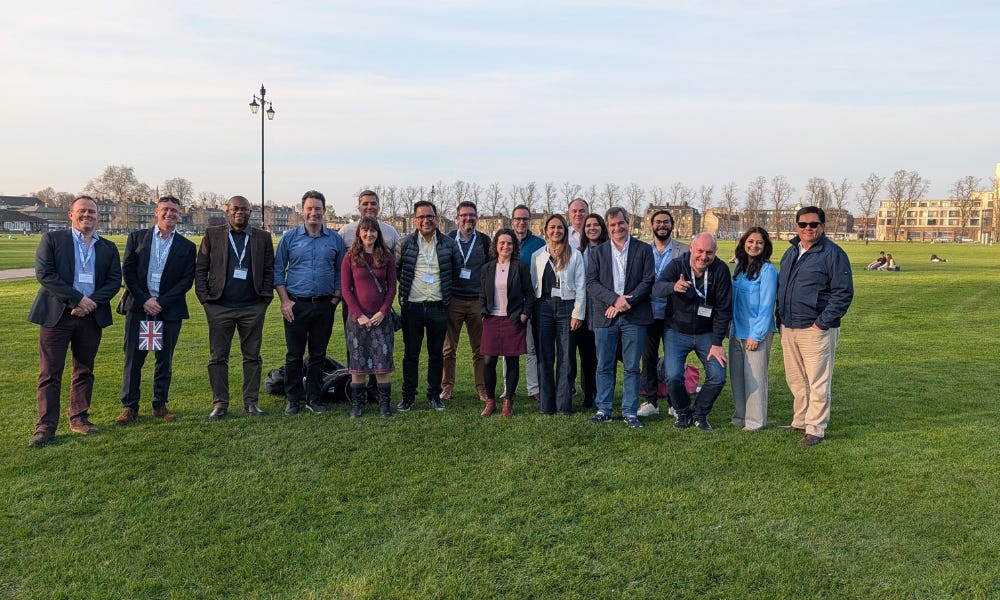
Norwich Research Park made that shift clear. The scale is impressive, but the more important point is that this is no longer just a cluster of strong research institutions. It is becoming a platform that is thinking more seriously about where science can travel and where it can find the biggest commercial opportunity.
According to Jonathan Clarke of John Innes Enterprise, the traditional model often centred on attracting foreign startups and talent into the UK through funded projects and research collaborations. That model is now widening. The UK has strong science, serious funding through bodies like the Biotechnology and Biological Sciences Research Council (BBSRC) and UK Research and Innovation (UKRI), and deep institutional capability, but it also needs larger and more commercially relevant markets if that science is going to stretch beyond its home market.
Brazil offers exactly that kind of market. The UK has excellent research capability, but a smaller, fragmented, and seasonal agricultural market. Brazil offers larger scale, year-round production, tropical crops, climate pressure, and a much bigger commercial opportunity in both agriculture and climate. For UK AgriTech looking to move from lab to land, some of that land will need to be outside the UK.
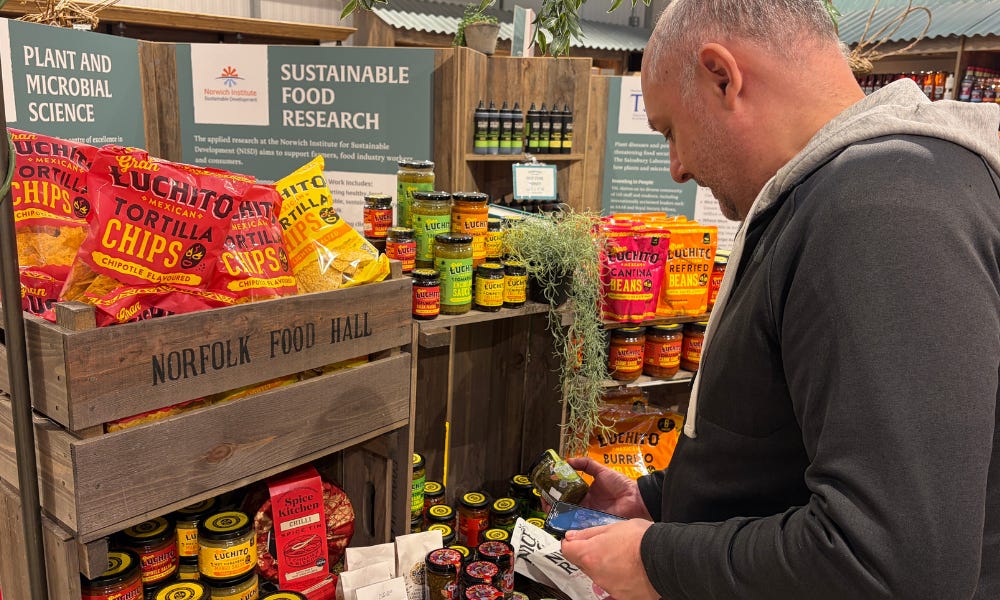
According to James Canham of GetGenome, a non-profit spinout from The Sainsbury Laboratory, around 95% of genomes in the main databases come from the Global North. That points to a major blind spot in global science and a major opportunity as well. If the data is concentrated in the North, then a large part of the future value may come from helping researchers in the Global South build better genomic infrastructure of their own.
Farm Reality
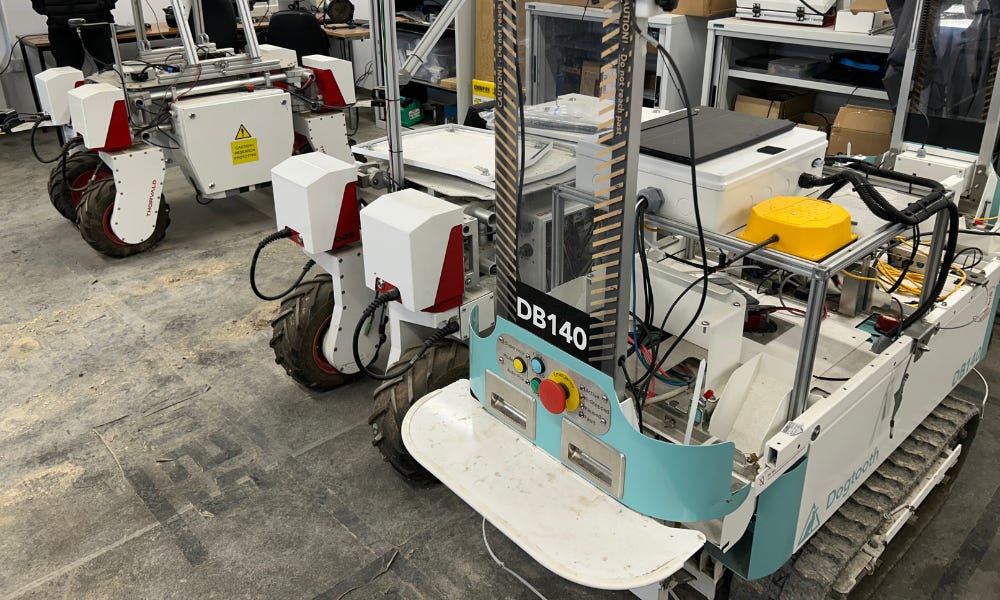
If Norwich was strong on market direction, the Lincoln Institute for Agri-Food Technology (LIAT) was strong on practical reality. The conversation there was less about abstract potential and more about what it takes to make a technology survive in an agricultural setting.
One example was the effort to make a robot more farm-ready by giving it extra torque. That is not a flashy detail, but it tells you a lot. Agriculture is a rough operating environment, and machines need to cope with mud, weight, uneven ground, and long working days. Design choices like that show a centre thinking about the job, not just the demonstration.
The idea of developing stacks that can sit on top of different robotic platforms was also interesting. That feels like a more practical route to scale than tying everything to one machine. In AgriTech, the strongest solution is often the one that can be adapted, reused, and deployed across different contexts without starting from zero each time.
I also liked LIAT’s “pull, push, foundry” framework for identifying market opportunity. Some technologies are pulled by market demand. Others are pushed by research. Others need a more collaborative foundry model where industry, researchers, and builders work through the problem together. Whatever the starting point, the lesson was the same: the technology has to earn its way onto the farm.
Scale Matters
Warwick added another layer to the story. If Lincoln was about field readiness, Warwick was about manufacturing readiness. That may sound less exciting, but it is where many AgriTech ideas either become real businesses or quietly stall.
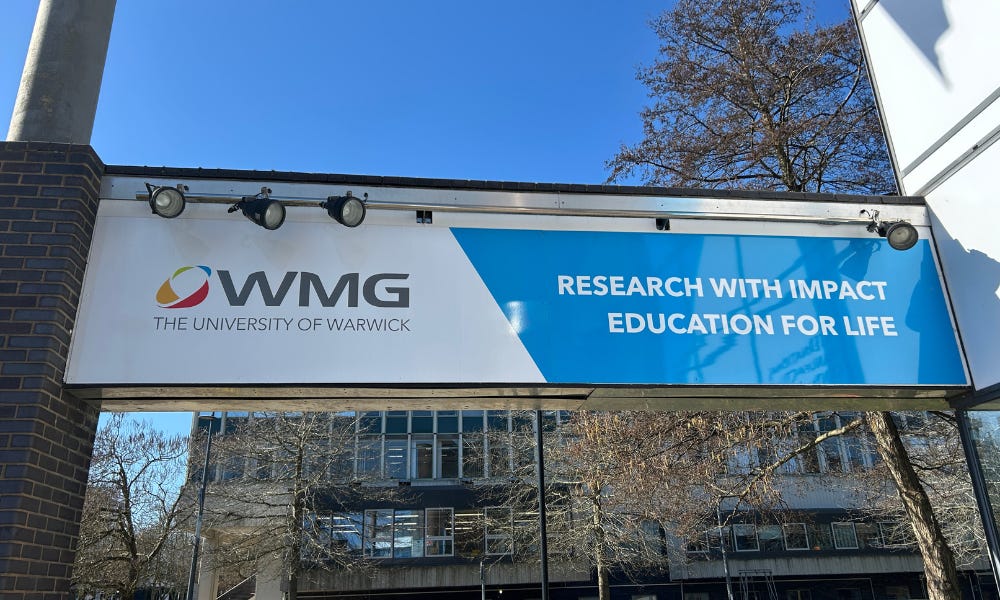
Warwick Manufacturing Group at the University of Warwick seemed to approach the problem from exactly that angle. The real question is not just whether a technology works. It is whether it can be produced, repeated, integrated, and scaled in a way that makes commercial sense.
What stood out there was the multidisciplinary mindset. Life science, software, hardware, engineering, and business are all part of the same conversation. That matters because AgriTech tends to fail where those disciplines do not connect. A promising product can easily get stuck between technical proof, operational fit, and manufacturing economics.
That manufacturing lens also feels like a sign of maturity. Too much AgriTech still gets judged too early by whether it is novel or technically impressive. Warwick seemed more interested in whether it could survive contact with reality. In that sense, the move from lab to land also depends on a move from prototype to production.
Support Rails
What also stood out across the trip was that the centres are not operating in isolation. Around them sits a layer of programmes, partnerships, and support structures that help move ideas forward. That part matters because strong science on its own is rarely enough.
According to Gareth Arnott, Head of Biological Sciences at Queen’s University Belfast, the Momentum One Zero programme is a good example of this. Instead of funding research and worrying about the market later, it is building a more applied framework around digital innovation, data, and commercial collaboration. That kind of support can be especially useful in agriculture, where the path from science to business is rarely straightforward.
The same applies to the wider discussions around gateway programmes, soft-landing models, and institutions like Barclays Eagle Labs. The UK seems to be getting more serious about the infrastructure around innovation, not just the invention itself. That includes helping startups and technologies find the right networks, markets, and partners beyond their home base.
That may end up being one of the most important lessons from the trip. AgriTech does not just need better science. It needs better rails around the science so good ideas can move more smoothly from research centre to company, from company to pilot, and from pilot to market.
*ARISE (Agri-Tech for Resilience, Innovation & Sustainable Ecosystems) is a UK government-funded Tactical Fund project led by Agri-TechE in partnership with AgriTIERRA, Earthbase, Embrapa, and The Yield Lab Institute. The trilateral knowledge exchange program across the UK, US, and Brazil brought together participants from Niab, Newcastle University, Harper Adams University, the Donald Danforth Plant Science Center, the Taylor Geospatial Institute, Washington University in St. Louis, CREA and Universidad Austral in Argentina, AgCenter Colombia, Tec de Monterrey in Mexico, AgTech Chile, APTA Hub in Brazil, and The Yield Lab Latam.
Thanks for reading.
KFG
Kieran Finbar Gartlan is an Irish native with over 30 years experience living and working in Brazil. He is Managing Partner at The Yield Lab Latam, a leading venture capital firm investing in Agrifood and Climate Tech startups in Latin America.