


Hi, I’m Kieran Gartlan, Managing Partner at The Yield Lab Latam, ranked second in the world last year for AgTech investments. If you’re interested in learning more about Brazil’s AgTech opportunity, feel free to reach out.
In Brazil AgTech news this week, Chinese agribusiness giant DBN is targeting 30% of Brazil’s soybean-biotech market, while Cogny has registered the country’s first locally developed metabolite-based biofungicide. Embrapa has identified nitrogen-fixing bacteria with potential use in cotton bioinputs, and a new study estimates AI could add $10 billion to Brazilian agriculture by 2030.
In Climate Tech, Brazil has introduced rules for SAF, carbon capture and low-carbon hydrogen, while the STF has upheld the Soy Moratorium. Amazon deforestation alerts have fallen 37%, international carbon-credit sales are moving closer, and Brazilian agricultural capital is expanding into Bolivia.
In Macro & Markets news, the Senate has approved up to $2 billion in incentives for domestic fertilizer production. Rising judicial-recovery filings and a new rural-debt restructuring program reveal growing financial pressure across the sector, while a $244 billion logistics plan sets out a longer-term route for improving infrastructure.
AgTech
DBN Targets 30% of Brazil’s Soybean Biotech Market
Cogny Registers Brazil’s First Metabolite-Based Biofungicide
AI Could Add $10 Billion to Brazilian Agriculture
Embrapa Finds Nitrogen-Fixing Bacteria in Cotton
Nestlé, Carrefour and Ourofino Seek AgTech Solutions
Climate Tech
Brazil Regulates SAF, Carbon Capture and Low-Carbon Hydrogen
STF Upholds the Soy Moratorium
Brazilian Agricultural Capital Expands into Bolivia
Amazon Deforestation Alerts Fall 37%
Brazil Prepares International Carbon-Credit Sales
Macro & Markets
Brazil Approves $2 Billion Fertilizer-Incentive Program
Rural-Debt Restructuring Targets Mounting Credit Stress
Judicial-Recovery Filings by Farmers Jump 73.5%
Brazil Launches $244 Billion Logistics Plan
AgTech
DBN Targets 30% of Brazil’s Soybean Biotech Market – Chinese agribusiness group DBN plans to capture 30% of Brazil’s soybean-biotechnology market, challenging Bayer, Corteva, BASF and Syngenta. The Shenzhen-listed company will establish an R&D center in Campinas, beginning with a molecular-biology laboratory for GM crops. Fieldwork on its first herbicide-tolerance and insect-control platforms starts this year, ahead of a planned 2028 commercial launch. Its pipeline also includes traits targeting stink bugs, rust and nematodes. Source: Forbes Agro
Cogny Registers Brazil’s First Metabolite-Based Biofungicide – Cogny has received regulatory approval for Metabolic Protection, the first biofungicide based entirely on metabolites developed in Brazil. Unlike conventional biological products that apply living microorganisms, the technology delivers approximately 40 bioactive molecules directly to the plant. More than 20 act against fungi, while another 17 stimulate the plant’s natural defenses. Developed over five years with Cogny’s R&D arm Orygen, the product will initially target soybean diseases, with potential expansion into cotton and beans. Source: AgFeed
AI Could Add $10 Billion to Brazilian Agriculture – Artificial intelligence could add $10 billion to Brazilian agriculture between 2027 and 2030, according to a study by Reglab commissioned by OpenAI. Around 92% of the projected gains would come through more efficient machinery, equipment and production systems rather than office-based automation. The estimate points toward AI becoming embedded in tractors, sensors and farm operations, although limited rural connectivity and uneven access to modern equipment could slow adoption. Source: Exame Agro
Embrapa Finds Nitrogen-Fixing Bacteria in Cotton – Embrapa researchers have identified bacteria capable of converting atmospheric nitrogen into forms cotton plants can absorb. In controlled tests, inoculated plants developed similarly to those receiving recommended nitrogen fertilization. The bacteria were isolated from tree-cotton roots and tested on commercially grown upland cotton, opening a possible route toward bioinputs that reduce fertilizer costs, imports and emissions. The findings remain preliminary, with further strain evaluation and product development required before commercial use. Source: Embrapa
Nestlé, Carrefour and Ourofino Seek AgTech Solutions – Nestlé, Carrefour and Ourofino have presented new challenges for the fourth AptaHub Conecta open-innovation program. Nestlé is seeking continuous coffee-crop monitoring, Carrefour wants intelligent label-verification tools, and Ourofino is looking for technologies to improve pig-production efficiency without ractopamine. Applications remain open until August 31. Previous editions have trained 95 science-based startups and generated 27 commercial connections with participating companies. Source: Globo Rural

Climate Tech
Brazil Regulates SAF, Carbon Capture and Low-Carbon Hydrogen – Brazil has issued long-awaited decrees establishing frameworks for sustainable aviation fuel, carbon capture and storage, and low-carbon hydrogen. The SAF rules create a certification system and allow environmental attributes to be traded separately through book-and-claim, while CCS gains rules covering permits, pipelines and underground monitoring. The hydrogen program provides for $3.5 billion in tax credits. Agricultural residues, ethanol and vegetable oils could become important feedstocks, although further ANP and Anac regulations are still required. Source: Capital Reset
STF Upholds the Soy Moratorium – Brazil’s Supreme Court has ruled that the Soy Moratorium is legal and compatible with the Forest Code, rejecting claims that the agreement constitutes a cartel. The court also ordered the termination of related compensation cases and proceedings before Cade and other authorities. Established in 2006, the private agreement prevents participating traders from purchasing soy grown on Amazon land cleared after July 2008, imposing environmental requirements that extend beyond Brazil’s general land-use rules. Source: CNN Brasil
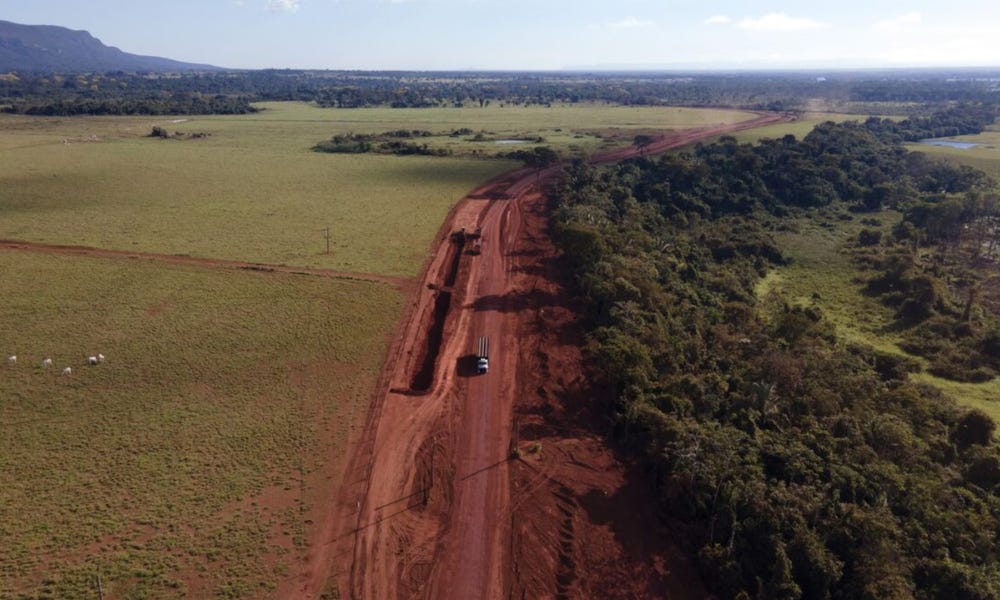
Brazilian Agricultural Capital Expands into Bolivia – Brazilian soybean and cattle investors are moving into Bolivia, attracted by cheaper land, new transport links and more permissive clearing rules. Much of the expansion is occurring in Chiquitania, a biodiverse dry-forest region connected to the Amazon basin. Bolivia lost around one-sixth of its tree cover between 2001 and 2025 and recorded the world’s second-largest tropical-forest loss last year. The movement raises concerns that agricultural expansion and deforestation pressure could migrate across the border as Brazil tightens domestic enforcement. Source: Bloomberg Línea
Amazon Deforestation Alerts Fall 37% – Deforestation alerts in Brazil’s Amazon covered 2,874 square kilometres between August 2025 and July 2026, down 37% from the previous twelve months. This was the lowest level recorded by the current Deter monitoring system, which began in 2015, and suggests Brazil could approach its lowest official annual deforestation rate since 1988. Deter provides rapid alerts for enforcement, while the higher-resolution Prodes system will produce the definitive annual estimate later this year. Source: Bloomberg Línea
Brazil Prepares International Carbon-Credit Sales – Brazil could begin authorizing advance sales of internationally transferable carbon credits in 2027 or 2028, before its regulated emissions market becomes fully operational in 2031. The Finance Ministry is revising proposed rules after a public consultation received 2,532 submissions, with project developers concerned about missing near-term international demand. Implementation still requires approved methodologies, a national compensation program and a central registry. Earlier authorization could help attract capital to forestry, restoration and agricultural carbon projects seeking access to Article 6 markets. Source: Capital Reset
Macro & Markets
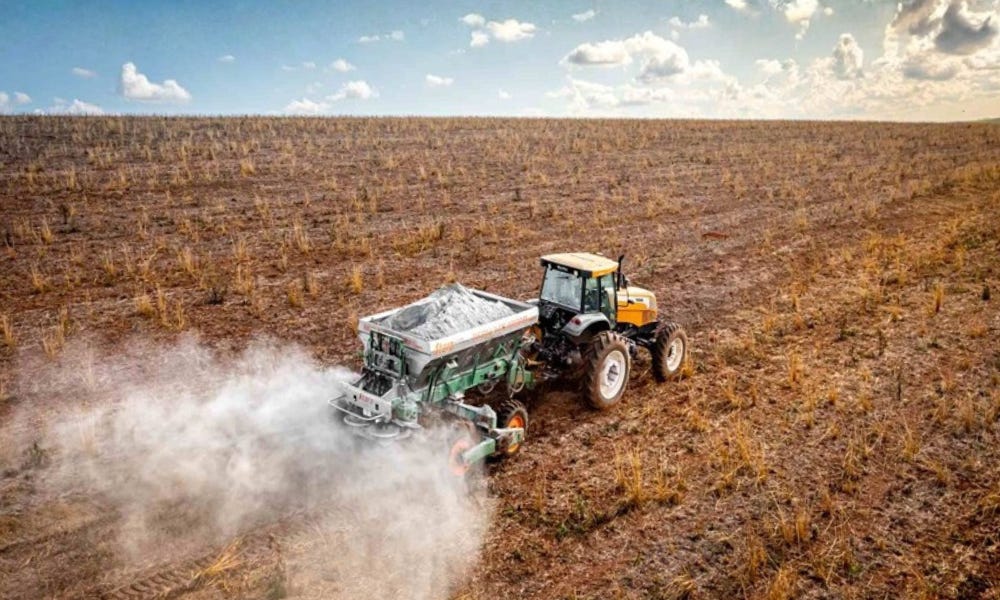
Brazil Approves $2 Billion Fertilizer-Incentive Program – Brazil’s Senate has approved Profert, offering up to $2 billion in federal tax credits over five years for new fertilizer factories and the expansion or modernization of existing plants. The program covers synthetic, mineral and organic fertilizers, as well as remineralizers, bioinputs and biofertilizers. Designed to reduce Brazil’s dependence on imports, which supply roughly 85% of domestic fertilizer demand, the legislation now moves to presidential approval. Source: Senate
Rural-Debt Restructuring Targets Mounting Credit Stress – Brazil has authorized subsidized interest rates for a new rural-debt restructuring program, with ten financial institutions participating and contracts available through November 12. Banco do Brasil estimates that as much as $20 billion of its agricultural loan portfolio could qualify, illustrating the scale of the financial pressure created by high costs, weak margins and successive crop losses. Actual uptake will depend on eligibility reviews, bank execution and budget availability. Source: CNN Brasil
Judicial-Recovery Filings by Farmers Jump 73.5% – Brazilian agricultural producers operating as companies filed 196 judicial-recovery requests during the first quarter of 2026, up 73.5% year on year. Soybean growers accounted for 137 filings and cattle producers for 42. Including individual farmers and companies elsewhere in the agribusiness supply chain, filings reached 474, an increase of 21.9%. Mato Grosso led the country with 135 cases, followed by Goiás with 73. Source: Exame
Brazil Launches $244 Billion Logistics Plan – Brazil’s new National Logistics Plan identifies a potential $244 billion investment portfolio through 2050, spanning 42 logistics corridors across the country. Around $147 billion is expected to come from private capital and $98 billion from public funding. The plan seeks to lower transport costs and reduce the freight system’s reliance on roads by expanding rail and waterway integration. The figures represent potential projects rather than committed investment, with priorities still to be defined through sector-specific plans. Source: Agência iNFRA
That’s all for this week, thanks for reading,
KFG
Kieran Finbar Gartlan is an Irish native with over 30 years of experience living and working in Brazil. He is Managing Partner at The Yield Lab Latam, a leading venture capital firm investing in Agrifood and Climate Tech startups across Latin America.