


In Brazil AgTech news this week, Cowmed uses AI-enabled collars to identify disease risks in calves earlier, Bayer partners with IdeeLab on biologicals for tropical agriculture, Embrapa develops a digital compliance passport for exports, and Inbix targets the farm-management AI gap.
In Climate Tech, umgrauemeio brings AI-powered wildfire detection to remote communities in Marajó, new mapping exposes the economic choices shaping Amazon cocoa production, Brazil authorizes carbon-credit exports while excluding forest conservation, and Itaú directs US$41 million to low-carbon cattle projects.
In Funding & M&A, Vereda raises US$6 million to rebuild agricultural input distribution, CJ Selecta secures US$30 million in green soy financing, and Plantae plans a US$20 million Fiagro for producers underserved by traditional lenders.
And in Macro & Markets, Brazilian agribusiness emerges as an early market for physical AI, fertilizer deliveries fall as rural credit tightens, biologicals enter a more selective growth phase, and record delinquency deepens pessimism across the sector.
AgTech
Cowmed’s AI Collar Detects Calf Disease Earlier
Bayer Partners with IdeeLab to Develop Tropical Biologicals
Embrapa Trace Creates Digital Compliance Passport for Agricultural Exports
Inbix Targets the Farm-Management AI Gap
Climate Tech
AI Fire Detection Reaches Remote Marajó Communities
Brazil’s Cocoa Sector Tests the Economics of Regenerative Production
Brazil Opens Carbon Exports but Excludes Forest Conservation
Itaú Directs US$41 Million to Low-Carbon Cattle Projects
Funding & M&A
Vereda Raises US$6 Million to Rebuild Agricultural Input Distribution
CJ Selecta Secures US$30 Million in Green Soy Financing
Plantae Plans US$20 Million Fiagro for Underserved Producers
Macro & Markets
Brazil’s Agribusiness Leads Emerging Physical-AI Demand
Brazil’s Fertilizer Deliveries Fall 10.4% as Credit Tightens
Brazil’s Biologicals Market Enters a More Selective Growth Phase
Rural Pessimism Deepens amid Record Delinquency
AgTech
Cowmed’s AI Collar Detects Calf Disease Earlier — Brazilian startup Cowmed has launched a collar that uses artificial intelligence to monitor calves’ activity, rumination and chewing patterns for early signs of diarrhea and pneumonia. In tests involving 1,555 calves across 20 pilot farms, the company says the technology anticipated diagnosis in 83% of disease cases, with 96% precision for diarrhea alerts and 90% for pneumonia. The results have not yet been independently validated. Source: Food Forum
Bayer Partners with IdeeLab to Develop Tropical Biologicals — Bayer has partnered with Piracicaba-based IdeeLab Biotecnologia to co-develop a new biofungicide for foliar diseases affecting soybeans and other crops. The agreement is Bayer’s first local co-development initiative focused specifically on Latin American agricultural conditions. It forms part of a broader biologicals strategy that includes eight planned Brazilian product launches by 2030. No commercial terms or expected launch date for the jointly developed product were disclosed. Source: AgFeed
Embrapa Trace Creates Digital Compliance Passport for Agricultural Exports — Embrapa has introduced an API that combines certifications and producer declarations with TerraClass land-use data and ElegiAgro’s geospatial analysis. Initially covering soybeans, coffee and beef, the system can generate digital compliance records to support traceability, EUDR requirements and animal-health controls. It will be integrated with the government’s AgroBrasil Mais Sustentável platform, although Embrapa has not disclosed current adoption levels or operating scale. Source: Embrapa
Inbix Targets the Farm-Management AI Gap — Paraná-based Inbix says AI adoption remains limited in the administrative management of Brazilian farms, particularly for purchasing, credit analysis, financial planning and internal processes. The consultancy plans to reach farmers through cooperatives and machinery dealers, with its first farm pilot under discussion. One machinery dealership estimates that 11 internally developed applications could save more than US$480,000, although the figure has not been independently verified. Source: AgFeed
Climate Tech
AI Fire Detection Reaches Remote Marajó Communities — The Marajó Sem Fumaça project is using umgrauemeio’s Pantera platform to identify smoke through AI-enabled cameras and send early warnings to locally trained volunteer brigades. Operated by Instituto Ar with support from the Clean Air Fund, the system can detect smoke within a radius of nearly 20 kilometres. Local brigades also classify harmless smoke from activities such as ceramic ovens, helping train the technology and reduce false alerts. The project shows how advanced climate technology can work in remote areas where conventional emergency response is difficult. Source: Forbes
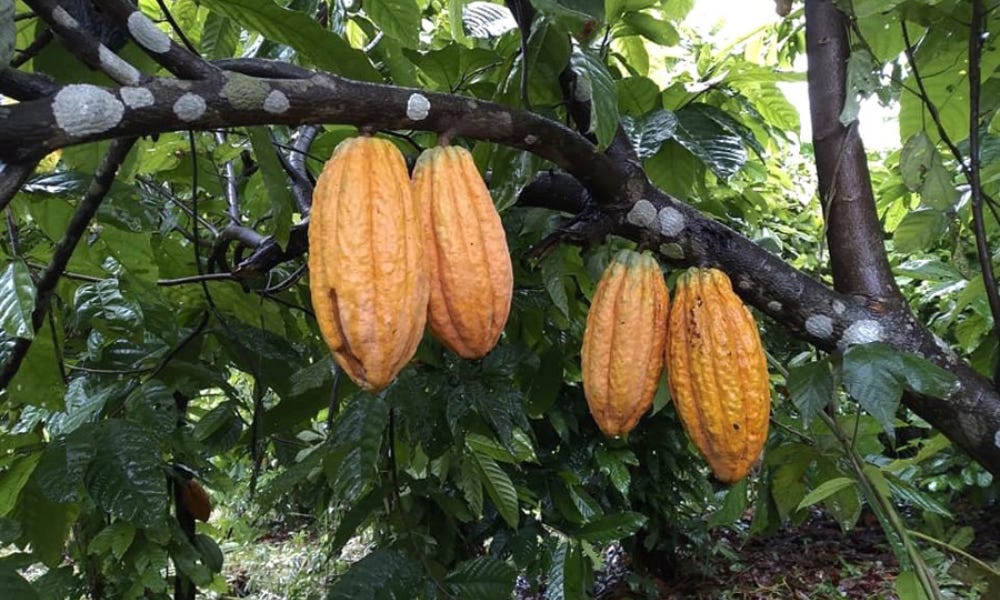
Brazil’s Cocoa Sector Tests the Economics of Regenerative Production — Embrapa mapping found that cocoa cultivation in Pará expanded 33% between 2022 and 2024, with 96% of mapped production located on land cleared before 2020. However, 63% of recent planting was in full-sun monoculture rather than agroforestry. Full-sun trees can produce around three times more cocoa, while buyers generally pay the same price regardless of the production system. Brazil therefore has considerable room to expand cocoa without new deforestation, but regenerative production will need stronger commercial incentives if it is to compete with the higher short-term yields offered by monoculture. Source: Mongabay
Brazil Opens Carbon Exports but Excludes Forest Conservation — Brazil has authorized exports of internationally transferred carbon credits generated from 2026, positioning developers to serve demand from the aviation sector’s mandatory Corsia phase beginning in 2027. The initial rules allow credits from carbon removal—including forest restoration—and methane reduction, but exclude private REDD+ and state-level forest-conservation programs. Export volumes are capped at 50 million tonnes of CO₂ equivalent through 2030 and 100 million tonnes from 2031 to 2035. The decision creates an earlier route to international buyers but sidelines many of Brazil’s most established forest-carbon projects. Source: Capital Reset
Itaú Directs US$41 Million to Low-Carbon Cattle Projects — Itaú BBA has financed three cattle projects in Mato Grosso through Eco Invest Brasil, supporting pasture restoration, crop-livestock integration, organic inputs and individual animal traceability. The projects aim to increase output without expanding production areas, including one operation targeting an increase from two to five animal units per hectare. All three will measure greenhouse-gas emissions and track animal performance, health and movement. The financing provides a practical test of whether productivity, traceability and emissions reduction can be combined in commercially viable cattle operations. Source: CNN Brasil
Funding & M&A
Vereda Raises US$6 Million to Rebuild Agricultural Input Distribution — Rio Verde-based Vereda has raised a seed round led by Canary and Valor Capital Group, with participation from Andreessen Horowitz’s Speedrun fund. The startup connects input manufacturers directly with farmers without holding inventory or retaining credit risk, using AI and WhatsApp to support sales and agronomic recommendations. It will test a model in which banks, trading companies and private-credit funds finance farmers and pay manufacturers upfront during the 2026/27 safrinha. Source: Startups.com.br
CJ Selecta Secures US$30 Million in Green Soy Financing — CJ Selecta has secured a green export prepayment facility from Bradesco that must be used to purchase certified and traceable soybeans. The financing links working capital to verifiable environmental criteria across the processor’s supply chain. The company says 99.63% of the soy it acquired in 2025 was traced to the farm through Brazil’s Cadastro Ambiental Rural, or Rural Environmental Registry, while its entire non-GMO volume was ProTerra certified. Source: CNN Brasil
Plantae Plans US$20 Million Fiagro for Underserved Producers — Digital agricultural lender Plantae is negotiating with an unnamed asset manager to launch a Fiagro-FIDC in early 2027. The proposed agricultural investment fund would diversify Plantae’s funding and expand lending to small and midsized producers who often lack unencumbered farmland to offer as collateral. Plantae expects to originate between US$80 million and US$100 million in credit during 2026, more than twice its 2025 volume, but the fund has not yet been formally launched. Source: AgFeed
Macro & Markets
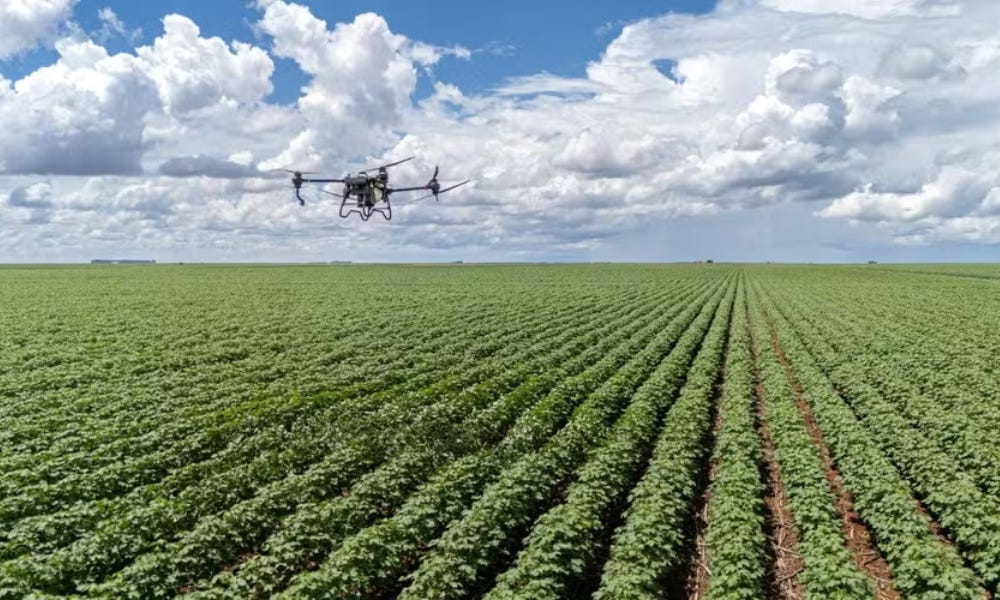
Brazil’s Agribusiness Leads Emerging Physical-AI Demand — An AWS study of 4,420 startups found that agriculture is the principal driver of Brazilian demand for “physical AI,” which combines artificial intelligence with robotics, sensors, drones and computer vision. Twenty-six percent of Brazilian startups surveyed already work with drones or autonomous aerial systems, above the 19% global average. Brazil nevertheless remains classified as an emerging market, constrained by expensive capital, regulation, infrastructure and limited access to operational data. Source: Bloomberg Línea
Brazil’s Fertilizer Deliveries Fall 10.4% as Credit Tightens — Fertilizer deliveries in Brazil fell to 27.31 million tonnes through August, while imports declined 12% and domestic production recorded by ANDA dropped 22.7%. Restricted credit, high interest rates, geopolitical uncertainty and climate risks are making farmers more cautious about purchasing inputs. The decline ahead of a potentially large crop raises the possibility of unusually late procurement or reduced application, although ANDA acknowledged that its domestic-production data did not capture all urea and potash output. Source: Portal do Agronegócio
Brazil’s Biologicals Market Enters a More Selective Growth Phase — Rabobank estimates that Brazil’s biological-input market will reach approximately US$1.34 billion in 2026 and exceed US$1.4 billion next year. Growth is continuing, but financially constrained farmers are becoming more selective and suppliers are consuming cash to preserve market share. Biologicals are also settling into a complementary role alongside chemical crop protection rather than replacing it, raising the importance of demonstrated efficacy, distribution capacity and integration into existing crop-management programs. Source: CNN Brasil
Rural Pessimism Deepens amid Record Delinquency — Financial pressure across Brazilian agriculture has intensified following the presidential election, with problematic rural loans reaching a record US$41.6 billion from a total portfolio of approximately US$177 billion. Expensive credit, weaker grain margins and repeated climate shocks are restricting investment in machinery, land and crop expansion. Farm groups are seeking broader debt relief, but uncertainty over fiscal policy and banking risk premiums means that lower benchmark rates may not quickly translate into cheaper agricultural financing. Source: Bloomberg Línea
Thanks for reading,
KFG
Kieran Finbar Gartlan is an Irish native with over 30 years experience living and working in Brazil. He is Managing Partner at The Yield Lab Latam, a leading venture capital firm investing in Agrifood and Climate Tech startups across Latin America.