


Hi, I’m Kieran Gartlan, Managing Partner at The Yield Lab Latam, ranked second in the world last year for AgTech investments. If you’re interested in learning more about Brazil’s AgTech opportunity, feel free to reach out.
In this week’s Brazil AgTech news, Label Rouge is targeting premium consumers with milder-smelling free-range eggs, while Embrapa has trained AI models to identify drought-tolerant corn with more than 90% accuracy. A new $2 billion credit line could accelerate adoption of locally developed agricultural technology, and Cummins is preparing to expand into tractors, battery storage and lower-emission farm energy.
In Climate Tech, indigenous Brazil nut producers in Rondônia are receiving additional payments for conserving forests and biodiversity. Maringá will host Brazil’s first blue-economy innovation cluster, WRI Brasil is proposing a unified traceability framework for soy and beef, and federal agencies have introduced common standards for measuring native vegetation restoration across all six Brazilian biomes.
In Funding & M&A, Mantiqueira is returning to the capital markets with a $30 million offering, Symbiosis is seeking $100 million to scale its native-forest timber and carbon model, and Coamo is acquiring and leasing more assets from financially troubled Belagrícola as it expands across Paraná.
In Macro & Markets, China has signalled that it may increase fertilizer shipments to Brazil as more than 6.1 million tonnes move through the country’s import pipeline. The combination offers some reassurance ahead of the next planting season, although Brazil’s heavy reliance on imported nutrients continues to leave farmers exposed to geopolitics, logistics and global prices.
AgTech
Label Rouge Targets Premium Egg Market With Odor-Free Product
Cummins Targets Brazil’s Agricultural Machinery and Energy Markets
AI Identifies Drought-Tolerant Corn With Over 90% Accuracy
Brazil Launches $2 Billion Credit Line for Agricultural Innovation
Climate Tech
Indigenous Brazil Nut Producers Receive Environmental-Service Payments
Portuguese Group Selects Maringá for Brazil’s First Blue-Economy Cluster
WRI Calls for Single Traceability Framework for Soy and Beef
Brazil Sets National Rules for Native Vegetation Restoration
Funding & M&A
Mantiqueira Returns to the CRA Market With $30 Million Offering
Symbiosis Seeks $100 Million to Scale Native-Forest Timber Model
Coamo Expands Through Acquisition of Belagrícola Assets
Macro & Markets
China Signals More Fertilizer Supply as Brazilian Imports Accelerate
AgTech
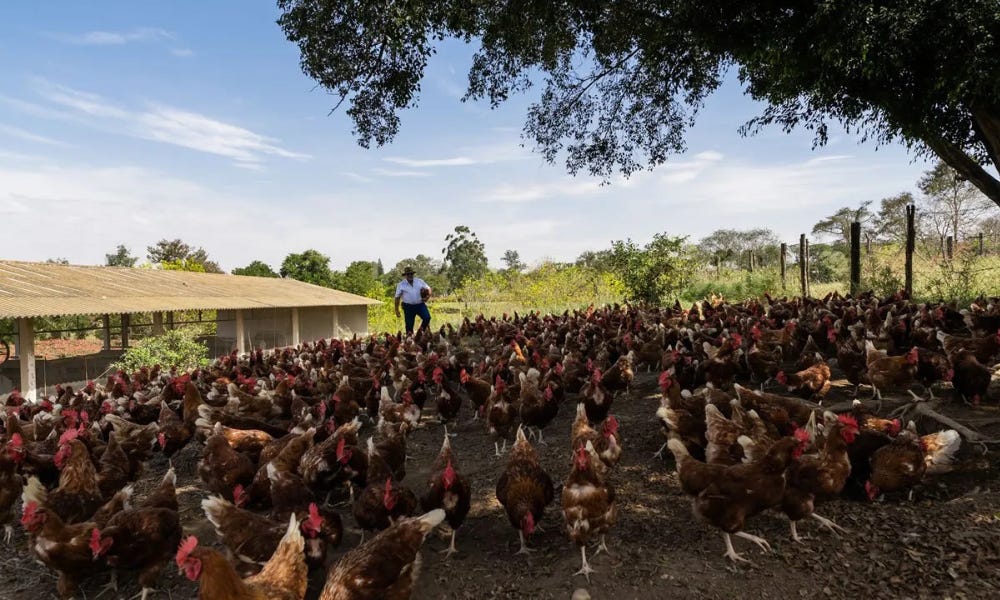
Label Rouge Targets Premium Egg Market With Odor-Free Product - Brazilian egg producer Label Rouge has developed what it says are the country’s first free-range eggs without the strong smell often associated with eggs. The company attributes the milder aroma, redder yolks and firmer whites to outdoor rearing, plant-based feed and tighter quality controls. With Brazilian egg consumption expected to exceed 300 per person in 2026, Label Rouge is betting that sensory quality, animal welfare and product differentiation can support a more premium positioning in a fast-growing market. Source: Globo Rural
Cummins Targets Brazil’s Agricultural Machinery and Energy Markets - Cummins is expanding its agricultural business in Brazil after sales of engines and power generators to the sector rose more than 20% in 2025. The company plans to enter the tractor market from 2028 through an engine being validated with XCMG, while also growing sales of generators, microgrids and battery-storage systems for farms and agribusinesses. Cummins is adapting engines for ethanol, biomethane and higher biodiesel blends, and expects agricultural demand to rise as rural operations require more reliable and lower-emission energy solutions. Source: AgFeed
AI Identifies Drought-Tolerant Corn With Over 90% Accuracy - Embrapa and researchers at Brazil’s Center for Research in Genomics Applied to Climate Change have developed a system combining drones, multispectral sensors and artificial intelligence to identify corn hybrids that are more tolerant to drought. Tested on 28 hybrids over two years, the models reproduced conventional field assessments with accuracy above 90% in some scenarios. The approach could allow breeding programs to screen thousands of plants more quickly, reducing manual measurements and accelerating the development of climate-resilient cultivars. Source: Canal Rural
Brazil Launches $2 Billion Credit Line for Agricultural Innovation - Brazil’s National Monetary Council has approved a credit line of up to $2 billion to finance locally developed agricultural technology and equipment. Managed by Finep and partner financial institutions, the funding will support machinery, precision agriculture systems, rural connectivity and digital solutions produced in Brazil. Farmers, cooperatives and agricultural companies will be eligible, with the program designed to accelerate technology adoption, raise productivity and strengthen the domestic agricultural machinery industry. Source: Brasil 247
Climate Tech
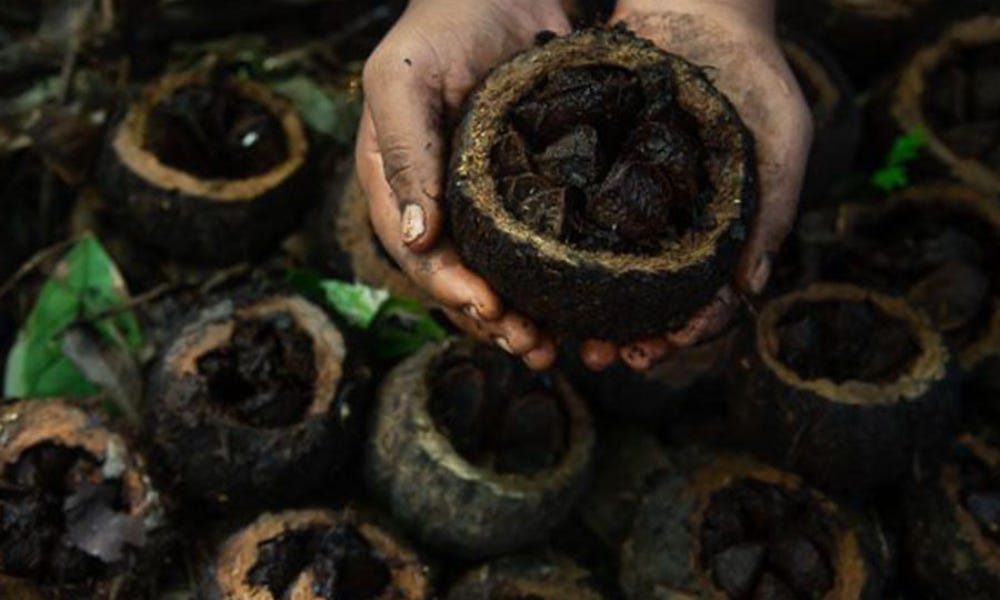
Indigenous Brazil Nut Producers Receive Environmental-Service Payments - Indigenous communities in Rondônia have received an additional 20% payment for Brazil nuts produced during the 2025/26 harvest, recognising their role in conserving forests, biodiversity and local ecosystems. The agreement between Castanhas Ouro Verde and the Coopirb cooperative covers communities across roughly 236,000 hectares and forms part of an Embrapa-led project to improve quality, reduce losses and strengthen market access. About seven tonnes were sold under the model, with the premium managed collectively for community priorities. Source: Embrapa
Portuguese Group Selects Maringá for Brazil’s First Blue-Economy Cluster - Portuguese consultancy Vide de Grunwald has chosen Maringá, Paraná, to host its first blue-economy innovation cluster in Brazil. Developed with the State University of Maringá, the initiative will connect researchers, companies and investors around technologies for more sustainable water use, including aquaculture genetics, biotechnology, AI, veterinary science and waterTech. The cluster will begin by mapping local capabilities before establishing governance and a business-acceleration hub. Maringá was selected partly for the university’s expertise in tilapia genetics, with ambitions to become an international reference for blue-economy innovation. Source: Startups
WRI Calls for Single Traceability Framework for Soy and Beef - WRI Brasil has proposed harmonizing the country’s fragmented deforestation-monitoring and traceability systems into a single framework for soy and beef. The study reviewed 21 protocols, certifications and platforms, finding differences in cutoff dates, indirect-supplier controls and auditing standards that can confuse buyers and investors. Recommendations include integrating databases, simplifying audits, tracing soy back to the farm and accelerating monitoring of indirect cattle suppliers. The goal is to improve credibility, reduce trade risks and align Brazilian supply chains with international requirements. Source: Globo Rural
Brazil Sets National Rules for Native Vegetation Restoration - Brazil has introduced a national system to standardize how native vegetation recovery is monitored across all six biomes. Developed by Ibama, ICMBio, Embrapa and the Brazilian Forest Service, the model assesses ecological outcomes after a minimum four-year period using indicators such as ground cover, native plant density, species diversity and the presence of invasive species. The framework applies to 46 vegetation types and is intended to improve legal certainty, reduce inspection costs and support Brazil’s goal of restoring 12 million hectares by 2030. Source: Embrapa
Funding & M&A
Mantiqueira Returns to the Capital Markets With $30 Million Offering - Egg producer Mantiqueira has filed a public offering for approximately $30 million in agribusiness receivables certificates (CRAs), following a roughly $100 million issue last year. The single-tranche transaction will be backed by a financial CPR issued by the company and led by XP Investimentos. The unsecured deal comes as Mantiqueira accelerates expansion through new higher-value products, a low-carbon soy partnership with Bunge and its acquisition of Hickman’s Egg Ranch in the United States. JBS has shared control of the company since acquiring a 48.5% stake in 2025. Source: AgFeed
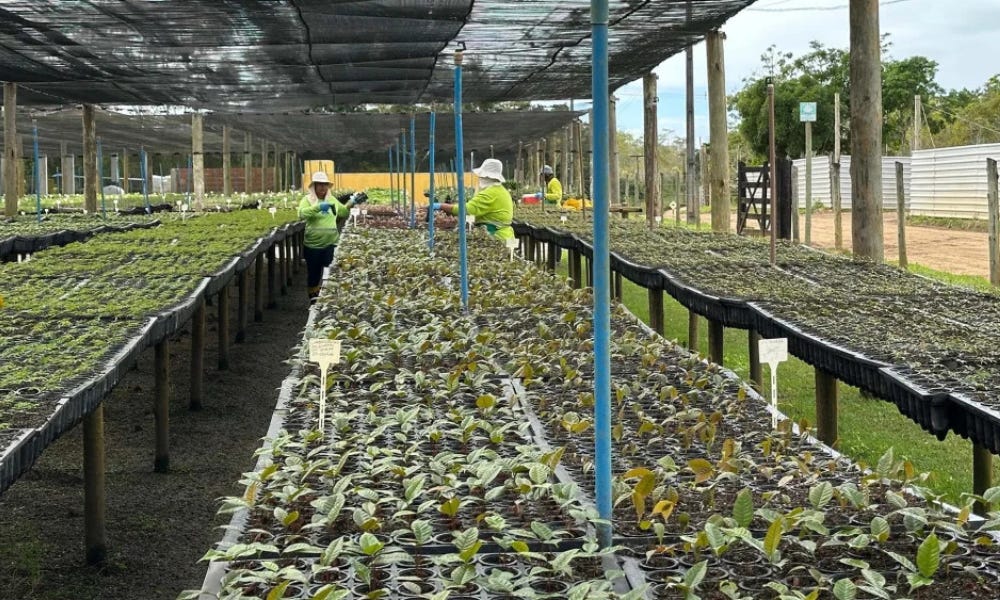
Symbiosis Seeks $100 Million to Scale Native-Forest Timber Model - Brazilian forestry company Symbiosis is seeking $100 million in debt and equity from international investors to expand its native-tree planting model in southern Bahia. Backed by Apple and financing from BNDES’ Climate Fund, the company plans to grow from 5,000 hectares to a further 10,000 hectares while combining certified timber, seedlings and carbon credits. A new sawmill will begin processing wood for decking, flooring and furniture, as Symbiosis aims to prove that restoring Atlantic Forest species can become a commercially viable alternative to harvesting natural forests. Source: The AgriBiz
Coamo Expands Through Acquisition of Belagrícola Assets - Coamo has acquired and leased agricultural units in five Paraná municipalities as Belagrícola restructures approximately $440 million in debt. The transaction extends a strategy that has already included the purchase of storage facilities and a seed-processing unit, with leased sites potentially converted into permanent acquisitions once documentation is regularized. Brazil’s largest agricultural cooperative is also investing about $13 million in new grain silos, largely financed by BNDES, to support storage expansion and its corn ethanol operations. Source: AgFeed
Macro & Markets
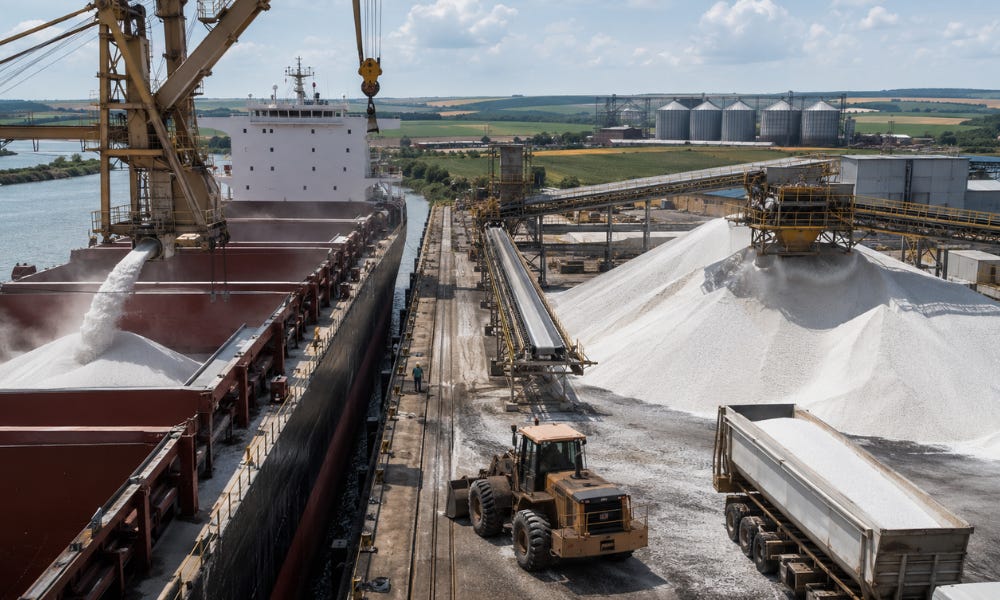
China Signals More Fertilizer Supply as Brazilian Imports Accelerate - China has indicated it is prepared to increase shipments of phosphate and nitrogen fertilizers to Brazil, responding to concerns over supply disruptions and rising geopolitical tensions. The signal comes as Brazilian ports handle a heavy fertilizer pipeline, with more than 6.1 million tonnes listed for unloading and Santos and Paranaguá accounting for the largest volumes. Brazil still imports more than 80% of the fertilizers it consumes, leaving farm costs and crop planning highly exposed to global trade, logistics and diplomatic relations. Source: Brasil 247 and AF News
That’s all for this week, thanks for reading,
KFG
Kieran Finbar Gartlan is an Irish native with over 30 years of experience living and working in Brazil. He is Managing Partner at The Yield Lab Latam, a leading venture capital firm investing in Agrifood and Climate Tech startups across Latin America.