


After proving itself as a global leader in agriculture, Brazil is now adopting digital technologies to capture more value through credit, insurance, traceability, and premium markets.
Born to Produce
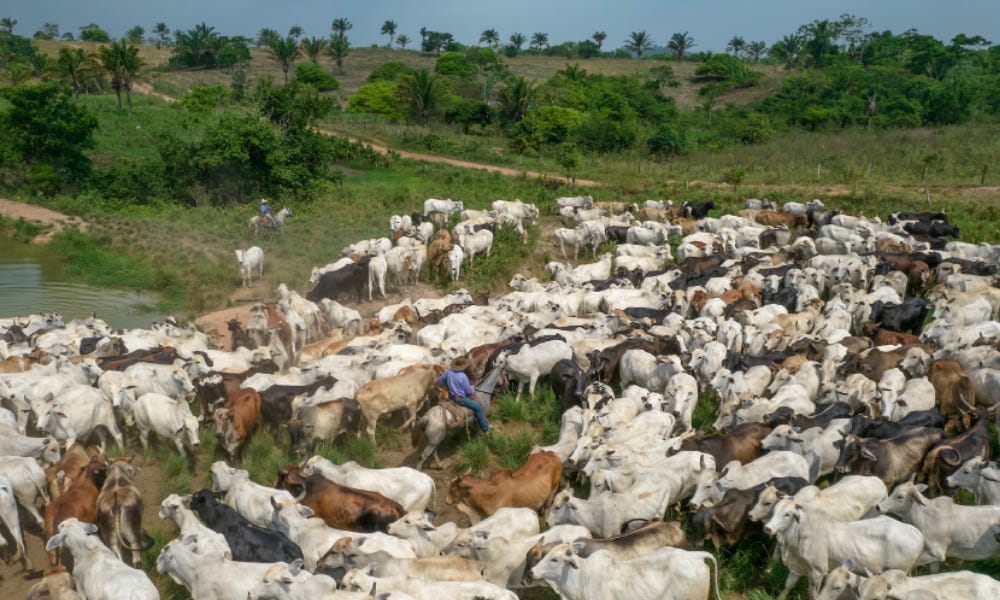
Brazil does not need to prove it can produce food at scale. That chapter is already written. Over recent years, the country has cemented its position as one of the world’s most efficient and competitive agricultural producers, culminating in Brazil overtaking the United States as the world’s largest beef exporter.
That milestone was not the result of a sudden technological leap. It reflected decades of accumulated progress in genetics, tropical agronomy, farm management, and logistics, layered onto natural advantages of land availability, climate diversity, and the ability to produce across multiple seasons.
For much of that journey, success was measured in output. Producing more, producing reliably, and doing so efficiently defined progress. Capital, talent, and innovation flowed toward strengthening production systems on the ground, improving yields, reducing losses, and expanding acreage with discipline.
That focus delivered results. Brazil emerged as a global agricultural leader, capable of competing across crops, geographies, and export markets. The production race was won. What is changing now is how that production strength is converted into value.
New Dawn
Brazilian agriculture is already far more digital than it was a decade ago. Digital tools were first adopted to solve practical farm problems: managing scale, coordinating logistics, improving agronomic decisions, and operating efficiently across large and dispersed operations. This transition happened gradually and quietly, driven by necessity rather than strategy.
That quiet shift is now visible in the data. Surveys from the past two years show that more than 80 percent of Brazilian farmers use digital channels daily for farm-related activities, while over 70 percent rely on digital tools during their purchasing decisions, combining physical and online workflows. Digital payments in agriculture have roughly doubled in recent years, reaching more than half of producers, and nearly one in two farms now uses at least one precision agriculture tool, with a growing share operating multiple systems in parallel.
What has changed is not the presence of technology, but its role. Tools that once supported day-to-day decisions in the field are increasingly being used to organize information, reduce administrative friction, and support interactions beyond the farm gate. Digital systems are moving from operational aids to the underlying infrastructure of the farm business.
This shift reflects a broader transition in priorities. As production gains have matured and margins tightened, attention has moved beyond yield toward how performance is recorded, compared, and carried forward. Digital adoption is no longer only about farming better. It is about positioning farms to capture more value from what they already produce.

Hard Proof
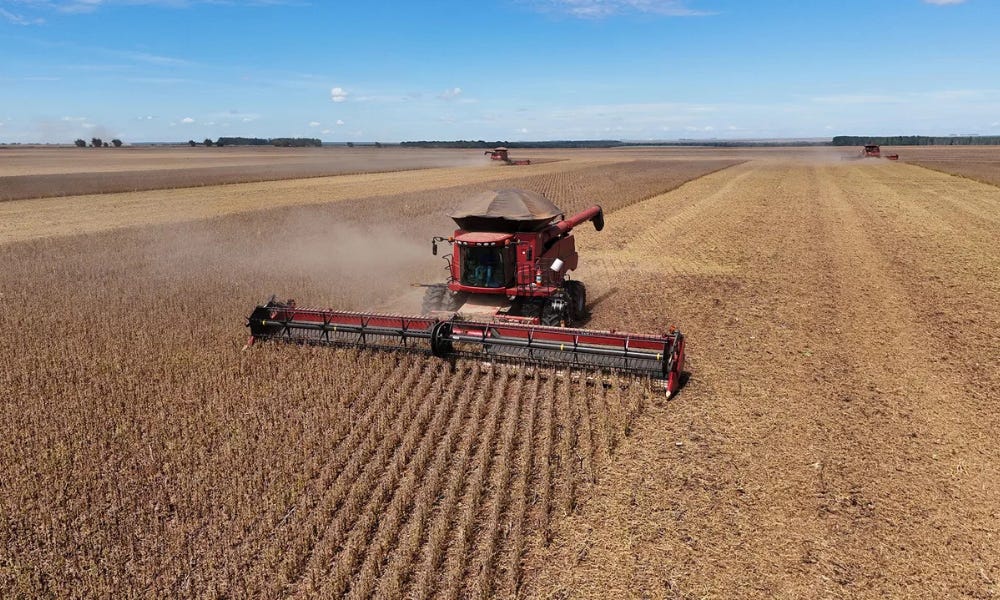
Modern farms in Brazil generate enormous volumes of information. Machinery, inputs, consultants, climate models, and daily field operations all produce data. Yield maps, application records, animal performance metrics, and management decisions are already part of routine farm life.
The challenge is not producing information, but organizing it. In many operations, data remains fragmented across spreadsheets, PDFs, emails, and disconnected platforms. Records are created for immediate use, then set aside, rather than maintained as part of a continuous operational history.
As a result, farms often perform better than they appear on paper. Performance is clear internally, but difficult to present externally. Banks, insurers, and buyers frequently see partial snapshots instead of a coherent picture of how risk is managed and outcomes are delivered over time.
This is where value is captured or lost. Not because farms underperform, but because performance cannot travel easily beyond the farm gate. Digital systems that consolidate records, reduce manual work, and maintain continuity turn output into evidence. They make results usable, comparable, and defensible in markets that increasingly demand proof.
Why Now
For years, this disconnect carried limited consequences. Today, it does not. The environment around agriculture has changed, and tolerance for opacity has narrowed. Capital is more selective. Insurance pricing is more granular. Buyers face tighter requirements around traceability and compliance. Sustainability commitments increasingly require verification rather than intention.
Volatility amplifies the effect. When margins tighten and uncertainty rises, access to credit, insurance terms, and market channels becomes more important than incremental yield gains. Farms that can document performance move faster and negotiate from a stronger position. Those that cannot face higher costs, delays, or exclusion.
At the same time, the barriers to digital adoption have fallen. Tools are easier to use, require less manual input, and increasingly work despite connectivity constraints. Artificial intelligence is accelerating this shift by automating data capture and turning existing information into usable insight with minimal friction.
Digital adoption has become costly to ignore. The focus has shifted away from experimenting with new tools toward reducing friction, as value increasingly flows through verified information rather than assumptions.

Sharp Edge
Brazil has already done the hardest work. It built a production system capable of competing at global scale under demanding conditions. The next advantage comes from turning that strength into proof that travels across financial, commercial, and regulatory channels.
As farms move from output to evidence, they gain access to cheaper capital, better risk pricing, and broader market opportunities. Digital systems do not change how food is produced. They change how performance is seen, priced, and rewarded.
For producers operating in export-driven markets, the question is no longer whether this shift applies, but how long it remains optional. Brazil is already moving up the value curve, and those competing alongside it will increasingly need to do so on the market’s terms.

Thanks for reading.
KFG
Kieran Finbar Gartlan is an Irish native with over 30 years experience living and working in Brazil. He is Managing Partner at The Yield Lab Latam, a leading venture capital firm investing in Agrifood and Climate Tech startups in Latin America.