


The biotech startup using AI and genomics to transform Brazil’s soil microbes into sustainable crop inputs.
Soil Tension
Over the past four decades, Brazil has become an agricultural powerhouse, thanks in large part to a green revolution that lifted yields across soy, corn, and sugarcane. But that productivity came at a cost.
The push for scale relied heavily on synthetic fertilisers and pesticides, mostly imported, combined with intensive cultivation. The result? Degraded soils, reduced biodiversity, and growing pressure to decarbonise food production. With nearly 70 million hectares under cultivation, Brazil now faces a twin challenge: sustain productivity while rebuilding the health of the soil below.
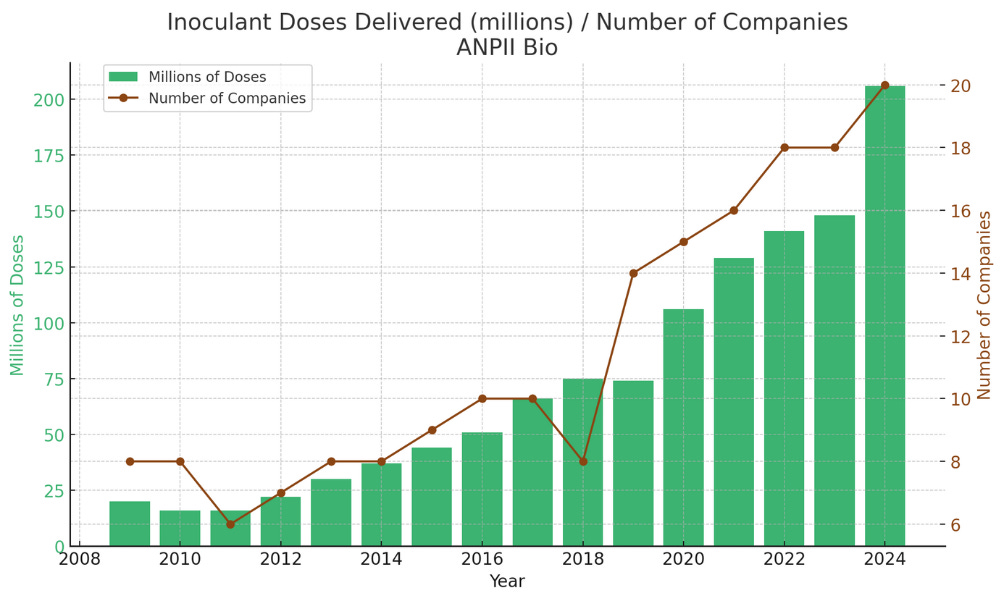
Brazil’s biologicals market is booming. Sales by ANPII Bio members—a leading industry group—more than doubled to 206 million doses by 2024, and the total market is even larger. But most of that growth is concentrated in soy, and product diversity remains limited.
That’s where microbes come in. Beneath every farm lies a hidden universe of microbial diversity: complex, adaptable, and largely untapped. These microscopic organisms can fix nitrogen, solubilise phosphorus, suppress disease, and help plants withstand heat or drought.
But harnessing them at scale, and making them work in Brazil’s vast and varied soils, is a different kind of science. That’s the challenge Symbiomics set out to solve.
Microbial Playbook
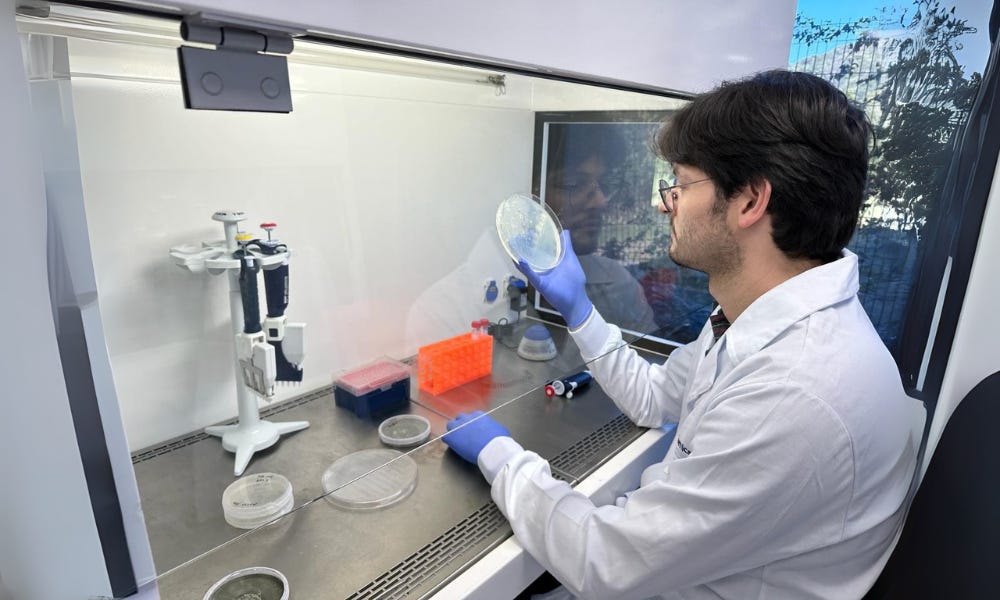
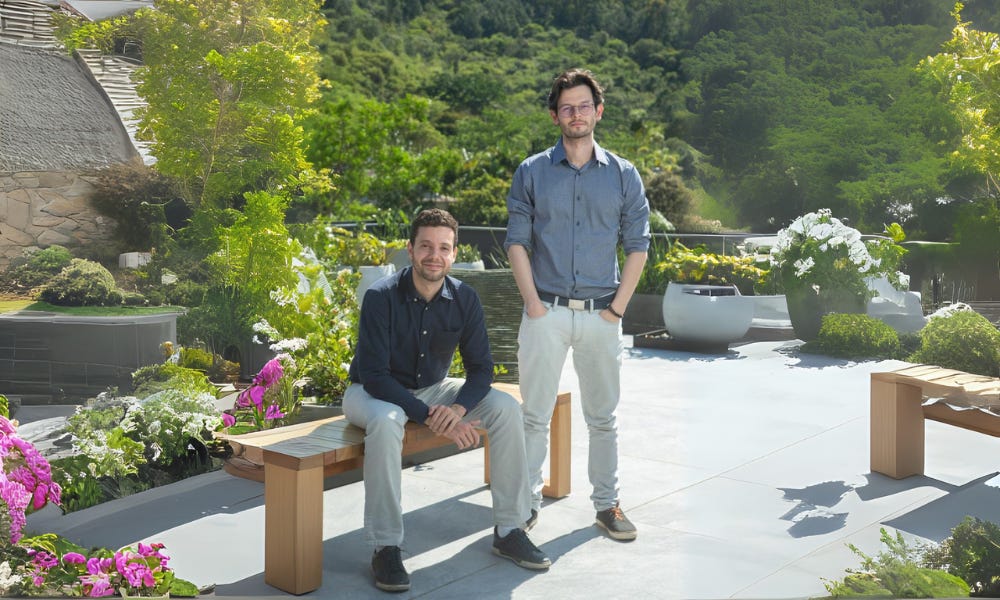
Founded in Sao Paulo by two PhDs in molecular biology, Symbiomics uses genome sequencing, bioinformatics, and AI-driven selection to build synthetic microbial communities, or SynComs, tailored for agriculture.
Each SynCom is designed to act like a biological input: improving nutrient availability, crop resilience, or pathogen resistance without chemical residue.
Its licensing model allows Symbiomics to stay focused on discovery while partners handle production and distribution, an approach that’s already attracting major input players.
Its flagship SynComs entered field trials in collaboration with Stoller/Corteva, covering multiple locations with varied soil and climate conditions.
A second initiative is underway with Brazilian biological input producer, Nitro, focused on plant nutrition in grasses. As the company expands its collaborative network, other partnerships are soon to be announced this year.
Data Meets Dirt
While Symbiomics' core strength lies in biotech, its secret sauce is a business intelligence engine, a data-heavy platform that scrapes regulatory databases to identify market gaps, analyse registered biofungicide compositions, and track unmet needs across crops and geographies. That intelligence flows straight into product development, guiding both the biology and the go-to-market strategy.
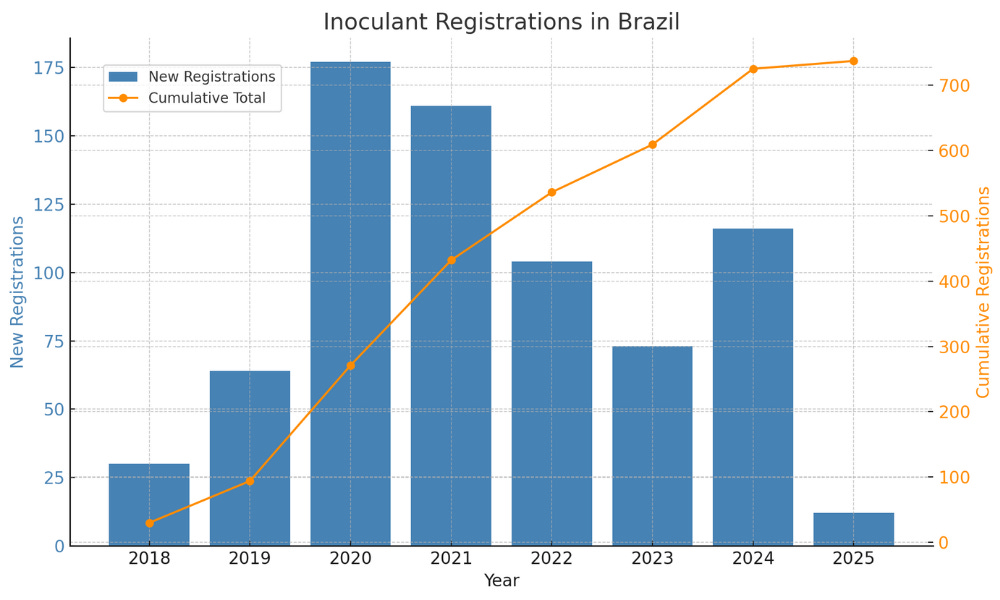
Today, 62% of Brazil’s registered inoculants use Bradyrhizobium, and just 35 microbial species make up the vast majority of the market, leaving huge gaps in functionality, geography, and crop fit.
This approach allows Symbiomics to work closely with its partners, designing each licensing deal based on projected impact, royalties, and product adoption curves. The result: high-value contracts with clear upside, structured around future performance rather than upfront volume.
Behind the tech is a conviction that microbes aren’t just inputs, they’re infrastructure. With the right tools and partnerships, they can be deployed systematically to solve yield, sustainability, and climate resilience at once.
Rich Roots
Backed by federal and state research grants from FINEP and FAPESC, Symbiomics has attracted more than US$4.5 million in non-dilutive funding to accelerate its R&D, scale its labs, and build out its team. In parallel, the company has filed multiple patents covering its gene-editing methods and SynCom designs, laying the foundation for a defensible IP portfolio.
Its Series A round brought in a strong syndicate: led by Corteva Catalyst, with participation from The Yield Lab Latam, Arar Capital, Cazanga Capital, and MOV Investimentos. The investment marked the first time Corteva’s Catalyst platform backed a Brazilian startup, reinforcing Symbiomics’ position as a leading player in the country's emerging bioinputs sector.
The deal also opened doors for future joint development, as Symbiomics and Corteva explore new applications for sustainable agriculture, building on the startup’s microbial discovery platform and growing library of synthetic communities.
With dozens of companies now active in Brazil’s inoculants space, the race is on to differentiate through data, IP, and biological performance. Symbiomics is betting that a lean, licensing-led model can move faster than legacy development pipelines.
Founder Formula
Co-founder and CEO Rafael de Souza spent years mapping microbial ecosystems in crops like sugarcane and soybean, including leading the Plant Microbiome team at Brazil’s Genomics for Climate Change Research Center. COO Jader Armanhi, also a PhD, developed techniques to isolate, characterise, and culture hard-to-reach strains from roots and rhizospheres. Both founders believe the future of agriculture will be built not by creating new molecules, but by better understanding the ones we already share our soil with.
That vision is gaining traction far beyond Brazil. Globally, biological inputs are one of the fastest-growing categories in agtech, with projected market growth of over 10% annually. Brazil, thanks to its crop diversity, climate variability, and entrepreneurial research base, is emerging as a proving ground. It’s where urgency meets opportunity. And with partners, capital, and science on its side, Symbiomics is showing what it means to grow in harmony with nature.
Thanks for reading.
KFG
Symbiomics is a Yield Lab Latam portfolio company. Please reach out if you're interested in connecting with the company or if you would like to learn more about how to invest in high-potential agrifood and climate tech startups in Latin America.
Kieran Finbar Gartlan is an Irish native with over 30 years experience living and working in Brazil. He is Managing Partner at The Yield Lab Latam, a leading venture capital firm investing in Agrifood and Climate Tech startups in Latin America.