


What a week in São Paulo revealed to visitors from seven countries about Brazil’s depth in agri and climate innovation.
Behind the Curtain
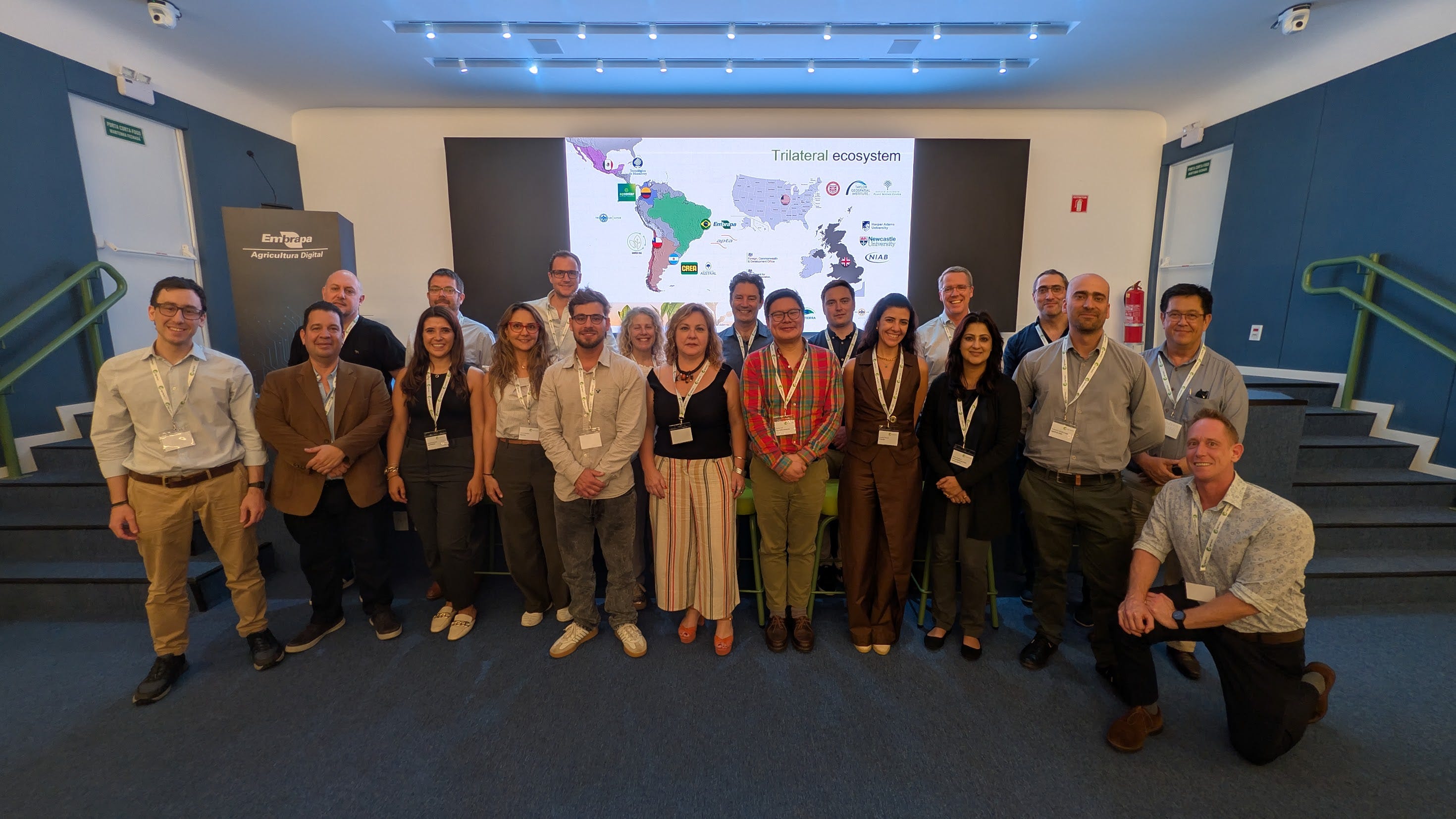
They say travel broadens the mind. That proved very true for the ARISE* trilateral delegation as they touched down in São Paulo last week, expecting to see tropical agriculture but instead finding something far more layered. Over the course of the week, the group — made up of participants from the UK, US, and countries across Latin America — discovered a sophisticated agri and climate innovation ecosystem operating largely out of sight of global limelight.
The same sentiment was felt earlier this month at COP30, where foreign visitors were stunned by Embrapa’s Agrizone — a walk-through demonstration of over fifty net-zero crops that revealed a Brazil they did not know existed. It was a reminder that much of the country’s innovation strength is visible only when you step inside it.
That became the theme of the ARISE week. The delegation spent their days moving through São Paulo’s own agri zones — scientific, industrial, and environmental — seeing firsthand what rarely appears on international radars. Three visits in particular reshaped their understanding. Embrapa showed a country reinventing agricultural research for a digital and climate-conscious era. CTC demonstrated an energy transition that has been running at national scale for decades. And CNPEM revealed a frontier-science capability few expected to find.
Embrapa’s Evolution
Any exploration of Brazil’s innovation system begins with Embrapa. Created to solve the challenge of farming in tropical conditions, Embrapa played a central role in transforming the Cerrado — once considered unsuitable for agriculture — into one of the world’s most productive grain regions. Its breakthroughs in tropical seed varieties, soil correction, and systems agronomy underpin much of modern Brazilian agriculture. Yet Embrapa today is far more than the institution that unlocked the Cerrado. It is a distributed network of more than forty specialised research units, each advancing a different frontier of agri and climate innovation.
The ARISE delegation engaged with two of these units in Campinas. Embrapa Digital Agriculture, situated within the prestigious Unicamp campus, is building the digital foundations of tomorrow’s farming — data modelling, sensor networks, geospatial analysis, and climate intelligence that help producers navigate complexity at scale. A short distance away, Embrapa Environment focuses on the ecological dimension: biodiversity, water quality, bioinputs, soil health, and land-use transitions. Together, they reflect how Embrapa blends technological and environmental insight into a unified vision of sustainable production.
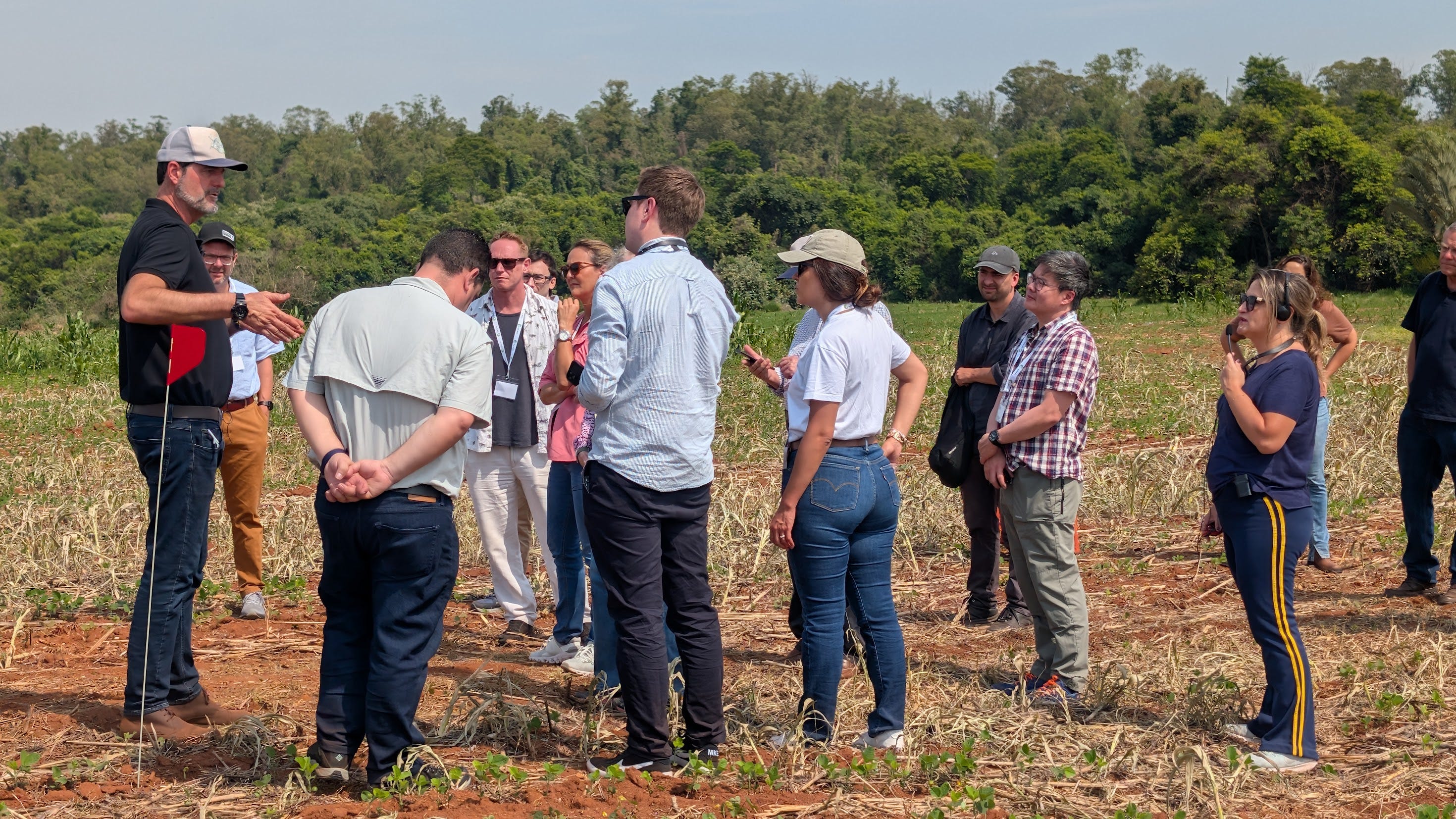
AgNest, Embrapa’s farm lab on the outskirts of Campinas, showed how this vision is tested in the real world. It is a fully operational farm designed for technology trials under commercial conditions, where startups, researchers, and industry partners work side by side to evaluate what truly delivers impact in the field.
Across these touchpoints, the group gained a clearer sense of Embrapa’s breadth — and of how actively it is shaping Brazil’s next chapter of agricultural and climate innovation.
Bioenergy Engine
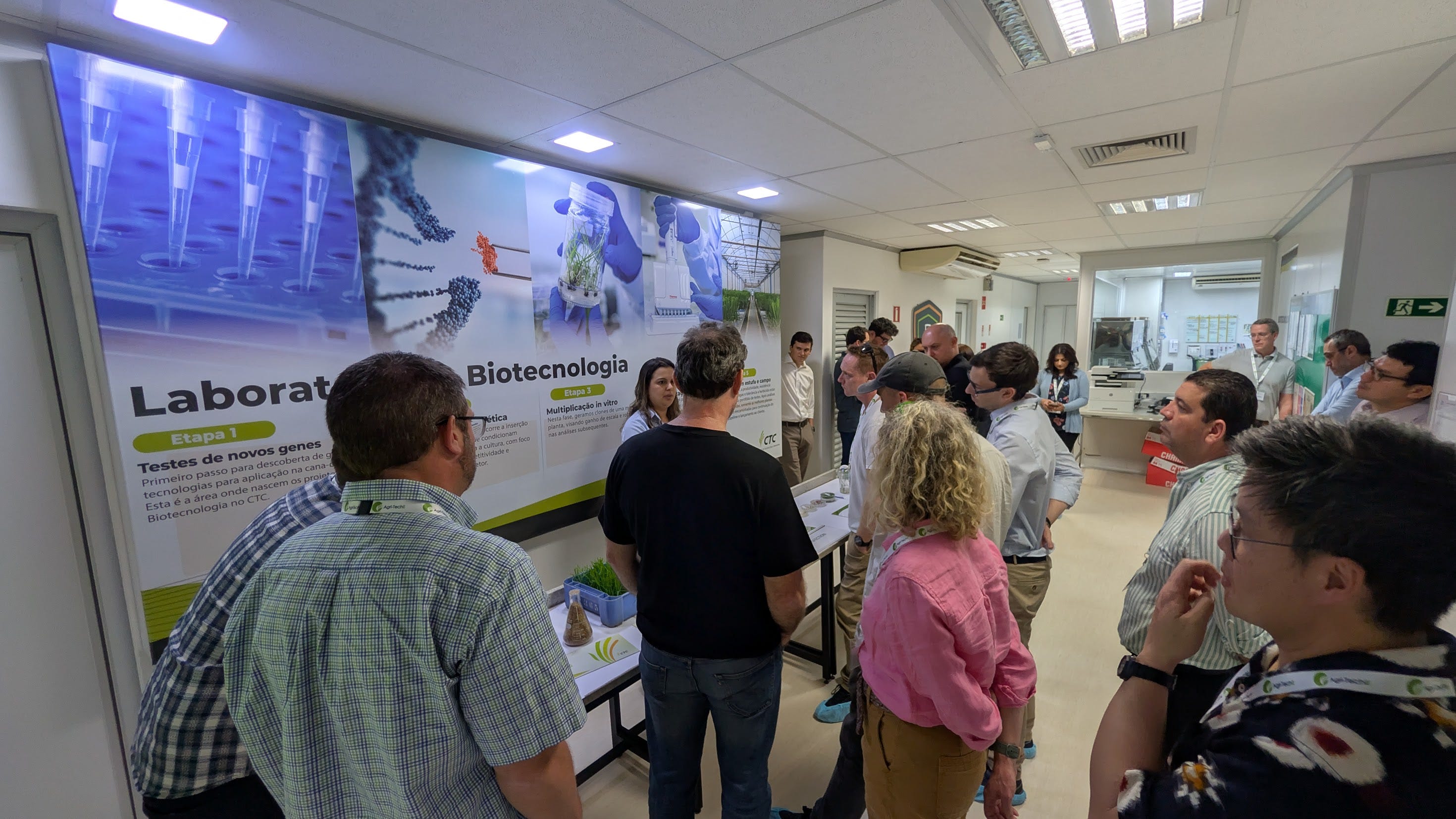
Few countries have a renewable-fuel legacy as deep as Brazil’s. Its sugarcane ethanol program began in the 1970s, giving it nearly fifty years of accumulated expertise, with CTC serving as one of the key centres moving this innovation engine forward.
What the ARISE delegation encountered at CTC was an industry built on steady, cumulative innovation. High-performance cane varieties, precision breeding, efficient milling systems, bagasse-to-energy loops, and emerging pathways for second-generation ethanol all reflect decades of coordinated scientific and industrial effort. The result is a renewable transport ecosystem operating at national scale, one that has quietly shaped Brazil’s emissions profile for generations.
CTC’s influence extends well beyond Brazil’s borders. Countries across Africa, Asia, and Latin America license Brazilian genetics, adopt its processing technologies, and study its policy frameworks when designing their own bioenergy programs. CTC itself has also maintained a research presence at the Donald Danforth Plant Science Center in St. Louis for several years, deepening the international exchange around sugarcane science and bioenergy innovation.
For the ARISE group, the visit underscored how deeply agriculture, industry, and climate are intertwined in Brazil. Sugarcane is simultaneously a crop, an energy source, a climate asset, and a platform for biotechnological innovation — a reminder that the energy transition here is not aspirational, but already embedded in daily life.
Frontier Science
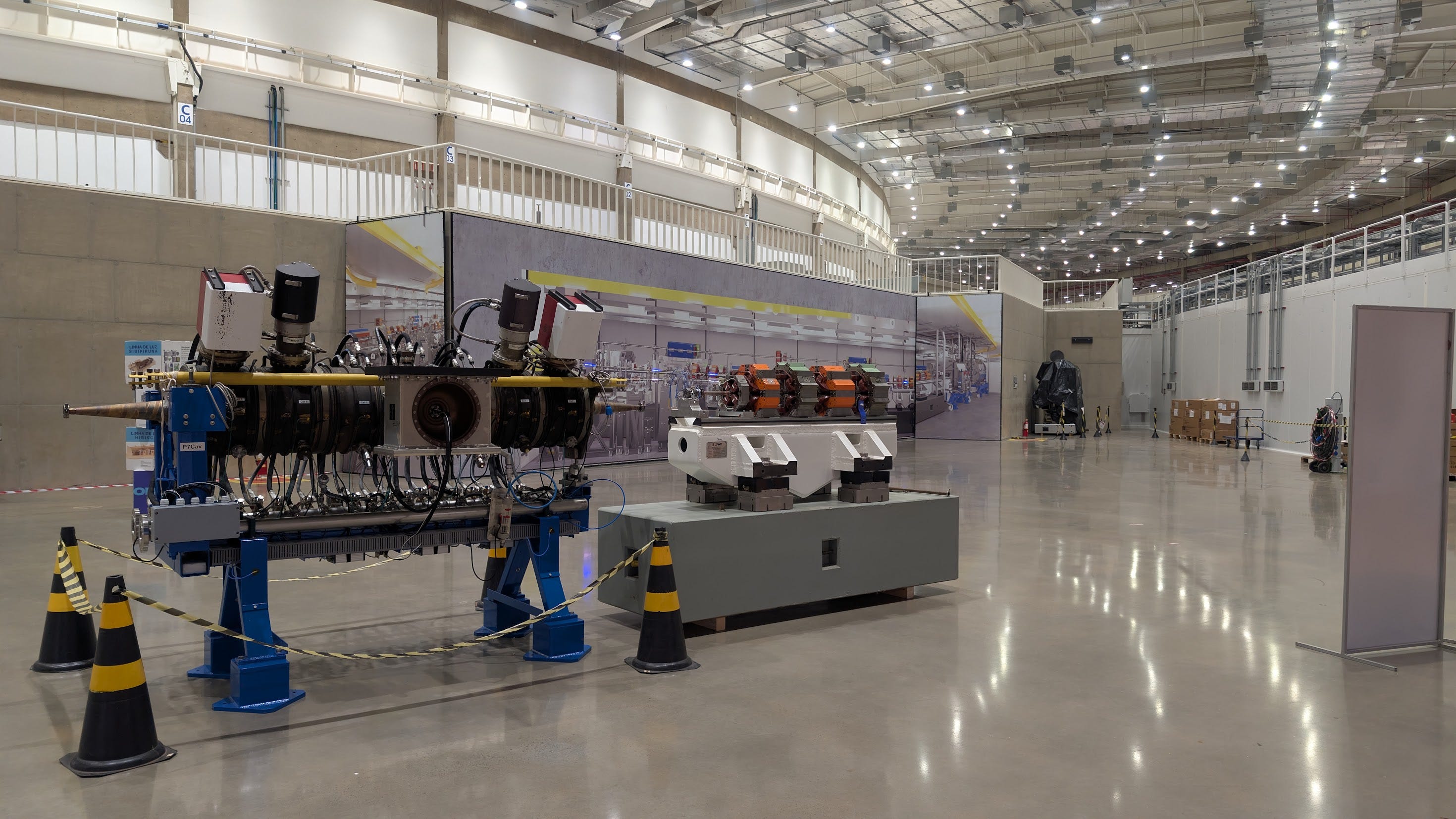
CNPEM, the Brazilian Center for Research in Energy and Materials, was the visit that most shifted the group’s sense of Brazil’s scientific capacity. Many arrived expecting an advanced agricultural laboratory. Instead they found a national research campus with capabilities on par with leading centres in the US and Europe, anchored by Sirius — one of the most sophisticated synchrotron light sources in the world.
Sirius allows researchers to observe biological and material structures at near-atomic resolution, opening the door to breakthroughs in plant science, pathogen resistance, soil–root interactions, biomaterials, and engineered molecules. Surrounding it are four national laboratories covering biosciences, nanotechnology, renewable materials, and biorenewables. Together, they form an integrated platform where questions that span agriculture, climate, and energy can be investigated at a level of detail few countries can match.
For the ARISE delegation, the scale and sophistication of CNPEM came as a surprise. The facilities were not just impressive; they were deeply relevant to the challenges facing global food and climate systems. The experience reframed Brazil not only as a producer or a testbed, but as a contributor to frontier science with the tools to shape how the next generation of technologies is developed.
Next Steps
The first ARISE Knowledge Exchange Week was built around discovery, and Brazil delivered it at every turn. Embrapa revealed the depth of scientific and environmental thinking behind the country’s agricultural transformation. CTC showed how a crop became the foundation of a national renewable-fuel system. And CNPEM demonstrated that Brazil is not only producing at scale, but also generating frontier science with global relevance. Each visit offered a different lens, yet together they lifted the veil on a country whose innovation capacity is far greater than its public narrative suggests.
This was only the opening chapter. In February 2026, the ARISE delegation will travel to St. Louis to explore another critical part of the global innovation ecosystem, from the Danforth Center and Taylor Geospatial Institute to the region’s industrial biotech networks. A month later, the final stage in Cambridge will bring the UK’s translational infrastructure and engineering biology expertise into the conversation. São Paulo helped the group see what already exists. St. Louis and Cambridge will help shape what might come next.
*ARISE (Agri-Tech for Resilience, Innovation & Sustainable Ecosystems) is a UK Government–funded Tactical Fund project led by Agri-TechE, in partnership with AgriTIERRA, Earthbase, Embrapa, and The Yield Lab Institute. The São Paulo Knowledge Exchange Week brought together participants from NIAB, Newcastle University, Harper Adams University, the Donald Danforth Plant Science Center, the Taylor Geospatial Institute, Washington University in St. Louis, CREA, University Austral, AgCenter Colombia, Tec de Monterrey, AgTech Chile, and The Yield Lab Latam.
Thanks for reading.
KFG
Kieran Finbar Gartlan is an Irish native with over 30 years experience living and working in Brazil. He is Managing Partner at The Yield Lab Latam, a leading venture capital firm investing in Agrifood and Climate Tech startups in Latin America.