


Some of the best-funded AgTech startups are being built in developed regions, but not always in markets large enough to generate venture-scale returns.
Hot and Cold
In my last article, I mentioned how impressed I was by the sophistication of the UK AgTech ecosystem. Lots of funding, strong talent, and serious technology. What it’s missing, however, is a market large enough to help these startups scale to venture capital heights.
A lot of the solutions I saw were agronomic in nature and aimed directly at farmers. That is a very tough market. It’s fragmented, seasonal, and slow to build. Most farmers are busy running the farm, and many are not looking to spend extra time or money trying out the latest technology unless the value is very clear.
That creates a problem for venture-backed startups. You can build a good product, raise serious money, and still find yourself selling into a market that is hard to grow quickly. In most cases, the technology is not the main constraint. The real issue is that the home market may simply be too small or fragmented.
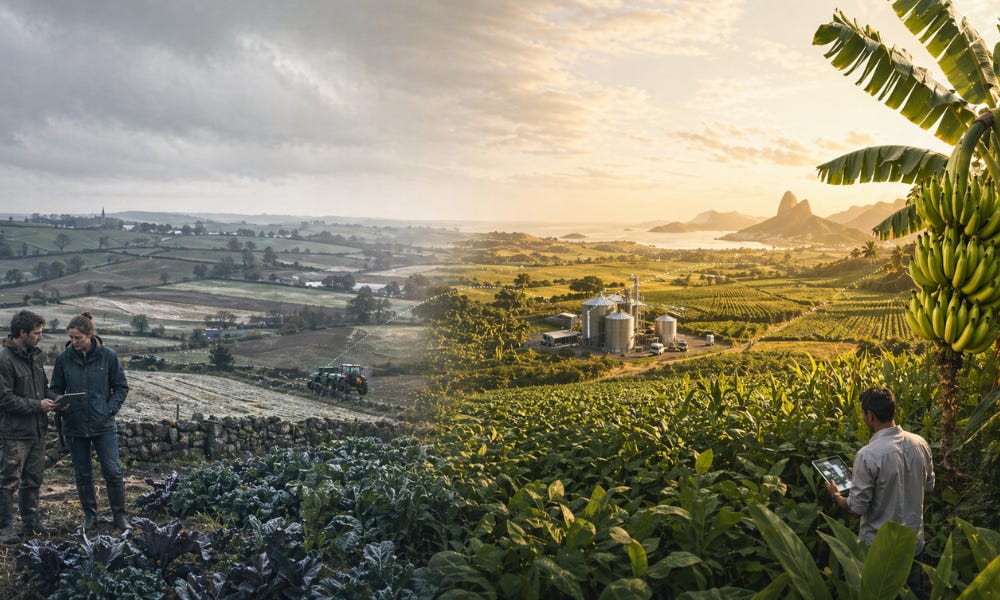
This is where Brazil starts to look attractive. The market is larger, runs year-round, and the problems are often bigger and more urgent, including many outside the farmgate that are B2B in nature and easier to scale. The opportunity is there, even if getting in is not always straightforward. The three examples that follow show different ways that fit can work in practice.
Bounty Hunt
Building in the UK does not always mean building for the UK. In some cases, the much bigger opportunity is global. One good example of this is Tropic, a startup that came out of the Norwich Research Park and now operates internationally.
Tropic is a biotech company focused on improving tropical crops through gene editing. It has raised more than $190 million and is already operating well beyond the UK. Its work in bananas shows why.
The global banana industry still depends heavily on a single variety, Cavendish, which makes it unusually vulnerable. Disease pressure is high, and Tropic highlighted that around 50% of bananas are lost along the supply chain. One of the biggest threats is Panama disease, a soil fungus that can stay in the ground for up to 50 years. That is why resistant varieties matter so much.
Tropic is working on traits linked to disease resistance, but also on a gene to stop oxidization aimed at reducing browning and helping the fruit last longer after harvest. The company already operates in Brazil and other parts of Latin America, as well as India, the Philippines, and the Middle East.
Remote Edge
If Tropic shows how UK science can be built around global crop problems, Lacuna Space shows how a solution developed in the UK can become much more relevant in a market like Brazil.
Lacuna is a satellite company focused on connecting low-power sensors in remote areas. It is not trying to compete with Starlink or provide broadband internet. Its model is much simpler: help small field devices send small amounts of data from places where normal connectivity does not reach.
That fits Brazil well. A farm may have internet at the office, but that does not mean the field is connected. And in many cases, the sensor only matters if it is out in the field.
One reason Lacuna has landed well in Brazil is that it has found trusted partners such as Embrapa, USP, and Corteva to work on an important problem: black sigatoka in bananas. The system combines sensor data with weather, satellite imagery, and AI to improve spray timing and reduce fungicide use.
Brazil has the size, the crop diversity, and the rural connectivity gaps to make a product like this much more relevant than it might be in its home market.
Crop Pick
If Lacuna is about getting data out of the field, Fruitcast is more about what to do with that data. It also points to another useful strategy for startups: pick a high-value crop, where the pain is clearer, the margins are higher, and the return on a better tool is easier to prove.
Fruitcast started with a simple problem in strawberries. Growers often do not know with enough confidence how much fruit is actually in the field, which creates problems for labor planning, contracts, waste, and margins. In a high-value crop, a weak forecast quickly becomes an expensive one.
The company’s solution is quite practical. Someone walks the crop with a phone or camera, uploads the video, and Fruitcast uses computer vision to count fruit and flowers, estimate maturity, and project yield. It then adds weather, historic yield data, crop cycles, and variety information to build a digital view of the farm.
This matters because better forecasting gives growers more time to plan labor, manage supply, and deal with buyers if volumes are likely to be above or below plan. In a crop like strawberries, those gains can show up quickly, which makes it a much easier place for a startup to prove value than in broadacre.
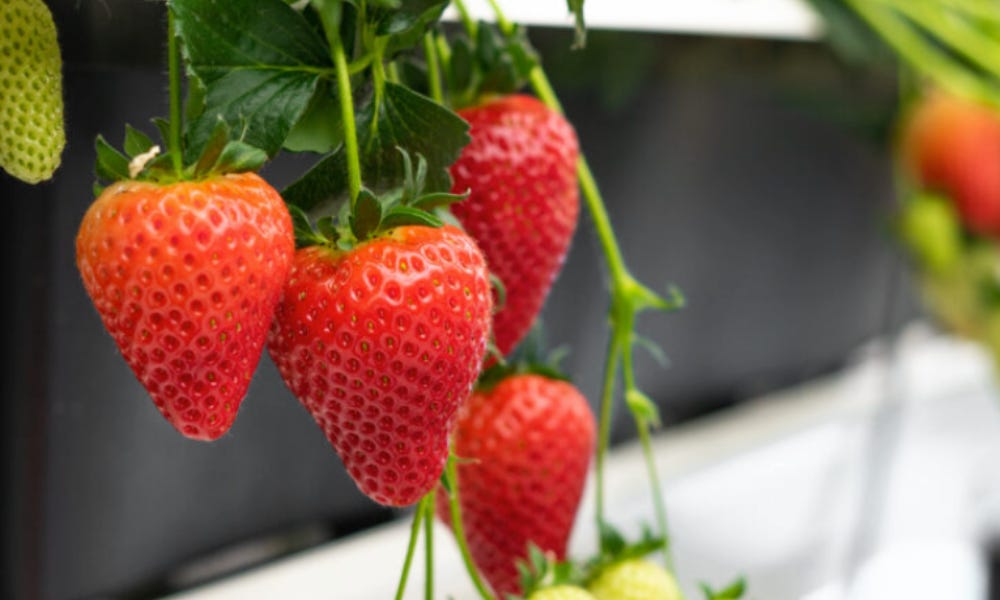
Many of those high-value crop opportunities sit outside the UK today, but that may also change over time. Dyson Farming’s strawberry operation showed how far that can go when the crop is valuable enough to justify more technology and more capital. Using large greenhouses, novel varieties, and a hybrid vertical growing system, Dyson is producing strawberries all year round and has managed to triple yields from the same area.
Hard Ground
While Dyson hints at what the future can look like, all-year-round farming, especially in high-value crops, Brazil already offers that now. So why have more UK and other Northern Hemisphere startups not made the move? Because Brazil is still a hard nut to crack.
A company can have strong technology and still struggle if it does not have the right local partner, the right first customer, the right crop focus, or the right route to market. Brazil is not a place where you just land, translate the deck, and hope things work out.
That is especially true in agriculture. Conditions vary a lot by region, crop, and business model. What works in one market may need real adaptation in another. In some cases, the product fits well, but the go-to-market does not. In others, the issue is pricing, local support, or simply finding the right place to start.
Brazil may offer the scale many foreign AgTech startups are missing at home. But scale on its own is not enough. The winners will be the ones that find the right entry point, the right partners, and the patience to adapt.
Thanks for reading.
KFG
Kieran Finbar Gartlan is an Irish native with over 30 years experience living and working in Brazil. He is Managing Partner at The Yield Lab Latam, a leading venture capital firm investing in Agrifood and Climate Tech startups in Latin America.