


AI is making farm decision tools easier to build. The real challenge is capturing field reality and connecting it fast enough to guide better decisions.
Digital Dream
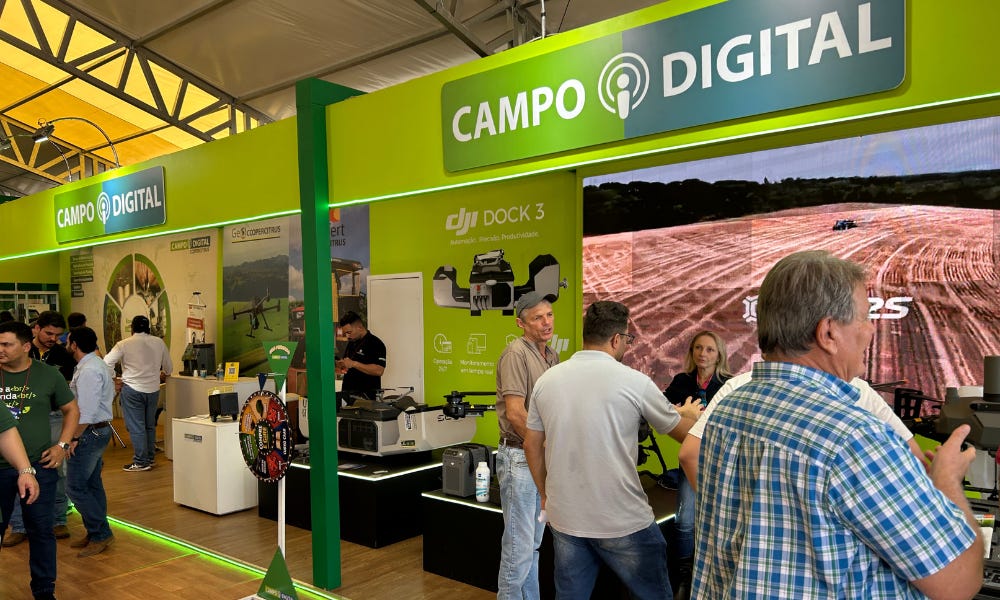
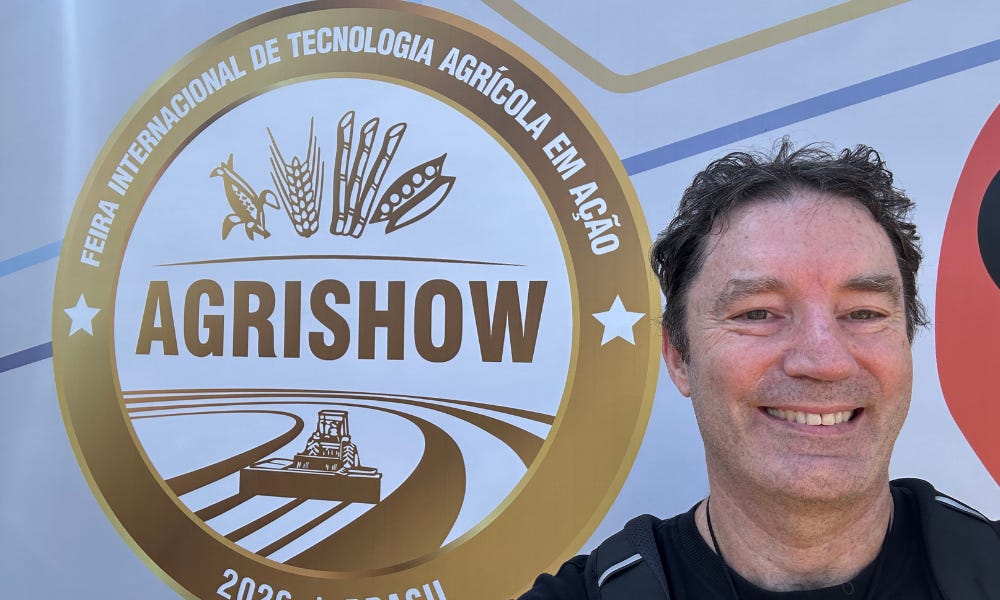
Agrishow, Brazil’s largest agricultural machinery fair, took place this week in Ribeirão Preto, about four hours from São Paulo. For one week, more than 200,000 people descend on the city to look at tractors, planters, sprayers, combines, drones, and whatever else promises to make farming a little more productive or a little less painful.
If you have never been, it is hard to describe the scale. There are machines everywhere. Huge machines. Machines that look more like mining equipment than farm tools. For decades, that was the point. Agrishow was where Brazilian agriculture came to show its muscle.
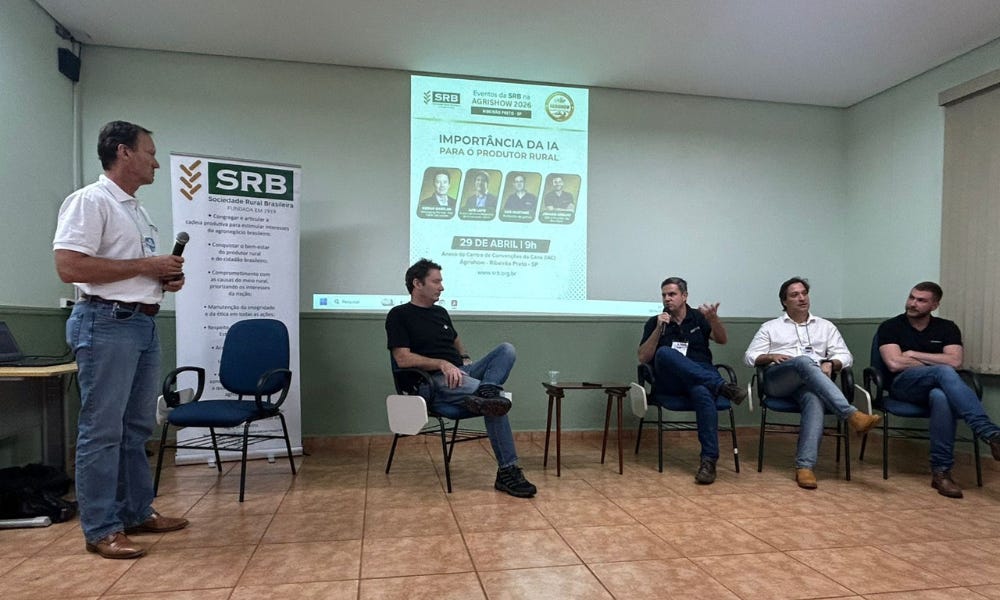
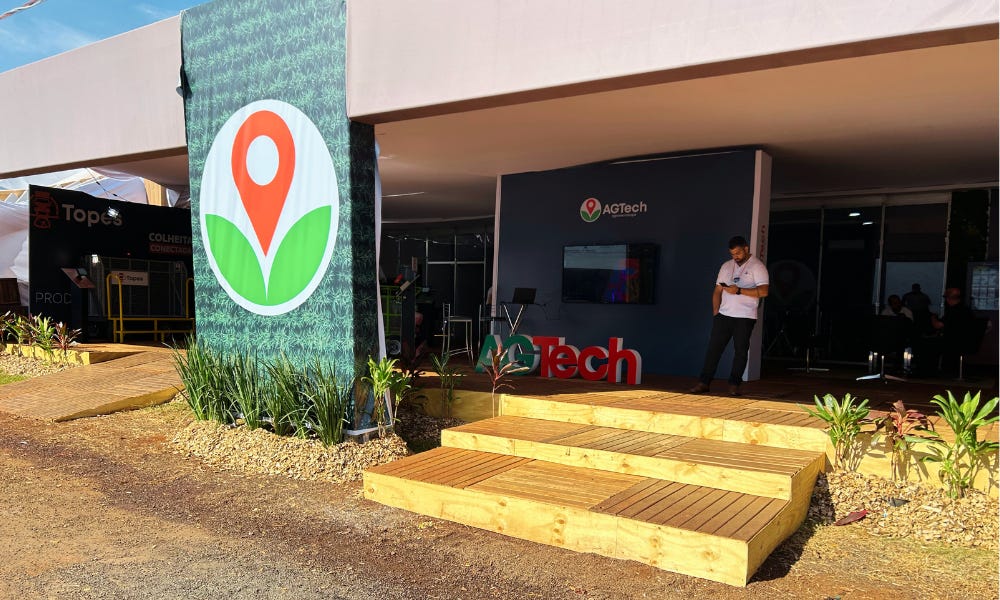
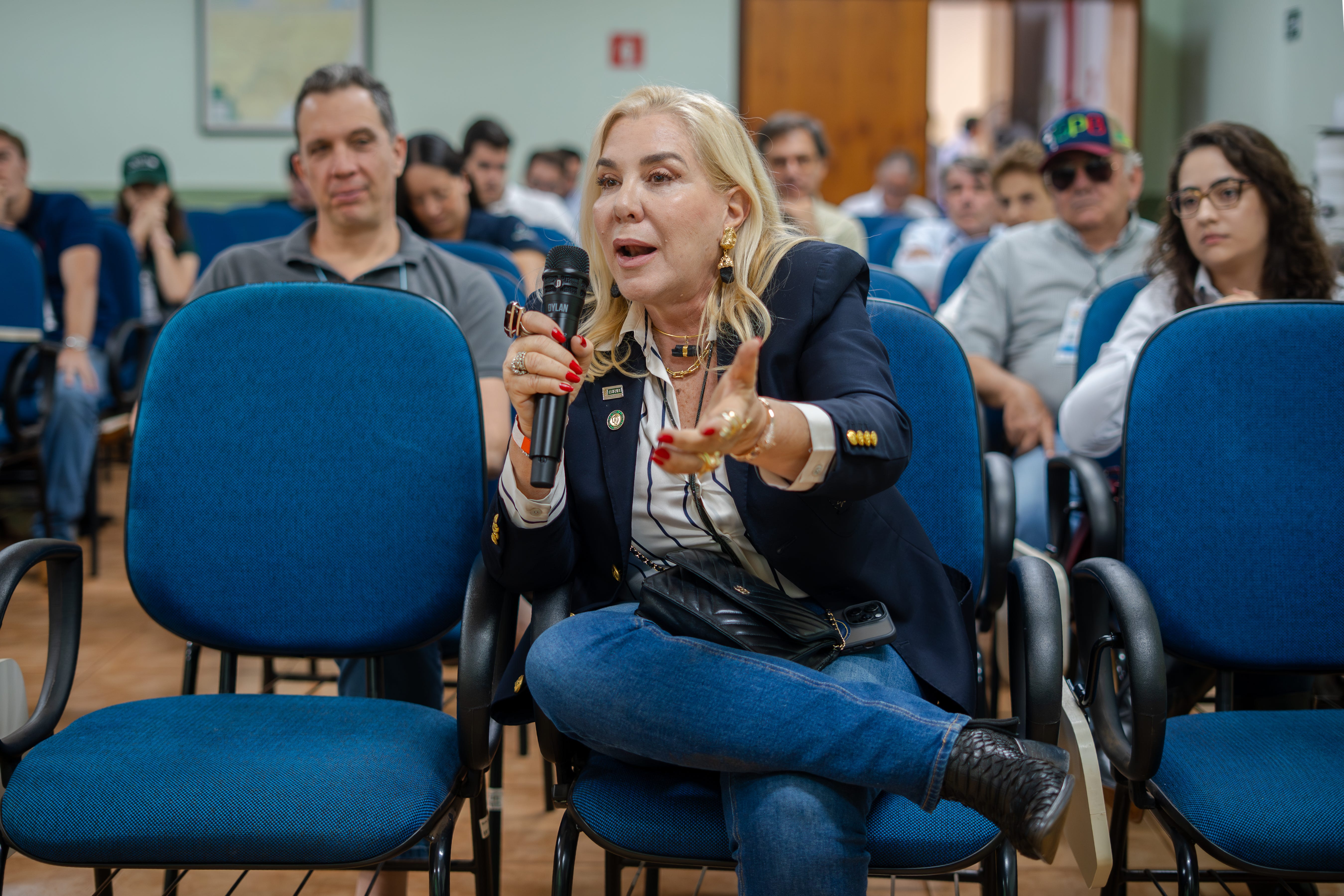
I was there this week for two panels, one on AI in agriculture and another on the evolution of the AgTech ecosystem. Machinery still dominated the landscape. Farmers still need to plant, spray, harvest, haul, store, and sell. No app is going to pull a planter through heavy soil.
The next layer of value is forming around the machine. It is in the software behind it, the data coming off the field, the image from the drone, the weather alert, the price signal, the WhatsApp message from the agronomist, and the ability to turn all of that into a better decision before the window closes.
That is the promise. A farmer should be able to ask a simple question during the day and get a useful answer. Should I spray now or wait? Is this freight quote fair? Should I sell soy today? Is this pest pressure showing up elsewhere? Can I afford to test this biological input? What machine should go where first?
AI makes that kind of tool much easier to imagine and much cheaper to build. The problem is that the tool is only as good as what it knows. On most farms, a lot of what matters still sits outside a clean database. It is in photos, voice notes, field visits, invoices, machine operators’ comments, WhatsApp groups, and the farmer’s own instinct.
That is where the next challenge begins.
Dating Game
In the past, some startups have been guilty of treating farmers like unpaid data-entry employees.
Fill out this form. Upload this file. Tag this field. Enter this activity. Update this dashboard. Log the spray. Record the cost. Connect the machine. Come back next week and do it all again.
That might look fine in a product demo. In the field, it dies quickly. It is also one of the main reasons many AgTech startups struggled to understand why farmers were not engaging, even when the product made sense on paper.
Farmers are already juggling weather, people, machinery, inputs, credit, prices, pests, logistics, and risk. Asking them to feed another system without giving something useful back straight away is a hard sell. Agriculture has enough friction. It does not need software adding homework.
That is why data capture is really a relationship problem.
You do not get the farmer’s information on the first date. You have to earn it.
The exchange has to be simple. The farmer gives something small and natural, like a photo, voice note, WhatsApp question, freight quote, planting update, pest observation, input price, or yield number. In return, he gets something useful quickly: a benchmark, alert, comparison, recommendation, market signal, risk warning, or next-best action.
This give-to-get exchange matters because farmers like comparison. They want to know what is happening over the fence. Am I paying too much for inputs? Is my freight quote high? Are neighbors seeing the same pest pressure? Is my yield on track? Should I sell now or wait? How does my cost structure compare with similar farms?
That was part of the early power of Farmers Business Network in the United States. Farmers shared information because they received benchmarks and transparency back. The comparison created value, and the value encouraged more sharing.
Brazil may be even more suited to this model because farmers already live on WhatsApp. It is the unofficial operating system of the countryside. Prices, photos, invoices, field problems, freight quotes, agronomic doubts, worker updates, and commercial negotiations already flow through it every day.
The best data capture strategy may look less like data capture and more like a useful conversation.
A farmer sends a photo of a leaf disease and receives a likely diagnosis, plus an alert that similar cases are appearing nearby. Another shares a freight quote and learns whether it is above or below the regional range. Another asks whether to sell soybeans today and receives local price intelligence, storage considerations, and cash-flow context.
Every useful response builds trust. Every trusted interaction creates more data.
That is how the farm data layer starts to form. Through value, not forms.
The App Trap
AI has made it easier than ever to build the front end of farm intelligence.
A startup can now create an app, agent, chatbot, dashboard, or recommendation engine much faster and cheaper than before. That is a good thing. It lowers the cost of experimentation and opens the door for more founders to build for agriculture.
It also creates a trap.
Build the app faster than the data relationship underneath it, and the product may look intelligent without being useful. A smart-looking recommendation sitting on incomplete data is still just a guess in a nice interface.
And AI language is everywhere now. Every platform wants to become a copilot. Every dashboard wants to become an agent. Every farm management tool wants to offer recommendations. That may be the right direction, provided the system knows enough about the farm to recommend something practical.
A satellite image can show crop stress, though not always why it happened. A drone can identify weeds, though not whether the sprayer is available. A sensor can measure soil moisture, though not whether the farmer has the labor, cash, or input stock to act. An ERP can show inventory, though not what the agronomist saw in the field yesterday.
A chatbot can sound clever. If it is disconnected from the farm’s real operating context, it is still mostly guessing.
This is the difference between digital decoration and decision infrastructure.
The app is not the intelligence. The agent is not the intelligence. The dashboard is not the intelligence.
The intelligence comes from knowing what is actually happening, connecting it with context, and helping someone act in time.
Join the Dots
The end goal is not a better dashboard. It is an easy-to-use tool that helps the farmer make better decisions throughout the day, across whatever activity matters at that moment.
That decision may be agronomic. Should I spray? Should I irrigate? Should I replant? Is this pest pressure serious or still manageable?
It may be operational. Which machine should go where first? Do I have enough labor? Is the sprayer free? Did the input arrive? Will rain stop the operation?
It may be financial. Should I take credit now? Should I delay a purchase? Can I afford a biological input trial? Does this technology pay back this season, or only over three years?
It may be commercial. Should I sell grain today? Should I store? Is this basis attractive? Is the freight quote too high? Should I buy inputs now or wait?
It may involve machinery, livestock, land, sustainability, insurance, certification, or market access.
One data point rarely makes a farm decision.
A field photo matters. A weather forecast matters. A satellite image matters. A machinery alert matters. A grain price matters. A cash-flow update matters. None of them are enough alone.
The farmer needs a system that can connect agronomy, weather, machinery, labor, finance, logistics, input prices, market signals, risk, and sustainability into one practical decision layer. The more relevant information the system can access, the better it can help the farmer make decisions that are efficient, profitable, and sustainable.
This is where AI becomes powerful. It can connect more variables than any human can hold in their head at once. It can notice patterns, compare scenarios, structure messy information, and suggest next steps.
Agriculture’s challenge is that too many of those variables are still scattered across systems, people, phones, machines, documents, and memory.
AI is very good at connecting dots. Agriculture’s problem is that too many of the dots are still sitting in people’s heads, phones, notebooks, and WhatsApp groups.
The real breakthrough will come when those dots can be captured naturally, connected quickly, and returned to the farmer as useful guidance.
Missing Link
The next phase of farm AI will not be won by the company with the prettiest dashboard or the loudest AI claim. It will be won by whoever solves the link between farmer behavior, low-friction data capture, and useful decisions.
That link has three parts.
First, the farmer must be willing to engage. The interaction has to feel natural. WhatsApp, voice, photos, videos, and simple questions will often beat another app login. The system needs to fit the farmer’s workflow, not force the farmer to fit the system.
Second, the farmer must get value back quickly. A benchmark. A warning. A comparison. A recommendation. A market signal. A better price. A lower risk. The exchange has to be clear. Give information, get insight.
Third, the information has to be connected. A farm is not a spreadsheet with soil attached. It is a living system of biology, machinery, finance, labor, weather, logistics, markets, and instinct. Capturing individual pieces is useful. Connecting them fast enough to change decisions is where the value lives.
Agrishow showed plenty of digital dreams this week. Some will be real. Some will be premature. The test is simple: does the product help the farm understand itself better, and does it turn that understanding into a decision?
The first wave of digital agriculture tried to make farmers use software. The next wave of AI will need to make software understand farmers.
Thanks for reading.
KFG
Kieran Finbar Gartlan is an Irish native with over 30 years experience living and working in Brazil. He is Managing Partner at The Yield Lab Latam, a leading venture capital firm investing in Agrifood and Climate Tech startups in Latin America.