


In Brazil AgTech news this week, Solinftec begins its European expansion with Spanish trials of its autonomous Solix robot, Yara invests US$38 million as bioinputs become central to its Brazil strategy, PwC takes its 700-startup AgTech platform global, and FAPESP selects 30 small companies for an agricultural innovation program.
In Climate Tech, Amazon and Cerrado deforestation falls to record lows, Brazilian agricultural production continues growing while emissions remain broadly flat, and Greenline develops a digital platform to strengthen the verification of forest carbon credits.
In Funding & M&A, a proposed US$2 billion fund would aggregate loans for Brazil’s rural transition, Cotribá members approve the cooperative’s extrajudicial liquidation, Ruiz Coffees seeks court protection with US$320 million in debt, and Cosan ends negotiations to sell part of Rumo.
And in Macro & Markets, Lula wins a fourth presidential term in a closely contested runoff, a Newcastle disease outbreak triggers poultry-trade restrictions, Chinese and Indian tractor brands gain ground as Brazil’s machinery market contracts, and wheat imports head towards their highest level in 30 years.
AgTech
Solinftec Begins European Expansion with Spanish Robot Trials
PwC Turns Its 700-Startup AgTech Hub into a Global Solutions Platform
FAPESP Selects 30 Small Companies for Agricultural Innovation Program
Yara Invests US$38 Million as Bioinputs Become Central to Its Brazil Strategy
Climate Tech
Amazon and Cerrado Deforestation Fall to Record Lows
Brazilian Farm Output Grows While Agricultural Emissions Remain Flat
Greenline Builds Digital Verification Platform for Forest Carbon Credits
Funding & M&A
Proposed US$2 Billion Fund Would Aggregate Rural Transition Loans
Cotribá Members Approve Extrajudicial Liquidation
Ruiz Coffees Seeks Court Protection with US$320 Million in Debt
Cosan Ends Negotiations to Sell Part of Rumo
Macro & Markets
Lula Wins Fourth Term in Closely Contested Runoff
Newcastle Outbreak Triggers Poultry-Trade Restrictions
Chinese and Indian Tractors Gain Ground in Brazil
Brazil Faces Its Largest Wheat Imports in 30 Years
AgTech
Solinftec Begins European Expansion with Spanish Robot Trials — Brazilian AgTech Solinftec has deployed its autonomous Solix robot in Castile and León through a partnership with agricultural research centre Itagra.ct. The company will spend two to three months adapting its AI-powered pest detection to European soils and climate before potentially expanding into France, Germany and Italy. The Spanish trial gives a technology developed for Brazilian crops its first foothold in Europe, where restrictions on agrochemicals could strengthen demand for precision applications. Source: BrasilAgro
PwC Takes Its 700-Startup AgTech Platform Global — PwC is turning its Piracicaba-based AgTech Innovation hub into an international platform connecting approximately 700 startups with clients in markets including the United States, New Zealand, Colombia and the United Arab Emirates. The expansion responds to growing foreign demand for Brazilian technologies in tropical agriculture, sustainability and farm management. A New Zealand-based PwC partner will spend three years in Brazil organizing the platform’s international processes and governance. Source: AgFeed
FAPESP Selects 30 Small-Company AgTech Projects — FAPESP has selected 30 projects for the first phase of its PIPE Jornada Tecnológica Agro program, which provides non-repayable research funding to small companies in São Paulo. The projects span biological inputs, precision agriculture, animal health, citrus greening detection, water monitoring and agricultural waste valorization. The program could help turn early scientific research into commercial technologies, although several selected teams have yet to confirm the companies that will host their projects. Source: FAPESP
Yara Invests US$38 Million as Bioinputs Become Central to Its Brazil Strategy — Yara is investing US$38 million to expand into new bioinput categories in Brazil, including products based on living microorganisms. Bioinputs and foliar products already generate 14% of Yara Brasil’s EBITDA, with the company targeting 30% of margins by 2030. Brazil now represents half of Yara’s global business in this segment, while its first microbial products could reach the market in 2028 or 2029. Source: AgFeed
Climate Tech
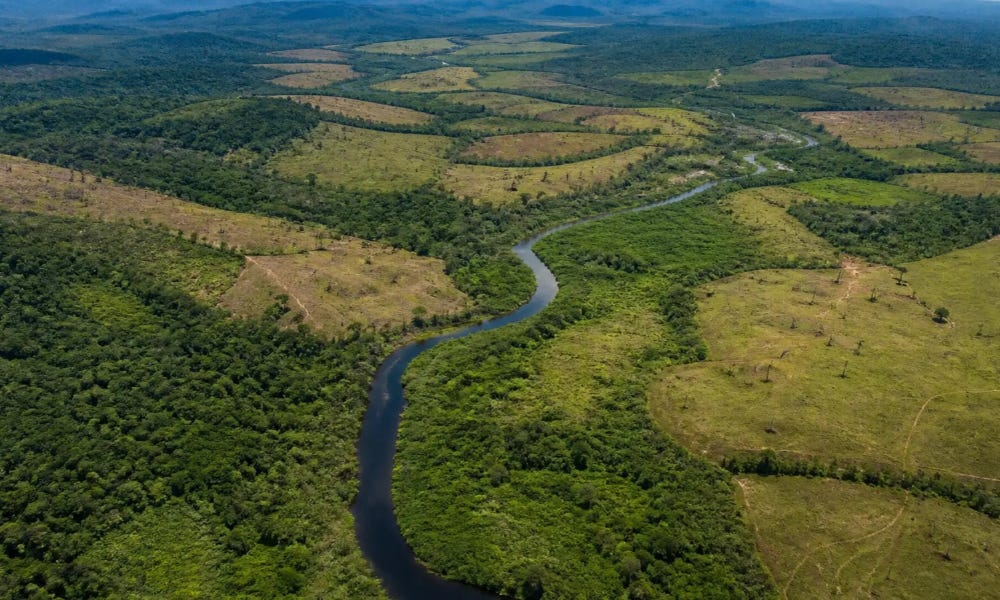
Amazon and Cerrado Deforestation Fall to Record Lows — Amazon deforestation fell 42% to 3,335 square kilometres in the 12 months through July, its lowest level since satellite monitoring began in 1988. Clearing in the Cerrado declined 24% to 5,517 square kilometres, also the lowest in its series. The figures strengthen Brazil’s climate credentials, although the Cerrado still lost more native vegetation than the Amazon and recent fires are not captured by the reporting period. Source: Reuters
Brazilian Farm Output Grows While Agricultural Emissions Remain Flat — Brazil’s agricultural emissions remained virtually unchanged at 626.3 million tonnes of CO₂ equivalent in 2025, even as several areas of production reached record levels. Livestock emissions fell 1.7% as cattle slaughter increased and the national herd contracted, while crop emissions rose 6.5% because of expanded production, cultivated area and input use. The figures show improving livestock efficiency, but also the growing climate challenge presented by crop production. Source: AgFeed
Greenline Scales Digital Verification for Forest Carbon Credits — Brazilian ClimateTech Greenline has invested US$7 million in a platform combining satellite imagery, AI and geospatial data to monitor and verify forest carbon projects. The company says it monitors 1.5 million hectares and has 111 projects in its pipeline, including 56 already operating. Its technology provides evidence for project developers and auditors, while a partnership with the RCGI-USP Carbon Registry adds an independent institutional layer to the verification process. Source: Forbes Brasil
Funding & M&A
Proposed US$2 Billion Fund Would Aggregate Rural Transition Loans — Economists Winston Fritsch and Julieda Puig have designed EcoA, a mechanism that would combine fragmented sustainable loans from banks, cooperatives and agricultural producers into diversified portfolios for global investors. The proposed fund would use blended finance, with different risk layers potentially backed by agribusiness companies, institutional investors, BNDES and development banks. The developers are targeting an initial US$2 billion launch in late 2027, although the model still requires detailed financial and risk testing. Source: Capital Reset
Cotribá Members Approve Extrajudicial Liquidation — Members of Brazil’s oldest agricultural cooperative unanimously approved its voluntary dissolution and extrajudicial liquidation following unsuccessful attempts at judicial restructuring. Cotribá, which has estimated debts of US$280 million, will continue operating while its liquidator negotiates with creditors, restructures business units and considers asset sales. The process does not guarantee that producers, employees and financial creditors will recover the full amounts owed. Source: AgFeed
Ruiz Coffees Seeks Court Protection with US$320 Million in Debt — Ruiz Coffees and related companies and producers have requested judicial reorganization after reporting US$320 million in debt. Approximately US$155 million would fall inside the restructuring plan, while US$164 million is classified outside it. The group cultivates around 7,500 hectares of coffee and operates storage capacity for 160,000 bags. The court temporarily suspended enforcement actions, but had not formally approved the restructuring process when the story was published. Source: The AgriBiz
Cosan Ends Negotiations to Sell Part of Rumo — Cosan ended exclusive negotiations with potential buyers after failing to secure commercially acceptable terms for the sale of part of its stake in railway operator Rumo. The group had reportedly sought to sell 15% of the company to reduce leverage, with Bunge and COFCO among the interested parties. Cosan still owns 20.33% of Rumo and says it will continue evaluating asset sales and other measures to strengthen its capital structure. Source: AgFeed
Macro & Markets
Lula Wins Fourth Term in Closely Contested Runoff — Luiz Inácio Lula da Silva was reelected with 51.79% of the vote, defeating Flávio Bolsonaro’s 48.21%. The result points to continuity in Brazil’s rural-credit, climate, biofuel and trade policies, but Lula will face a more conservative Congress alongside pressure to control public debt and support economic growth. Source: Reuters
Newcastle Outbreak Triggers Poultry-Trade Restrictions — Brazil confirmed Newcastle disease at a commercial turkey farm containing around 6,000 birds in Nova Itaberaba, Santa Catarina. The outbreak prompted sanitary controls and temporary restrictions from export markets, including China, renewing concerns about how quickly an isolated animal-health incident can disrupt Brazil’s poultry trade. Source: AgFeed
Chinese and Indian Tractors Gain Ground in Brazil — Brazil imported 11,200 agricultural machines between January and September, 42% more than a year earlier, while domestic machinery sales declined. China and India supplied 93% of imported tractors, reflecting producers’ search for lower-cost equipment as expensive credit and tighter margins delay investment in locally manufactured machinery. Source: CBN
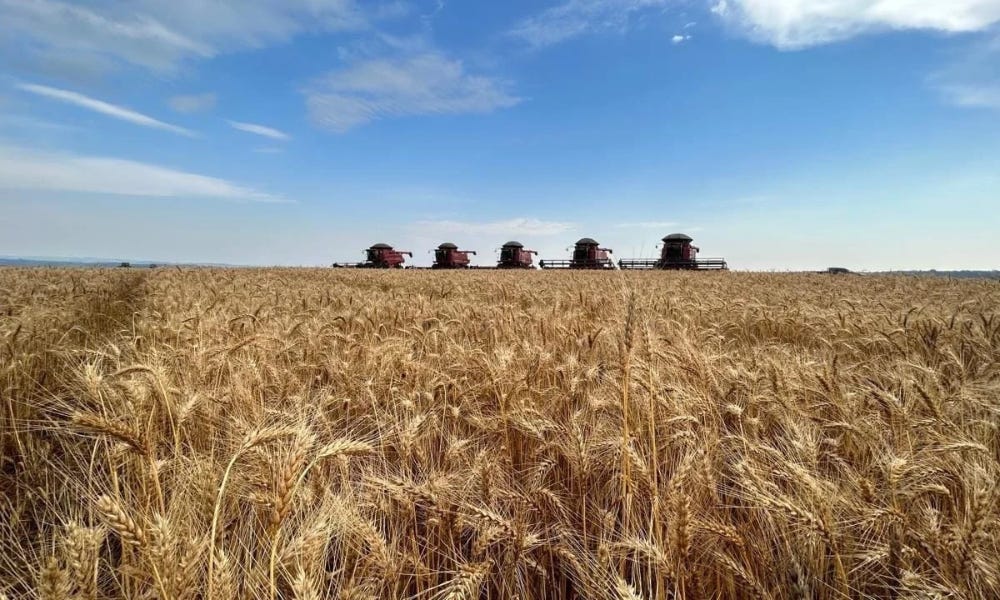
Brazil Faces Its Largest Wheat Imports in 30 Years — Brazil could import a record nine million tonnes of wheat during the 2026/27 season as adverse weather reduces domestic production and grain quality. The forecast highlights the country’s persistent dependence on foreign wheat and could increase costs for millers, food manufacturers and consumers. Source: DatamarNews
Thanks for reading,
KFG
Kieran Finbar Gartlan is an Irish native with over 30 years experience living and working in Brazil. He is Managing Partner at The Yield Lab Latam, a leading venture capital firm investing in Agrifood and Climate Tech startups across Latin America.
The funny thing is, the record-low deforestation and the cooperative liquidation sit in the same week. I've noticed farm output can grow while the finance under the farms gets shakier. Do you think the proposed US$2 billion fund reaches smaller growers, or mostly the big ones?