


How Veridi, Grão Direto and goFlux are applying artificial intelligence to fix soil diagnostics, grain commercialization and logistics bottlenecks in Brazil.
Smart Fixes
Last week I wrote about large companies embedding artificial intelligence into their operating systems. This week I’m shifting the lens. Startups tend to enter where the system is already under strain. They focus on the bottlenecks farmers experience every season but often accept as part of the job.
Some of those strain points sit in the soil itself. Others surface when it is time to sell grain. And some appear when trucks, rail and ports struggle to keep pace during harvest. In each case, the challenge is rarely a lack of data. It is the cost, delay or complexity involved in turning that data into efficient decision making.
What stood out at our event in Sao Paulo last week (Inteligent Ag: AI in Action) was how specific these solutions are. These founders are not trying to automate entire farms. They are fixing narrow loops where uncertainty quietly erodes profits. Soil diagnostics that take too long. Grain prices negotiated without the full picture. Logistics systems that creak when volumes spike.
Below are three examples of AI being applied at those pressure points, starting at ground level.
Microscopic Margins
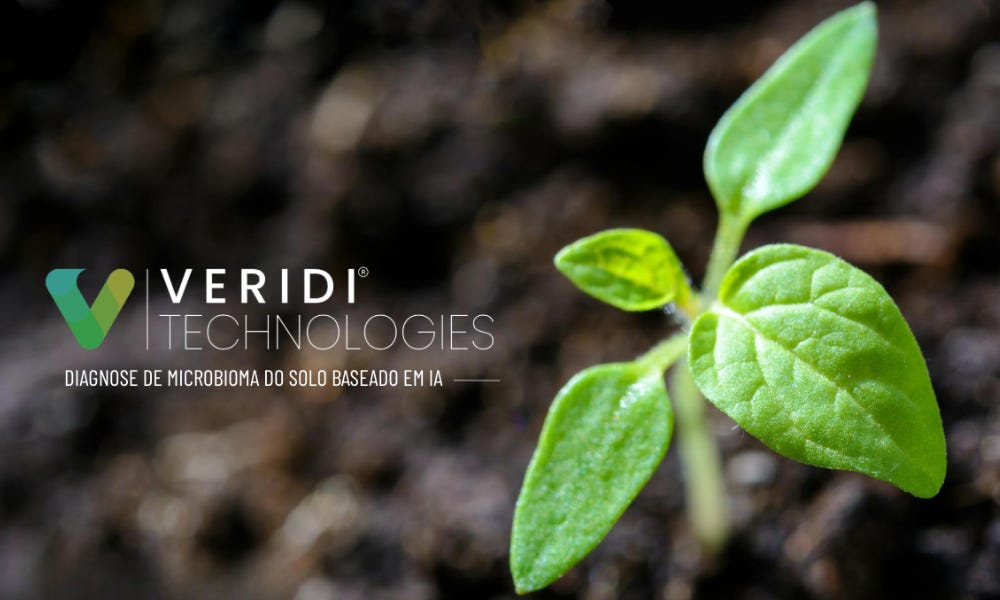
Nematodes are microscopic worms that live in the soil. Some are beneficial. Others attack plant roots, reducing nutrient uptake and lowering yields. In Brazil alone, plant-parasitic nematodes are estimated to cause roughly $7 billion in crop losses per harvest, with soybeans accounting for more than $3 billion of that total. Yet only about half of producers actively monitor the problem.
Diagnosis has traditionally relied on manual microscopy. Technicians examine samples under standard magnification, classify organisms visually and group them broadly by genus. Species-level identification often requires additional testing. The process is slow, dependent on specialist expertise and often inconsistent across labs. Different nematode species require different management strategies. When classification lacks precision, farmers sometimes apply the wrong product, too much, or too little.
Veridi, a Dutch biotech startup that recently launched in Brazil, built a robotic microscope specifically for nematode analysis. The system captures ultra-high-resolution images and processes them through computer vision models trained to distinguish species with more than 95 percent accuracy (compared with around 40% the traditional manual way).
Beyond identifying harmful species, the platform also classifies free-living nematodes, which serve as biological indicators of soil health, carbon cycling and regenerative practices. In Europe, soil monitoring regulations now incorporate nematode-based metrics. In Brazil, this layer of analysis remains largely untapped.
Veridi does not sell the equipment. Instead, it installs the system at partner laboratories at no upfront cost and charges per analysis, typically below the price of traditional nematode diagnostics. Rather than building a new lab network, it upgrades existing infrastructure. The result is faster turnaround, greater consistency and more precise soil intelligence.
Commercial Edge
Brazilian farmers are among the most efficient producers in the world. They manage tropical biology, double cropping and tight planting windows with impressive precision. Commercialization, however, is more complicated.
Farmers here must navigate currency volatility, regional basis spreads against Chicago, uneven logistics and limited hedging tools. Compared with U.S. farmers operating in deeper financial markets, Brazilian producers face more variables at the moment of sale. In volatile markets, even a short delay can mean missing a pricing window.
Grão Direto, Brazil’s first digital grains marketplace, facilitated more than 12 million tons of grain transactions last year. That scale produces something rare in Brazil’s physical market: a large dataset of executed trades. Quoted prices are one thing. Real completed transactions provide a clearer signal of where business is actually being done.
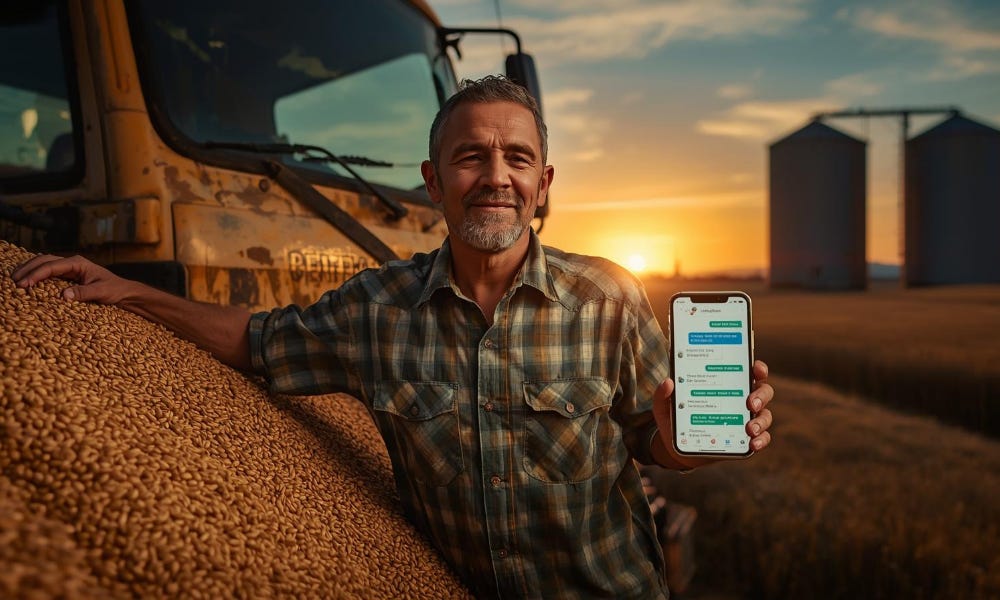
Building on that data, the company developed Airton, an AI-powered commercial assistant that operates inside WhatsApp, the platform nearly every Brazilian farmer already uses daily. Producers can ask about soybean prices, regional basis levels, currency movements or market context in plain language and receive responses grounded in real transaction data.
Airton does not replace the commercial relationship. It shortens response time and expands access to information. Producers can receive price alerts, track movements during the trading day and formalize transactions through integrated trading partners.
Long Haul
Brazil is continental in scale. Grain is grown from the southern most state of Rio Grande do Sul up to Roraima in the northern hemisphere. Moving crops across that geography isn’t a minor logistical issue — it’s one of the biggest challenges Brazilian agriculture faces.
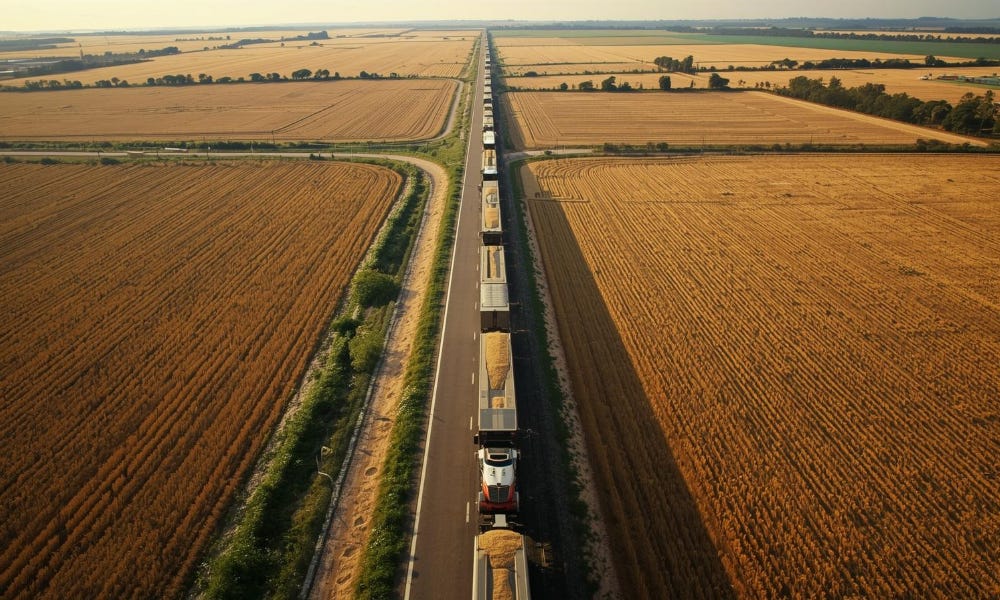
During peak harvest, that constraint becomes visible. Trucks tighten. Freight rates rise. Inputs for the second crop need to move toward farms while grain moves toward ports. Delays compound quickly when millions of tons are in motion across thousands of kilometers.
Brazilian startup goFlux operates at the center of that movement. Through its digital freight marketplace, the company transacts tens of millions of tons of agricultural cargo each year, generating a live dataset on how freight behaves across routes, regions and seasons.
Using its Intelligence platform, goFlux recently modeled 3.6 million logistics scenarios for a large ethanol producer weighing a long-term decision: remain exposed to road freight volatility or commit to rail capacity for the next 15 years.
Rail required upfront investment and long-term contracts. Road offered flexibility but rising structural pressure as ethanol production expands and competition for tanker trucks increases. Freight cannot be hedged like currency or Chicago prices. Based on the modeling, the company chose to lock in rail positioning to reduce exposure and protect margin.
Sharper Edges
Put these three cases side by side and you start to see the common thread. None of these companies are trying to reinvent agriculture from scratch. They are working on the edges — the places where friction shows up every season.
In the soil, that friction looks like slow diagnostics and imprecise treatment. At the moment of sale, it shows up as fragmented information and missed price windows. In logistics, it appears when harvest volumes overwhelm roads and long-term freight exposure goes unmanaged. Farmers and operators have learned to live with these constraints. Startups are choosing not to.
Brazilian agriculture already runs at scale. What these companies are doing is tightening the parts that leak value — a lab result delivered faster, a price confirmed with more confidence, a freight decision made before the squeeze hits. None of it is dramatic on its own. Together, it makes the system more resilient and a little more profitable for farmers.
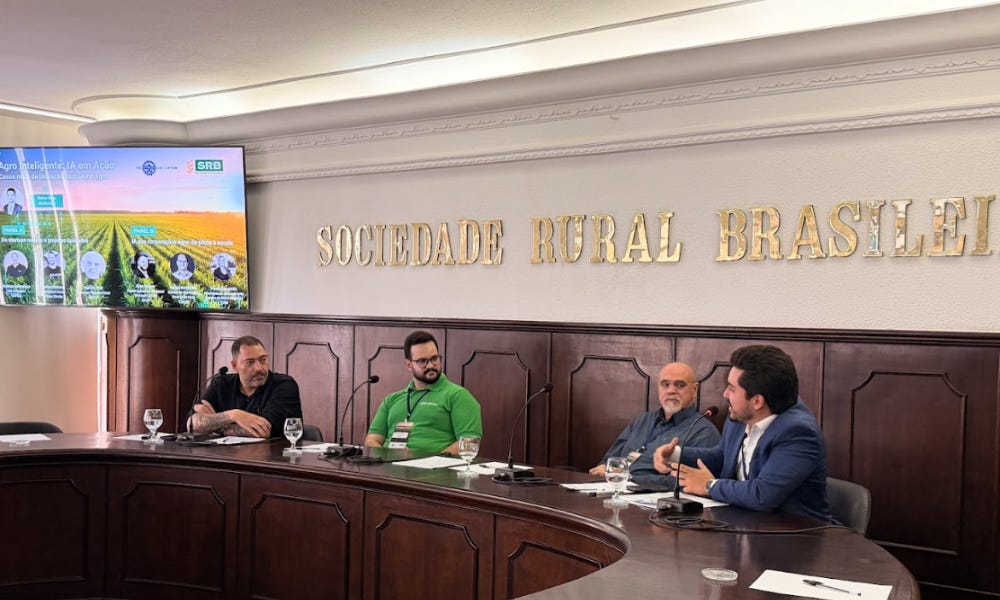
Veridi, Grão Direto and goFlux presented these cases at The Yield Lab Latam AI in Agro event (26/2) in São Paulo, in partnership with the Brazilian Rural Society (SRB). The event was held in Portuguese. You can watch the full recording here
Thanks for reading.
KFG
Kieran Finbar Gartlan is an Irish native with over 30 years experience living and working in Brazil. He is Managing Partner at The Yield Lab Latam, a leading venture capital firm investing in Agrifood and Climate Tech startups in Latin America.