


How Cargill, BASF and CNH are embedding artificial intelligence into operating systems that drive measurable results.
Heavyweight Thinkers
Most conversations about AI in agriculture focus on startups building new tools or experimenting in controlled settings. That is usually where innovation begins. Smaller teams can move quickly, adjust fast, and experiment without too much internal resistance.
What is less visible is how large agribusinesses are beginning to incorporate AI into their day-to-day operations. These are organizations managing supply chains, machinery fleets, animal production systems, and agronomic programs across thousands of hectares. Any new technology has to work within existing processes, compliance rules, and financial constraints.
Inside many corporates, early AI initiatives were exploratory. Pilot projects generated insights and internal learning, but they did not always change how the business actually ran. More recently, the emphasis has shifted toward embedding AI directly into operating systems, linking it to decisions that affect productivity, cost, and risk across entire business units.
In this article, I want to showcase three examples of corporate AI in action. Each case shows how artificial intelligence is being applied inside established agribusinesses, not as a side project, but as part of how the business now operates.
Counting What Counts
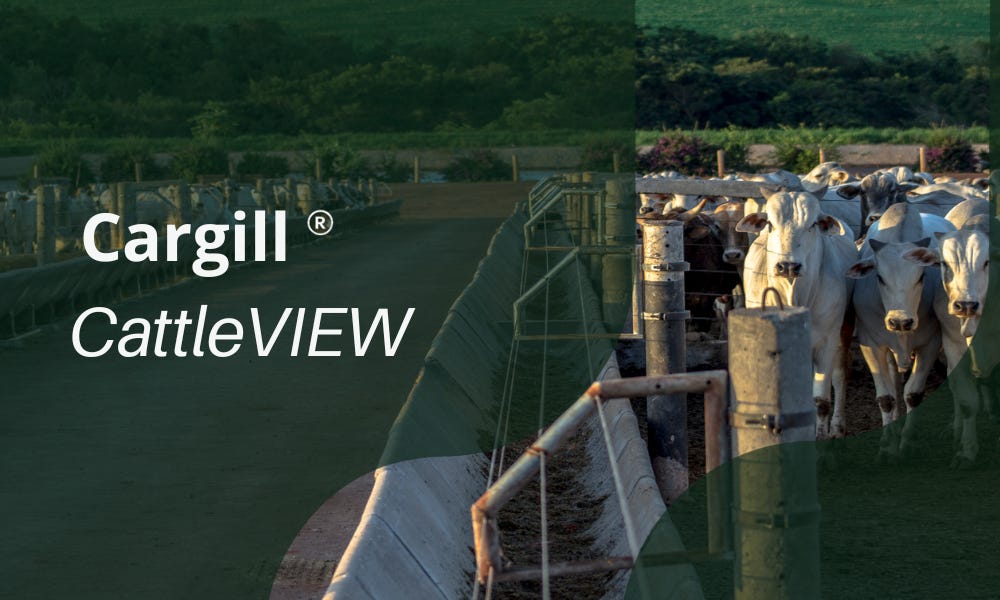
In Brazilian cattle feedlots, a surprising amount of management still depends on manual observation. Animal counts, feed trough readings, and behavior assessments are often based on human judgment. Small inaccuracies may seem harmless, but over a 120-day confinement cycle they compound quickly into measurable cost.
Cargill’s Cattle View system starts with a straightforward premise: better information leads to better decisions. Drones capture high-resolution images of the feedlot. Those images are uploaded to the cloud and analyzed using AI-powered computer vision models that count animals, assess distribution patterns, and monitor activity around the troughs.
One of the key outputs is Cargill’s Animal Welfare Index, known as the IBE, scored from 1 to 10. The index incorporates variables such as the percentage of animals standing or lying down, proximity to the trough, and position during feed readings. The operational target is to keep the score above 9.
But the IBE is more than a welfare indicator. Scores above 9 have also been associated with around $8 per head in additional margin. Improvements in counting accuracy, tighter control of feed consumption variation, and better inventory management contribute directly to financial performance. In this context, AI becomes part of the daily management cycle, shaping both animal welfare and profitability at a scale that would not be feasible through manual observation alone.
Into the Weeds
Agronomic decisions are rarely simple. Weed pressure, disease risk, weather patterns, crop genetics, and input costs interact across a growing season. Many of these decisions have traditionally relied on field scouting, historical experience, and fixed application schedules.
BASF’s approach adds artificial intelligence directly into that decision process. Digital mapping tools generate field-level data on biomass and variability. AI models integrate agronomic logic, crop development stages, meteorological inputs, and target biology to guide decisions around herbicides, fungicides, and growth regulators.
In weed management, variable-rate control has shown up to 60 percent optimization in resource use while maintaining or improving productivity. Growth regulators applied at variable rates have demonstrated around 30 percent input optimization alongside measurable yield gains. These adjustments translate directly into cost per hectare and input efficiency.
Disease timing offers another example. Applying fungicides too early increases cost. Applying too late risks significant yield loss. BASF’s AI-driven decision models combine meteorology, crop genetics, pathogen biology, and historical field data to identify the preventive application window. In comparative testing, the system achieved 98.7 percent performance in supporting optimal preventive decisions relative to field specialists.
Small shifts in timing translate into meaningful changes in cost and yield over a full season.
Machines in Sync
If Cargill shows what AI can do in animal protein, and BASF in crop protection, CNH represents the third layer of the system: machinery. Equipment sits at the center of farm operations. When machines operate in isolation, small coordination issues show up in planting windows, spraying schedules, and harvest timing.
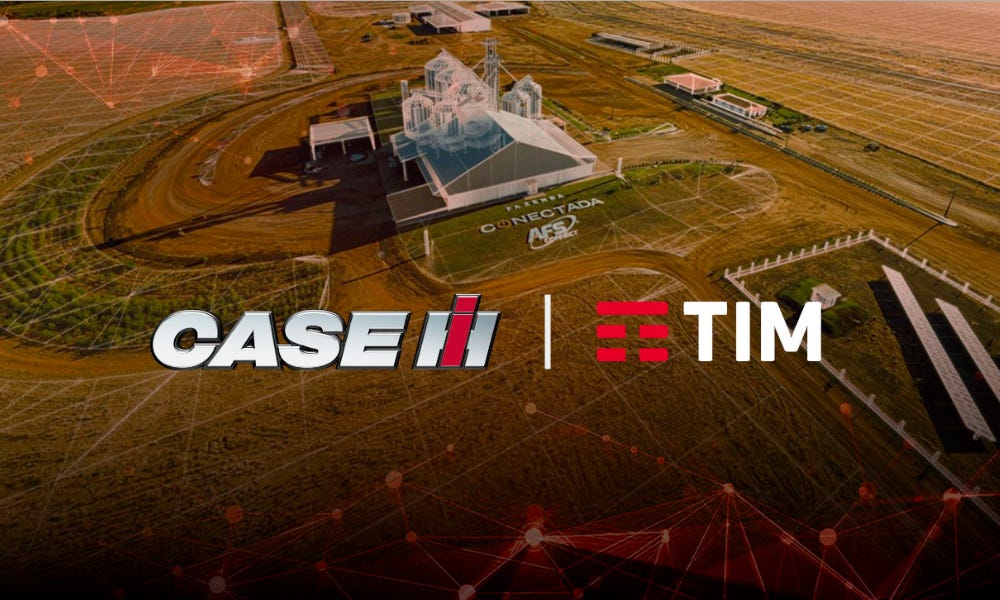
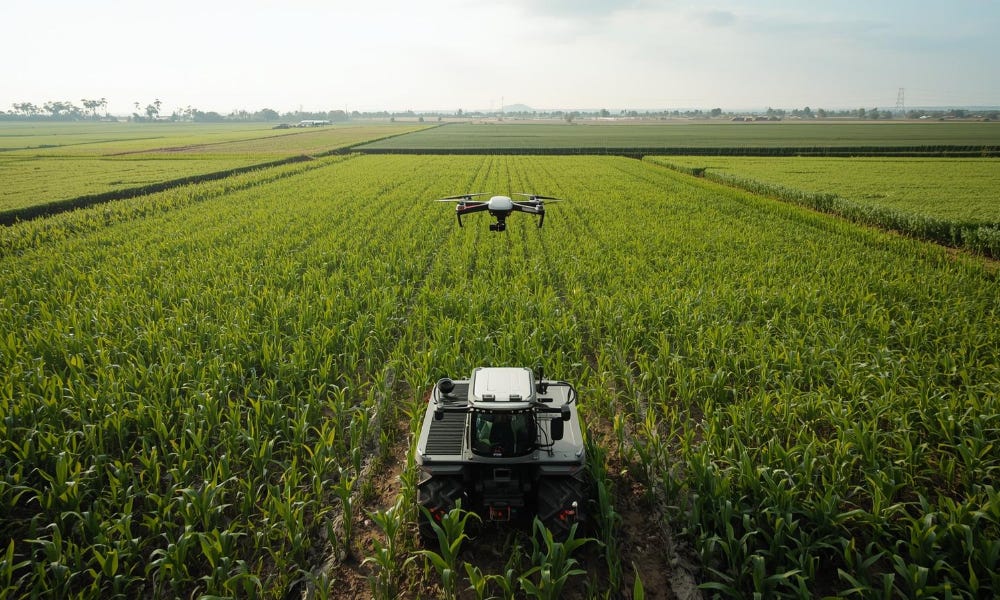
CNH’s connected farm model builds on years of telematics and machine monitoring. Equipment transmits operational data in real time, including field activity, input application, fuel use, and performance metrics. Artificial intelligence analyzes those streams to highlight bottlenecks, adjust routes, and support coordination between machines working in the same field.
The effect is visible in core operating numbers. Recent seasons showed productivity above regional and national benchmarks at CNH's model farm in Mato Grosso. Machine availability improved through better maintenance planning. Harvest efficiency increased, reducing the number of days required to complete operations. Fuel consumption declined, lowering cost per hectare and reducing emissions intensity.
For farm managers, that translates into fewer surprises during critical windows. Better visibility into how equipment is performing allows earlier adjustments, keeping operations closer to plan and costs under tighter control. Here, AI is applied to something fundamental: keeping machines, timing, and cost aligned during critical field operations.
Smart at Scale
Across these three examples, the pattern is clear. In feedlots, better counting improves both animal welfare and margin. In crop protection, more precise timing reduces input waste and protects yield. In machinery fleets, tighter coordination lowers fuel use and shortens operational windows.
In each case, the starting point is visibility. When managers can see more clearly what is happening, whether in a pen of cattle, across a field, or inside a fleet of machines, they make smaller, earlier adjustments. Over time, those adjustments affect cost per head, cost per hectare, and cost per hour of operation.
None of these changes depend on a single breakthrough. They come from using better data more consistently. The benefits show up in steadier performance, tighter cost control, and fewer operational surprises during critical windows.
Large agribusinesses tend to move carefully. When they decide to integrate a system into everyday operations, it usually reflects sustained results rather than experimentation. In animal protein, crops, and machinery, AI is increasingly part of that operating discipline.
Cargill, BASF and CNH will present these cases at The Yield Lab Latam AI in Agro event this week (26/2) in São Paulo, in partnership with the Brazil Rural Society (SRB). The event will be held in Portuguese. In-person places are already fully booked, but online access remains available. You can register here
Thanks for reading.
KFG
Kieran Finbar Gartlan is an Irish native with over 30 years experience living and working in Brazil. He is Managing Partner at The Yield Lab Latam, a leading venture capital firm investing in Agrifood and Climate Tech startups in Latin America.