


The Brazilian startup using AI to detect wildfires in under 3 seconds, turning speed into climate resilience.
Burning Point
In a world warming by the week, fire has become both symptom and accelerant. Wildfires are no longer isolated disasters, they’re a chronic threat, intensified by heatwaves, land degradation, and erratic weather. Across Latin America, fire seasons now stretch for months, and when they strike, they strike fast.
In Brazil, over 25 million hectares burned in 2022 alone, according to data from INPE, the country’s space research institute. Flames sweep through planted forests, conservation areas, and cropland, emitting vast volumes of CO₂, devastating ecosystems, and costing landowners billions in damage. In the world’s most vulnerable biomes, wildfire isn’t just an ecological event, it’s a carbon bomb.
The deeper problem? Most fires still go undetected until it’s too late. Surveillance is manual. Response is slow. And with climate change shortening the gap between ignition and disaster, speed has become the new frontier in fire defense.
That’s where climate tech startup umgrauemeio comes in—its name, Portuguese for 1.5 °C, is a nod to the planet’s critical warming threshold. It’s both a warning and a mission.
👁️ Eye of the Tiger
To stop wildfires, 1.5 °C focused on what matters most: time and terrain.
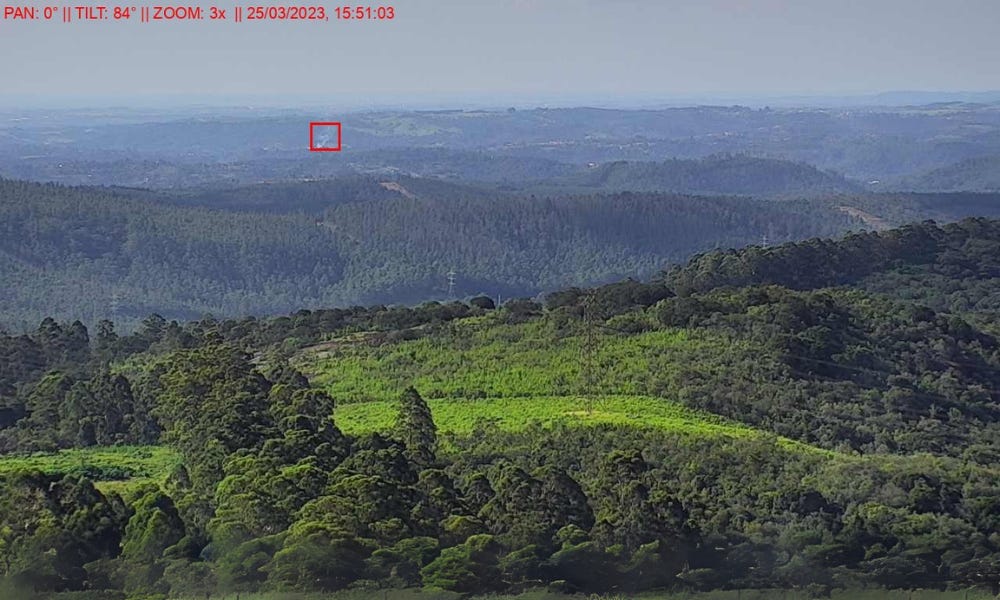
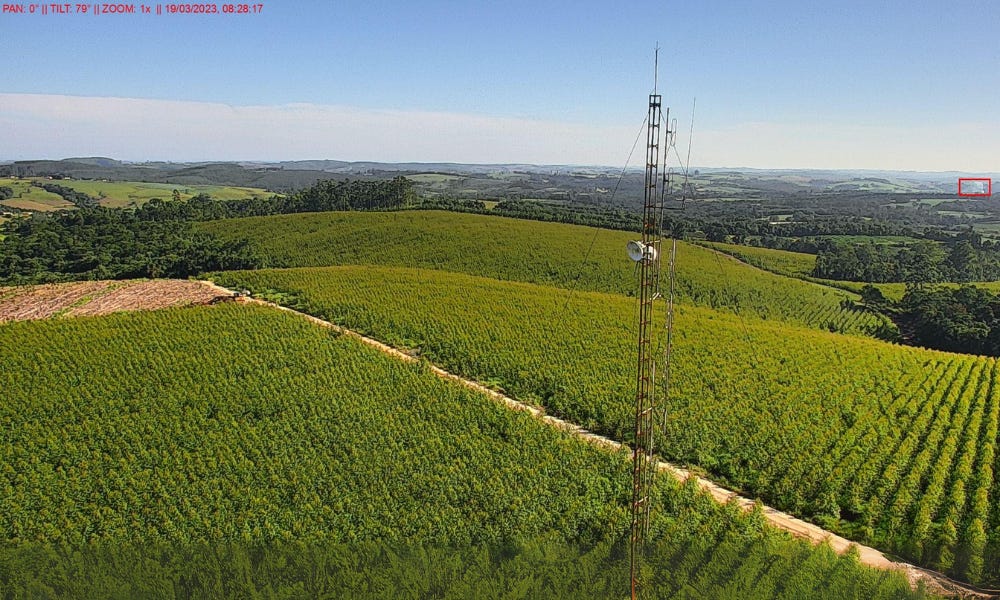
At the core of its platform, called Pantera, is an AI-powered detection system that sees faster, farther, and smarter than any human observer. Its 360-degree, high-definition cameras scan the landscape day and night, flagging fire starts within three seconds across a 20-kilometer radius, or 125,000 hectares. That’s a staggering leap from traditional systems, where detection can lag up to 48 hours, especially in remote areas. But Pantera doesn’t just watch, it knows where to look. Its algorithm identifies high-risk zones using historic burn data, temperature, humidity, wind, and patterns of human activity, then prioritizes attention where fire is most likely to start.
That intelligence shapes more than just alerts. It guides water strategy too, placing tanks and resources near predicted ignition zones instead of stockpiling them at headquarters. When fire does strike, Pantera’s GPS-coordinated response tools help brigades act quickly, safely, and precisely.
Pantera doesn’t just detect fires. It anticipates them, mobilizes against them, and proves the results, turning firefighting from a scramble into a system.
Ring of Fire
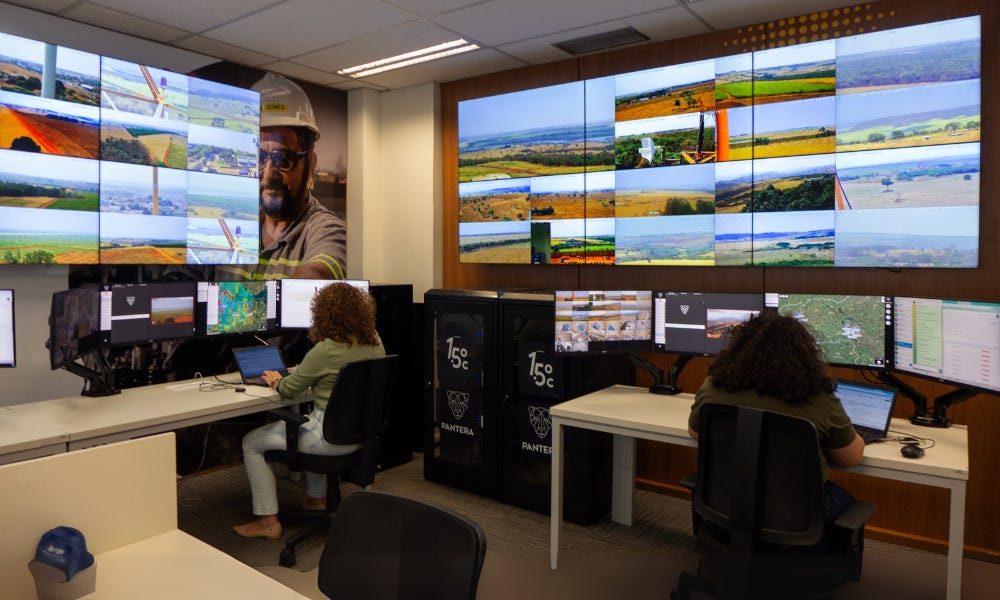
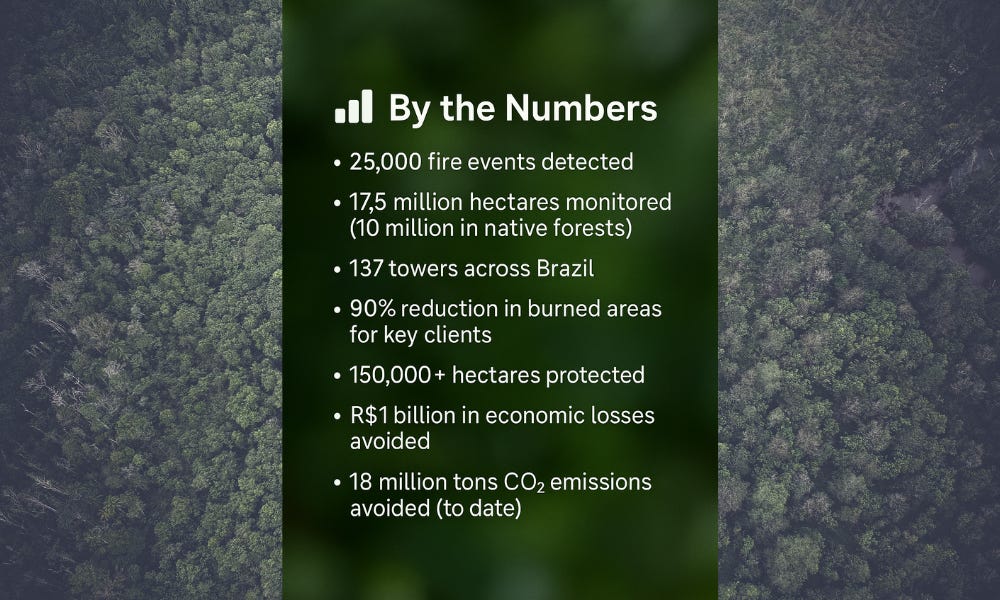
What makes 1.5 °C more than just a smart tool is the system it’s building behind the scenes. With over 137 towers deployed and more than 17.5 million hectares under monitoring—10 million of which are native forests—Pantera is quietly becoming one of Latin America’s largest wildfire detection networks. And with every hectare added, the system gets smarter.
This data density powers Pantera’s predictive models, but it also creates something harder to replicate: network effects. More land means better insights. Better insights lead to better outcomes. And better outcomes attract more clients, feeding a loop that reinforces 1.5 °C’s position with every new deployment.
That reach is already reshaping how fire is managed. In Brazil’s Pantanal, the world’s largest tropical wetland, Pantera now connects brigades, NGOs, and corporate landowners through a shared platform. It has helped detect hundreds of fire starts, direct water and personnel to the right location, and prevent an estimated 5 million tons of CO₂ emissions—all while protecting ecologically sensitive areas.
Since launch, Pantera has recorded over 25,000 fire detections across key biomes like the Amazon, Cerrado, and Pantanal. In total, 1.5 °C estimates that its deployments have helped avoid more than 18 million tons of CO₂ emissions—a climate impact with real policy and financial weight.
The company also leads Abrace o Pantanal, one of the world’s largest forest fire prevention initiatives. The project spans 2.5 million hectares, including 140,000 hectares of Indigenous territory, and is projected to reduce emissions by 15 million tons. In 2025, it received the Barcelona Horizon Award for innovative impact, setting the stage for expansion into Europe.
Flames to Finance
1.5 °C currently operates on a SaaS model, licensing its Pantera platform to major sugar mills, pulp and paper companies, and other land-intensive agribusinesses across Brazil. These sectors face some of the highest wildfire risks, often without reliable insurance coverage, making early detection both urgent and valuable.
While this model already generates substantial revenue, 1.5 °C’s long-term vision mirrors Kilimo’s approach to water stewardship — shifting fire prevention from a cost center to a climate asset. By tracking not just where fires start but where they don’t, Pantera helps quantify hectares preserved and emissions avoided—turning invisible outcomes into economic value. These metrics could unlock future revenue for clients via carbon credits, ESG-linked finance, and risk-adjusted premiums.
1.5 °C isn’t issuing credits today, but it’s building the capabilities to get there. Its roadmap includes partnerships with MRV providers and methodology developers, and internal modeling shows the potential: if coverage scales to 30 million hectares, Pantera could help avoid 36 million tons of CO₂ annually, roughly 1% of Brazil’s emissions. At projected carbon prices, that could generate up to 38 million dollars per year in future revenue.
Insurance and risk products are on the horizon too, as companies begin linking fire visibility to premiums and finance terms. For clients, reducing fire doesn’t just protect assets—it may soon unlock capital.
With Pantera, fire becomes more than just a risk to manage. It becomes a data asset, and eventually, a revenue stream.
Founders on Fire
Founded in 2016 in Jundiaí, São Paulo, 1.5 °C has been shaped by a team that knows how slow change can be, especially in agriculture, forestry, and government. Founder Rogerio Cavalcante, a veteran of Brazil’s startup scene, began the company with a bold thesis: that climate adaptation would require not just new tools, but new operating systems. That meant building for the field, not just for the screen.
Cavalcante sold off his logistics business to focus full-time on climate resilience. He met co-founder Eimi Arikawa at the BNDES Garagem accelerator, where their shared vision, combining agronomic precision with digital innovation, took shape. As Cavalcante puts it: "Every second counts, and every hectare saved is a win for the world."
CTO Antonio Leblanc, with a background in AI and systems architecture, powers Pantera’s real-time engine. Eimi leads on commercial execution and customer success. Diego Debruyn, Osmar Bambini, and Maíra Polidoro round out the founding team, bringing strengths across operations, sustainability, and legal structure.
The company’s impact has been recognized by major institutions, including the World Economic Forum, Google for Startups, and MWCapital Awards in Barcelona. They also won South Summit’s 2025 award as the world’s most sustainable startup.
As Brazil takes center stage ahead of COP30, 1.5 °C is showing that with smart technology, wildfire risk can not only be managed—it can become a financial lever for those investing in prevention.

Thanks for reading.
KFG
UGM is a Yield Lab Latam portfolio company. Please reach out if you're interested in connecting with the company or if you would like to learn more about how to invest in high-potential agrifood and climate tech startups in Latin America.
Kieran Finbar Gartlan is an Irish native with over 30 years experience living and working in Brazil. He is Managing Partner at The Yield Lab Latam, a leading venture capital firm investing in Agrifood and Climate Tech startups in Latin America.