


Brazil’s soy moratorium clash reveals the deeper divide between national law, global markets, and the push for zero-deforestation supply chains.
A Fragile Pact
For nearly two decades, the Soy Moratorium stood as a voluntary safeguard against Amazon deforestation. Major traders agreed not to buy soy grown on newly cleared forest land after 2008, a pact that reassured NGOs and international retailers. When Brazil’s competition regulator, CADE, recently suspended it on grounds of anti-competitive behavior, the delicate balance cracked.
What began as an industry commitment has become a legal and political battlefield. Supporters say it is one of the few effective tools to slow Amazon loss. Critics argue it creates “double law,” piling on requirements beyond Brazil’s Forest Code, which already obliges farmers to preserve large portions of native vegetation. Now, with appeals winding through the courts, the question now is not just about soy—it is about who gets to set the rules of Brazilian agriculture.
The debate intensified when twenty-five European supermarket chains—including Tesco, Sainsbury’s, and Aldi—wrote to ADM, Bunge, Cargill, Louis Dreyfus, and Cofco, demanding they continue zero-deforestation sourcing regardless of Brazil’s legal rulings. It was a blunt reminder that the real power in global supply chains often sits far from Brasília.
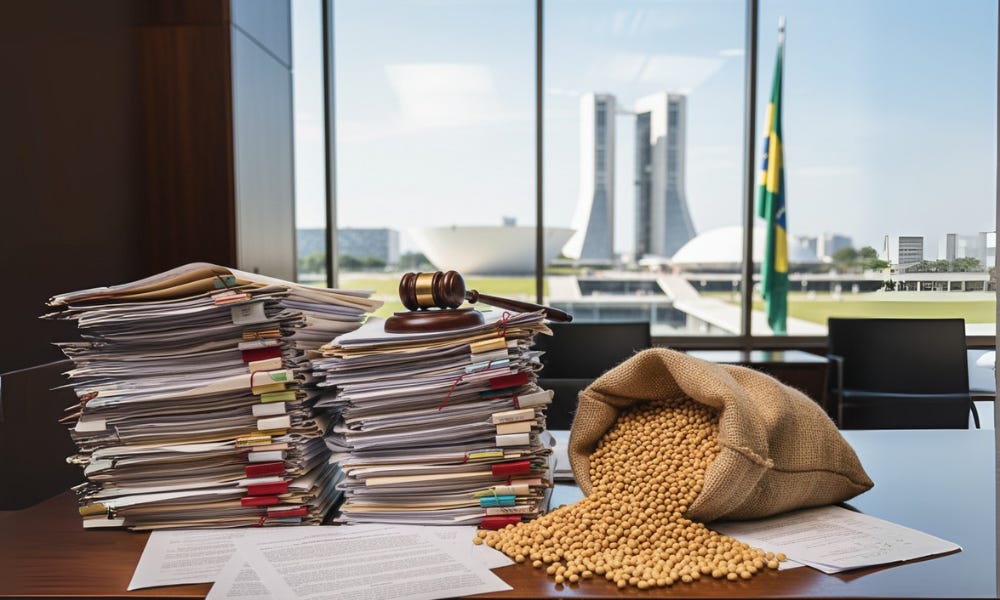
Above and Beyond
Under the Forest Code, Brazilian farmers are required to preserve anywhere from 20 to 80 percent of their land as native vegetation, depending on the biome. A farmer in Mato Grosso, for example, may legally clear part of his property for production while still remaining fully compliant with Brazilian law.
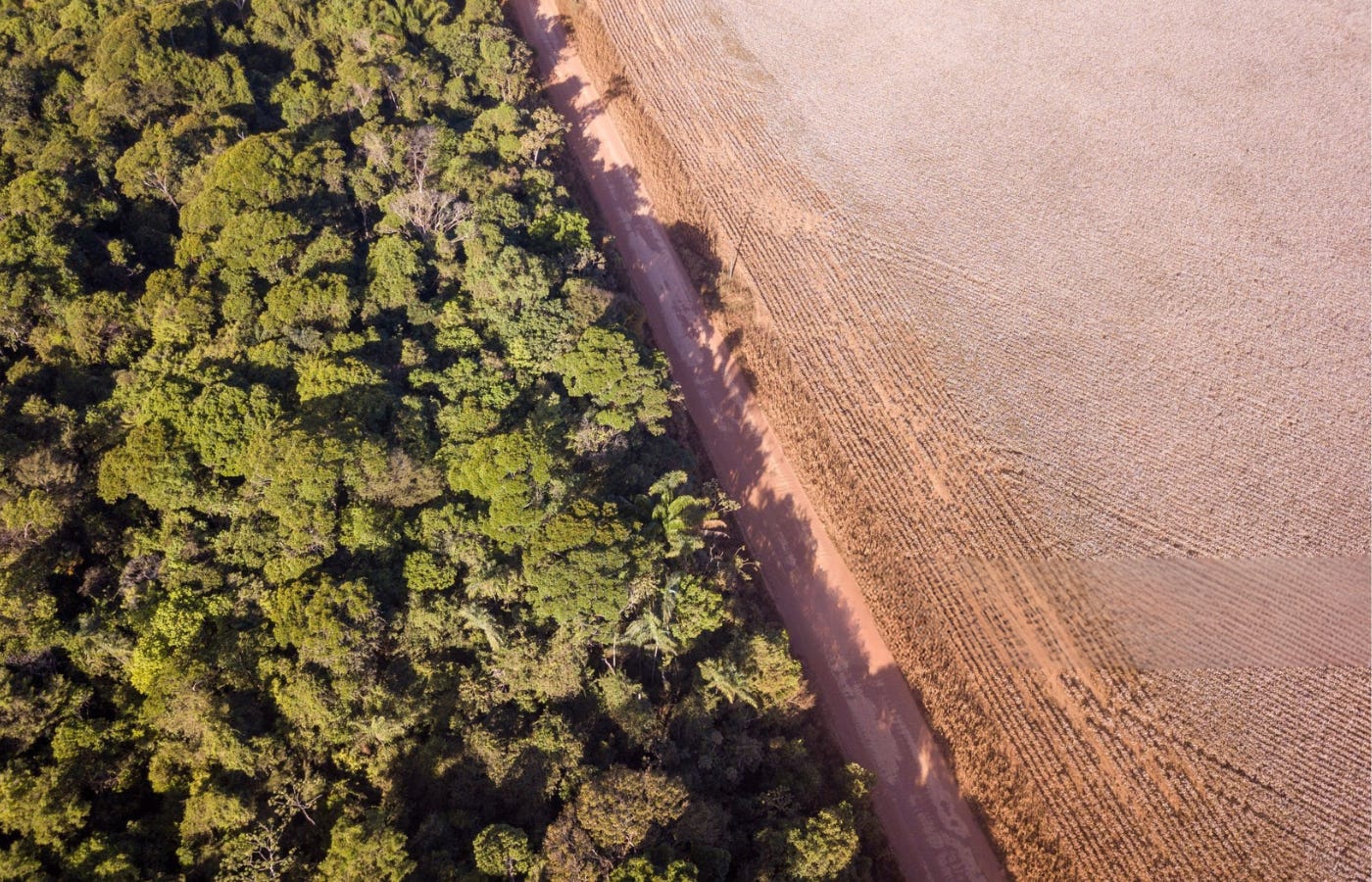
European buyers, however, have drawn a harder line. They insist on zero deforestation after 2008—no new clearing, regardless of whether it is legal under Brazil’s system. That is the sticking point. For long-established producers, already cleared before 2008, compliance is straightforward. For newer farmers who bought land more recently, the rule is effectively retroactive, blocking them from using portions of their own property that national law allows.
This widening gap between legal rights at home and market access abroad is at the heart of farmer frustration. Compliance is no longer about following Brazilian law; it’s about following European definitions of sustainability, even when they go further than national standards.
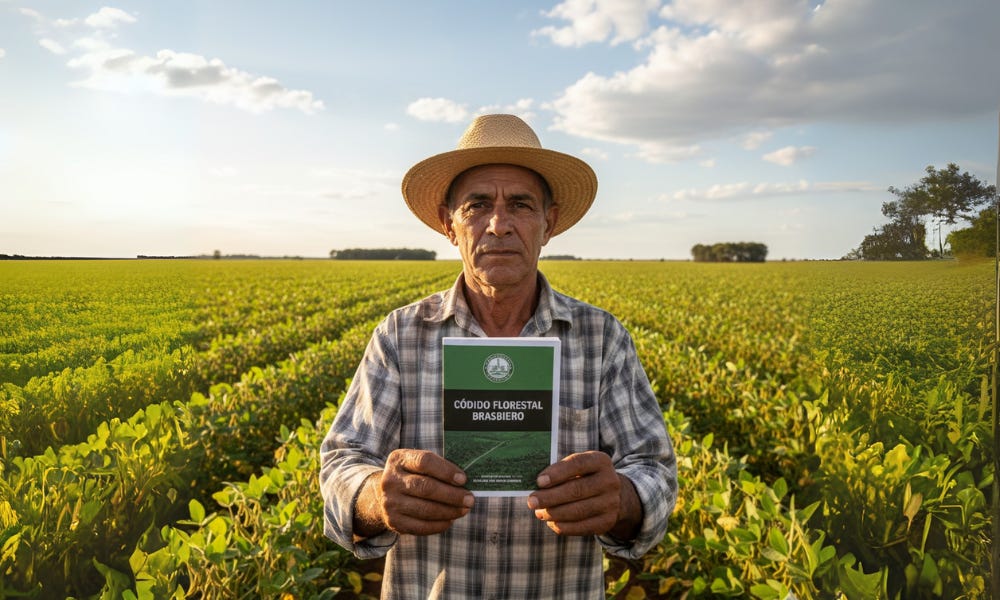
Clear Cutoff
In Mato Grosso, the world’s largest soy-producing state, the impact is particularly acute. Farmers who purchased land with the expectation of clearing it within the legal limits of the Forest Code now find themselves locked out of premium export markets if they do so. The moratorium’s cut-off date of 2008 penalizes newcomers, regardless of whether their clearing is lawful.
For established producers, this creates a perverse advantage. Their fields, cleared decades ago, pass certification checks with little effort. Younger farmers, who entered the sector later, face restrictions that make their business models unviable. The sense of injustice is palpable. Farmers argue that they are being asked to shoulder rules written in Brussels rather than Brasília, while Europe conveniently forgets its own past.
The hypocrisy stings. As many farmers point out, Europe cleared most of its forests decades ago, often with government subsidies. In my native Ireland, farmers were even paid in the 1970s to cut down trees and expand arable land. Today the same continent that once incentivized deforestation tells Brazil to keep its trees standing, this time without offering any financial incentive in return.
Trust and Trade
The moratorium debate is therefore less about legality and more about legitimacy. Brazil’s Forest Code already sets some of the strictest conservation standards anywhere. But for buyers, legality is not enough—they want assurances that extend beyond national law. For farmers, this feels like a breach of sovereignty and a denial of property rights.
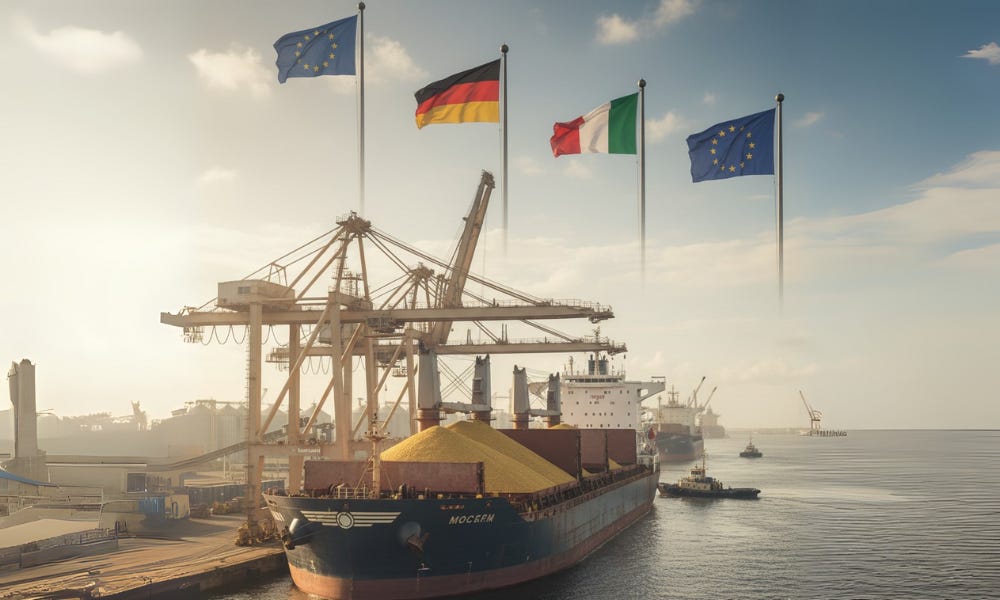
The power imbalance is clear. Europe may account for a smaller share of Brazil’s soy exports than China, but its influence extends through the rules it writes into corporate supply chains. Traders, unwilling to lose access to European shelves, often enforce zero-deforestation standards across the board. In practice, European buyers are shaping land-use policy in Brazil, even without formal jurisdiction.
The result is a triangle of mistrust: farmers see hypocrisy, regulators see sovereignty under attack, and buyers see risk mitigation. The Soy Moratorium sits at the fault line of these competing perspectives.
Beyond the Moratorium
What happens next will shape not just soy, but the future of Brazil’s ag exports. One option is for Brazil to lean harder on Forest Code enforcement, showing the world that its own laws are credible and sufficient. Another is a continuation of buyer-led zero-deforestation commitments, effectively bypassing national law. The third, and most workable, is a hybrid: Brazil’s laws enforced through public systems, complemented by digital traceability that meets international demands at lower cost.
Brazil has already shown that productivity and preservation can coexist, through no-till farming, integrated crop-livestock systems, and regenerative practices across the Cerrado. The challenge is aligning that progress with the standards of skeptical buyers. If Brazil can prove, through transparent data rather than moral arguments, that legal production is also sustainable, it could shift the balance of trust.
The Soy Moratorium began as a voluntary pact. Today it is a flashpoint in a larger clash between sovereignty and market power. If Brazil can turn compliance into competitiveness, it won’t just defend its soy sector. It will redefine who really sets the rules of global agriculture.
Thanks for reading.
KFG
Kieran Finbar Gartlan is an Irish native with over 30 years experience living and working in Brazil. He is Managing Partner at The Yield Lab Latam, a leading venture capital firm investing in Agrifood and Climate Tech startups in Latin America.