


Hi, I’m Kieran Gartlan, originally from Ireland, but have called Brazil home for the past 30 years. I currently serve as Managing Partner at The Yield Lab Latam, one of the top agrifood and climate tech VC funds in the region. If you’re curious to learn more about this space, feel free to reach out or connect on LinkedIn. I’m always happy to share what I’m seeing on the ground.
Summary
As we kick off 2026, I would like to wish all my readers a very happy and successful New Year. Here’s to a successful year for everyone building, investing in, and operating across Brazil’s ag and climate tech ecosystem.
In AgTech developments this week, Typcal moved alternative proteins into industrial production with Latin America’s first large-scale mycelium fermentation plant, while NeoSilos and major seed players Scheffer, GDM, and TMG showed how AI, imaging, and controlled environments are shortening cycles and reducing subjectivity across post-harvest operations and breeding programs.
In Climate Tech, Campo Limpo closed the year with around US$100 million in revenue and announced new investment to expand recycling capacity, while Brazil registered a record 162 new bioinputs in 2025, pushing the total number of approved biological products close to 1,000.
On the funding and capital markets front, early signs of recovery are emerging after a difficult 18 months. Private rural credit is picking up again, with renewed interest in Fiagros and other structured agro instruments, a positive signal for agfintech startups operating across credit, insurance, and risk management. Against this backdrop, Brazilian insurtech Guarda raised fresh capital to scale parametric climate insurance, reflecting growing demand for faster and more transparent climate risk coverage.
In Macro & Markets, Brazil begins the year with several structural shifts in focus. The country overtook the United States as the world’s largest beef producer, agricultural exports surpassed US$1.2 trillion over the past decade, and farmland transactions accelerated despite tighter credit conditions. At the same time, trade and sustainability debates resurfaced, with China’s beef surcharge and Mato Grosso’s confirmation of Abiove’s exit from the Soy Moratorium adding new layers of uncertainty to global supply chains.
🧭 Table of Contents
AgTech
Typcal Opens Latin America’s First Large-Scale Mycelium Factory
NeoSilos Targets Automated Grain Classification with AI Cameras
Scheffer, GDM and TMG Adopt New Light-Based Approach in Seed Breeding
Climate Tech
Campo Limpo Posts Record Revenue and Expands Recycling Investment
Brazil Sets Record With 162 New Bioinput Registrations in 2025
Funding & M&A
Guarda Raises US$800k Pre-Seed to Scale Digital Climate Insurance
Capital Markets Expect More Fiagros and Issuances in 2026
Savencia Acquires Quata Alimentos to Expand Brazilian Dairy Portfolio
Macro & Markets
Brazil Overtakes U.S. as World’s Largest Beef Producer
Brazil’s Ag Exports Surpass US$1.2 Trillion Over the Past Decade
Chinese Surcharge Could Lower Beef Prices in Brazil
Mato Grosso Confirms Abiove’s Exit From the Soy Moratorium
Brazil’s Farmland Market Heats Up in 2025
AgTech
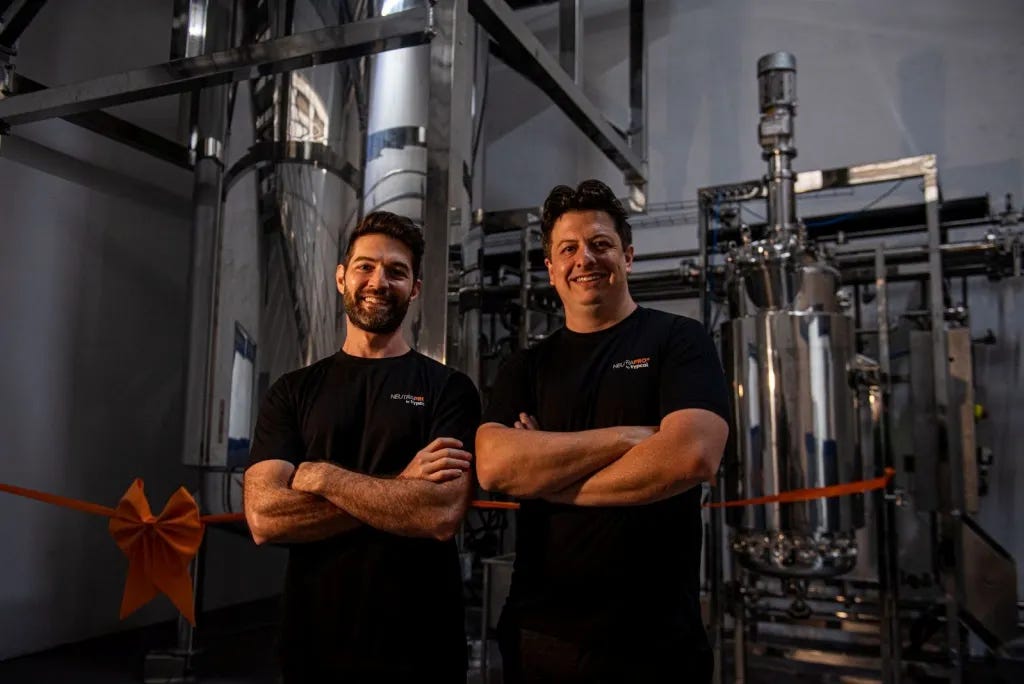
Typcal Opens Latin America’s First Large-Scale Mycelium Factory – Typcal has inaugurated the region’s first industrial-scale mycelium fermentation facility, moving Brazil’s alternative protein sector into commercial production. The plant, located in Pinhais near Curitiba, was built following a R$10 million (around US$2 million) funding round backed by Brazilian investors and Belgian biotech accelerator Biotope. The facility is designed for scalable production of fresh and powdered mycelium-based ingredients, with initial commercial output expected in 2026 and early sales planned for Latin American and European markets. read more
NeoSilos Targets Automated Grain Classification with AI Cameras – NeoSilos is developing an AI-based system to automate grain quality classification, aiming to replace manual, visual inspection methods still used at Brazilian silos and warehouses. The solution combines computer vision cameras and artificial intelligence to evaluate attributes such as color, impurities, broken kernels, and defects during grain reception. Based in Curitiba, the startup has raised around US$800,000 through a mix of grants and equity investment, including backing from KPTL. NeoSilos is currently running pilot projects with grain storage operators, initially focused on soybeans and corn, and plans to integrate the technology into existing silo infrastructure. read more
Scheffer, GDM and TMG Adopt New Light-Based Approach in Seed Breeding – Scheffer, GDM and TMG, three major seed and grain producers, are applying advanced lighting systems to accelerate seed breeding cycles, according to AgFeed. The approach uses controlled light environments to shorten development timelines by allowing researchers to evaluate more plant generations per year, particularly in soybean breeding programs. The companies report that the technology supports faster genetic selection while maintaining field trials as a core validation step in the breeding process. read more
Climate Tech
Campo Limpo Posts Record Revenue and Expands Recycling Investment – Campo Limpo, Brazil’s agrochemical packaging recycling company, closed the year with revenue of around US$100 million and announced plans to invest approximately US$28 million in the expansion and modernization of its recycling operations. Managed by inpEV, the program operates a nationwide reverse logistics network for empty pesticide containers. Brazil currently recycles more than 90 percent of properly returned agrochemical packaging, one of the highest recovery rates globally for this category of waste. The new investment will be directed toward upgrading recycling units, expanding processing capacity, and improving logistics and traceability as return volumes continue to grow. read more
Brazil Sets Record With 162 New Bioinput Registrations in 2025 – Brazil recorded a historic high in bioinput approvals in 2025, with registrations granted for 162 new products, according to data released by the Ministry of Agriculture. The approvals cover biological, microbiological, and plant-extract-based inputs, reflecting the rapid expansion of biological solutions in crop protection and soil management. By the end of the year, the total number of registered bioinputs in Brazil reached 912, reinforcing the modernization of the country’s phytosanitary portfolio. The increase follows regulatory streamlining and growing adoption of bioinputs across major crops, as producers seek alternatives to conventional chemical products. read more

Funding & M&A
Guarda Raises US$800k Pre-Seed to Scale Digital Climate Insurance – Guarda, a Brazilian insurtech focused on parametric climate insurance for agriculture, raised around US$800,000 in a pre-seed round to expand its digital platform. The round was led by Randon Ventures, the corporate venture capital arm of Brazilian logistics and industrial group Randon, with participation from angel investors with backgrounds in agribusiness, insurance, and fintech. Investors include José Kfuri, former CEO of Marubeni Grãos Brasil; Rodrigo Botti, an executive at Lockton and former CFO of reinsurer IRB; Alan Chusid, founder of Spin Pay; and Johann von Sothen, co-founder of Solfácil. The capital will be used to validate the model at scale, with pilot coverage targeting up to 10,000 hectares in early 2026. read more
Capital Markets Expect More Fiagros and Issuances in 2026 – Brazil’s agribusiness capital markets are showing signs of recovery after a difficult 18-month period marked by defaults, restructurings, and weaker issuance. In 2025, private rural credit began to normalize, with renewed investor appetite for instruments such as Fiagros (listed agribusiness investment funds), CRAs (agribusiness receivables certificates), LCAs (bank-issued agribusiness savings notes), and CPRs (farm production contracts). CRA issuance reached around US$10.4 billion in 2025, while total outstanding private agro credit surpassed US$280 billion, according to industry data. Market participants expect this recovery to continue in 2026, supported by clearer risk differentiation, stabilizing margins, and regulatory improvements. The rebound is viewed as positive for agfintech startups, which increasingly rely on capital markets to scale credit, insurance, and on-farm financing solutions. read more
Savencia Acquires Quata Alimentos to Expand Brazilian Dairy Portfolio – Savencia Fromage & Dairy, the French group that owns the Polenghi brand, announced the acquisition of Quata Alimentos to strengthen its presence in value-added dairy categories. Quata operates in cheese and dairy ingredient production and will be integrated into Savencia’s existing industrial and commercial structure in Brazil. The transaction expands production capacity and brand reach, with a focus on higher-margin segments. Financial terms were not disclosed, and the deal remains subject to approval by Brazil’s antitrust authority, Cade. read more

Macro & Markets
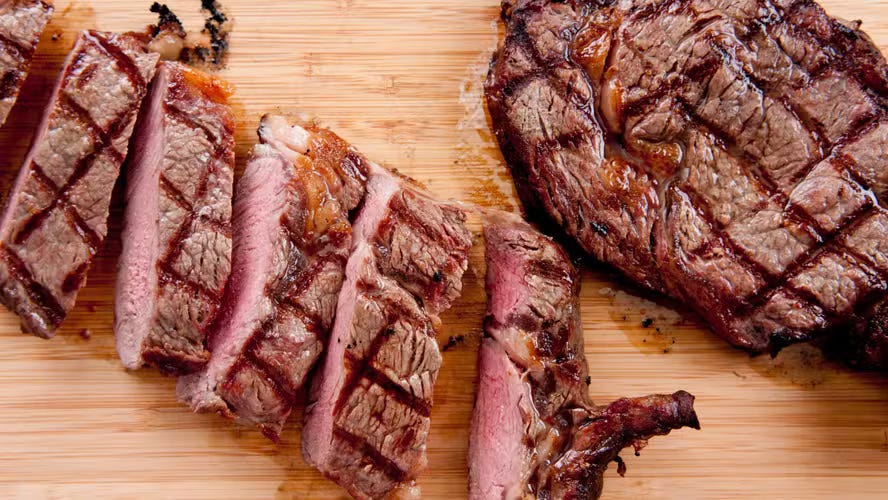
Brazil Overtakes U.S. as World’s Largest Beef Producer – Brazil became the world’s largest beef producer for the first time, overtaking the United States in 2025. Brazilian output reached around 12.3 million tons, while U.S. production declined to around 11.8 million tons, following herd reductions linked to drought, higher feed costs, and tighter margins. The shift reflects Brazil’s expanding cattle herd, productivity gains, and lower production costs. Brazil also strengthened its role in global trade, accounting for more than 25 percent of global beef exports, with China remaining its main destination. read more
Brazil’s Ag Exports Surpass US$1.2 Trillion Over the Past Decade – Brazilian agribusiness exports exceeded US$1.2 trillion over the past ten years, reflecting a structurally diversified export base anchored by a few dominant commodity complexes. The soybean complex remained the main driver, generating around US$446 billion over the period and accounting for more than one third of total agribusiness export revenue. Animal proteins ranked second, with beef, poultry, and pork contributing approximately US$202 billion. Forestry products, including pulp and timber, added around US$137 billion, while the sugar and ethanol complex generated roughly US$121 billion. Agribusiness now represents close to half of Brazil’s total exports, reinforcing its central role in the country’s trade balance. read more
Chinese Surcharge Could Lower Beef Prices in Brazil – China announced an import quota on Brazilian beef that is expected to reduce export volumes to Brazil’s largest market in 2026. Shipments above 1.1 million tonnes per year will be subject to a 55 percent surcharge, effectively discouraging exports beyond that threshold. In 2025, Brazil is estimated to have exported between 1.5 million and 1.7 million tons of beef to China, meaning a significant share of volumes could be affected. Analysts note that surplus product may be redirected to the domestic market, potentially easing prices paid to producers and at retail, depending on how long the measure remains in place and exporters’ ability to diversify destinations. read more
Mato Grosso Confirms Abiove’s Exit From the Soy Moratorium – Mato Grosso state authorities have confirmed that Oilseed industry association, Abiove, has withdrawn from the Soy Moratorium, a voluntary agreement restricting the purchase of soy grown on areas deforested after 2008. Abiove argues that the agreement no longer reflects current Brazilian environmental legislation and that compliance with the Forest Code should govern production. State authorities say the move restores legal certainty for producers, while critics warn of potential implications for access to deforestation-sensitive markets. read more
Brazil’s Farmland Market Heats Up in 2025 With Multi-Billion-Dollar Deals – Brazil’s farmland market recorded a sharp pickup in activity in 2025, with major transactions totaling around US$1.9 billion across 19 disclosed deals. The buyers were primarily family-controlled agribusiness groups, including those linked to the Cervi, Roquetto, Logemann and Maggi families, which have built large-scale grain and fiber operations over decades. Most transactions involved prime grain-producing land in Mato Grosso, Bahia and other Cerrado regions, with smaller allocations to forestry and cattle ranching. Among the largest moves, SLC Agrícola completed transactions worth approximately US$460 million, covering farmland acquisitions, leases and partial asset sales involving more than 100,000 hectares. Other notable deals included purchases exceeding 40,000 hectares and individual transactions surpassing 100,000 hectares. Despite higher land prices and tighter credit conditions, demand remained strong, largely driven by long-term strategic expansion rather than leveraged financial plays. read more
That’s all for this week, thanks for reading,
KFG
Kieran Finbar Gartlan is an Irish native with over 30 years of experience living and working in Brazil. He is Managing Partner at The Yield Lab Latam, a leading venture capital firm investing in Agrifood and Climate Tech startups across Latin America.
Where you see the fastest adoption coming from? Large operators pushing standards, or smaller players using tech to leapfrog legacy systems.